

 Voorvertoning
 Verstuur
 Delen
Delen
 Details bekijken

 Download
 Vergelijkbare items
 Röntgenonderzoek
 Diavoorstelling
Emperor Rudolf II
 Oil On Canvas
- WallArt
- Northern Mannerism
 1607
1607 60.0 x 58.0 cm
 Kunsthistorisches Museum
 Lees meer
Giclée / Kunstafdrukken
Giclée- of canvasafdruk van museumkwaliteit met een snelle productie en flexibele afwerkingsmogelijkheden. ( Bestel handgeschilderde reproductie Koop afbeelding)




P118B $10

P118H $10

P118W $10

P438Z $10

P508JH $12

P508YH $12

P805H $10

P805Z $10

P919BZ $10

P919G $10

P919XJ $10

P959ZH $10

P968JZ $12

W106C $8

W218G $10

W218JH $8

W218Y $10

W307PJ $10

W316G $10

W316PJ $8

W316Y $10

W398PJ $8

W4111J $10

W500HY $15

W500JH $15

W692G $12

W849H $8

W940BG $15

W953PJ $8




Kies uit onze vooraf ingestelde maten die overeenkomen met de originele verhoudingen van het kunstwerk.

U kunt uw eigen afmetingen opgeven om in een specifieke lijst of ruimte te passen. Als de door u gekozen maat niet overeenkomt met de proporties van het originele kunstwerk, zullen wij de afbeelding bijsnijden of uitbreiden met een gespiegelde of effen rand. Een digitaal mockup wordt ter goedkeuring naar u verzonden voordat de productie begint.
Houd er rekening mee dat de preview op het scherm de werkelijke bijsneding of uitbreiding niet weergeeft. Alleen de mockup toont de uiteindelijke compositie nauwkeurig.
Hoewel aangepaste maten beschikbaar zijn, raden wij aan een afmeting uit de vooraf bepaalde lijst te kiezen om de originele proporties te behouden.
Wereldwijde levering () binnen 2 weken in plaats van de standaard 4/5 weken. (21 augustus)

Gratis wereldwijde expressverzending

Hoogwaardig linnen canvas

Volledige verzendverzekering

Garantie op terugbetaling van invoerrechten

Garantie op exacte kleurweergave

Retourbeleid van 60 dagen (alleen bij defecten)

100% Geld-terug-garantie

Korting bij meerdere afnames
 De optie voor glas is alleen beschikbaar bij een formaat kleiner dan 110 cm.

Emperor Rudolf II
Giclée / Kunstafdrukken
Afmetingen reproductie
-


Eindtotaal
$ 81
Beschrijving verzamelobject
The Imperial Gaze: Hans von Aachen’s Portrait of Emperor Rudolf II
Hans von Aachen's “Portrait of Emperor Rudolf II,” painted in 1607, is more than just a likeness; it’s a carefully constructed tableau of power, intellect, and the burgeoning anxieties of a man grappling with his role as Holy Roman Emperor. This oil-on-canvas masterpiece, measuring 60 x 58 cm and currently residing within the Kunsthistorisches Museum in Vienna, offers a rare glimpse into the mind of Rudolf II, a ruler renowned for both his lavish patronage of the arts and his ultimately disastrous handling of European politics.
The painting immediately commands attention with its dramatic use of space and light. The Emperor is positioned centrally within a deep, almost impenetrable black background – a deliberate choice that serves to isolate him, elevating him to an almost mythical status. This darkness isn’t merely decorative; it speaks to the weight of his responsibilities, the isolation inherent in leadership, and perhaps even hints at the melancholy that would later define his reign. The focus is entirely on Rudolf's face – a study in controlled severity. His gaze, direct and unwavering, holds an air of contemplative power, suggesting both wisdom and a certain weariness.
A Mannerist Masterpiece: Style and Technique
Von Aachen’s style firmly places this portrait within the realm of Northern Mannerism, a movement characterized by its meticulous detail, elongated figures, and often unsettling psychological depth. He expertly employs the techniques of oil painting to achieve remarkable realism – the texture of the velvet robes, the intricate folds of the ruff collar, and the subtle nuances of Rudolf’s facial features are rendered with astonishing precision. Notice particularly the rendering of the beard and mustache; each strand appears meticulously painted, contributing to a sense of tangible presence.
The artist's use of glazing – layering thin washes of translucent paint over dried layers – creates an incredible luminosity, particularly in the highlights that catch the light on Rudolf’s face. This technique not only enhances the realism but also imbues the portrait with a subtle, almost ethereal quality. The composition itself is carefully balanced, utilizing strong lines to define the contours of the figure and creating a sense of solidity and structure. The restrained palette – dominated by deep reds, browns, and blacks – further emphasizes the formality and gravitas of the subject.
Rudolf II: A Complex Figure
Understanding the historical context surrounding Rudolf II is crucial to appreciating this portrait fully. He was a man of immense wealth and intellectual curiosity, a passionate collector of art, books, and scientific instruments – a veritable Renaissance man who ruled from Prague. However, his reign was marked by political instability, costly wars, and ultimately, the devastating Thirty Years’ War. His eccentricities and seclusion contributed to his inability to effectively govern, leading to widespread discontent and rebellion.
The portrait captures this duality – the outward appearance of imperial authority juxtaposed with an underlying sense of introspection and perhaps even unease. The elaborate ruff collar, a symbol of status and wealth, is offset by the Emperor’s somber expression. It's a visual representation of a man caught between his responsibilities as ruler and his own internal struggles. Interestingly, Rudolf II was particularly fond of eroticized mythological scenes in art, suggesting a hidden sensuality beneath his formal exterior – a theme subtly echoed in some of von Aachen’s other works.
Symbolism and Legacy
Beyond the immediate depiction of Emperor Rudolf II, the portrait is rich in symbolic meaning. The crown, prominently displayed, represents his authority and divine right to rule. The dark background can be interpreted as a metaphor for the challenges he faced – the shadows of war, political intrigue, and personal anxieties that surrounded him. Von Aachen’s meticulous attention to detail reflects the importance placed on appearances during the Renaissance, highlighting the need for rulers to project an image of strength and stability.
“Portrait of Emperor Rudolf II” remains a significant work of art, offering a compelling glimpse into the life and mind of one of Europe's most enigmatic figures. It’s a testament to Hans von Aachen’s skill as a painter and his ability to capture not just a likeness but also the essence of a complex historical personality. Reproductions of this captivating portrait continue to resonate with art lovers today, inviting us to contemplate the burdens of power and the enduring allure of the Renaissance ideal.
Biografie van de kunstenaar
vroege jaren en opleiding
Hans von Aachen, een Duitse meester uit de schilderkunst, werd in 1552 geboren in de historische stad Keulen. Hoewel er weinig bekend is over zijn vroege jaren, wordt aangenomen dat hij zijn artistieke fundament legde in het atelier van Leonardus Sievenhoven, een lokale schilder.artistieke stijl en invloeden
Het oeuvre van Von Aachen wordt gekenmerkt door het gebruik van levendige kleuren en dramatische composities, die typerend zijn voor de maniëristische stijl. Zijn doeken vertonen vaak uitgerekte figuren, verfijnde details en een voelbare spanning, een esthetiek die sterk werd beïnvloed door de meesterlijke werken van El Greco (Domenikos Theotokopoulos). Enkele van zijn meest opmerkelijke meesterwerken omvatten:- De Kruisiging (1585), een schilderij dat zijn beheersing van krachtige kleuren en dramatische lichtinval ten toon legt.
- Het Laatste Oordeel (1590), een werk dat zijn vermogen bewijst om meerdere figuren in een enkele, complexe compositie te balanceren.
- Portret van een onbekende dame (1595), een portret dat zijn talent voor het vastleggen van de subtiele nuances van de menselijke expressie onderstreept.
opmerkelijke collecties en tentoonstellingen
De werken van Von Aachen zijn te bewonderen in diverse vooraanstaande musea, waaronder:- Gemäldegalerie Alte Meister in Dresden, Duitsland – een museum met een uitgebreide collectie Europese schilderijen uit de 15e tot de 18e eeuw.
- Museum Ostdeutsche Galerie in Regensburg, Duitsland – waar een unieke collectie Oost-Duitse kunst wordt gepresenteerd.
erfenis
Hans von Aachen overleed in 1615 en liet een nalatenschap na van complexe en emotioneel geladen schilderijen. Zijn werk blijft kunstenaars en liefhebbers inspireren en biedt een uniek venster op de wonderlijke wereld van de maniëristische kunst. Ontdek meer over het leven en de werken van Hans von Aachen op OriginalUniqueArt.com: [https://OriginalUniqueArt.com/@@/a@d3aquv](https://OriginalUniqueArt.com/@@/a@d3aquv) | ontdekkingsreis door het Museum Ostdeutsche Galerie (Duitsland)
Hans Von Aachen
1552 - 1615 , Duitsland
Belangrijkste feiten
- Artistic Movement Or Style: Maniëristische schilderkunst
- Artists Or Movements Influenced By This Artist: ['Renaissancekunst']
- Artists Who Influenced This Artist: ['El Greco']
- Date Of Birth: 1552 Keulen, Duitsland
- Date Of Death: 1615
- Full Name: Hans von Aachen
- Nationality: Duits
- Notable Artworks:
- De Kruisiging
- Het Laatste Oordeel
- Portret van een onbekende dame
- Place Of Birth: Keulen
Gerelateerde artikelen
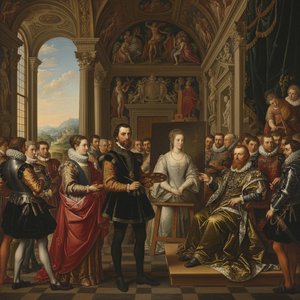
Hans von Aachen: Mannerism's Courtly Visionary & Imperial Portraiture
Explore the captivating world of Hans von Aachen, a leading Mannerist painter renowned for his exquisite imperial portraits & mythological scenes. Discover his legacy and influence on 16th-century European art.
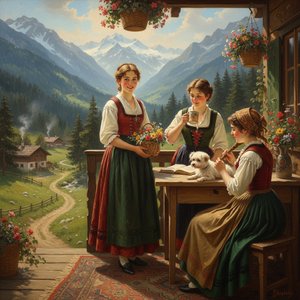
Eugen von Blaas: Capturing Alpine Life & Sentiment in 19th-Century Austrian Painting
Discover the captivating world of Eugen von Blaas! Explore his exquisite 19th-century paintings capturing Venetian life & Alpine beauty. Learn about his Academic Classicism style and find museum-quality reproductions at OriginalUniqueArt.

Anton von Werner: Imperial Painter, Historical Witness & Shifting German Identity
Explore the life & work of Anton von Werner, Imperial Germany's leading painter. Discover his dramatic depictions of war, unification, and court life – a fascinating insight into 19th-century German history & art.

Hans Holbein the Younger: A Renaissance Portraitist's Mastery of Realism & Psychological Insight
Explore the life & art of Hans Holbein the Younger, a Renaissance master renowned for his strikingly realistic portraits and psychological insight. Discover iconic works like 'The Ambassadors' and delve into his lasting legacy.

Friedrich von Amerling: Capturing Viennese Aristocracy & the Biedermeier Spirit
Explore the elegant portraits of Friedrich von Amerling, a master of Viennese Biedermeier art. Discover his life, style, and lasting influence on 19th-century Austrian painting. Find high-quality reproductions at OriginalUniqueArt.

