
 Voorvertoning
 Verstuur
 Delen
Delen
 Details bekijken
 Gids
Gids

 Download
 Vergelijkbare items
 Röntgenonderzoek
 Diavoorstelling
 Q&A
Q&A Statistieken
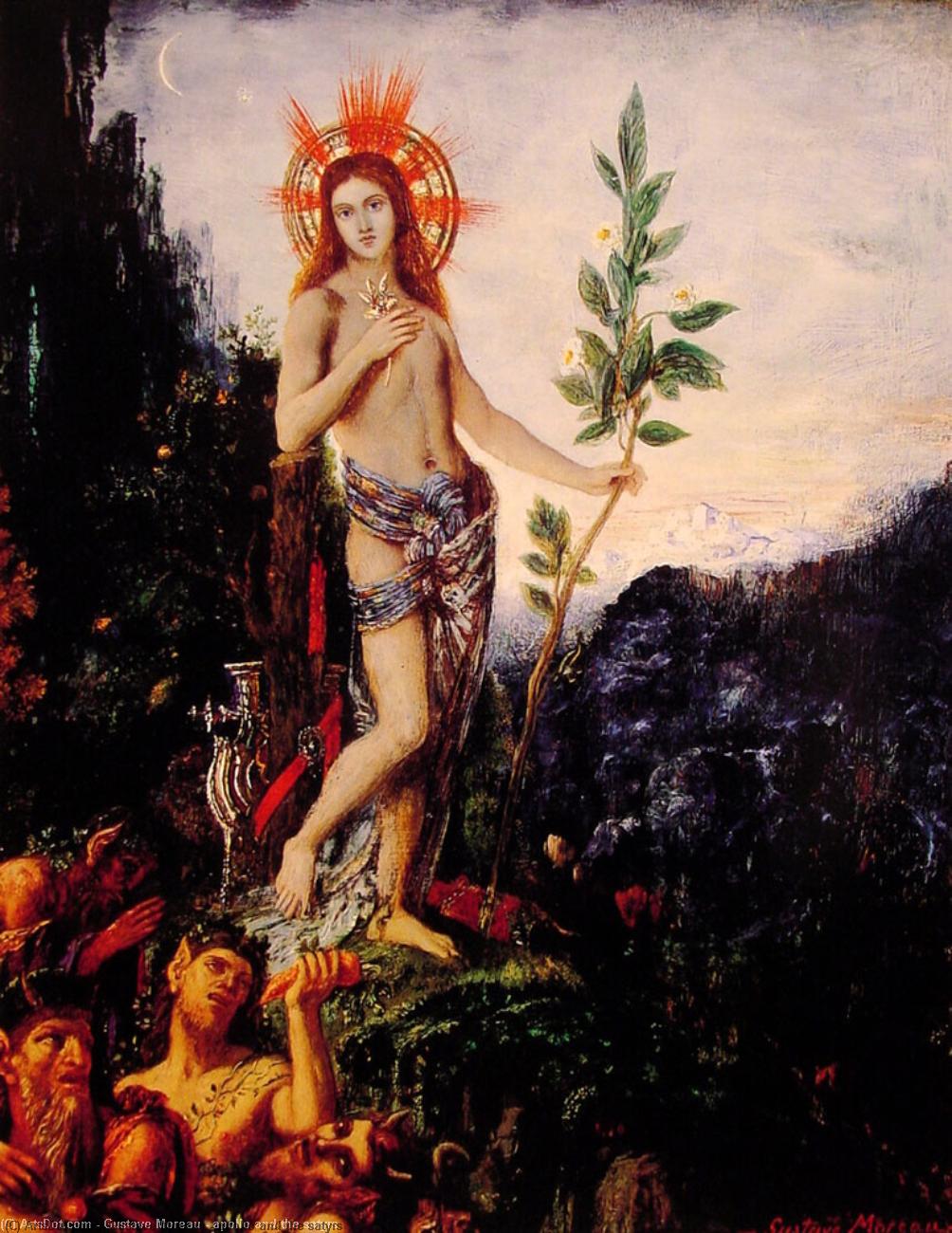
apollo and the satyrs


 Lees meer
Ontvang een bestand dat klaar is voor drukwerk en de kwaliteit van het online voorbeeld ver overstijgt. Elke digitale afbeelding die wij verkopen, is afkomstig van een high-resolution master uit onze database — meestal tussen de 5.000 en 15.000 pixels breed — zodat u met vertrouwen groot kunt afdrukken, nauwkeurig kunt bijsnijden of fijne details kunt reproduceren.
Geen enkel bestand verlaat ons atelier onbewerkt. Een digitaal expert controleert de kleuren aan de hand van het originele schilderij en corrigeert deze indien nodig, om vervolgens de helderheid en details te verbeteren met professionele retoucheertechnieken — waarbij de penseelstreek en stijl van de kunstenaar altijd strikt worden gerespecteerd. Het resultaat is een afbeelding die oogt als het schilderij zelf, en niet als een gescande foto met een filter.
U keurt de afbeelding goed voordat de bestelling wordt afgerond: onze expert stuurt u binnen 72 uur een e-mail ter beoordeling. Niet tevreden? Vraag om aanpassingen of correcties, of vraag een terugbetaling aan als de kwaliteit niet aan de verwachtingen voldoet.
Dit is de kwaliteit waarop uitgevers, designstudio's, galeries en drukkerijen vertrouwen.
Digitale afbeeldingen
Download een bestand met hoge resolutie voor persoonlijke weergave, afdrukken en creatieve projecten. ( Schakel over naar print Bestel handgeschilderde reproductie)
Inbegrepen bij elke bestelling van een digitale afbeelding
Professionele digitale levering, gegarandeerd
Wanneer u kiest voor OriginalUniqueArt.com, ontvangt u niet alleen een afbeelding – u krijgt een professioneel verbeterd digitaal kunstwerk, met precisie vervaardigd en voorzien van een tevredenheidsgarantie. Dit is alles wat automatisch bij uw bestelling is inbegrepen:

Snelle levering per e-mail
Uw hoogwaardige digitale afbeeldingsbestand wordt binnen 72 uur na bestelling naar u gemaild – klaar voor direct gebruik.

AI-verbeterd digitaal bestand
Uw kunstwerk wordt professioneel geoptimaliseerd met behulp van geavanceerde AI-tools en handmatige bewerkingen, waardoor maximale details, helderheid en kleurnauwkeurigheid worden gegarandeerd.

Gratis levenslange herlevering van digitale bestanden
Je bestand per ongeluk verwijderd of kwijtgeraakt? Geen zorgen – we sturen het u op elk gewenst moment gratis opnieuw toe.

Geen invoerkosten – nooit
Geniet direct van uw kunstwerk zonder invoerrechten, belastingen of verzendkosten – digitale downloads zijn altijd belastingvrij.

Garantie op kleurgetrouwheid
Met behulp van professionele hulpmiddelen en kleurbeheer zorgen wij ervoor dat uw digitale afbeelding de originele kleuren zo nauwkeurig mogelijk weergeeft.

100 dagen tevredenheidsgarantie
Mocht u niet tevreden zijn met uw digitale afbeelding, dan passen wij deze aan of storten wij 100% terug binnen 100 dagen – zonder vragen te stellen.

100% Geld-terug-garantie
Niet tevreden? Ontvang een volledige terugbetaling binnen 100 dagen na ontvangst van uw digitale bestand – zonder vragen te stellen.

Korting bij grote bestellingen
Koop 3 afbeeldingen, bespaar 10% - Koop 5, bespaar 15% - Koop 10+, bespaar 20%. Ideaal voor creatieve projecten, galerieën en bureaus.
A Descent into Myth: Gustave Moreau’s *Apollo and the Satyrs*
Gustave Moreau's *Apollo and the Satyrs* is not merely a depiction of classical mythology; it’s an immersion into a dreamscape, a meticulously constructed world born from the artist’s profound engagement with Symbolist aesthetics. Painted during a period of intense intellectual ferment in 19th-century Paris, this work exemplifies Moreau's unique approach – one that prioritized emotional resonance and symbolic suggestion over literal representation. The painting immediately draws the eye to its central figure: a woman elevated upon a hill, her posture radiating both regal authority and vulnerable beauty. This isn’t a straightforward narrative of Apollo’s encounter with the satyrs; rather, it's an exploration of themes – perhaps of desire, innocence corrupted, or the eternal struggle between order and chaos – rendered through a deliberately ambiguous lens.
- Subject Matter: The composition centers around a woman, likely intended to represent Apollo himself, though her identity remains tantalizingly elusive.
- Symbolism: The presence of satyrs, traditionally associated with wildness and hedonism, introduces an element of danger and temptation. The plant she holds could symbolize fertility or perhaps the intoxicating power of the senses.
The Language of Symbolism – Moreau’s Technique
Moreau's technique is characterized by a rich, opulent palette and meticulous detail. He employed a layering approach, building up glazes upon glazes to achieve an effect of luminous depth and otherworldly atmosphere. The brushwork is often obscured, contributing to the painting’s hazy, dreamlike quality. Notice the heavy use of gold leaf – a hallmark of Moreau's style – which not only adds to the visual splendor but also imbues the scene with a sense of divine presence. His training at the École des Beaux-Arts provided him with a solid foundation in traditional academic techniques, yet he deliberately subverted these conventions, favoring instead a highly personal and expressive approach.
- Color Palette: Dominated by deep blues, greens, and golds, creating a sense of mystery and grandeur.
- Brushwork: Often obscured through multiple layers of glazing, contributing to the painting’s ethereal quality.
Historical Context & Moreau's Vision
Moreau was a key figure in the Symbolist movement, which arose as a reaction against the perceived materialism and superficiality of Realism and Impressionism. Symbolists sought to express subjective emotions and spiritual truths through evocative imagery and symbolic language. Moreau’s work reflects this broader trend, drawing inspiration from classical mythology, medieval symbolism, and esoteric traditions. His paintings were often described as ‘dream visions,’ reflecting his belief that art should transport the viewer to a realm beyond the everyday world. The painting's setting – a stylized hill – evokes ancient landscapes, further anchoring it within a historical and mythological framework.
Artist Biography Snippet: "A Dream Weaver of Symbolism: The Life and Art of Gustave Moreau"Emotional Impact & Artistic Value
*Apollo and the Satyrs* possesses a captivating power that transcends its subject matter. It’s a painting that invites contemplation, prompting viewers to grapple with questions of beauty, desire, and the nature of human experience. The ambiguity inherent in the composition – the woman's identity, the meaning of the plant – adds to its allure, making it a timeless masterpiece. A hand-painted reproduction offers an unparalleled opportunity to bring this evocative work into your home or office, allowing you to appreciate Moreau’s extraordinary vision and technical skill for generations to come.
Veelgestelde vragen
Hoe licht is "apollo and the satyrs" in zijn geheel?
Wat betreft de waargenomen helderheid is "apollo and the satyrs" door Gustave Moreau shadow.
Hoe verhoudt de stijl van "apollo and the satyrs" zich tot het tijdperk van de maker?
"apollo and the satyrs" behoort tot de Symbolist Painting-stroming en de maker ervan was werkzaam in het 19e eeuw-tijdperk.
Welk palet en welke emotie komen samen in "apollo and the satyrs"?
In "apollo and the satyrs" versterken Earthy kleuren een Mysterious gevoel.
Kunstenaarsbiografie
A Dream Weaver of Symbolism: The Life and Art of Gustave Moreau
Gustave Moreau, een naam die synoniem staat voor de etherische schoonheid en de betekenisvolle diepten van symbolistische schilderkunst, kwam in de 19e eeuwse Parijs als een unieke artistieke stem tot bloei. Geboren in 1826 in een burgerlijke familie – zijn vader een architect en archivaris – was Moreau’s vroege leven doordrenkt met intellectuele nieuwsgierigheid en esthetische gevoeligheid. Vanaf jonge leeftijd toonde hij een opmerkelijk talent voor tekenen, gekneed door traditionele academische training aan de École des Beaux-Arts onder figuren als François-Édouard Picot. Echter, Moreau’s artistieke pad zou aanzienlijk afwijken van de heersende Realistische en Impressionistische stromingen van zijn tijd. Hij was niet geïnteresseerd in het vastleggen van vluchtige momenten of objectieve realiteit; in plaats daarvan zocht hij naar het ontsluiten van de verborgen rijkdommen van mythologie, religie en de menselijke psyche door middel van een diep persoonlijke en symbolische visuele taal. Zijn reis was één van interne exploratie, waarbij subjectieve emoties en spirituele verlangens werden vertaald naar doeken met obsessieve aandacht voor detail en een levendige, vaak opulence palet.The Forge of Imagination: Influences and Artistic Development
Moreau’s artistieke ontwikkeling werd niet in een vacuüm geboren. Hoewel hij de dominante trends van zijn tijd afwees, haalde hij inspiratie uit diverse bronnen. De dramatische toepassing van kleur en exotisch onderwerpmateriaal gevonden in het werk van Eugène Delacroix wekte bij hem een diepe passie voor narratieve schilderkunst, doordrenkt met emotionele intensiteit. Hij verreefde ook de meesters van de Renaissance zoals Michelangelo en Leonardo da Vinci, bewonderend hun beheersing van compositie, anatomie en psychologische inzicht. Toch was Moreau niet simpelweg een imitator van deze kunstenaars; hij synthetiseerde hun invloeden tot iets radicaal nieuws. Zijn reizen naar Italië in de jaren 1850 droegen bij aan zijn ontwikkeling, waardoor hij werd ondergedompeld in de kunst van het oude en de Renaissance, wat een schat aan motieven en stijlelementen opleverde die zijn toekomstige werken zouden bevolken. Hij kopieerde zorgvuldig Oude werken, niet als oefening in replicatie, maar om hun technieken te absorberen en hun geheimen te ontsluiten. Deze toewijding aan vakmanschap, gecombineerd met zijn groeiende interesse in mythologie en literatuur, legde de basis voor zijn unieke artistieke visie.A World of Symbols: Themes and Techniques
Moreau’s schilderijen zijn niet simpelweg illustraties van mythen of bijbelse verhalen; ze zijn complexe allegorieën die contemplatie en interpretatie uitnodigen. Hij duikte in verhalen zoals die van Salome, Orpheus, Jupiter en Semele, niet om ze letterlijk te vertellen, maar om hun onderliggende psychologische en spirituele waarheden te verkennen. Zijn doeken zitten vol symbolische beelden – slangen die verlangen vertegenwoordigen, juwelen die aardse verlangens symboliseren, en figuren die abstracte concepten zoals verdriet, verlies of redding uitbeelden. Hij creëerde meesterlijk een dromerige sfeer door middel van ingewikkelde details, rijke texturen en een vaak misleidende juxtapositie van licht en schaduw. Moreau’s techniek kenmerkte zich door zorgvuldige laag op laag aanbrengen van verf, waardoor oppervlakken schitteren met iriserende kleuren en een gevoel van bovennatuurlijke schoonheid oproepen. Zijn gebruik van bladgoud versterkte dit effect, waardoor zijn werken een Byzantijnse kwaliteit kregen die hun spirituele dimensie onderstreepte. Hij was niet geïnteresseerd in het vastleggen van realistische texturen of perspectieven; hij hechtte de voorkeur aan de expressieve kracht van kleur en vorm om stemming en betekenis over te brengen.Notable Works and Legacy
Moreau’s oeuvre is remarkably diverse, encompassing a wide range of subjects and styles. Some of his most celebrated works include *Salome Dancing before Herod*, a dramatic depiction of the biblical tale that became synonymous with his artistic vision; *Jupiter and Semele*, a powerful allegory exploring themes of divine power and mortal vulnerability; *Orpheus*, a series of paintings capturing the tragic figure’s lament and musical prowess; *The Apparition*, showcasing his ability to create ethereal and otherworldly scenes, and *Desdemona*, a poignant portrayal of Shakespeare's doomed heroine. Beyond these individual works, Moreau’s influence extended far beyond his own lifetime. He played a pivotal role in shaping the Symbolist movement, encouraging artists to embrace imagination, symbolism, and individual expression. His legacy continues to inspire artists today, reminding us of the power of art to transcend the boundaries of reality. The Musée Gustave Moreau, housed in his former studio and home in Paris, stands as a testament to his enduring impact—a sanctuary where visitors can immerse themselves in the captivating world of this extraordinary artist.Historical Significance
Gustave Moreau’s work emerged during a period of significant artistic and intellectual change in Europe. The rise of Symbolism coincided with growing interest in psychology, mythology, and the occult, reflecting a broader cultural shift away from rationalism and towards subjective experience. Moreau's exploration of the subconscious mind and his use of dreamlike imagery resonated deeply with audiences seeking alternative forms of expression. His rejection of academic conventions and his embrace of personal symbolism paved the way for subsequent artistic movements, including Art Nouveau and Expressionism. Moreau’s influence can be seen in the works of numerous artists who followed him, solidifying his place as a pivotal figure in the history of modern art.
Gustave Moreau
1826 - 1898 , Frankrijk
Belangrijkste feiten
- Artistic Movement Or Style: Symbolisme
- Artists Or Movements Influenced By This Artist:
- Matisse
- Rouault
- Artists Who Influenced This Artist:
- Delacroix
- Michelangelo
- Date Of Birth: 6 april 1826
- Date Of Death: 18 april 1898
- Full Name: Gustave Moreau
- Nationality: Frans
- Notable Artworks:
- Salome
- Jupiter
- Orpheus
- Place Of Birth: Parijs, Frankrijk