Voorvertoning
 Verstuur
 Delen
Delen
 Details bekijken
 Gids
Gids

 Download
 Vergelijkbare items
 Röntgenonderzoek
 Diavoorstelling
 Statistieken
Drie Engelse Meisjes bij het Raam
 Olieverf
- Wanddecoratie
- Realist Painting
 1865
1865- 19e eeuw
 93.0 x 73.0 cm
 Ny Carlsberg Glyptotek
 Lees meer
Giclée / Kunstafdrukken
Giclée- of canvasafdruk van museumkwaliteit met een snelle productie en flexibele afwerkingsmogelijkheden. ( Bestel handgeschilderde reproductie Schakel over naar digitale afbeeldingen)




P118B €10

P118H €10

P118W €10

P438Z €10

P508JH €12

P508YH €12

P805H €10

P805Z €10

P919BZ €10

P919G €10

P919XJ €10

P959ZH €10

P968JZ €12

W106C €8

W218G €10

W218JH €8

W218Y €10

W307PJ €10

W316G €10

W316PJ €8

W316Y €10

W398PJ €8

W4111J €10

W500HY €15

W500JH €15

W692G €12

W849H €8

W940BG €15

W953PJ €8




Kies uit onze vooraf ingestelde maten die overeenkomen met de originele verhoudingen van het kunstwerk.

Voer de gewenste breedte en hoogte in, passend bij uw lijst of muur. Een afdruk kan alleen worden ingekort en nooit groter worden gemaakt dan het origineel; een formaat met andere verhoudingen zal daarom een deel van de afbeelding verliezen. Wij sturen u een digitaal mockup ter goedkeuring voordat we tot drukwerk overgaan. De afbeelding op deze pagina toont niet de werkelijke uitsnede — dit is alleen te zien op het mockup.
Wereldwijde levering () binnen 2 weken in plaats van de standaard 4/5 weken. (28 oktober)

Gratis wereldwijde expressverzending

Hoogwaardig linnen canvas

Volledige verzendverzekering

Garantie op terugbetaling van invoerrechten

Garantie op exacte kleurweergave

Retourbeleid van 100 dagen (alleen bij defecten)

100% Geld-terug-garantie

Korting bij meerdere afnames
 De optie voor glas is alleen beschikbaar bij een formaat kleiner dan 110 cm.

Drie Engelse Meisjes bij het Raam
Giclée / Kunstafdrukken
Afmetingen reproductie
-


Eindtotaal
€ 71
Drie Engelse Meisjes bij het Raam: Een Moment van Intimiteit in Realistische Detail
Gustave Courbet’s Drie Engelse Meisjes bij het Raam, geschilderd in 1865, is meer dan een eenvoudig portret; het is een zorgvuldig geconstrueerde compositie die een moment van stil contemplatie en subtiele sociale commentaar vastlegt. Deze olieverfschilderij, nu te bewonderen in het Ny Carlsberg Glyptotek in Kopenhagen, biedt een fascinerende blik op Courbet’s kenmerkende Realistische stijl – een bewuste afwijzing van romantische idealisering ten gunste van eerlijke en directe weergaven van het alledaagse leven. Met afmetingen van 93 x 73 cm, nodigt dit schilderij ons uit om stil te staan en de nuances in zijn eenvoudige samenstelling te ontcijferen.
De scène ontvouwt zich met een opmerkelijke helderheid: drie jonge vrouwen zijn geplaatst voor een raam, hun blikken gericht op het uitgestrekte uitzicht over de oceaan. De indeling is niet slechts decoratief; ze creëert een dynamische relatie tussen de figuren en het landschap. Twee andere personen – een man links en een rechts – zijn subtiel in de achtergrond verwerkt, wat suggereert dat er een gesprek of gedeelde activiteit gaande is. Deze toevoeging voegt een sociaal element toe, waardoor we ons kunnen afvragen naar hun relatie tot de meisjes en de aard van hun interactie. Courbet gebruikt met meesterhand ruimtelijke relaties om een gevoel van intimiteit en gedeeld genot te creëren, ondanks de relatieve afstand tussen de figuren.
Courbet’s artistieke aanpak is direct herkenbaar door zijn krachtige penseelstreken en ingetogen kleurenpalet. Afwijkend van de levendige tinten die vaak geassocieerd worden met Romantiek, gebruikt hij aardse tonen – ockergrijs, bruin en gedempte groentinten – om een gevoel van warmte en huiselijkheid te oproepen. De gezichten van de meisjes zijn met delicate precisie weergegeven, waardoor hun jeugdige kenmerken en expressies van serene contemplatie tot uiting komen. Daarentegen worden de achtergrondelementen – het raamkozijn en de verre zeekust – met losser, meer expressieve penseelstreken vastgelegd, wat suggereert dat de focus ligt op het vangen van de essentie van de scène in plaats van een gedetailleerde weergave. Deze duidelijke contrast tussen figuur en landschap is een kenmerkend element van Courbet’s stijl.
De betekenis van dit schilderij gaat verder dan zijn esthetische kwaliteiten; het weerspiegelt de bredere context van de Realistische beweging in 19e-eeuws Frankrijk. Courbet, als een van de belangrijkste figuren in deze beweging, streefde ernaar om alledaagse leven en mensen weer te geven zonder idealisering of versiering. Drie Engelse Meisjes bij het Raam illustreert dit principe door een oprecht moment van ontspanning en verbinding tussen jonge vrouwen vast te leggen. Bovendien vond de creatie van het schilderij plaats in een periode van significante sociale veranderingen in Frankrijk, gekenmerkt door industrialisatie en urbanisatie. Courbet’s toewijding aan het portretteren van gewone onderwerpen weerspiegelde een groeiende behoefte aan authenticiteit en maatschappelijk commentaar binnen de kunst.
De plaatsing van het werk in het Ny Carlsberg Glyptotek, opgericht door Heinrich Hirschsprung, voegt nog een extra laag interesse toe. De collectie van het museum, grotendeels gericht op Deense kunst uit de 19e en vroege 20e eeuw, biedt een waardevolle context voor het begrijpen van Courbet’s invloed en nalatenschap. Het schilderij is een getuigenis van Courbet’s artistieke visie en zijn blijvende impact op de geschiedenis van de kunst. OriginalUniqueArt biedt zorgvuldig gecreëerde olieverf reproducties die de schoonheid en het detail van dit meesterwerk trouw vastleggen, waardoor u een stuk kunstgeschiedenis in uw eigen huis kunt brengen.
Artiest Informatie: Gustave Courbet
- Geboren: 31 juli 1819, in Ornans, Frankrijk
- Overleden: 31 december 1877, Parijs, Frankrijk
- Vroege Leven & Educatie: Courbet’s artistieke reis begon met de aanmoediging van zijn moeder. Hij ontving formele training op de École des Beaux-Arts in Parijs, maar daagde snel academische dogma’s uit.
- Belangrijke Invloeden: In eerste instantie beïnvloed door Delacroix en Géricault, legde hij uiteindelijk zijn eigen pad uit richting Realisme.
Aanvullend Onderzoek & Gerelateerde Werken
Voor een diepere duik in Courbet’s artistieke wereld, overweeg dan om de volgende gerelateerde werken te verkennen:
- Claude Monet: The Water Lily Pond – Een studie in licht en atmosfeer, die Monet’s Impressionistische stijl laat zien.
- Edouard Manet: The Absinthe Drinker – Een verkenning van stedelijk leven en sociale uitsluiting, die de angsten van modern Parijs weerspiegelt.
- Paul Gauguin: Snow, Rue Carcel – Een levendige weergave van een straatscène in Tahiti, die Gauguin’s Symbolistische esthetiek uitdrukt.
Handige Links:
- OriginalUniqueArt - Three English Girls at a Window
- WikiArt - Three English Girls at a Window, 1865
- Wikipedia - Gustave Courbet
- Web Gallery of Art - Three English Girls at a Window
- Museum Courbet, Oran
- OriginalUniqueArt - Gustave Courbet
Thema’s & Stijl
- Stijl: Realisme
- Onderwerpen: Meisjes, Raam, Oceaan, Ontspanning, Vriendschap, Huishouden
- Periode: Volwassen Periode
- Context van het Corpus: Delacroix, Géricault, Nederlandse Realisme, Observatie, Vroege Realistische portrettering, Huishoudelijk leven, Engelse samenleving, Ontspanning
Veelgestelde vragen
Wat is de techniek en de afmeting van "Drie Engelse Meisjes bij het Raam"?
"Drie Engelse Meisjes bij het Raam" is vervaardigd in Olieverf en heeft in zijn originele vorm de afmetingen 93 x 73 cm.
Welk gevoel roept "Drie Engelse Meisjes bij het Raam" door Gustave Courbet op?
In "Drie Engelse Meisjes bij het Raam" gaat een Sereniteit sfeer gepaard met een Reflectief emotie.
Welke plaatsing past bij het formaat van "Drie Engelse Meisjes bij het Raam" door Gustave Courbet?
Formaat (Portret) en aanbevolen ruimte (Woonkamer) zijn de twee plaatsingskenmerken vastgelegd voor "Drie Engelse Meisjes bij het Raam" door Gustave Courbet.
Biografie kunstenaar
A Rebel’s Brush: The Life and Legacy of Gustave Courbet
Jean Désiré Gustave Courbet, born in Ornans, France, on June 10, 1819, stands as a monumental figure in the history of art – a defiant iconoclast who irrevocably altered the trajectory of painting during the mid-nineteenth century. More than simply capturing visual impressions; his artistic journey embodies a profound rejection of convention and an unwavering dedication to portraying reality with uncompromising honesty. His upbringing within a moderately prosperous bourgeois family fostered an early appreciation for artistic pursuits, nurtured by his mother’s encouragement – a formative influence that propelled him toward a revolutionary vision of artistic expression. Formal training commenced at the École des Beaux-Arts in Paris in 1839, yet Courbet swiftly recognized the stifling limitations imposed by academic dogma and Romantic idealism. While acknowledging debts to artists like Eugène Delacroix and Théodore Géricault – figures who championed dramatic emotion and historical narrative – Courbet resolutely forged his own path, prioritizing observation over imagination and truth above all else. This deliberate divergence from established artistic norms would define his entire career and establish him as the undisputed leader of Realism.The Birth of Realism: Challenging Artistic Conventions
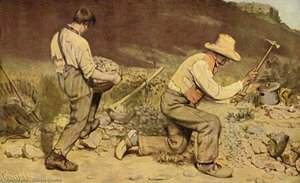
Courbet’s artistic development was characterized by a conscious repudiation of prevailing aesthetic standards. He eschewed mythological tales and heroic allegories, instead focusing intently on the everyday lives of ordinary individuals – particularly laborers and rural inhabitants. This commitment to depicting the world without embellishment—a stance that would soon become synonymous with Realism—encountered vehement opposition from critics accustomed to idealized representations steeped in romantic sentimentality. Early canvases explored landscapes and portraits; however, he swiftly transitioned toward scenes of working-class existence, rendered on monumental scales traditionally reserved for grand historical or religious paintings. This deliberate choice wasn’t merely stylistic; it was a declaration about the inherent dignity and significance of subjects often marginalized by artistic discourse. The Stone Breakers (1849), tragically destroyed during World War II, exemplifies this approach—a stark portrayal of two laborers toiling under oppressive conditions, their faces obscured by exhaustion and despair. Critics deemed such depictions vulgar and unworthy of serious consideration, highlighting the profound challenge Courbet posed to the prevailing artistic sensibilities of his time.Major Works and Artistic Philosophy
Courbet’s artistic philosophy extended beyond subject matter to encompass technique. He championed a direct, impasto style—applying paint thickly onto the canvas—that prioritized the materiality of the medium itself. This method deliberately rejected the smooth surfaces favored by academic painters, emphasizing texture and physicality as crucial elements of visual expression. His most celebrated paintings include A Burial at Ornans (1850-51), a monumental canvas depicting a provincial funeral that provoked considerable controversy upon its exhibition. Unlike Romantic artists who sought to elevate emotion and inspire awe, Courbet presented the mourners with unflinching realism—faces etched with sorrow, boredom, and resignation—challenging viewers to confront uncomfortable truths about human experience. Similarly, Château du Chillon (1874), a breathtaking depiction of the medieval castle overlooking Lake Geneva, showcases Courbet’s meticulous attention to detail and his masterful command of light and color. He sought to capture not merely what he saw but also how it felt—a profound ambition that resonated deeply with fellow artists grappling for new modes of artistic representation.Legacy and Historical Significance
Gustave Courbet's influence on subsequent art movements is undeniable. While acknowledging debts to earlier masters like Caravaggio for their dramatic realism and use of chiaroscuro, his impact transcended mere imitation. He fundamentally reshaped the landscape of painting by liberating artists from the constraints of tradition—encouraging them to explore uncharted territories of visual perception. His unwavering advocacy for artistic freedom cemented his position as a champion of intellectual dissent and fueled the burgeoning movement toward socially engaged art. Courbet’s participation in the Salon des Refusés (1863)—an audacious defiance of official censure—solidified his reputation as an iconoclastic rebel who refused to compromise on his convictions. He died peacefully in Paris on April 29, 1877, leaving behind a legacy that continues to inspire artists and scholars alike – a testament to the transformative power of art to confront societal norms and illuminate the complexities of human existence.
Gustave Courbet
1819 - 1877 , Frankrijk
Belangrijkste feiten
- Artistic Movement Or Style: Realisme
- Artists Or Movements Influenced By This Artist:
- Impressionisme
- Post-impressionisme
- Artists Who Influenced This Artist:
- Eugène Delacroix
- Théodore Géricault
- Caravaggio
- Date Of Birth: 10 juni 1819
- Date Of Death: 31 december 1877
- Full Name: Gustave Courbet
- Nationality: Frans
- Notable Artworks:
- De Steenbakers
- Een begrafenis te Ornans
- De Schilderstudio
- Place Of Birth: Orléans, Frankrijk
Gerelateerde artikelen
Top 10 Realistische Meesterwerken: Kunstgeschiedenis voor uw Interieur | OriginalUniqueArt.com
Ontdek de 10 meest iconische meesterwerken van het Realisme! Van Courbet tot Millet, leer over de kunstenaars, technieken & impact. Vind museumkwaliteit reproducties voor uw interieur op OriginalUniqueArt.com. Exploreer de collectie online!

Romantic Realism's Finest: 10 Masterpieces for Your Home | OriginalUniqueArt
Explore 10 defining masterpieces of Romantic Realism! Discover Courbet, Millet & Daumier's powerful paintings—capturing emotion and social realities. Find museum-quality reproductions for your home at OriginalUniqueArt.com.
The Poetic Truth of Observation: Exploring 19th-Century Realism in Painting
Explore the captivating world of 19th-century Realism! Discover key artists like Courbet & Millet, masterpieces, and the powerful social commentary behind this influential art movement. Expert insights at OriginalUniqueArt.
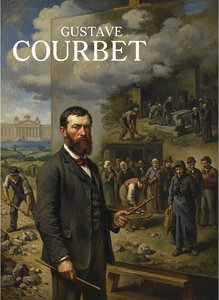
Gustave Courbet: Realism's Revolutionary Vision & the Social Canvas of 19th-Century France
Explore the revolutionary art of Gustave Courbet, pioneer of Realism. Discover his iconic paintings, social commentary, and lasting impact on 19th-century French art history. Expert analysis & insights.
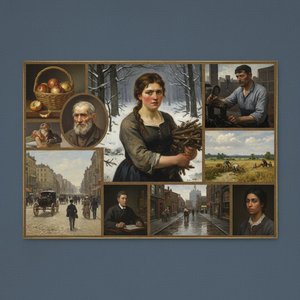
Top 10 Realistische Kunstwerken: Meesterwerken & Verhalen voor aan de Muur
Ontdek de 10 meest iconische realistische kunstwerken! Van Courbet tot Millet, leer over meesterlijke technieken & verhalen achter deze tijdloze schilderijen. Vind museumkwaliteit reproducties voor jouw interieur op OriginalUniqueArt.com.