Bekijk op ware grootte
 Verstuur
 Delen
Delen
 Details bekijken
 Gids voor studentenkunstwerken

 Download
 Vergelijkbare items
 Röntgenonderzoek
 Diavoorstelling
 Statistieken
De Forel
 Olieverf op canvas
- Wanddecoratie
- Realistische terugkeer
 1873
1873- 19e eeuw
 65.0 x 98.0 cm
 Musée d'Orsay
 Lees meer
Giclée / Kunstafdrukken
Giclée- of canvasafdruk van museumkwaliteit met een snelle productie en flexibele afwerkingsmogelijkheden. ( Koop handgeschilderd kunstwerk Schakel over naar digitale afbeeldingen)




P118B €10

P118H €10

P118W €10

P438Z €10

P508JH €12

P508YH €12

P805H €10

P805Z €10

P919BZ €10

P919G €10

P919XJ €10

P959ZH €10

P968JZ €12

W106C €8

W218G €10

W218JH €8

W218Y €10

W307PJ €10

W316G €10

W316PJ €8

W316Y €10

W398PJ €8

W4111J €10

W500HY €15

W500JH €15

W692G €12

W849H €8

W940BG €15

W953PJ €8




Kies uit onze vooraf ingestelde maten die overeenkomen met de originele verhoudingen van het kunstwerk.

Voer de breedte en de hoogte in die u nodig heeft, passend bij uw lijst of uw muur. Een afdruk kan alleen worden ingekort, nooit groter worden gemaakt dan het origineel, waardoor een formaat met een andere verhouding een deel van de afbeelding verliest. Wij sturen u een digitaal mockup ter goedkeuring voordat we iets drukken. De afbeelding op deze pagina toont niet de werkelijke uitsnede — dit is alleen te zien op het mockup.
Wereldwijde levering () binnen 2 weken in plaats van de standaard 4/5 weken. (22 oktober)

Gratis wereldwijde expressverzending

Hoogwaardig linnen canvas

Volledige verzendverzekering

Garantie op terugbetaling van invoerrechten

Garantie op exacte kleurweergave

Retourbeleid van 100 dagen (alleen bij defecten)

100% Geld-terug-garantie

Korting bij meerdere afnames
 De optie voor glas is alleen beschikbaar bij een formaat kleiner dan 110 cm.

De Forel
Giclée / Kunstafdrukken
Formaat reproductie
-


Totaalprijs
€ 71
De Forel: Een Studie in Realisme door Gustave Courbet
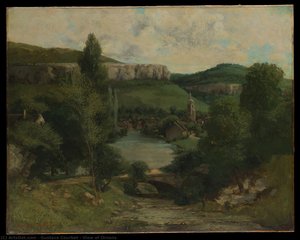
Gustave Courbet, een spilfiguur in de 19e-eeuwse Franse schilderkunst en de onbetwiste leider van de realistische stroming, schiep in 1873 "De Forel". Dit olieverfwerk op canvas, met afmetingen van 65 x 98 cm, bevindt zich tegenwoordig in het vooraanstaande Musée d'Orsay in Parijs, Frankrijk. Het kunstwerk is een perfect voorbeeld van Courbets toewijding aan het weergeven van de natuur met onverzettelijke nauwkeurigheid en een scherp oog voor alledaagse onderwerpen.
Een Realistische Weergave van de Natuur
“De Forel” presenteert een treffend realistische weergave van een grote bruine forel die rust op een bed van rotsen nabij het water. De vis, die schijnbaar gevangen of reeds overleden is, ligt bewegingsloos voor de toeschouwer, zonder enige poging tot idealisering. Courbets meesterschap komt duidelijk naar voren in de minutieuze weergave van de schubben, vinnen en de spiermassa van de forel, wat resulteert in een ongelooflijk levendige representatie. De scène roept een gevoel van stille observatie op, die de kijker uitnodigt tot contemplatie over de schoonheid en de kwetsbaarheid van de natuur.
Artistieke Stijl: Het Omarmen van het Realisme
De artistieke stijl van Courbet in “De Forel” is stevig geworteld in zijn verbintenis met het Realisme. Door de conventies van de academische schilderkunst en de geromantiseerde visies van eerdere stromingen te verwerpen, streefde Courbet ernaar de wereld weer te geven zoals hij die direct observeerde. Deze benadering was revolutionair voor die tijd; het daagde gevestigde normen uit en plaveide de weg voor latere artistieke ontwikkelingen zoals het Impressionisme en het Cubisme. Het gebrek aan versiering in het schilderij en de focus op een alledaags onderwerp — een enkele forel — onderstreept zijn toewijding om de realiteit zonder kunstmatigheid te portretteren.
Het Leven en de Context van Courbet
Gustave Courbet, geboren op 10 juni 1819 in Ornans, Frankrijk, leidde een leven dat werd gekenmerkt door zowel artistieke innovatie als sociale kritiek. Zijn werk weerspiegelde vaak de realiteit van het arbeidersbestaan en daagde maatschappelijke normen uit. Na zijn betrokkenheid bij de Parijse Commune in 1871, kreeg hij te maken met juridische repercussies en leefde hij uiteindelijk in ballingschap in Zwitserland tot aan zijn dood in 1877. “De Forel”, gecreëerd tijdens deze turbulente periode, kan worden geïnterpreteerd als een reflectie van Courbets persoonlijke omstandigheden — een gevoel van gevangenschap en misschien zelfs een symbolische representatie van hemzelf als iemand die gevangen of onderworpen is.
Symboliek en Emotionele Impact
Naast de technische briljantie draagt "De Forel" lagen van symboliek in zich. De forel zelf staat symbool voor kracht, veerkracht en de inherente macht van de natuur. De stilte van het dier kan worden geïnterpreteerd als een moment van verstilde bezinning, wat de kijker uitnodigt om schoonheid te waarderen in zelfs de meest schijnbaar gewone onderwerpen. Het gedempte kleurenpalet — gedomineerd door bruin, grijs en groen — creëert een sombere maar realistische atmosfeer, die een gevoel van rust en introspectie oproept. Uiteindelijk is “De Forel” niet louter de afbeelding van een vis; het is een krachtig statement over de toewijding van de kunstenaar aan het realisme en zijn diepe verbondenheid met de natuurlijke wereld.
Vragen & Antwoorden
Kan ik een olieverfreproductie van "De Forel" bestellen?
U kunt een met de hand geschilderde reproductie van "De Forel" door Gustave Courbet rechtstreeks bestellen op de Met de hand geschilderde reproductie pagina: een met de hand geschilderde olieverfreproductie op linnen canvas, op bestelling vervaardigd.
Welk gevoel roept "De Forel" door Gustave Courbet op?
De vastgelegde stemming van "De Forel" door Gustave Courbet is Rustgevend, en de emotionele toon ervan is Reflectief.
Kan ik "De Forel" door Gustave Courbet op mijn eigen muur bekijken voordat ik het koop?
"De Forel" door Gustave Courbet kan worden voorgeproefd op uw eigen muur via de AR-voorvertoning-pagina van het kunstwerk, met behulp van augmented reality op een compatibel apparaat.
Biografie van de kunstenaar
A Rebel’s Brush: The Life and Legacy of Gustave Courbet
Jean Désiré Gustave Courbet, born in Ornans, France, on June 10, 1819, stands as a monumental figure in the history of art – a defiant iconoclast who irrevocably altered the trajectory of painting during the mid-nineteenth century. More than simply capturing visual impressions; his artistic journey embodies a profound rejection of convention and an unwavering dedication to portraying reality with uncompromising honesty. His upbringing within a moderately prosperous bourgeois family fostered an early appreciation for artistic pursuits, nurtured by his mother’s encouragement – a formative influence that propelled him toward a revolutionary vision of artistic expression. Formal training commenced at the École des Beaux-Arts in Paris in 1839, yet Courbet swiftly recognized the stifling limitations imposed by academic dogma and Romantic idealism. While acknowledging debts to artists like Eugène Delacroix and Théodore Géricault – figures who championed dramatic emotion and historical narrative – Courbet resolutely forged his own path, prioritizing observation over imagination and truth above all else. This deliberate divergence from established artistic norms would define his entire career and establish him as the undisputed leader of Realism.The Birth of Realism: Challenging Artistic Conventions
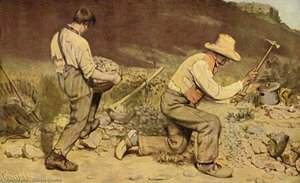
Courbet’s artistic development was characterized by a conscious repudiation of prevailing aesthetic standards. He eschewed mythological tales and heroic allegories, instead focusing intently on the everyday lives of ordinary individuals – particularly laborers and rural inhabitants. This commitment to depicting the world without embellishment—a stance that would soon become synonymous with Realism—encountered vehement opposition from critics accustomed to idealized representations steeped in romantic sentimentality. Early canvases explored landscapes and portraits; however, he swiftly transitioned toward scenes of working-class existence, rendered on monumental scales traditionally reserved for grand historical or religious paintings. This deliberate choice wasn’t merely stylistic; it was a declaration about the inherent dignity and significance of subjects often marginalized by artistic discourse. The Stone Breakers (1849), tragically destroyed during World War II, exemplifies this approach—a stark portrayal of two laborers toiling under oppressive conditions, their faces obscured by exhaustion and despair. Critics deemed such depictions vulgar and unworthy of serious consideration, highlighting the profound challenge Courbet posed to the prevailing artistic sensibilities of his time.Major Works and Artistic Philosophy
Courbet’s artistic philosophy extended beyond subject matter to encompass technique. He championed a direct, impasto style—applying paint thickly onto the canvas—that prioritized the materiality of the medium itself. This method deliberately rejected the smooth surfaces favored by academic painters, emphasizing texture and physicality as crucial elements of visual expression. His most celebrated paintings include A Burial at Ornans (1850-51), a monumental canvas depicting a provincial funeral that provoked considerable controversy upon its exhibition. Unlike Romantic artists who sought to elevate emotion and inspire awe, Courbet presented the mourners with unflinching realism—faces etched with sorrow, boredom, and resignation—challenging viewers to confront uncomfortable truths about human experience. Similarly, Château du Chillon (1874), a breathtaking depiction of the medieval castle overlooking Lake Geneva, showcases Courbet’s meticulous attention to detail and his masterful command of light and color. He sought to capture not merely what he saw but also how it felt—a profound ambition that resonated deeply with fellow artists grappling for new modes of artistic representation.Legacy and Historical Significance
Gustave Courbet's influence on subsequent art movements is undeniable. While acknowledging debts to earlier masters like Caravaggio for their dramatic realism and use of chiaroscuro, his impact transcended mere imitation. He fundamentally reshaped the landscape of painting by liberating artists from the constraints of tradition—encouraging them to explore uncharted territories of visual perception. His unwavering advocacy for artistic freedom cemented his position as a champion of intellectual dissent and fueled the burgeoning movement toward socially engaged art. Courbet’s participation in the Salon des Refusés (1863)—an audacious defiance of official censure—solidified his reputation as an iconoclastic rebel who refused to compromise on his convictions. He died peacefully in Paris on April 29, 1877, leaving behind a legacy that continues to inspire artists and scholars alike – a testament to the transformative power of art to confront societal norms and illuminate the complexities of human existence.
Gustave Courbet
1819 - 1877 , Frankrijk
Snelle feiten
- Artistic Movement Or Style: Realisme
- Artists Or Movements Influenced By This Artist:
- Impressionisme
- Post-impressionisme
- Artists Who Influenced This Artist:
- Eugène Delacroix
- Théodore Géricault
- Caravaggio
- Date Of Birth: 10 juni 1819
- Date Of Death: 31 december 1877
- Full Name: Gustave Courbet
- Nationality: Frans
- Notable Artworks:
- De Steenbakers
- Een begrafenis te Ornans
- De Schilderstudio
- Place Of Birth: Orléans, Frankrijk
Gerelateerde artikelen
Top 10 Realistische Meesterwerken: Kunstgeschiedenis voor uw Interieur | OriginalUniqueArt.com
Ontdek de 10 meest iconische meesterwerken van het Realisme! Van Courbet tot Millet, leer over de kunstenaars, technieken & impact. Vind museumkwaliteit reproducties voor uw interieur op OriginalUniqueArt.com. Exploreer de collectie online!

Romantic Realism's Finest: 10 Masterpieces for Your Home | OriginalUniqueArt
Explore 10 defining masterpieces of Romantic Realism! Discover Courbet, Millet & Daumier's powerful paintings—capturing emotion and social realities. Find museum-quality reproductions for your home at OriginalUniqueArt.com.
Top 25 Meesterwerken Musée d'Orsay: Kunst, Geschiedenis & Decor Inspiratie
Ontdek de top 25 meesterwerken van het Musée d'Orsay! Van Monet’s impressionisme tot Van Gogh’s emotionele kracht. Leer over kunst, geschiedenis & vind perfecte reproducties voor uw interieur op OriginalUniqueArt.com.
Gustav Klimt's Top 25 Meesterwerken: Kunst, Geschiedenis & Decoratie | OriginalUniqueArt
Ontdek de top 25 meesterwerken van Gustav Klimt! Van 'De Kus' tot iconische portretten, duik in zijn gouden fase & symbolisme. Vind museumkwaliteit Klimt reproducties en inspiratie voor uw interieur op OriginalUniqueArt.com.
Gustave Courbet: Realism's Revolutionary Vision & the Social Canvas of 19th-Century France
Explore the revolutionary art of Gustave Courbet, pioneer of Realism. Discover his iconic paintings, social commentary, and lasting impact on 19th-century French art history. Expert analysis & insights.