
 Bekijk op ware grootte
 Verstuur
 Delen
Delen
 Details bekijken
 Gids voor studentenkunstwerken

 Download
 Vergelijkbare items
 Röntgenonderzoek
 Diavoorstelling
 Statistieken
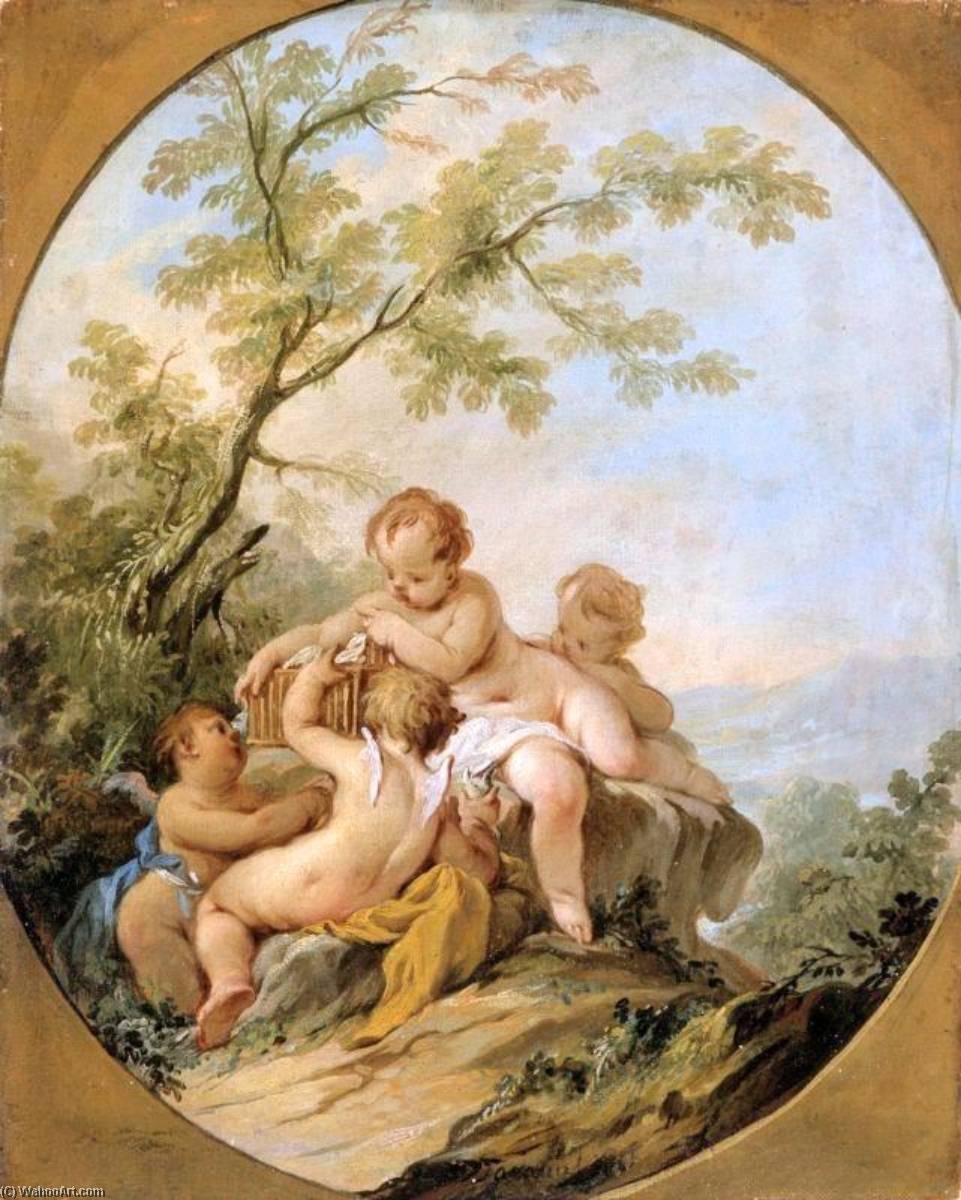
Four Putti Playing with a Birdcage

 Lees meer
Giclée / Kunstafdrukken
Giclée- of canvasafdruk van museumkwaliteit met een snelle productie en flexibele afwerkingsmogelijkheden. ( Koop handgeschilderd kunstwerk Schakel over naar digitale afbeeldingen)




































Kies uit onze vooraf ingestelde maten die overeenkomen met de originele verhoudingen van het kunstwerk.

U kunt uw eigen afmetingen opgeven om in een specifieke lijst of ruimte te passen. Als de door u gekozen maat niet overeenkomt met de proporties van het originele kunstwerk, zullen wij de afbeelding bijsnijden of uitbreiden met een gespiegelde of effen rand. Een digitaal mockup wordt ter goedkeuring naar u verzonden voordat de productie begint.
Houd er rekening mee dat de preview op het scherm de werkelijke bijsneding of uitbreiding niet weergeeft. Alleen de mockup toont de uiteindelijke compositie nauwkeurig.
Hoewel aangepaste maten beschikbaar zijn, raden wij aan een afmeting uit de vooraf bepaalde lijst te kiezen om de originele proporties te behouden.
Wereldwijde levering () binnen 2 weken in plaats van de standaard 4/5 weken. (26 september)

Gratis wereldwijde expressverzending

Hoogwaardig linnen canvas

Volledige verzendverzekering

Garantie op terugbetaling van invoerrechten

Garantie op exacte kleurweergave

Retourbeleid van 100 dagen (alleen bij defecten)

100% Geld-terug-garantie

Korting bij meerdere afnames
 De optie voor glas is alleen beschikbaar bij een formaat kleiner dan 110 cm.

Four Putti Playing with a Birdcage
Giclée / Kunstafdrukken
Formaat reproductie
-


Totaalprijs
$ 81
Biografie van de kunstenaar
A Visionary of the Rococo: The Life and Legacy of Guillaume Thomas Taraval
In the grand, gilded corridors of eighteenth-century Europe, few artists possessed the transformative vision of Guillaume Thomas Taraval. Born in Paris in 1701 into a lineage steeped in the fine arts, Taraval’s early years were shaped by both profound loss and exceptional mentorship. Orphaned at a young age, he was raised by his foster-father, Henry Guillemard, who provided him with his first delicate lessons in the nuances of light and line. This foundational training, later refined under the tutelage of the esteemed Claude Audran, prepared Taraval for a career that would eventually bridge the cultural landscapes of France and Sweden, forever altering the aesthetic trajectory of the North.
Taraval’s arrival in Stockholm in 1732 marked the beginning of a profound artistic revolution. At a time when Swedish art was largely tethered to the heavy, somber traditions of the Baroque, Taraval introduced the airy, luminous, and playful spirit of the French Rococo. His presence in the capital was not merely that of a visiting painter but of a cultural pioneer. Within the opulent halls of the Stockholm Palace, he breathed new life into the ceilings and walls, replacing rigid structures with asymmetrical compositions, delicate pastel palettes, and an effortless sense of movement that seemed to defy the very architecture he adorned.
Mastery of Form and the Rococo Spirit
The brilliance of Taraval’s technique lay in his ability to marry monumental scale with intimate grace. He was a master of the ceiling painting, creating vast, ethereal vistas that invited the viewer to look upward into worlds of mythological splendor and pastoral tranquility. His work often featured:
- Mythological Allegories: Reimagining classical legends through a lens of idealized beauty and harmony.
- Pastoral Serenity: Capturing the gentle, romanticized essence of nature and landscape.
- Ornate Ornamentation: Utilizing the intricate, swirling motifs characteristic of the Rococo movement to enhance decorative surfaces.
Beyond these grand architectural commissions, Taraval demonstrated a remarkable versatility that allowed him to navigate various genres with equal finesse. His portraits captured the dignity and elegance of the Swedish nobility, while his still lifes showcased an exquisite, almost scientific devotion to botanical detail. Even in his more religious works, such as his altarpieces, one can sense the influence of his French training—a lightness of touch that brought a sense of divine grace through soft light and fluid forms.
Architect of an Artistic Institution
Taraval’s significance extends far beyond the aesthetic beauty of his canvases; he was a foundational architect of Swedish art education. In 1735, he was appointed as the inaugural director of the Royal Swedish Academy of Arts, a position he held until his death in 1750. This was a watershed moment for the region, as it established a formal sanctuary for scholarship, experimentation, and the cultivation of new talent. Through this institution, Taraval ensured that the principles of excellence and humanist ideals would be passed down to future generations of Scandinavian artists.
Even as he sought to modernize Swedish taste, Taraval remained deeply connected to the pulse of Parisian innovation. His journey back to Paris in 1739 allowed him to study the latest developments in French art, a period of intellectual renewal that he brought back to Stockholm upon his return in 1740. This continuous dialogue between the established traditions of France and the emerging needs of Sweden defined his career. When he passed away in Stockholm, he left behind more than just a collection of beautiful paintings; he left a legacy of cultural sophistication and an institutional framework that would sustain the Swedish art world for centuries to come.

guillaume thomas taraval
1701 - 1750
Snelle feiten
- Artistic Movement Or Style: Rococo
- Artists Or Movements Influenced By This Artist: ['Swedish Rococo']
- Artists Who Influenced This Artist: ['Jean Oudry']
- Date Of Birth: 1701
- Date Of Death: 1750
- Full Name: Guillaume Thomas Taraval
- Nationality: French
- Notable Artworks:
- Group of Angels
- Female Figures with Putti in a Landscape
- Four Putti Playing with a Birdcage
- Place Of Birth: Paris, France