
 Voorvertoning
 Verstuur
 Delen
Delen
 Details bekijken
 Gids
Gids

 Download
 Vergelijkbare items
 Röntgenonderzoek
 Diavoorstelling
 Vraag & antwoord
 Statistieken
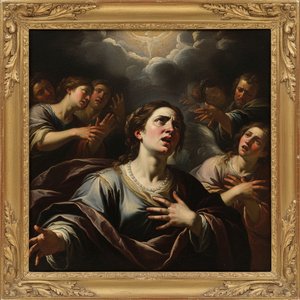
Susanna and the Elders

- 144.0 x 173.0 cm


 Lees meer
Giclée / Kunstafdrukken
Giclée- of canvasafdruk van museumkwaliteit met een snelle productie en flexibele afwerkingsmogelijkheden. ( Bestel handgeschilderde reproductie Schakel over naar digitale afbeeldingen)




P118B €10

P118H €10

P118W €10

P438Z €10

P508JH €12

P508YH €12

P805H €10

P805Z €10

P919BZ €10

P919G €10

P919XJ €10

P959ZH €10

P968JZ €12

W106C €8

W218G €10

W218JH €8

W218Y €10

W307PJ €10

W316G €10

W316PJ €8

W316Y €10

W398PJ €8

W4111J €10

W500HY €15

W500JH €15

W692G €12

W849H €8

W940BG €15

W953PJ €8




Kies uit onze vooraf ingestelde maten die overeenkomen met de originele verhoudingen van het kunstwerk.

Voer de gewenste breedte en hoogte in, passend bij uw lijst of muur. Een afdruk kan alleen worden ingekort en nooit groter worden gemaakt dan het origineel; een formaat met andere verhoudingen zal daarom een deel van de afbeelding verliezen. Wij sturen u een digitaal mockup ter goedkeuring voordat we tot drukwerk overgaan. De afbeelding op deze pagina toont niet de werkelijke uitsnede — dit is alleen te zien op het mockup.
Wereldwijde levering () binnen 2 weken in plaats van de standaard 4/5 weken. (6 november)

Gratis wereldwijde expressverzending

Hoogwaardig linnen canvas

Volledige verzendverzekering

Garantie op terugbetaling van invoerrechten

Garantie op exacte kleurweergave

Retourbeleid van 100 dagen (alleen bij defecten)

100% Geld-terug-garantie

Korting bij meerdere afnames
 De optie voor glas is alleen beschikbaar bij een formaat kleiner dan 110 cm.

Susanna and the Elders
Giclée / Kunstafdrukken
Afmetingen reproductie
-


Eindtotaal
€ 72
The Enigmatic Scene: Guido Cagnacci’s Susanna and the Elders
Guido Cagnacci's “Susanna and the Elders” is not merely a depiction of a biblical narrative; it’s an immersion into the sensual drama and psychological tension that defined the height of the Bolognese Baroque. Painted around 1627-1630, this arresting work resides within the hallowed halls of The Hermitage Museum in St. Petersburg, Russia, yet its power transcends geographical boundaries, captivating viewers with a masterful blend of classical restraint and intensely felt emotion. Cagnacci, born in Sant'Arcangelo di Romagna, skillfully inherited and expanded upon the traditions of his predecessors – Reni, Carracci – while forging a distinctly personal style characterized by rich color palettes, dramatic chiaroscuro, and an uncanny ability to capture the fleeting expressions of human desire.
A Story of Deception and Virtue
The narrative unfolds with a quiet intensity, centered around Susanna, a young woman renowned for her beauty and virtue. She is depicted in a moment of vulnerability – seated on a simple bench within a private garden, bathed in the diffused light of an unseen window. Her gaze, direct and unwavering, draws the viewer into the scene, creating an immediate connection between subject and observer. Behind her, two elderly men, figures of authority and presumed wisdom, lurk in shadow, their faces etched with lustful intent. The Elders, driven by a desperate desire for Susanna, have falsely accused her of adultery, threatening to expose her shame to the community. This isn’t a grand, operatic drama; it's a slow-burning revelation of deceit and the struggle between innocence and corruption.
Cagnacci masterfully utilizes composition to heighten this tension. The diagonal lines created by Susanna’s posture and the placement of the Elders draw our eye across the canvas, emphasizing their proximity and the potential danger she faces. The mirror reflecting her image adds a layer of self-awareness, suggesting that even in her vulnerability, Susanna retains a sense of dignity and control.
Technique and Artistic Flourishes
Cagnacci’s technical prowess is immediately apparent in the painting's rich textures and luminous colors. He employs a masterful use of chiaroscuro – the dramatic contrast between light and shadow – to sculpt Susanna’s form and create a sense of depth within the intimate setting. The warm hues of her dress and skin stand in stark opposition to the cool, shadowed figures of the Elders, further emphasizing their moral corruption. The brushwork is remarkably smooth and refined, indicative of Cagnacci's meticulous attention to detail. Note particularly the delicate rendering of the fabric folds, the subtle nuances of expression on Susanna’s face, and the atmospheric quality of the background – a dark, suggestive space that hints at both danger and mystery.
The painting is executed in oil on canvas, measuring 144 x 173 cm. The scale allows for a remarkable level of detail and intimacy, drawing the viewer into the heart of the drama. The artist’s choice to depict Susanna partially clothed – seated on a bench with only her dress covering her body – is deliberate, inviting contemplation about themes of modesty, virtue, and the vulnerability of women in a patriarchal society.
Symbolism and Enduring Resonance
Beyond its biblical subject matter, “Susanna and the Elders” resonates with broader themes of justice, deception, and the triumph of truth. The painting serves as a potent allegory for the dangers of false accusations and the importance of upholding moral integrity. The mirror reflects not only Susanna’s image but also the viewer's own reflection, prompting us to consider our own roles in witnessing and challenging injustice. Cagnacci’s work continues to hold relevance today, reminding us of the timeless struggle between virtue and vice, and the enduring power of art to illuminate the complexities of human experience.
Veelgestelde vragen
Hoe kan ik "Susanna and the Elders" door Guido Cagnacci bekijken als een diavoorstelling?
De diaporama van "Susanna and the Elders" is te bekijken op de Diavoorstelling-pagina van het kunstwerk.
Wat deelt "Susanna and the Elders" met het overige oeuvre van Guido Cagnacci?
"Susanna and the Elders" deelt met andere werken van Guido Cagnacci de Baroque-stijl en de terugkerende thema's: bolognese school, sensual subjects, religious narrative, moral lesson, courtly painting, aristocratic themes, chiaroscuro, dramatic lighting.
Waar komen de bezoekers van "Susanna and the Elders" door Guido Cagnacci vandaan?
Statistieken over "Susanna and the Elders" door Guido Cagnacci zijn te vinden op de Statistieken-pagina van het kunstwerk: maandelijkse weergaven van het kunstwerk, weergaven van de werken van de kunstenaar en een uitsplitsing naar land en taal van recente bezoekers.
Biografie kunstenaar
Het vroege leven en artistieke begin
Guido Cagnacci, geboren op 19 januari 1601 in de bescheiden stad Sant'Angelo in Romagna, kwam voort uit een familie van ambachtslieden—zijn vader, Matteo Cagnacci, was een looier en bontwerker. Hoewel zijn oorsprong enigszins gehuld blijft in mysterie, met speculaties die wijzen op mogelijke wortels in Castel Durante of Rimini, is het duidelijk dat de jonge Guido over een aangeboren artistiek talent beschikte. In tegenstelling tot veel kunstenaars uit die tijd, die vanaf hun kindertijd rigoureuze formele leertrajecten doorliepen, lijkt Cagnacci grotendeels autodidact te zijn geweest; de achttiende-eeuwse biograaf Giovan Battista Costa beschreef hem als iemand aan wie “zo'n wonderbaarlijk talent uit de natuur was geschonken” dat hij zijn artistieke reis met minimale begeleiding begon. Deze vroegtijdige bekwaamheid leidde ertoe dat zijn vader zocht naar een meer gestructureerde opleiding voor hem, aanvankelijk in Bologna rond 1618 en later tijdens twee verblijven in Rome. Hoewel de exacte identiteit van zijn mentoren onderwerp van debat blijft, wordt algemeen aangenomen dat Ludovico Carracci en Guido Reni zijn vroege ontwikkeling binnen de Bolognese School diepgaand hebben beïnvloed. Deze vormende ervaringen legden de basis voor een stijl die hem uiteindelijk zou onderscheiden als een unieke stem binnen het barokke landschap.Een ontwikkelende stijl: Bologna, Rome en regionale invloeden
Cagnacci’s artistieke educatie beperkte zich niet tot één enkel atelier of stad. Zijn tijd in Bologna stelde hem bloot aan de klassieke idealen en verfijnde technieken van de familie Carracci, terwijl zijn reizen naar Rome hem in contact brachten met de dramatische intensiteit van Guercino en de verfijnde elegantie van Guido Reni. Tijdens zijn Romeinse periodes ontmoette hij ook de Franse schilder Simon Vouet, wat zijn stilistische horizon verder verbredde. Deze samensmelting van invloeden is duidelijk zichtbaar in zijn vroege werken, die vaak devotionele onderwerpen bevatten, uitgevoerd met een groeiende beheersing van chiaroscuro—het dramatische samenspel van licht en schaduw dat een kenmerk werd van de barokke schilderkunst. Cagnatie was echter niet louter een imitator; hij begon zijn composities te doordrenken met een kenmerkende sensualiteit en psychologische diepgang. Na perioden in Bologna en Rome vestigde hij zich als werkend kunstenaar in Rimini van 1627 tot 1642, voordat hij naar Forlì verhuisde. Zijn tijd in Forlì bleek bijzonder betekenisvol, omdat het hem de mogelijkheid bood om de werken van Melozzo da Forlì te bestuderen, wiens innovatieve gebruik van perspectief en dynamische composities zijn artistieke visie verder vormgaven.Volwassen werken: Sensualiteit, drama en controverse
De volwassen fase van Cagnacci’s carrière, die ruwweg loopt van de jaren 1640 tot aan zijn dood in 1663, wordt gekenmerkt door een gedurfde verkenning van sensuele onderwerpen en een steeds geraffineerder gebruik van chiaroscuro. Hij werd beroemd om zijn afbeeldingen van *Maria Magdalena*, vaak afgebeeld als een prachtige, berouwvolle vrouw verloren in extatische contemplatie, en zijn interpretaties van klassieke mythen, in het bijzonder die met *Cleopatra*. Deze schilderijen zijn niet simpelweg oefeningen in technische vaardigheid; ze bezitten een opmerkelijke psychologische intensiteit en een bijna verontrustend realisme. De figuren van Cagnacci zijn doordrenkt met een tastbare fysicaliteit en emotionele kwetsbaarheid die zijn tijdgenoten zowel boeiden als soms schokten. Zijn werk overschreed vaak de grenzen van het aanvaardbare decorum, wat leidde tot beschuldigingen van onzedelijkheid en het uitdagen van de heersende artistieke conventies. De intieme portretten van de kunstenaar kregen eveneens erkenning voor hun vermogen om niet alleen de fysieke gelijkenis, maar ook het innerlijke leven van zijn modellen vast te leggen.Herontdekking en historische betekenis
Ondanks het behalen van aanzienlijk succes tijdens zijn leven—hij genoot bescherming van prominente adellijke families in Romagna en daarbuiten—nam de reputatie van Guido Cagnacci na zijn dood af. Zijn werken raakten voor eeuwen in relatieve vergetelheid, grotendeels vergeten door kunsthistorici en het grote publiek. Pas in de twintigste eeuw werd een gecoördineerde inspanning geleverd om zijn oeuvre te herontdekken en opnieuw te evalueren. Geleerden begonnen de unieke kwaliteiten van zijn stijl te herkennen—het meesterlijke chiaroscuro, het sensuele realisme en de psychologische diepgang—en waardeerden zijn bijdrage aan de barokke traditie. Vandaag de dag wordt Cagnacci gevierd als een belangrijk figuur in de Italiaanse barokschilderkunst, een brug tussen de klassieke idealen van de Bolognese School en de meer dramatische, emotioneel geladen stijlen die later in de eeuw ontstonden. Zijn schilderijen bieden een fascinerend venster op de artistieke gevoeligheid van zijn tijd en dagen ons uit om onze begrip van schoonheid, sensualiteit en de kracht van representatie te heroverwegen. Zijn nalatenschap ligt niet alleen in zijn technische virtuositeit, maar ook in zijn bereidheid om complexe thema's te verkennen en de grenzen van artistieke expressie te verleggen. Het werk van Cagnacci blijft resoneren bij hedendaags publiek, en herinnert ons aan de blijvende kracht van kunst om te provoceren, te inspireren en onze percepties uit te dagen.
Guido Cagnacci
1601 - 1663 , Italië
Belangrijkste feiten
- Artistic Movement Or Style: Barok
- Artists Who Influenced This Artist:
- Ludovico Carracci
- Guido Reni
- Guercino
- Date Of Birth: 19 januari 1601
- Date Of Death: 1663
- Full Name: Guido Cagnacci
- Nationality: Italiaans
- Notable Artworks:
- Maria Magdalena
- Cleopatra schilderijen
- Place Of Birth: Santarcangelo di Romagna, Italië
Gerelateerde artikelen
Chiaroscuro and Soul: A Definitive Guide to the Drama and Emotion of Italian Baroque Masterpieces
Embark on a sophisticated journey through Italian Baroque art. Discover the dramatic interplay of light and emotion in Caravaggio’s masterpieces and explore how to bring this timeless grandeur into your collection with expert art insights.

Barokke Pracht: Kunst die Grootsheid in Huis Brengt
Ontdek de barokke pracht! Leer over de geschiedenis, kenmerken en toepassingen van deze weelderige kunststijl in uw interieur. Laat u inspireren door meesters en breng grootsheid in huis.

Drama and Light: A Definitive Guide to the Italian Baroque Masterpieces and the Revolution of Chiaroscuro
Explore the dramatic world of Italian Baroque art. Discover how masters like Caravaggio used chiaroscuro and tenebrism to revolutionize painting through light, shadow, and profound realism. A definitive guide for history lovers and art collectors.

Top 10 Barok Meesterwerken: Kunstgeschiedenis voor uw Interieur | OriginalUniqueArt.nl
Ontdek de 10 meest iconische Barok meesterwerken van Caravaggio, Rembrandt & Rubens! Duik in de geschiedenis en passie achter deze klassieke schilderijen. Vind museumkwaliteit reproducties voor uw interieur op OriginalUniqueArt.com.

Italian Baroque Unlocked: High-Drama Art That Hits Hard
Dive into the high-drama world of Italian Baroque art. Discover how chiaroscuro, intense emotion, and theatrical lighting redefined aesthetics. Explore the visceral power of the Counter-Reformation through a modern lens with expert insights from OriginalUniqueArt.com.