Bekijk op ware grootte
 Verstuur
 Delen
Delen
 Details bekijken
 Gids voor studentenkunstwerken

 Download
 Vergelijkbare items
 Röntgenonderzoek
 Diavoorstelling
 Statistieken
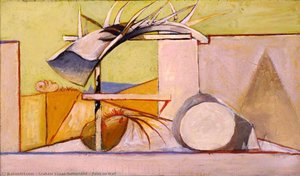
Tree Form
 Oil On Canvas
- WallArt
- Surrealism
 1941
1941 39.0 x 31.0 cm
 Leeds Art Gallery
 Lees meer
De kunstwerken die op deze pagina worden weergegeven, zijn beschermd door de auteursrechtwetgeving, wat betekent dat het ons wettelijk niet is toegestaan om identieke reproducties te maken of te verkopen. Deze bescherming wordt gehandhaafd onder internationale overeenkomsten zoals de Conventie van Bern en door nationale wetgeving, waaronder de bepalingen van de Amerikaanse auteurswet - Titel 17. Alle rechten voorbehouden. Reproduceren of distribueren van afbeeldingen is niet toegestaan zonder uitdrukkelijke schriftelijke toestemming van WahooArt.com en de rechthebbenden.
Als een respectvol en legaal alternatief bieden wij op maat gemaakte, handgeschilderde kunstwerken aan die geïnspireerd zijn op het origineel. Onze bekwame en professionele kunstenaars bestuderen zorgvuldig de stijl, sfeer en artistieke essentie van het origineel om een nieuw, uniek werk te creëren dat dezelfde emotie oproept – terwijl het een op zichzelf staande, originele creatie blijft.
Deze methode voldoet volledig aan de auteursrechtwetgeving, omdat het niet gaat om het kopiëren of dupliceren van het beschermde kunstwerk. In plaats daarvan is er sprake van een creatieve herinterpretatie — een nieuw schilderij dat door het origineel wordt geïnspireerd, maar er niet identiek aan is.
Handgemaakte olieverfreproductie
Met de hand geschilderd in olieverf op canvas in uw gewenste maat en lijst, op bestelling gemaakt door onze kunstenaars. ( Schakel over naar print Schakel over naar digitale afbeeldingen)




P118B €10

P118H €10

P118W €10

P438Z €10

P508JH €12

P508YH €12

P805H €10

P805Z €10

P919BZ €10

P919G €10

P919XJ €10

P959ZH €10

P968JZ €12

W106C €8

W218G €10

W218JH €8

W218Y €10

W307PJ €10

W316G €10

W316PJ €8

W316Y €10

W398PJ €8

W4111J €10

W500HY €15

W500JH €15

W692G €12

W849H €8

W940BG €15

W953PJ €8




Kies uit onze vooraf ingestelde maten die overeenkomen met de originele verhoudingen van het kunstwerk.

Voer de breedte en de hoogte in die u nodig heeft, passend bij uw lijst of uw muur. Dit is handgeschilderd, dus bij een afmeting met een andere vormverhouding kan de kunstenaar iets meer rondom het schilderij schilderen of juist iets meer weglaten — u kiest zelf. Wij sturen u een digitaal mockup ter goedkeuring voordat het schilderwerk begint. De afbeelding die op deze pagina wordt getoond, is niet het uiteindelijke resultaat — alleen de mockup geeft dit weer.
Na de bestelling zal het team van OriginalUniqueArt.com per e-mail contact opnemen met de klant voor instructies en een mockup-voorbeeld sturen.
Wereldwijde levering () binnen 3 tot 4 weken in plaats van de standaard 5 weken. (24 oktober). Zonder concessies aan de kwaliteit.

Gratis wereldwijde expressverzending

Hoogwaardig linnen canvas

Volledige verzendverzekering

Garantie op terugbetaling van invoerrechten

Garantie op exacte kleurweergave

Retourbeleid van 100 dagen (alleen bij defecten)

100% Geld-terug-garantie

Korting bij meerdere afnames
 De optie voor glas is alleen beschikbaar bij een formaat kleiner dan 110 cm.

Tree Form
Reproductiemethode
Formaat reproductie
-


Totaalprijs
€ 263
A Descent into the Organic: Unveiling Graham Vivian Sutherland's "Tree Form"
Graham Vivian Sutherland’s 1941 painting, “Tree Form,” isn’t merely a depiction of a tree; it’s an immersion in primal emotion and a profound exploration of the natural world filtered through the lens of Surrealism. This arresting work, housed within a relatively modest 39 x 31 cm canvas, immediately commands attention with its unsettling yet captivating composition – a colossal, textured creature emerging from a void of deep indigo. It’s a piece that lingers in the mind long after viewing, prompting questions about instinct, vulnerability, and the hidden depths beneath the surface of our perception.
Sutherland, a master of translating the English landscape into intensely personal visions, was deeply influenced by the European avant-garde movements of his time. He wasn’t simply replicating what he saw; he was distilling it – stripping away the familiar and revealing something far more potent. The painting's roots lie in Sutherland’s lifelong fascination with Pembrokeshire, a rugged coastal region in Wales that provided him with an endless source of inspiration. This particular piece embodies his signature style: a masterful blend of meticulous observation and dreamlike abstraction. The work reflects the post-war mood of uncertainty and introspection, mirroring a generation grappling with the aftermath of conflict and searching for new ways to understand themselves and their world.
Decoding Texture and Form: A Study in Impasto
Technically, “Tree Form” is a testament to Sutherland’s remarkable skill. The dominant technique is oil paint applied with a generous hand, utilizing thick impasto – building up layers of pigment to create an incredibly tactile surface. The raised areas, the recessed pools, and the swirling patterns within the creature's scales aren’t merely decorative; they are integral to the painting’s emotional impact. The artist deliberately avoids precise detail, opting instead for a gestural approach that conveys movement and energy. Notice how the brushstrokes themselves seem to writhe and pulsate, mirroring the unsettling quality of the subject.
The color palette is predominantly dark – deep blues, greens, and violets dominate, punctuated by flashes of gold and teal. These colors aren’t used in a harmonious way; they clash and contrast, contributing to the painting's sense of unease. The limited use of brighter hues—particularly the gold—suggests a glimmer of hope or perhaps even a primal instinct struggling to emerge from the darkness. The flattened perspective further enhances this feeling of claustrophobia, drawing the viewer directly into the creature’s shadowed realm.
Symbolism and the Primal Within
While rooted in observation, “Tree Form” transcends simple representation. The central figure – a vaguely reptilian or amphibian form – is open to multiple interpretations. Some scholars suggest it represents the primal instincts that lie dormant within us all, a reminder of our connection to the natural world and its often-unpredictable forces. Others see it as an embodiment of vulnerability, a creature both powerful and exposed. The swirling patterns within its scales could be interpreted as symbols of chaos or perhaps even the interconnectedness of all things.
The painting’s overall mood is undeniably unsettling, yet simultaneously compelling. It evokes feelings of unease, curiosity, and a profound sense of mystery. Sutherland wasn't interested in providing easy answers; he was inviting us to confront our own anxieties and explore the darker corners of the human psyche. “Tree Form” remains a powerful testament to the artist’s ability to transform observation into a deeply personal and emotionally resonant experience.
Vragen & Antwoorden
Hoe kan ik kunstwerken ontdekken die lijken op "Tree Form" door Graham Vivian Sutherland?
Werken die lijken op "Tree Form" staan vermeld op de Vergelijkbare werken-pagina van het kunstwerk.
Is een download met hoge resolutie van "Tree Form" beschikbaar?
Om een digitaal bestand van "Tree Form" door Graham Vivian Sutherland te verkrijgen, kunt u een download van een digitale afbeelding in hoge resolutie bestellen op de Digitale afbeelding pagina.
Waarvan is "Tree Form" gemaakt en in welke stijl?
"Tree Form" door Graham Vivian Sutherland combineert de Oil On Canvas-techniek met de Surrealism-stijl. Techniek en stroming beschrijven de vervaardiging en de stijl van het werk.
Biografie van de kunstenaar
De visionaire landschappen van Graham Vivian Sutherland
Graham Vivian Sutherland, een titan van het Brits modernisme, bezat het zeldzame vermogen om de vertrouwde contouren van de natuurlijke wereld te transformeren tot iets diep verontrustends en spiritueels. Geboren in Streatham, Londen, in 1903, was de reis van Sutherland er een van constante metamorfose. Hoewel zijn vroege jaren werden gevormd door een klassieke opleiding aan het Epsom College, kwam zijn ware roeping voort uit een wereld die ver afstond van de juridische kringen van zijn familie. Zijn eerste stappen in de technische wereld, via een stage bij de Midland Railway Locomotive Works, boden een fundament van precisie dat later zou doorschemeren in zijn complexe prentkunst en getextureerde olieverfschilderende werken. Bij zijn overstap naar de Goldsmiths' School of Art begon Sutherland zich los te maken van traditionele representatie, waarbij hij zich aangetrokken voelde tot de evocatieve kracht van gravures en etsen.
De vroege esthetiek van de kunstenaar was diep geworteld in het romantisme van Samuel Palmer, maar hij weigerde verankerd te blijven aan het verleden. In plaats daarvan fungeerde Sutherland als een brug tussen de Engelse pastorale traditie en de radicale energie van de Europese avant-garde bewegingen. Door de droomachtige logica van het surrealisme en de rauwe emotionaliteit van het expressionisme te absorberen, ontwikkelde hij een visuele taal die zowel het fysieke landschap als de psychologische staat kon vangen. Zijn vroege prenten, gekenmerkt door een gevoel van mysterie en organische vorm, legden de basis voor een carrière die werd gedefinieerd door een obsessie met de "vreemdheid" van de natuur—een thema dat zijn meest blijvende nalatenschap zou worden.
De schaduw van de natuur en de oorlogsjaren
De jaren 40 markeerden een cruciaal tijdperk in de ontwikkeling van Sutherland, aangezien zijn focus verschoof van het delicate medium van de prentkunst naar de viscerale, impasto texturen van de olieverfschilderkunst. Het was tijdens deze periode dat de ruige, door de wind geteisterde landschappen van Pembrokeselijke zijn primaire muze werden. In werken zoals Thorn Tree kan men de meesterschap van de kunstenaar getuigen in het versmelten van botanische realiteit met surrealistische vervorming. Hij schilderde niet louter bomen; hij schilderde de spanning, de strijd en de skeletachtige architectuur van het leven zelf. Deze periode zag hem bewegen naar een meer abstracte, maar diep symbolische manier van kijken, waarbij doorns, wortels en kronkelende takken dienden als metaforen voor menselijke kwetsbaarheid en veerkracht.
De Tweede Wereldoorlog bracht een andere, somberdere dimensie in zijn werk. In zijn rol als officieel oorlogskunstenaar richtte Sutherland zijn blik op de industriële en vaak spookachtige scènes van het Britse thuisfront. Zijn schilderijen uit deze tijd, zoals Flying Bomb Depot The Caverns, zijn meesterwerken van atmosfeer. Door middel van zware texturen en een palet dat zowel verval als angst oproept, legde hij de ijzingwekkende verlatenheid van interieurs tijdens de oorlog vast. Deze werken waren niet louter documentatie; het waren psychologische portretten van een tijdperk dat werd getekend door angst en de dreigende aanwezigheid van vernietiging, een reflectie van de verscheurde realiteit van een wereld in oorlog.
Een nalatenschap van symboliek en grandeur
In de naoorlogse jaren steeg het werk van Sutherland naar nieuwe hoogten van spirituele en publieke betekenis. Hij begon religieuze symboliek te integreren met zijn organische motieven, waardoor een krachtige synthese van het heilige en het natuurlijke ontstond. Dit culmineerde in een van zijn meest monumentale prestaties: het ontwerp van het enorme centrale wandtapijt voor de nieuwe kathedraal van Coventry, getiteld Christ in Glory in the Tetramorph. Dit werk, waarin hij zijn vermogen om vorm en kleur op grote schaal te manipuleren ten volle benutte, staat als een testament voor zijn rol in de culturele wederopbouw van het naoorlogse Groot-Brittannië.
Gedurende zijn vruchtbare carrière stelde de veelzijdigheid van Sutherland hem in staat om een onuitwisbare indruk achter te laten in meerdere disciplines:
- Portretkunst: Zijn vermogen om de psychologische diepgang van publieke figuren vast te leggen, zoals zijn waardige en melancholische Somerset Maugham.
- Prentkunst: Een levenslange toewijding aan de precisie van etsen en graveren die zijn gevoel voor lijn en structuur vormgaf.
- Toegepaste kunst: Zijn bijdragen aan wandtapijtontwerp en glaskunst, waarmee hij moderne abstractie naar het domein van functionele schoonheid bracht.
Uiteindelijk blijft Graham Sutherland een hoeksteen van de 20e-eeuwse kunst omdat hij durfde te kijken naar wat zich onder het oppervlak van het landschap bevond. Hij vond het surrealistische in het reële en het goddelijke in het organische. Zijn nalatenschap is niet alleen te vinden in musea, maar ook in de manier waarop wij de verborgen, vaak grillige schoonheid van de wereld om ons heen waarnemen—een wereld waarin elke doorn een verhaal bevat en elke schaduw een mysterie herbergt.

Graham Vivian Sutherland
1903 - 1980 , Verenigd Koninkrijk
Snelle feiten
- Artistic Movement Or Style: Surrealism
- Artists Or Movements Influenced By This Artist: ['Paul Nash']
- Artists Who Influenced This Artist:
- Samuel Palmer
- F.L. Griggs
- Date Of Birth: August 24, 1903
- Date Of Death: February 17, 1980
- Full Name: Graham Vivian Sutherland
- Nationality: British
- Notable Artworks:
- Flying Bomb Depot
- Entrance to a Lane
- Place Of Birth: London, England
Gerelateerde artikelen

Top 10 Meesterwerken gedomineerd door 'Slate Blue': Kunst voor uw interieur
Ontdek 10 beroemde schilderijen gedomineerd door de prachtige tint 'Slate Blue'. Van Monet tot Van Gogh, leer over kunstgeschiedenis & techniek. Museumkwaliteit reproducties voor uw interieur op OriginalUniqueArt.com! Ontdek de collectie online.

Top 10 Meesterwerken van de Geometrische Abstractie | OriginalUniqueArt.nl
Ontdek de 10 meest invloedrijke meesterwerken van de geometrische abstractie! Van Mondriaan tot Malevich, leer over kunstenaars, technieken & kleuren. Museumkwaliteit reproducties op OriginalUniqueArt.com – voor een unieke interieurstijl.

Kandinsky's Meesterwerken: 25 Abstracte Kunstparels voor uw Interieur | OriginalUniqueArt
Ontdek de 25 meest iconische werken van Wassily Kandinsky! Duik in zijn abstracte wereld vol kleur, expressionisme & spirituele diepgang. Vind museumkwaliteit reproducties en interieurinspiratie op OriginalUniqueArt.com.

The Allure of Azure: Exploring the Symbolic & Aesthetic Depths of Blue in Art History
Explore the rich history of blue in art! Discover its symbolism, from ancient pigments to modern masterpieces by Kandinsky & Seurat. Uncover the psychological impact and cultural meanings behind this captivating hue.

Top 10 Abstract Expressionisme Meesterwerken: Kunst voor uw Interieur | OriginalUniqueArt.com
Ontdek de 10 meest invloedrijke werken van Abstract Expressionisme! Leer over Jackson Pollock, Mark Rothko & meer. Museumkwaliteit kunst reproducties voor uw interieur. Bekijk de collectie op OriginalUniqueArt.com.