
 Voorvertoning
 Verstuur
 Delen
Delen
 Details bekijken

 Download
 Vergelijkbare items
 Röntgenonderzoek
 Diavoorstelling
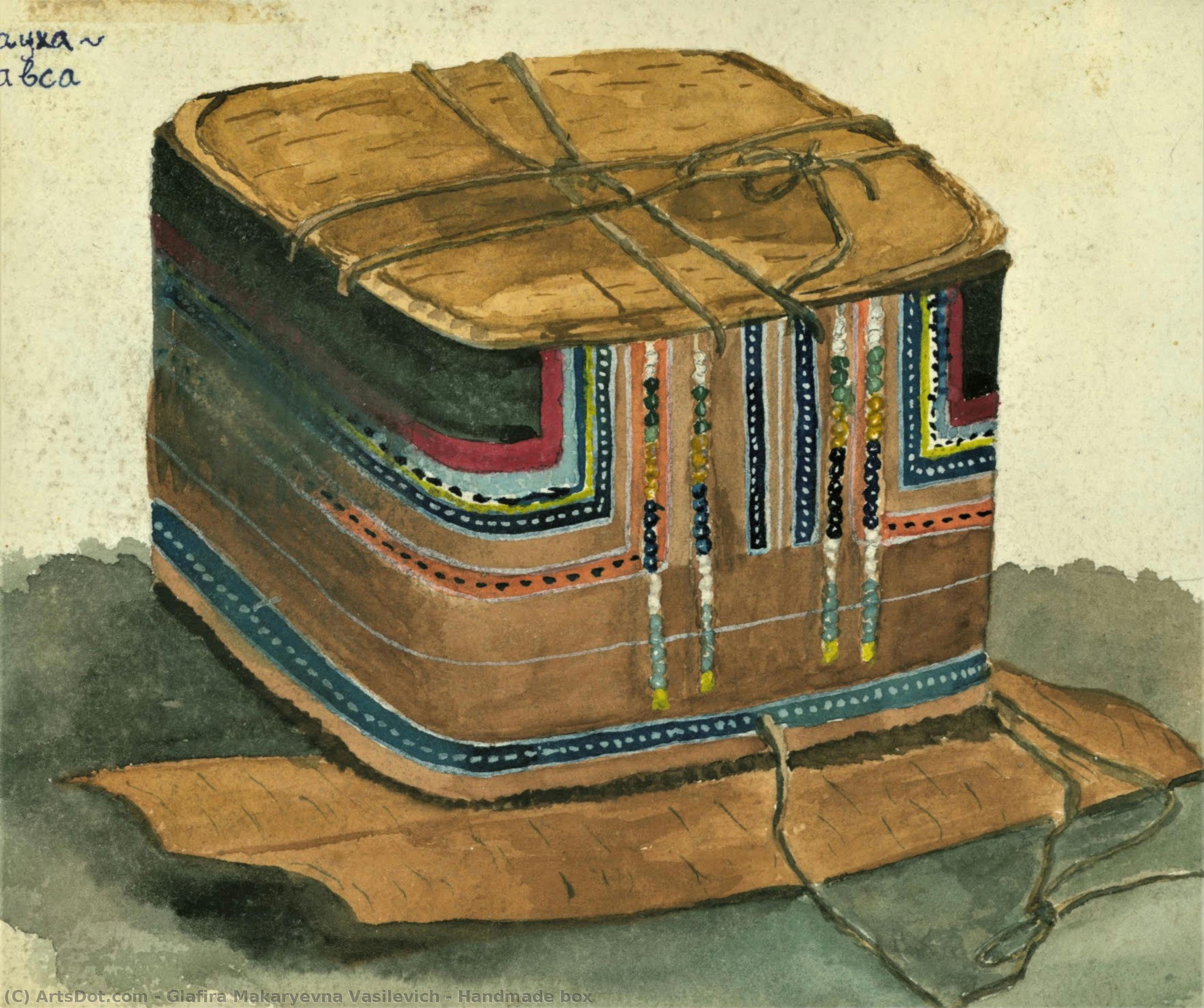
Handmade box

 Lees meer
Koop een digitale afbeelding in hoge resolutie met verbeterde kwaliteit, die veel superieur is aan de online voorvertoning.
Elk bestand wordt met uiterste precisie voorbereid door onze interne specialisten, met behulp van geavanceerde tools en deskundige handmatige retouche. Wij garanderen dat elke afbeelding een uitzonderlijke helderheid, nauwkeurige kleurweergave en verfijnde details bezit.
Het uiteindelijke bestand wordt binnen 72 uur per e-mail geleverd, geoptimaliseerd voor direct gebruik in professionele, redactionele en printomgevingen. Dit is dezelfde kwaliteit waarop vooraanstaande designstudio's, uitgevers en galerieën vertrouwen.
Digitale afbeeldingen
Download een bestand met hoge resolutie voor persoonlijke weergave, afdrukken en creatieve projecten. ( Bestel print Bestel handgeschilderde reproductie)
Inbegrepen bij elke bestelling van een digitale afbeelding
Professionele digitale levering, gegarandeerd
Wanneer u kiest voor OriginalUniqueArt.com, ontvangt u niet alleen een afbeelding – u krijgt een professioneel verbeterd digitaal kunstwerk, met precisie vervaardigd en voorzien van een tevredenheidsgarantie. Dit is alles wat automatisch bij uw bestelling is inbegrepen:

Snelle levering per e-mail
Uw hoogwaardige digitale afbeeldingsbestand wordt binnen 72 uur na bestelling naar u gemaild – klaar voor direct gebruik.

AI-verbeterd digitaal bestand
Uw kunstwerk wordt professioneel geoptimaliseerd met behulp van geavanceerde AI-tools en handmatige bewerkingen, waardoor maximale details, helderheid en kleurnauwkeurigheid worden gegarandeerd.

Gratis levenslange herlevering van digitale afbeeldingen
Je bestand per ongeluk verwijderd of kwijtgeraakt? Geen zorgen – we sturen het u op elk gewenst moment gratis opnieuw toe.

Geen invoerkosten – nooit
Geniet direct van uw kunstwerk zonder invoerrechten, belastingen of verzendkosten – digitale downloads zijn altijd belastingvrij.

Garantie op kleurgetrouwheid
Met behulp van professionele hulpmiddelen en kleurbeheer zorgen wij ervoor dat uw digitale afbeelding de originele kleuren zo nauwkeurig mogelijk weergeeft.

60 dagen tevredenheidsgarantie
Als u niet tevreden bent met uw digitale afbeelding, passen wij deze aan of storten wij 100% terug binnen 60 dagen – zonder vragen gesteld.

100% Geld-terug-garantie
Niet tevreden? Ontvang binnen 60 dagen na ontvangst van uw digitale bestand uw volledige aankoopbedrag terug – zonder vragen te stellen.

Korting bij grote bestellingen
Koop 3 afbeeldingen, bespaar 10% - Koop 5, bespaar 15% - Koop 10+, bespaar 20%. Ideaal voor creatieve projecten, galerieën en bureaus.
Kunstenaarsbiografie
A Life Dedicated to the Voices of the Evenk: Glafira Makaryevna Vasilevich
Glafira Makaryevna Vasilevich (1895-1971) stands as a remarkable figure in Soviet ethnography and linguistics, a scholar whose life was inextricably linked with the preservation and understanding of the Tungus peoples – particularly the Evenk. Born in Nesterov, Russia, her path diverged from conventional academic pursuits to embrace fieldwork amongst one of Siberia’s most resilient indigenous groups. Vasilevich wasn't merely an observer; she became a dedicated chronicler, immersing herself in the language, folklore, and daily existence of the Evenk, transforming their oral traditions into invaluable written records. Her early education at the Petrovskaya Female Gymnasium in St. Petersburg provided a foundation, but it was her subsequent work with the Geographic Institute’s ethnographic faculty that truly ignited her passion for the Tungus cultures. This marked the beginning of an extraordinary journey spanning decades and eleven expeditions into the remote territories inhabited by the Evenk people.The Tapestry of Fieldwork: Documenting a Vanishing World
Vasilevich's expeditions were not simply academic exercises; they were acts of cultural salvage. The early 20th century witnessed increasing pressures on indigenous communities, threatening their traditional ways of life. Recognizing this urgency, Vasilevich meticulously documented the Evenk language – creating manuals and educational programs to ensure its survival – but her work extended far beyond linguistics. She delved into the rich tapestry of Evenk folklore, recording myths, legends, and songs that had been passed down through generations. Perhaps most significantly, she focused on understanding their social structures, economic practices, and spiritual beliefs, with a particular emphasis on shamanism. Her research wasn’t confined to passive observation; she actively engaged with the Evenk people, learning from elders, participating in ceremonies (where appropriate), and building relationships based on mutual respect. This immersive approach allowed her to capture nuances often missed by more detached researchers. The resulting body of work offered a profound insight into a culture facing rapid change.Art as Ethnographic Record: Beyond Linguistics
While primarily known as a linguist and ethnographer, Vasilevich’s legacy extends into the realm of art. Her reproductions – such as “Dishes of the Nepa Tungus” and “Handmade box” – are not simply decorative objects; they represent tangible expressions of Evenk culture. These pieces, created with traditional materials and techniques, offer a visual window into their daily lives and artistic sensibilities. The "Dishes of the Nepa Tungus" for example, showcase the practical skills and aesthetic preferences embedded in everyday objects. Similarly, the “Handmade box” reveals intricate craftsmanship and symbolic motifs that speak volumes about Evenk beliefs and values. These artworks are invaluable because they provide a material dimension to her ethnographic research, complementing her written records with authentic examples of Evenk artistry. They demonstrate Vasilevich’s understanding that culture is not solely expressed through language or ritual but also through the objects people create and use.Challenges and Resilience: A Life Interrupted
Vasilevich's dedication wasn’t without its challenges. The political climate of the Soviet era presented obstacles for many scholars, and Vasilevich was no exception. She faced arrest in 1952, a period that undoubtedly disrupted her research and personal life. However, she was later rehabilitated in 1955, allowing her to return to her work at the Institute of Ethnography. This resilience speaks volumes about her commitment to her field and her unwavering belief in the importance of preserving Evenk culture. Her ability to overcome adversity underscores her strength as a scholar and her deep connection with the people she studied. She continued her research until her death in 1971, leaving behind a legacy that continues to inspire ethnographers and linguists today.A Lasting Impact: The Enduring Significance of Vasilevich’s Work
Glafira Makaryevna Vasilevich's contributions extend far beyond the immediate documentation of Evenk culture. Her work serves as a powerful reminder of the importance of preserving indigenous languages and traditions in the face of globalization and cultural homogenization.- Linguistic Preservation: Her manuals and educational programs played a crucial role in safeguarding the Evenk language, ensuring its continued vitality.
- Cultural Understanding: Her ethnographic research provided invaluable insights into the social structures, beliefs, and artistic practices of the Evenk people.
- Shamanistic Studies: Her detailed documentation of Evenk shamanism remains a cornerstone of scholarship in this field.
- Art as Evidence: The reproductions of Evenk art offer tangible expressions of their culture, complementing her written records and providing a visual dimension to her research.

glafira makaryevna vasilevich
1895 - 1971 , Russia
Belangrijkste feiten
- Artistic Movement Or Style: Ethnographic art
- Date Of Birth: 1895
- Date Of Death: 1971
- Full Name: Glafira Makaryevna Vasilevich
- Nationality: Soviet
- Notable Artworks:
- Dishes of the Nepa Tungus
- Bird
- Handmade box
- Place Of Birth: Nesterov, Russia

