
 Voorvertoning
 Verstuur
 Delen
Delen
 Details bekijken

 Download
 Vergelijkbare items
 Röntgenonderzoek
 Diavoorstelling
 Statistieken
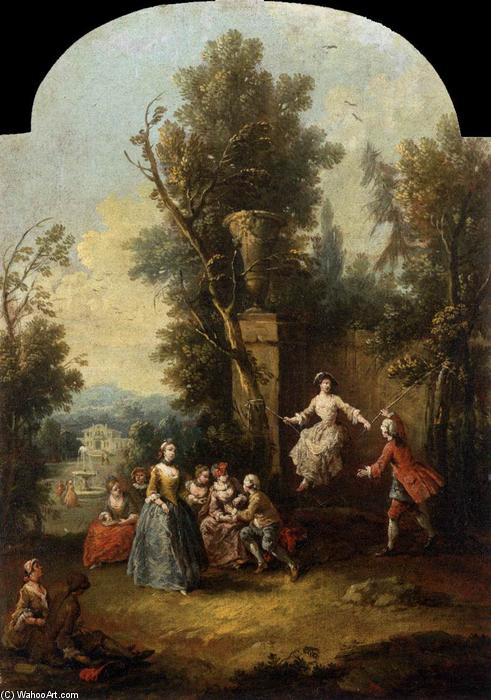
The Swing
 Oil On Canvas
- WallArt
- Rococo Art
 1765
1765 53.0 x 39.0 cm
 Gallerie dell’Accademia
 Lees meer
Koop een digitale afbeelding in hoge resolutie met verbeterde kwaliteit, die veel superieur is aan de online voorvertoning.
Elk bestand wordt met uiterste precisie voorbereid door onze interne specialisten, met behulp van geavanceerde tools en deskundige handmatige retouche. Wij garanderen dat elke afbeelding een uitzonderlijke helderheid, nauwkeurige kleurweergave en verfijnde details bezit.
Het uiteindelijke bestand wordt binnen 72 uur per e-mail geleverd, geoptimaliseerd voor direct gebruik in professionele, redactionele en printomgevingen. Dit is dezelfde kwaliteit waarop vooraanstaande designstudio's, uitgevers en galerieën vertrouwen.
Digitale afbeeldingen
Download een bestand met hoge resolutie voor persoonlijke weergave, afdrukken en creatieve projecten. ( Schakel over naar print Bestel handgeschilderde reproductie)
Inbegrepen bij elke bestelling van een digitale afbeelding
Professionele digitale levering, gegarandeerd
Wanneer u kiest voor OriginalUniqueArt.com, ontvangt u niet alleen een afbeelding – u krijgt een professioneel verbeterd digitaal kunstwerk, met precisie vervaardigd en voorzien van een tevredenheidsgarantie. Dit is alles wat automatisch bij uw bestelling is inbegrepen:

Snelle levering per e-mail
Uw hoogwaardige digitale afbeeldingsbestand wordt binnen 72 uur na bestelling naar u gemaild – klaar voor direct gebruik.

AI-verbeterd digitaal bestand
Uw kunstwerk wordt professioneel geoptimaliseerd met behulp van geavanceerde AI-tools en handmatige bewerkingen, waardoor maximale details, helderheid en kleurnauwkeurigheid worden gegarandeerd.

Gratis levenslange herlevering van digitale afbeeldingen
Je bestand per ongeluk verwijderd of kwijtgeraakt? Geen zorgen – we sturen het u op elk gewenst moment gratis opnieuw toe.

Geen invoerkosten – nooit
Geniet direct van uw kunstwerk zonder invoerrechten, belastingen of verzendkosten – digitale downloads zijn altijd belastingvrij.

Garantie op kleurgetrouwheid
Met behulp van professionele hulpmiddelen en kleurbeheer zorgen wij ervoor dat uw digitale afbeelding de originele kleuren zo nauwkeurig mogelijk weergeeft.

100 dagen tevredenheidsgarantie
Als u niet tevreden bent met uw digitale afbeelding, passen wij deze aan of storten wij 100% terug binnen 100 dagen - zonder vragen te stellen.

100% Geld-terug-garantie
Niet tevreden? Ontvang een volledige terugbetaling binnen 100 dagen na ontvangst van uw digitale bestand - zonder vragen te stellen.

Korting bij grote bestellingen
Koop 3 afbeeldingen, bespaar 10% - Koop 5, bespaar 15% - Koop 10+, bespaar 20%. Ideaal voor creatieve projecten, galerieën en bureaus.
A Moment Frozen in Rococo Elegance: Giuseppe Zais’s “The Swing”
“The Swing,” painted by Giuseppe Zais in 1765, stands as a quintessential embodiment of Rococo art—a movement that prioritized grace, frivolity, and an idealized vision of aristocratic life. Housed within the Gallerie dell'Accademia in Venice, Italy, this oil on canvas masterpiece transcends mere depiction; it captures a fleeting tableau of leisure and social interaction against a backdrop of lush Venetian gardens.- Composition & Style: Zais skillfully orchestrates his scene with meticulous attention to detail. A woman dressed in a vibrant blue gown occupies the right side of the canvas, delicately holding the rope of a swing occupied by another woman adorned in pink attire. Two men engage in animated conversation in the foreground, while a verdant landscape—complete with trees and shrubs—provides an opulent setting for this intimate gathering. The overall aesthetic aligns perfectly with the Rococo penchant for asymmetry and playful curves, mirroring the movement’s fascination with ornamentation and sensual beauty.
- Color Palette & Technique: Zais employs a rich color palette dominated by blues and pinks, contrasting sharply against the greens of the foliage. His brushwork is remarkably refined, particularly evident in the depiction of fabrics—the dresses shimmer with subtle textures—and natural elements like leaves and branches. The artist’s technique demonstrates mastery of chiaroscuro, skillfully manipulating light and shadow to heighten dramatic effect and imbue the scene with a palpable sense of atmosphere.
Historical Context: Venice at Its Zenith
The painting emerged during Venice's golden age—a period marked by unparalleled artistic flourishing and economic prosperity. The Serenissima Republic, ruled by Doge Giorgio Pisani III, fostered a vibrant cultural environment that attracted artists from across Europe. Zais’s work reflects the prevailing taste for aristocratic entertainment and idealized representations of human relationships within this opulent milieu. It's important to note that Zais was influenced by earlier Venetian masters like Marco Ricci and Francesco Zuccarelli, who championed naturalism alongside decorative splendor.Symbolism & Emotional Resonance
Beyond its formal beauty, “The Swing” carries symbolic weight. The swing itself represents movement—a deliberate disruption of stillness—suggesting a desire for escape from societal constraints and an embrace of carefree enjoyment. The figures’ postures convey confidence and composure, reflecting the aristocratic ideal of refined behavior. Furthermore, the garden setting symbolizes paradise—a realm of beauty and tranquility—underscoring the painting's overarching theme of idyllic pleasure.Connections to Artistic Tradition
“The Swing” shares stylistic affinities with other celebrated Rococo paintings by Jean-Honoré Fragonard, demonstrating Zais’s engagement with prevailing artistic conventions. Like Fragonard’s masterpiece, this artwork exemplifies the movement's commitment to capturing fleeting moments of emotion and sensuality—a characteristic that continues to captivate audiences today.Giuseppe Zais (1709-1784), a Venetian painter known for his landscapes and frescoes, was recognized as a member of the Accademia di Belle Arti in 1774. His legacy resides in works like “The Swing,” which exemplifies the elegance and sophistication of Rococo art.
Further Exploration
For more information on Giuseppe Zais and his artistic endeavors, visit OriginalUniqueArt.com. To delve deeper into Rococo art’s distinctive features, consult Wikipedia: Wikipedia.
Kunstenaarsbiografie
A Venetian Voice: The Life and Art of Giuseppe Zais
Giuseppe Zais, born in the humble mountain town of Forno di Canale near Belluno in 1709, emerged as a significant, though often overlooked, figure within the vibrant landscape painting tradition of 18th-century Venice. His life story, while lacking dramatic flourishes, speaks to the dedication and subtle artistry that characterized his nearly five decades of work. Moving to Venice at a young age – likely around 1725 or 1730 – Zais immersed himself in the artistic currents of the city, a period already steeped in the legacy of masters like Canaletto and Guardi. While he wouldn’t achieve their widespread renown, his contribution to the *veduta* genre—the highly detailed, often panoramic views of cities—is nonetheless noteworthy, offering a unique perspective on the beauty and atmosphere of the Venetian lagoon.Early Influences and Artistic Development
Zais's artistic journey was shaped by two key figures: Marco Ricci and Francesco Zuccarelli. Ricci, also hailing from Belluno, profoundly influenced his initial approach to landscape. He absorbed Ricci’s penchant for scenographic compositions—landscapes framed by lush trees with villages nestled within—and adopted the use of etching as a means of disseminating his designs. These early works reveal a focus on descriptive power and a pleasing aesthetic simplicity. However, Zais soon sought further refinement, turning to Francesco Zuccarelli for guidance. Zuccarelli’s influence softened Ricci's dramatic effects, introducing an increased elegance into Zais’s palette and technique. This period saw the development of his distinctive style—a blend of atmospheric luminosity, rich color, and a delicate touch that often bordered on affectation. While contemporaries like Bartolomeo Pedon and Matteo Stom had already established a strong tradition of Venetian landscape painting, Zais carved out his own niche through this synthesis of influences.Frescoes and Patronage: A Career in Venice
Zais’s career unfolded primarily within the confines of Venice itself. Registered with the Fraglia, the city's painters’ guild, from 1748 to 1768, he steadily built a reputation as a skilled landscape artist. His most celebrated achievement lies in the frescoes adorning Villa Pisani in Stra, created between 1760 and 1765. These expansive works showcase his mastery of decorative painting and his ability to capture the idyllic beauty of the Venetian countryside. Beyond this commission, Zais benefited from a network of patrons, including Joseph Smith, a prominent English consul residing in Venice. Smith’s support likely played a crucial role in establishing Zais's position within the artistic community. In 1774, he was elected to the Accademia Veneziana—a testament to his growing recognition among his peers.A Legacy of Tranquility and Vedute
Despite achieving membership in the Academy, Zais’s later years were marked by financial hardship. He died in poverty at Treviso in 1784, a fate not uncommon for artists of the period. However, his artistic legacy endures through the surviving examples of his work. His paintings—often depicting pastoral scenes and tranquil harbor views—offer a glimpse into the everyday life and picturesque landscapes of 18th-century Venice. While he may not have possessed the virtuosity of Canaletto or the dramatic flair of Guardi, Zais’s art possesses a unique charm and sensitivity. He excelled at capturing the subtle nuances of light and atmosphere, creating scenes that evoke a sense of peace and serenity. His *vedute* paintings, though less focused on architectural precision than those of his contemporaries, offer a more intimate and emotionally resonant portrayal of the Venetian world.Rediscovering Zais: A Place in Art History
Today, Giuseppe Zais is increasingly recognized as an important figure within the broader context of Italian landscape painting. His works can be found in prominent collections such as the Gallerie dell'Accademia in Venice and the Museum of Bassano del Grappa. Scholars continue to explore his artistic development, highlighting the influence of Ricci and Zuccarelli while also acknowledging his unique contributions to the *veduta* genre. Zais’s art serves as a reminder that beauty can be found not only in grand spectacle but also in quiet contemplation. His paintings offer a valuable window into the social and cultural life of 18th-century Venice, capturing the essence of a city renowned for its artistic splendor and enduring allure. His legacy is one of tranquility, skillful execution, and a deep appreciation for the natural world—qualities that continue to resonate with viewers today.
Giuseppe Zais
1709 - 1781 , Italy
Belangrijkste feiten
- Artistic Movement Or Style: Veduta painting
- Artists Or Movements Influenced By This Artist: ['Rococo']
- Artists Who Influenced This Artist:
- Marco Ricci
- Francesco Zuccarelli
- Date Of Birth: March 22, 1709
- Date Of Death: October 29, 1784
- Full Name: Giuseppe Zais
- Nationality: Italian
- Notable Artworks:
- Landscape with River & Bridge
- The Swing
- PAYSAGE PASTORAL
- Place Of Birth: Forno di Canale, Italy