

 Bekijk op ware grootte
 Verstuur
 Delen
Delen
 Details bekijken
 Gids voor studentenkunstwerken

 Download
 Vergelijkbare items
 Röntgenonderzoek
 Diavoorstelling
 Statistieken
Untitled (ARCATH)


 Lees meer
Handgemaakte olieverfreproductie
Met de hand geschilderd in olieverf op canvas in uw gewenste maat en lijst, op bestelling gemaakt door onze kunstenaars. ( Schakel over naar print Schakel over naar digitale afbeeldingen)




































Kies uit onze vooraf ingestelde maten die overeenkomen met de originele verhoudingen van het kunstwerk.

U kunt uw eigen afmetingen invoeren om in een specifieke lijst of ruimte te passen. Als de door u gekozen maat niet overeenkomt met de verhoudingen van het originele beeld, zullen we het kunstwerk bijsnijden of het schilderij uitbreiden met extra handgeschilderde elementen. Een digitale mockup wordt ter goedkeuring naar u verzonden voordat de productie begint.
Houd er rekening mee dat de preview op het scherm niet de werkelijke uitsnede of uitbreiding weergeeft. Alleen de mockup toont de uiteindelijke compositie nauwkeurig.
Hoewel aangepaste afmetingen mogelijk zijn, raden we aan een maat uit de vooraf gedefinieerde lijst te selecteren om de originele verhoudingen te behouden.
Na de bestelling zal het team van OriginalUniqueArt.com per e-mail contact opnemen met de klant voor instructies en een mockup-voorbeeld sturen.
Wereldwijde levering () binnen 3 tot 4 weken in plaats van de standaard 5 weken. (26 september). Zonder concessies aan de kwaliteit.

Gratis wereldwijde expressverzending

Hoogwaardig linnen canvas

Volledige verzendverzekering

Garantie op terugbetaling van invoerrechten

Garantie op exacte kleurweergave

Retourbeleid van 100 dagen (alleen bij defecten)

100% Geld-terug-garantie

Korting bij meerdere afnames
 De optie voor glas is alleen beschikbaar bij een formaat kleiner dan 110 cm.

Untitled (ARCATH)
Reproductiemethode
Formaat reproductie
-


Totaalprijs
$ 300
Biografie van de kunstenaar
A Forgotten Master of the Belle Époque: The Life and Art of Giuseppe Amisani
Giuseppe Amisani, a name largely absent from mainstream art historical narratives until recently, was a prominent figure during Italy’s vibrant Belle Époque. Born on December 7, 1881, in Mede di Lomellina, near Pavia, Lombardy, he emerged as a celebrated portraitist whose canvases captured the elegance and status of his era’s elite. The town itself would later honor its native son by renaming Piazza Mercato to Piazza Giuseppe Amisani—a testament to the esteem in which he was once held. His journey began with an initial attempt at technical studies in Pavia, but a failed drawing course redirected him toward more artistic pursuits. He found his true calling within the hallowed halls of the Accademia di Brera in Milan, where he honed his skills under the tutelage of Cesare Tallone and Vespasiano Bignami. This formal training laid the foundation for a career defined by refined technique and an astute understanding of human character.Rising Acclaim and International Horizons
Amisani’s talent quickly garnered recognition, marked by his triumph in 1908 with the prestigious Mylius prize for *L'eroe* (“The Hero”). This early success was further solidified a few years later—either in 1911 or 1912—when he secured the Fumagalli prize for figure-painting with his striking portrait of Lyda Borelli. These accolades propelled him into the spotlight, establishing him as a sought-after portraitist among Milan’s high society. His style during this period was characterized by its freshness and elegance, an ability to capture not just likeness but also the essence of his subjects. However, Amisani's ambitions extended beyond Italy’s borders. He embarked on extensive travels that profoundly shaped his artistic vision. Years spent in Argentina and Brazil exposed him to new cultures and landscapes, while visits to England, France, North Africa, and the United States broadened his perspective and infused his work with a cosmopolitan sensibility. These experiences moved beyond mere observation; they became integral to his artistic identity, influencing both subject matter and technique.A Portraitist of Kings and Commoners
Amisani’s oeuvre is dominated by portraiture, reflecting the tastes and expectations of his clientele. He possessed a remarkable ability to portray individuals from all walks of life—from prominent industrialists like Michele Bernocchi (1937) and Davide Lanfranconi (1941), to figures of artistic renown such as Lyda Borelli, whose portrait now graces the São Paulo Museum of Art in Brazil. His masterpiece *La Teletta* resides within the Galleria d'Arte Moderna in Milan, showcasing his skill in capturing both physical appearance and psychological depth. In 1924, he received a royal commission to decorate Ras al-Tin, the palace of Fuad I of Egypt, where he immortalized the young Prince Farouk on canvas—a testament to his international reputation and artistic prowess. Beyond portraiture, Amisani also explored landscape painting, inspired by his travels, creating evocative scenes of the Italian Alps, Rhodes, and Tunisia. His participation in exhibitions like the twelfth Esposizione Internazionale d'Arte della Città di Venezia (the Biennale di Venezia) in 1920, alongside shows in London and Florence, further cemented his position within the European art world.Rediscovery and Legacy
Despite achieving considerable success during his lifetime, Amisani’s work fell into relative obscurity after his death on September 8, 1941, in Portofino. His name vanished from major art historical references, and his contributions were largely forgotten for half a century. This neglect is perhaps attributable to his deliberate choice to remain within the established artistic conventions of his time, eschewing the radical experimentation of movements like Futurism or Cubism. He catered to the preferences of his patrons, prioritizing realism and detailed representation over avant-garde innovation. However, a retrospective exhibition held at the Castello Sforzesco in Vigevano in 2008 sparked a renewed interest in his art, bringing his paintings back into public view after decades of neglect. This rediscovery revealed an artist deeply rooted in the Italian Renaissance tradition—influenced by masters like Michelangelo and Raphael in his meticulous attention to detail and realistic depiction of the human form—yet uniquely attuned to the elegance and opulence of the Belle Époque. Giuseppe Amisani’s story serves as a poignant reminder that artistic merit can sometimes be overshadowed by shifting tastes and historical currents, but true talent ultimately endures.Artistic Characteristics
Amisani's paintings are characterized by their technical brilliance and refined aesthetic sensibility. His portraits are not merely representations of physical likeness; they are insightful studies of character and social standing. He employed a luminous palette and masterful brushwork to capture the textures of fabrics, the nuances of skin tones, and the subtle expressions that reveal his subjects’ inner lives. While he acknowledged the artistic currents of his time, Amisani remained committed to traditional techniques, prioritizing realism and detailed observation. His landscapes, though less numerous than his portraits, demonstrate a similar attention to detail and atmospheric perspective. He skillfully blended elements of Impressionism with a classical sensibility, creating works that are both visually appealing and intellectually engaging. Amisani’s art reflects the values and aspirations of the Belle Époque—a period characterized by optimism, prosperity, and a celebration of beauty.
Giuseppe Amisani
1881 - 1941 , Italie
Snelle feiten
- Artistic Movement Or Style: Belle Époque portraituur
- Artists Or Movements Influenced By This Artist: ['Realisme']
- Artists Who Influenced This Artist:
- Michelangelo
- Raphael
- Date Of Birth: 7 december 1881
- Date Of Death: 8 september 1941
- Full Name: Giuseppe Amisani
- Nationality: Italiaans
- Notable Artworks:
- L'eroe
- La Teletta
- Lyda Borelli Portret
- Place Of Birth (City And Country): Mede, Italië
Gerelateerde artikelen

The Enduring Legacy of Oil on Canvas: Technique, History & Aesthetic Impact
Explore the rich history & techniques of oil painting – from Renaissance masters to Impressionism. Discover pigments, layering methods, and why this timeless medium endures. Expert insights for artists & art enthusiasts.

Oil on Canvas: A Historical & Technical Exploration of a Timeless Artistic Medium
Explore the rich history & enduring techniques of oil painting on canvas. Discover the science behind its longevity, conservation practices, and contemporary relevance. Expert insights for art enthusiasts.
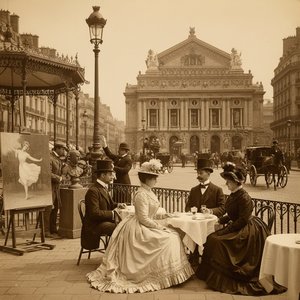
Echoes of 1882: Art, Culture & the Belle Époque's Lasting Impression
Explore the art & culture of the Belle Époque! Discover Impressionism, Realism, and iconic Parisian paintings from Degas, Béraud & more. High-quality reproductions at OriginalUniqueArt.
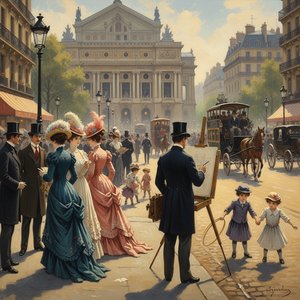
Jean-Georges Béraud: Capturing Parisian Life in the Belle Époque
Explore the captivating world of Jean-Georges Béraud, master painter of Belle Époque Paris. Discover his iconic scenes, artistic evolution, and social commentary. A deep dive into 19th-century French art.
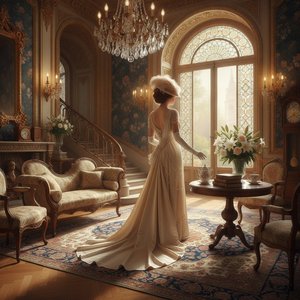
Step into Elegance: Discover the Timeless Beauty and Opulence of Belle Époque Art
Immerse yourself in the splendor of Belle Époque art. From Art Nouveau to Impressionism, OriginalUniqueArt.com provides exquisite, hand-painted oil reproductions and custom portraits. Discover timeless elegance and expert artistry to elevate your home decor with confidence.