

 Bekijk op ware grootte
 Verstuur
 Delen
Delen
 Details bekijken
 Gids voor studentenkunstwerken

 Download
 Vergelijkbare items
 Röntgenonderzoek
 Diavoorstelling
 Statistieken
Study for the Holy Family


 Lees meer
Handgemaakte olieverfreproductie
Met de hand geschilderd in olieverf op canvas in uw gewenste maat en lijst, op bestelling gemaakt door onze kunstenaars. ( Schakel over naar print Schakel over naar digitale afbeeldingen)




































Kies uit onze vooraf ingestelde maten die overeenkomen met de originele verhoudingen van het kunstwerk.

U kunt uw eigen afmetingen invoeren om in een specifieke lijst of ruimte te passen. Als de door u gekozen maat niet overeenkomt met de verhoudingen van het originele beeld, zullen we het kunstwerk bijsnijden of het schilderij uitbreiden met extra handgeschilderde elementen. Een digitale mockup wordt ter goedkeuring naar u verzonden voordat de productie begint.
Houd er rekening mee dat de preview op het scherm niet de werkelijke uitsnede of uitbreiding weergeeft. Alleen de mockup toont de uiteindelijke compositie nauwkeurig.
Hoewel aangepaste afmetingen mogelijk zijn, raden we aan een maat uit de vooraf gedefinieerde lijst te selecteren om de originele verhoudingen te behouden.
Na de bestelling zal het team van OriginalUniqueArt.com per e-mail contact opnemen met de klant voor instructies en een mockup-voorbeeld sturen.
Wereldwijde levering () binnen 3 tot 4 weken in plaats van de standaard 5 weken. (26 september). Zonder concessies aan de kwaliteit.

Gratis wereldwijde expressverzending

Hoogwaardig linnen canvas

Volledige verzendverzekering

Garantie op terugbetaling van invoerrechten

Garantie op exacte kleurweergave

Retourbeleid van 100 dagen (alleen bij defecten)

100% Geld-terug-garantie

Korting bij meerdere afnames
 De optie voor glas is alleen beschikbaar bij een formaat kleiner dan 110 cm.

Study for the Holy Family
Reproductiemethode
Formaat reproductie
-


Totaalprijs
$ 300
Giulio Romano’s Intimate Revelation – The Study for the Holy Family
Within the hushed reverence of the Musée du Louvre resides a deceptively simple work, Giulio Romano's “Study for the Holy Family” (1518). More than just a preparatory sketch, it’s a profound distillation of Renaissance ideals—a glimpse into the mind of a master grappling with composition, light, and the very essence of human dignity. The piece, rendered in delicate red chalk on paper, immediately captivates with its understated elegance, revealing layers of artistic thought that speak volumes about Romano's innovative approach to painting.
The drawing depicts a solitary female figure, presumed to be Mary, gazing downwards towards the infant Christ nestled within a rudimentary wooden cradle. The composition is remarkably restrained; there’s no grand theatricality here, no sweeping gestures or dramatic lighting. Instead, Romano employs a masterful use of negative space and subtle tonal variations to create a sense of quiet contemplation. The figure's posture—a gentle curve of the spine, a relaxed hand—suggests both vulnerability and profound serenity. The simplicity of the setting – just the cradle and the mother – amplifies this feeling, drawing the viewer’s attention entirely to the intimate connection between mother and child.
A Window into Romano's Workshop: Style and Technique
Examining the execution reveals Romano’s distinctive style—a hallmark of the High Renaissance transitioning into Mannerism. The lines are not rigid or precise, but possess a fluid quality, hinting at the artist’s intention to capture movement and emotion rather than simply replicating reality. Notice the meticulous attention to detail in rendering drapery; each fold and pleat is delicately outlined, conveying both texture and volume. The use of hatching—parallel lines drawn to create tonal values—is particularly noteworthy, subtly suggesting light and shadow without resorting to broad brushstrokes. This technique was a key element in Romano’s approach, allowing him to build up complex forms with remarkable control.
- Red Chalk: The choice of red chalk (carboncino) is significant. It offered a rich, velvety tone and allowed for easy blending—a crucial tool for creating the subtle gradations of light and shadow that define Romano’s style.
- Paper Support: The drawing was executed on sturdy prepared paper, a testament to the workshop's meticulous standards. The presence of incised lines reveals the process of transferring the design from the cartoon—a technique employed by many Renaissance artists.
- Compositional Foreshadowing: The Study offers a remarkable insight into Romano’s compositional planning. It demonstrates how he carefully considered the arrangement of figures and elements before committing to the final painting, revealing his methodical approach to artmaking.
Historical Context & Symbolism
Created in 1518 during a period of intense artistic innovation, this “Study” is inextricably linked to Raphael’s legacy. Romano served as a key assistant to the master, absorbing his techniques and stylistic influences while simultaneously forging his own unique path. The subject matter—the Holy Family—was a staple of Renaissance art, representing piety, innocence, and divine grace. However, Romano imbues this familiar theme with a distinctly personal quality, suggesting a deeper meditation on motherhood, faith, and the enduring power of familial bonds.
Further research reveals that this drawing is not merely an isolated study but a crucial component of a larger artistic narrative. As documented by scholars like Kristen Windmuller-Luna, it’s believed to be an adaptation of Raphael's “The Holy Family,” brought to Ethiopia through the clandestine efforts of Jesuit missionaries in the 18th century. This fascinating connection highlights the enduring influence of Renaissance art and its ability to transcend geographical boundaries and cultural contexts.
A Timeless Masterpiece: Reproduction & Inspiration
Giulio Romano’s “Study for the Holy Family” is a testament to the power of simplicity, restraint, and profound observation. Its quiet beauty continues to resonate with viewers centuries after its creation. Reproductions capture the delicate nuances of the original drawing—the subtle tonal variations, the fluid lines, and the intimate portrayal of human emotion. This piece offers an exceptional opportunity to bring Renaissance artistry into your home or office, serving as a constant source of inspiration and contemplation. Whether you’re seeking a statement piece for a sophisticated interior space or simply drawn to the timeless elegance of this masterpiece, a high-quality reproduction will undoubtedly capture the essence of Romano's genius.
Biografie van de kunstenaar
A Roman Beginning and Apprenticeship Under a Master
Giulio Romano, born Giulio Pippi around 1499 in Rome, emerged during a period of intense artistic transformation. Details surrounding his early life remain somewhat shrouded in mystery, yet it’s known he quickly entered the orbit of Raphael, arguably the most celebrated painter of the High Renaissance. This apprenticeship proved profoundly formative, not only shaping his technical skills but also laying the foundation for his future stylistic explorations. He wasn't merely a studio assistant; Giulio rapidly evolved into an indispensable collaborator, contributing significantly to monumental projects like the decoration of the Vatican Stanze – those magnificent rooms commissioned by Popes Julius II and Leo X. His hand is readily identifiable in *The Fire in the Borgo*, where he assisted Raphael in depicting a dramatic scene of miraculous intervention, capturing the intensity and dynamism that would become hallmarks of his later work. Following Raphael’s untimely death in 1520, Giulio inherited responsibility for completing numerous unfinished commissions, including the ambitious decoration of Villa Madama for Cardinal Giuliano de' Medici. This early exposure to large-scale projects and the demands of aristocratic patronage instilled within him a remarkable confidence and ambition—qualities that would define his subsequent career trajectory.The Birth of Mannerism: A Departure from Classical Harmony
While firmly rooted in Renaissance tradition, Giulio Romano’s artistic path soon diverged from the prevailing emphasis on classical balance and harmony. He became a key figure in the development of Mannerism – a style characterized by its deliberate artificiality, elegant distortions, and often unsettling psychological depth. Deeply influenced by Michelangelo's powerfully sculpted figures and dynamic compositions, as well as a broader climate of artistic experimentation within Rome, Giulio began to embrace asymmetry, tension, and emotional intensity in his work. This wasn’t a rejection of Renaissance ideals so much as a considered exploration of their limits—a deliberate push beyond the constraints of naturalism to create works that were more expressive and intellectually stimulating. He increasingly modified Raphael's plans, injecting a new sensibility into Roman art—a bold statement of Mannerism on a grand scale. This shift is readily apparent in his drawings, which exhibit a remarkable freedom of line and a penchant for dramatic foreshortening, hinting at the complex spatial arrangements he would later employ in his frescoes.Mantua’s Master: Palazzo Te and Architectural Innovation
In 1524, Giulio accepted an invitation from Federico II Gonzaga, Duke of Mantua, to become court painter and architect—a pivotal moment that dramatically altered the course of his career. This relocation provided him with unprecedented creative freedom and access to substantial resources. He essentially became responsible for all artistic activity within the duchy, overseeing not only paintings and frescoes but also architectural projects, elaborate garden designs, and even theatrical productions. His most celebrated achievement during this period is undoubtedly Palazzo Te, an extraordinary suburban villa that stands as a testament to his innovative genius. The palace’s interiors are adorned with illusionistic frescoes of breathtaking complexity and psychological depth—a dazzling display of virtuosity. The *Sala dei Giganti* (Hall of the Giants), for example, depicts a chaotic battle between gods and giants, engulfing the viewer in a swirling vortex of figures and architectural fragments, creating an immersive experience that is both awe-inspiring and unsettling. Beyond Palazzo Te, Giulio undertook significant renovations to Mantua’s ducal palace and cathedral, leaving an indelible mark on the city's urban landscape—transforming it into a showcase for his artistic vision.Key Works and Artistic Style
Giulio Romano’s oeuvre is characterized by a masterful command of illusionistic technique, combined with a profound understanding of human psychology. His frescoes are not merely decorative; they are carefully constructed narratives designed to evoke specific emotions and create dramatic effects. He frequently employed techniques such as *quadrature* (the use of geometric shapes to define space) and *prospettiva artificiale* (artificial perspective) to achieve the desired spatial illusions. His drawings, particularly those created during his time in Rome, reveal a remarkable draftsmanship and a fascination with line and form. Notable works include:- *The Fire in the Borgo* (Vatican Stanze)
- *Villa Madama* (Rome) – decorative elements
- Palazzo Te (Mantua) – overall design and frescoes
- Studies of Warriors, Horsemen, and Lions
- Various mythological scenes and portraits
Legacy and Lasting Influence
Giulio Romano died in Mantua in 1546, leaving behind a legacy that extended far beyond Italy’s borders. His drawings were highly prized by collectors throughout Europe, and engravings based on his work – particularly those by Marcantonio Raimondi – played a crucial role in disseminating Italian artistic styles to a wider audience. He was so renowned after his death that he is the only “modern” artist mentioned by William Shakespeare in *Henry VIII*, a testament to his widespread renown. His influence can be seen in the works of numerous subsequent artists, who adopted his dynamic compositions, elongated figures, and expressive use of color. While Mannerism eventually gave way to other stylistic movements, Giulio Romano’s contributions remain essential to understanding the evolution of Western art—a pivotal moment marked by a transition from the harmonious ideals of the High Renaissance to the more complex and emotionally charged aesthetic of the late 16th century. His work continues to captivate and challenge viewers today, reminding us of the power of art to both reflect and shape our understanding of the world.
Giulio Romano
1499 - 1546 , Italië
Snelle feiten
- Artistic Movement Or Style: Manierisme
- Artists Or Movements Influenced By This Artist: ['Manieristische kunstenaars']
- Artists Who Influenced This Artist:
- Raphael
- Michelangelo
- Date Of Birth: c. 1499
- Date Of Death: 1 november 1546
- Full Name: Giulio Romano
- Nationality: Italiaans
- Notable Artworks:
- De brand in de Borgo
- Palazzo Te
- Place Of Birth: Rome, Italië
Gerelateerde artikelen
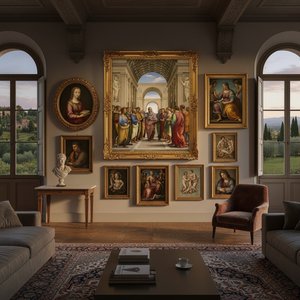
Raphael's Meesterwerken: 25 Iconische Kunstwerken voor uw Interieur | OriginalUniqueArt
Ontdek de 25 meest iconische meesterwerken van Raphael! Duik in de Renaissance kunst, bewonder zijn portretten & religieuze schilderijen. Hoogwaardige reproducties voor uw interieur op OriginalUniqueArt.com.

Mastering the Line: A Comprehensive Expert Guide to Technical Precision and Expressive Depth in Drawing
Elevate your artistic practice with this expert guide to mastering the line. Discover advanced techniques in graphite, charcoal, and contour drawing designed for art students seeking technical precision and expressive depth in their fine art studies.
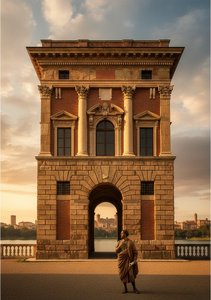
Giulio Romano: A Master of Mannerism & the Palazzo Te Legacy
Explore the revolutionary art of Giulio Romano, master of Mannerism & architect of Palazzo Te. Discover his influence, investment potential, and stunning frescoes – a guide for discerning collectors.
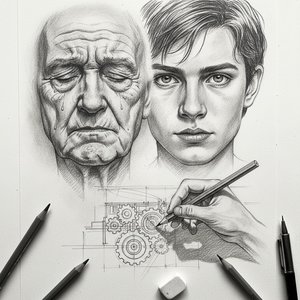
The Nuances of Graphite: Exploring Emotional Depth & Technical Mastery in Pencil Drawing
Explore the captivating world of graphite drawing! Discover its rich history, master essential techniques like chiaroscuro, and learn how artists evoke emotion through this timeless medium. Expert insights for art enthusiasts.

Van Kinderkamer tot Familieverhalen: Gepersonaliseerde Portretten als Chroniek van Generaties
Laat een uniek familieportret schilderen door professionele kunstenaars. Bewaar uw dierbare herinneringen voor altijd met een gepersonaliseerd meesterwerk. Vraag nu een offerte aan!
