
 Voorvertoning
 Verstuur
 Delen
Delen
 Details bekijken
 Gids
Gids

 Download
 Vergelijkbare items
 Röntgenonderzoek
 Diavoorstelling
 Vraag & antwoord
 Statistieken
Nude Child with Open Arms

- 270.0 x 209.0 cm


 Lees meer
Giclée / Kunstafdrukken
Giclée- of canvasafdruk van museumkwaliteit met een snelle productie en flexibele afwerkingsmogelijkheden. ( Bestel handgeschilderde reproductie Schakel over naar digitale afbeeldingen)




P118B €10

P118H €10

P118W €10

P438Z €10

P508JH €12

P508YH €12

P805H €10

P805Z €10

P919BZ €10

P919G €10

P919XJ €10

P959ZH €10

P968JZ €12

W106C €8

W218G €10

W218JH €8

W218Y €10

W307PJ €10

W316G €10

W316PJ €8

W316Y €10

W398PJ €8

W4111J €10

W500HY €15

W500JH €15

W692G €12

W849H €8

W940BG €15

W953PJ €8




Kies uit onze vooraf ingestelde maten die overeenkomen met de originele verhoudingen van het kunstwerk.

Voer de gewenste breedte en hoogte in, passend bij uw lijst of muur. Een afdruk kan alleen worden ingekort en nooit groter worden gemaakt dan het origineel; een formaat met andere verhoudingen zal daarom een deel van de afbeelding verliezen. Wij sturen u een digitaal mockup ter goedkeuring voordat we tot drukwerk overgaan. De afbeelding op deze pagina toont niet de werkelijke uitsnede — dit is alleen te zien op het mockup.
Wereldwijde levering () binnen 2 weken in plaats van de standaard 4/5 weken. (9 november)

Gratis wereldwijde expressverzending

Hoogwaardig linnen canvas

Volledige verzendverzekering

Garantie op terugbetaling van invoerrechten

Garantie op exacte kleurweergave

Retourbeleid van 100 dagen (alleen bij defecten)

100% Geld-terug-garantie

Korting bij meerdere afnames
 De optie voor glas is alleen beschikbaar bij een formaat kleiner dan 110 cm.

Nude Child with Open Arms
Giclée / Kunstafdrukken
Afmetingen reproductie
-


Eindtotaal
€ 72
The Echoes of Aspiration: Giulio Romano's Nude Child
To gaze upon this preparatory sketch by Giulio Romano is to encounter not merely a drawing, but a captured moment of pure, unbridled yearning. Rendered in rich red-brown tones, the figure of the nude child seems suspended between infancy and profound self-awareness. The composition immediately arrests the viewer with its dynamic energy; the upward reach of the arms suggests an aspiration toward something unseen—a divine grace, perhaps, or simply the boundless potential of life itself. This is a study steeped in the expressive fervor characteristic of Mannerism, where idealized form bends to serve emotional narrative rather than strict naturalism.
Mastery in Line and Shadow: Technique and Form
Romano’s hand breathes across the aged paper with remarkable delicacy. The technique employed—likely dry-point or charcoal—allows for an exquisite interplay of line weight and subtle tonal variation. Observe how the artist builds volume not through solid washes, but through meticulous hatching; these delicate lines coalesce to suggest the soft contours of flesh while simultaneously imparting a palpable sense of texture. The shallow perspective keeps all focus intensely concentrated on the vulnerable yet powerfully posed subject. It is in this masterful handling of line that the drawing achieves its haunting resonance, transforming simple charcoal marks into an enduring study of human form and spirit.
A Glimpse into High Renaissance Drama
Understanding Giulio Romano’s life situates this piece within a period of unparalleled artistic upheaval. Having trained in the orbit of Raphael, he absorbed the grandeur of the High Renaissance before developing his own signature flair for dramatic intensity. This sketch serves as a poignant artifact from that vibrant milieu, hinting at the monumental frescoes and decorative cycles—such as those adorning the Vatican Stanze—that defined his career. While the scale of the final works was grand, this intimate study reveals the foundational thought process: how to imbue a simple figure with such profound emotional weight.
Symbolism of Innocence and Yearning
The subject matter itself invites deep contemplation. The nude child has historically served as a potent symbol—a vessel for innocence untainted, or conversely, a representation of the soul grappling with its own burgeoning consciousness. With those open arms reaching skyward, the piece speaks eloquently to themes of spiritual yearning and potentiality. It captures that exquisite tension between utter vulnerability and boundless aspiration, making it a deeply resonant piece for any collector seeking art imbued with philosophical depth.
Bringing the Masterpiece Home
For the discerning patron or designer, this reproduction offers an unparalleled opportunity to integrate the dramatic spirit of Mannerism into a contemporary space. The warm, earthy tones and the raw energy captured in the linework provide an immediate focal point, lending an air of cultivated history and intellectual depth to any room. It is more than decoration; it is a conversation piece that whispers tales of Roman genius and timeless human emotion.
Veelgestelde vragen
Is "Nude Child with Open Arms" door Giulio Romano een licht of een donker kunstwerk?
Wat betreft de waargenomen helderheid is "Nude Child with Open Arms" door Giulio Romano brilliant.
Waar kan ik statistieken vinden over "Nude Child with Open Arms" door Giulio Romano?
Statistieken over "Nude Child with Open Arms" door Giulio Romano zijn te vinden op de Statistieken-pagina van het kunstwerk: maandelijkse weergaven van het kunstwerk, weergaven van de werken van de kunstenaar en een uitsplitsing naar land en taal van recente bezoekers.
Hoe kan ik kunstwerken ontdekken die lijken op "Nude Child with Open Arms" door Giulio Romano?
Op de Vergelijkbare werken-pagina van dit kunstwerk vindt u vergelijkbare werken als "Nude Child with Open Arms" door Giulio Romano.
Biografie kunstenaar
A Roman Beginning and Apprenticeship Under a Master
Giulio Romano, born Giulio Pippi around 1499 in Rome, emerged during a period of intense artistic transformation. Details surrounding his early life remain somewhat shrouded in mystery, yet it’s known he quickly entered the orbit of Raphael, arguably the most celebrated painter of the High Renaissance. This apprenticeship proved profoundly formative, not only shaping his technical skills but also laying the foundation for his future stylistic explorations. He wasn't merely a studio assistant; Giulio rapidly evolved into an indispensable collaborator, contributing significantly to monumental projects like the decoration of the Vatican Stanze – those magnificent rooms commissioned by Popes Julius II and Leo X. His hand is readily identifiable in *The Fire in the Borgo*, where he assisted Raphael in depicting a dramatic scene of miraculous intervention, capturing the intensity and dynamism that would become hallmarks of his later work. Following Raphael’s untimely death in 1520, Giulio inherited responsibility for completing numerous unfinished commissions, including the ambitious decoration of Villa Madama for Cardinal Giuliano de' Medici. This early exposure to large-scale projects and the demands of aristocratic patronage instilled within him a remarkable confidence and ambition—qualities that would define his subsequent career trajectory.The Birth of Mannerism: A Departure from Classical Harmony
While firmly rooted in Renaissance tradition, Giulio Romano’s artistic path soon diverged from the prevailing emphasis on classical balance and harmony. He became a key figure in the development of Mannerism – a style characterized by its deliberate artificiality, elegant distortions, and often unsettling psychological depth. Deeply influenced by Michelangelo's powerfully sculpted figures and dynamic compositions, as well as a broader climate of artistic experimentation within Rome, Giulio began to embrace asymmetry, tension, and emotional intensity in his work. This wasn’t a rejection of Renaissance ideals so much as a considered exploration of their limits—a deliberate push beyond the constraints of naturalism to create works that were more expressive and intellectually stimulating. He increasingly modified Raphael's plans, injecting a new sensibility into Roman art—a bold statement of Mannerism on a grand scale. This shift is readily apparent in his drawings, which exhibit a remarkable freedom of line and a penchant for dramatic foreshortening, hinting at the complex spatial arrangements he would later employ in his frescoes.Mantua’s Master: Palazzo Te and Architectural Innovation
In 1524, Giulio accepted an invitation from Federico II Gonzaga, Duke of Mantua, to become court painter and architect—a pivotal moment that dramatically altered the course of his career. This relocation provided him with unprecedented creative freedom and access to substantial resources. He essentially became responsible for all artistic activity within the duchy, overseeing not only paintings and frescoes but also architectural projects, elaborate garden designs, and even theatrical productions. His most celebrated achievement during this period is undoubtedly Palazzo Te, an extraordinary suburban villa that stands as a testament to his innovative genius. The palace’s interiors are adorned with illusionistic frescoes of breathtaking complexity and psychological depth—a dazzling display of virtuosity. The *Sala dei Giganti* (Hall of the Giants), for example, depicts a chaotic battle between gods and giants, engulfing the viewer in a swirling vortex of figures and architectural fragments, creating an immersive experience that is both awe-inspiring and unsettling. Beyond Palazzo Te, Giulio undertook significant renovations to Mantua’s ducal palace and cathedral, leaving an indelible mark on the city's urban landscape—transforming it into a showcase for his artistic vision.Key Works and Artistic Style
Giulio Romano’s oeuvre is characterized by a masterful command of illusionistic technique, combined with a profound understanding of human psychology. His frescoes are not merely decorative; they are carefully constructed narratives designed to evoke specific emotions and create dramatic effects. He frequently employed techniques such as *quadrature* (the use of geometric shapes to define space) and *prospettiva artificiale* (artificial perspective) to achieve the desired spatial illusions. His drawings, particularly those created during his time in Rome, reveal a remarkable draftsmanship and a fascination with line and form. Notable works include:- *The Fire in the Borgo* (Vatican Stanze)
- *Villa Madama* (Rome) – decorative elements
- Palazzo Te (Mantua) – overall design and frescoes
- Studies of Warriors, Horsemen, and Lions
- Various mythological scenes and portraits
Legacy and Lasting Influence
Giulio Romano died in Mantua in 1546, leaving behind a legacy that extended far beyond Italy’s borders. His drawings were highly prized by collectors throughout Europe, and engravings based on his work – particularly those by Marcantonio Raimondi – played a crucial role in disseminating Italian artistic styles to a wider audience. He was so renowned after his death that he is the only “modern” artist mentioned by William Shakespeare in *Henry VIII*, a testament to his widespread renown. His influence can be seen in the works of numerous subsequent artists, who adopted his dynamic compositions, elongated figures, and expressive use of color. While Mannerism eventually gave way to other stylistic movements, Giulio Romano’s contributions remain essential to understanding the evolution of Western art—a pivotal moment marked by a transition from the harmonious ideals of the High Renaissance to the more complex and emotionally charged aesthetic of the late 16th century. His work continues to captivate and challenge viewers today, reminding us of the power of art to both reflect and shape our understanding of the world.
Giulio Romano
1499 - 1546 , Italië
Belangrijkste feiten
- Artistic Movement Or Style: Manierisme
- Artists Or Movements Influenced By This Artist: ['Manieristische kunstenaars']
- Artists Who Influenced This Artist:
- Raphael
- Michelangelo
- Date Of Birth: c. 1499
- Date Of Death: 1 november 1546
- Full Name: Giulio Romano
- Nationality: Italiaans
- Notable Artworks:
- De brand in de Borgo
- Palazzo Te
- Place Of Birth: Rome, Italië
Gerelateerde artikelen

Mastering Charcoal: A Professional Guide to Texture and Depth for Large-Scale Interior Art Commissions
Discover professional techniques for mastering charcoal texture and depth. An expert guide for hotel designers and procurement managers looking to integrate high-impact monochrome art into large-scale hospitality projects with precision and scale.
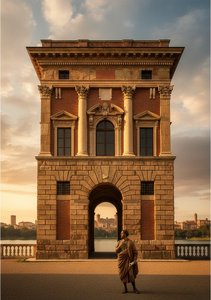
Giulio Romano: A Master of Mannerism & the Palazzo Te Legacy
Explore the revolutionary art of Giulio Romano, master of Mannerism & architect of Palazzo Te. Discover his influence, investment potential, and stunning frescoes – a guide for discerning collectors.

Mastering the Line: A Comprehensive Expert Guide to Technical Precision and Expressive Depth in Drawing
Elevate your artistic practice with this expert guide to mastering the line. Discover advanced techniques in graphite, charcoal, and contour drawing designed for art students seeking technical precision and expressive depth in their fine art studies.

Mastering Charcoal: The Definitive Expert Guide to Capturing Profound Depth, Texture, and Shadow
Elevate your artistry with this definitive expert guide to mastering charcoal. Designed for art students, learn professional techniques for capturing profound depth, intricate textures, and dramatic shadows through advanced blending and chiaroscuro methods.

Charcoal Art Mastery: A Visual Journey Through Raw Power, Deep Shadows, and Expressive Texture
Master the raw power of charcoal art. Explore professional techniques in chiaroscuro, texture, and shadow to elevate your sketches from simple lines to high-impact, expressive masterpieces. A visual guide for art students seeking technical precision and emotional depth.
