Italian Renaissance · 1550
Pietà (Giulio Clovio, 1550)
Giulio Clovio (1498–1578) maakte Pietà. Het dateert uit 1550. Het behoort tot de Italian Renaissance-stroming. Het is gemaakt van Manuscript. Het is te vinden in Galleria degli Uffizi in Florence, Italië. De afmetingen zijn 368 × 257 cm.
- 1550
- Manuscript
- 368 × 257 cm
- Galleria degli Uffizi, Florence

 Voorvertoning

 Met de hand geschilderd olieverfwerk
 Verstuur
 Delen
 Informatieblad


 Download
 Vergelijkbare items
 Röntgenonderzoek
 Diavoorstelling
 Vraag & antwoord

 Statistieken
Pietà, in het kort
- Titel
- Pietà
- Kunstenaar
- Giulio Clovio (1498–1578)
- Geboren in [jaar]
- Grižane, Kroatië
- Datum
- 1550
- Medium
- Manuscript
- Afmetingen
- 368 × 257 cm
- Te zien in
- Galleria degli Uffizi, Florence, Italië
- Beweging
- Italian Renaissance
- Periode
- Renaissance
- Onderwerp
- virgin mary, jesus christ, religious iconography, renaissance art, classical composition, emotional depth
Wat stelt Pietà voor?
A Testament to Sorrow and Divine Grace
In the quiet, hallowed corridors of art history, few images resonate with the profound emotional gravity found in Giulio Clovio’s Pietà. Created around 1550, this masterpiece serves as a breathtaking bridge between the fading echoes of the Gothic tradition and the luminous dawn of the High Renaissance. The scene captures the quintessential moment of Christian sorrow: the Virgin Mary cradling the lifeless body of Jesus Christ following his crucifixion. It is not merely a depiction of death, but a profound meditation on compassion—the very meaning of the word Pietà. Through Clovio’s masterful hand, the heavy weight of mortality is balanced by an ethereal sense of divine grace, inviting the viewer into a space of deep, contemplative mourning.
The composition is a masterclass in Renaissance balance and narrative depth. At the heart of the work, Mary sits as a pillar of strength and grief, her blue cloak—a color traditionally symbolizing her heavenly connection—draped with a weight that mirrors her sorrow. The figure of Christ, depicted with a serene, almost peaceful countenance despite his recent agony, rests heavily in her lap, creating a poignant focal point that draws the eye through its sheer vulnerability. Surrounding this central tragedy, celestial beings and saints emerge from the shadows; angels with active, reaching gestures and observers in prayerful poses create a sense of a cosmic event unfolding. This layering of figures ensures that the viewer’s gaze wanders through a complex web of devotion, from the intimate touch of a mother to the collective mourning of the heavens.
Technique and the Radiance of Light
What truly distinguishes Clovio’s work is his unparalleled ability to manipulate light and color, a skill honed during his time as one of history's greatest manuscript illuminators. Though this piece possesses the scale and grandeur of a monumental painting, it retains the meticulous, jewel-like precision of a miniature. Clovio employed a sophisticated technique of layering translucent glazes over gold leaf, a method that allows light to penetrate the surface and reflect back, creating an inner luminosity that seems to emanate from within the figures themselves. The use of ultramarine blue, derived from the precious stone lapis lazuli, provides a depth of color that is both regal and somber, anchoring the composition in a palette of earth tones and celestial blues.
The interplay of light and shadow—chiaroscuro—is used here not just for anatomical realism, but to direct the emotional narrative. Light strikes Mary’s face from the side, carving her features out of the darkness and highlighting the subtle lines of grief and devotion. This dramatic contrast creates a sculptural quality, giving the figures a tangible presence that commands the room. For the discerning collector or interior designer, such a work offers more than mere decoration; it provides a focal point of immense character. A high-quality reproduction of this Pietà brings with it an atmosphere of timelessness and intellectual depth, making it an exquisite addition to a curated space that values historical resonance and the profound beauty of the human spirit.
In welk museum bevindt Pietà zich?
Galleria degli Uffizi
Florence, Italië
De geschiedenis en de oorsprong van de Galleria degli Uffizi De Galleria degli Uffizi ligt in het hart van Florence, Italië. De instelling vindt haar oorsprong in 1560, een tijdperk waarin het gebouw oorspronkelijk werd ontworpen door Giorgio Vasari voor de magistraten van Florence. De bouw van dit imposante bouwwerk vond plaats tussen 1560 en 1580.


Hoogwaardige afbeeldingen van Pietà

Publiek domein: de kunstenaar is overleden in 1578.
Andere formaten, uitsneden en citatie →Giulio Clovio, Pietà (1550), Galleria degli Uffizi. Publiek domein
Vragen over Pietà, beantwoord
In welk museum is het originele werk "Pietà" te zien?
"Pietà" door Giulio Clovio is te zien in Galleria degli Uffizi, Florence, Italië. De vermelding van het museum heeft betrekking op het originele werk, niet op reproducties.
In welk jaar werd "Pietà" door Giulio Clovio gemaakt?
"Pietà" dateert uit 1550. Deze datum plaatst het werk binnen de carrière van Giulio Clovio en het betreffende tijdperk.
Met welk medium is "Pietà" door Giulio Clovio uitgevoerd?
Het medium van "Pietà" door Giulio Clovio is Manuscript. Reproducties zijn bedoeld om de uitstraling van deze techniek weer te geven.
Wat zijn de afmetingen van het originele "Pietà"?
Het originele werk "Pietà" door Giulio Clovio heeft de afmetingen 368 x 257 cm.
Wat stelt "Pietà" voor?
"Pietà" door Giulio Clovio toont: virgin mary, jesus christ, religious iconography, renaissance art, classical composition, emotional depth, medieval influence.
Is "Pietà" vrij van auteursrecht?
De auteursrechtelijke status van "Pietà" door Giulio Clovio: het werk is bevindt zich in het publiek domein - de auteursrechten zijn verlopen. Dit bepaalt of reproducties van de afbeelding vrijelijk mogen worden gemaakt.
Aan welke kunstenaar wordt "Pietà" toegeschreven?
De kunstenaar achter "Pietà" is Giulio Clovio. Het werk is gecatalogiseerd onder de naam van Giulio Clovio.
Bij welke kunststroming behoort "Pietà" door Giulio Clovio?
De kunststroming die verbonden is aan "Pietà" door Giulio Clovio is Italian Renaissance. Deze classificatie plaatst het werk binnen een context van verwante kunstenaars en kunstwerken.
Uit welke fase van de carrière van Giulio Clovio is "Pietà"?
"Pietà" vertegenwoordigt de Mature Period van Giulio Clovio.
Over de kunstenaar, Giulio Clovio

1498–1578, Kroatië
Giulio Clovio
Een Kroatische Lichtstraal van de Italiaanse Renaissance Giulio Clovio, geboren als Juraj Julije Klović in 1498 te midden van de glooiende heuvels van Grižane, Kroatië, staat als een cruciaal figuur die de laatgotische traditie van manuscriptverluchting verbindt met de opkomende Hoogrenaissance. Hoewel zijn wortels in het Koninkrijk Kroatië lagen, was het in Italië dat Clovio’s artistieke genie werkelijk tot bloei kwam, wat hem de reputatie opleverde als wellicht de grootste verluchter van zijn tijd en de laatste belangrijke meester in een stamboom die eeuwen terugreikt. Zijn verhaal is er een van uitzonderlijk talent, vindingrijk mecenaat en een onwankelbare toewijding aan het transformeren van de miniatuur tot een adembenemend verfijnde kunstvorm. De vroege jaren van Clovio’s leven blijven gehuld in mysterie.
Ook van Giulio Clovio
 The Rape of Ganymede
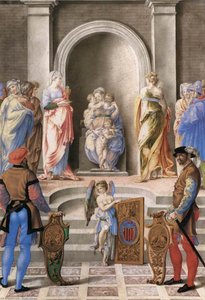 The Three Theological Virtues
 Holy Family with Santa Isabel and San Juanito1556
 Pages from the Farnese Hours1538
Essays over Pietà
 Masterpieces of Giotto: The Top 25 Essential Artworks of the Renaissance PioneerExplore Giotto's greatest masterpieces and his role in the Renaissance. Discover the full collection online at OriginalUniqueArt.com.
 Mastering Color and Light: The Timeless Brilliance of Titian's Venetian MasterpiecesExplore the luminous mastery of Titian. Discover how the Venetian master revolutionized color and light through breathtaking Renaissance te…
 Michelangelo Buonarroti: A Renaissance Titan – Life, Works & Enduring LegacyExplore the life, works & enduring legacy of Michelangelo Buonarroti, a Renaissance titan. Discover his iconic sculptures, frescoes, and ar…