
 Voorvertoning
 Verstuur
 Delen
Delen
 Details bekijken

 Download
 Vergelijkbare items
 Röntgenonderzoek
 Diavoorstelling
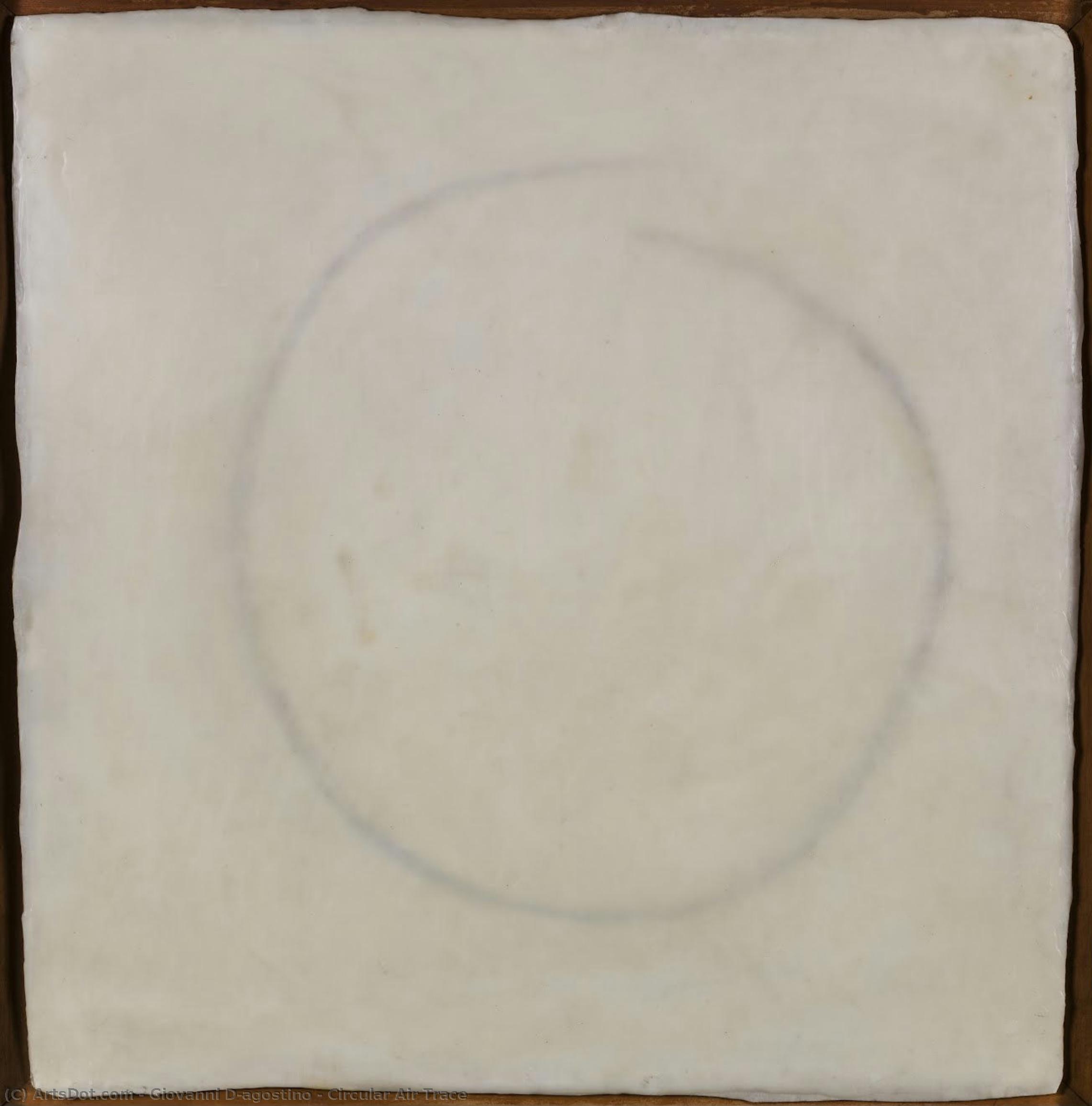
Circular Air Trace
 Oil On Canvas
- WallArt
- Minimalist
 1980
1980- Modern
 97.0 x 93.0 cm
 Galleria d'Arte Moderna Achille Forti
 Lees meer
Koop een digitale afbeelding in hoge resolutie met verbeterde kwaliteit, die veel superieur is aan de online voorvertoning.
Elk bestand wordt met uiterste precisie voorbereid door onze interne specialisten, met behulp van geavanceerde tools en deskundige handmatige retouche. Wij garanderen dat elke afbeelding een uitzonderlijke helderheid, nauwkeurige kleurweergave en verfijnde details bezit.
Het uiteindelijke bestand wordt binnen 72 uur per e-mail geleverd, geoptimaliseerd voor direct gebruik in professionele, redactionele en printomgevingen. Dit is dezelfde kwaliteit waarop vooraanstaande designstudio's, uitgevers en galerieën vertrouwen.
Digitale afbeeldingen
Download een bestand met hoge resolutie voor persoonlijke weergave, afdrukken en creatieve projecten. ( Bestel print Bestel handgeschilderde reproductie)
Inbegrepen bij elke bestelling van een digitale afbeelding
Professionele digitale levering, gegarandeerd
Wanneer u kiest voor OriginalUniqueArt.com, ontvangt u niet alleen een afbeelding – u krijgt een professioneel verbeterd digitaal kunstwerk, met precisie vervaardigd en voorzien van een tevredenheidsgarantie. Dit is alles wat automatisch bij uw bestelling is inbegrepen:

Snelle levering per e-mail
Uw hoogwaardige digitale afbeeldingsbestand wordt binnen 72 uur na bestelling naar u gemaild – klaar voor direct gebruik.

AI-verbeterd digitaal bestand
Uw kunstwerk wordt professioneel geoptimaliseerd met behulp van geavanceerde AI-tools en handmatige bewerkingen, waardoor maximale details, helderheid en kleurnauwkeurigheid worden gegarandeerd.

Gratis levenslange herlevering van digitale afbeeldingen
Je bestand per ongeluk verwijderd of kwijtgeraakt? Geen zorgen – we sturen het u op elk gewenst moment gratis opnieuw toe.

Geen invoerkosten – nooit
Geniet direct van uw kunstwerk zonder invoerrechten, belastingen of verzendkosten – digitale downloads zijn altijd belastingvrij.

Garantie op kleurgetrouwheid
Met behulp van professionele hulpmiddelen en kleurbeheer zorgen wij ervoor dat uw digitale afbeelding de originele kleuren zo nauwkeurig mogelijk weergeeft.

60 dagen tevredenheidsgarantie
Als u niet tevreden bent met uw digitale afbeelding, passen wij deze aan of storten wij 100% terug binnen 60 dagen – zonder vragen gesteld.

100% Geld-terug-garantie
Niet tevreden? Ontvang binnen 60 dagen na ontvangst van uw digitale bestand uw volledige aankoopbedrag terug – zonder vragen te stellen.

Korting bij grote bestellingen
Koop 3 afbeeldingen, bespaar 10% - Koop 5, bespaar 15% - Koop 10+, bespaar 20%. Ideaal voor creatieve projecten, galerieën en bureaus.
Beschrijving verzamelobject
The Geometry of Stillness: Exploring Circular Air Trace
To stand before Circular Air Trace is to encounter a moment suspended in time, a visual breath captured on canvas. This piece eschews the drama of narrative or the complexity of figurative representation, instead offering a profound meditation through pure geometry. The eye is immediately drawn to the pristine white circle, perfectly centered within its square embrace. It is an object of exquisite simplicity, yet one that demands deep contemplation. The composition itself—the dialogue between the contained circle and the surrounding void—speaks volumes about balance, focus, and the inherent order underlying apparent chaos.
A Dialogue in Line and Tone
The technical mastery evident here lies not in opulent brushwork, but in restraint. A thin, almost hesitant brown line defines both the perimeter of the central circle and the outer edge of the canvas itself, creating a delicate framing device. This linearity is crucial; it suggests a hand guiding the eye with utmost care. The background, rendered in textured off-white or cream tones, possesses a subtle grit that contrasts beautifully with the smooth expanse of the white form. While the artist’s historical context—Giovanni d'Agostino, whose life spanned the early 14th century—suggests an era rooted in monumental sculpture and fresco, this work feels like a deliberate departure, perhaps echoing later modernist sensibilities while retaining a foundational sense of craftsmanship.
Symbolism Woven into Form
In art history, nothing carries such weight as the circle. It has been universally understood as the symbol of eternity, wholeness, and unity—a perfect cycle with no discernible beginning or end. By isolating this form against a muted backdrop, Circular Air Trace invites the viewer to project their own sense of completeness onto the canvas. The minimalist approach strips away distraction, leaving only the pure concept: the continuous loop. It is an abstract whisper about infinity, making it a potent piece for any space intended for quiet reflection or intellectual gathering.
Integrating Modern Minimalism into Classic Spaces
For the discerning collector or interior designer, this artwork offers unparalleled versatility. Its restricted palette of white, cream, and warm brown ensures that it will harmonize with nearly any existing decor scheme, whether you are curating a sleek, contemporary loft or adding a touch of refined abstraction to a classically appointed room. The subtle texture visible in the paint application hints at an underlying depth, preventing the piece from feeling sterile. It is a sophisticated anchor—a point of calm visual repose that elevates a space without ever shouting for attention.
Kunstenaarsbiografie
Giovanni d'Agostino: Life and Legacy
Early Life and Training
Giovanni d'Agostino (also known as Agostino di Giovanni) was an Italian architect and sculptor active between 1310 and 1347, born in Siena around 1285. His origins lie within a Sienese family with a tradition of sculpting and architecture. Early biographical accounts, notably those by Giorgio Vasari, suggest he initially trained in the workshop of Giovanni Pisano. However, modern scholarship proposes an apprenticeship under Camaino di Crescentino, father to Tino di Camaino, as more likely.
Collaborations and Artistic Development
D'Agostino’s career was characterized by frequent collaboration with other artists. He wasn’t a solitary figure but thrived within the workshop system common during his time. A significant partnership was formed with Agnolo di Ventura, culminating in their joint execution of the cenotaph of Guido Tarlati in the Cathedral of Arezzo (signed and dated 1330). This work is considered one of his major achievements.
- Vasari also mentions collaborations on commissions from the commune of Siena, including the Porta Romana and the iconic Torre del Mangia. Documentation confirms D'Agostino’s involvement in the construction of the Torre del Mangia in 1339.
- He was further involved in constructing fortifications at Massa Marittima, demonstrating his versatility beyond purely sculptural work.
Major Works and Style
While individual attribution can be challenging due to collaborative practices, D'Agostino’s contributions are evident in several key works:
- Cenotaph of Guido Tarlati (Arezzo Cathedral): A prime example of his sculptural skill and collaboration with Agnolo di Ventura. It provides valuable insight into 14th-century aristocratic culture.
- Torre del Mangia (Siena): His involvement in this iconic tower showcases his architectural capabilities and contribution to the Sienese skyline.
- Porta Romana (Siena): Another example of his architectural work, contributing to the city’s fortifications.
D'Agostino’s style reflects the transition from earlier Gothic forms towards a more refined and naturalistic approach. His figures, while still rooted in medieval conventions, display increasing attention to detail and anatomical accuracy.
Influences and Legacy
D'Agostino was influenced by both Giovanni Pisano and Camaino di Crescentino, absorbing elements of their respective styles. He, in turn, passed on his skills to his sons, Giovanni and Domenico, who also became sculptors, continuing the family tradition.
His work represents a crucial link in the development of Sienese art during the 14th century, bridging the gap between earlier Gothic traditions and the emerging Renaissance aesthetic. Although not as widely celebrated as some of his contemporaries, D'Agostino’s contributions were significant to the artistic landscape of Siena and Tuscany.Death and Historical Significance
The exact date of Giovanni d'Agostino’s death is unknown, but a document dated June 27, 1347, indicates he was no longer living. His work remains as a testament to the artistic vitality of Siena during the Gothic period, and his collaborations exemplify the communal nature of art production in medieval Italy.

Giovanni d'Agostino
1285 - 1347 , Italy
Belangrijkste feiten
- Birth Date: c. 1285
- Birth Place: Siena, Italy
- Death Date: 1347
- Influenced: Giovanni di Agostino (son), Domenico di Agostino (son)
- Influenced By: Giovanni Pisano, Camaino di Crescentino
- Movement: Gothic art
- Name: Giovanni d'Agostino
- Nationality: Italian
- Notable Works: Cenotaph of Guido Tarlati, Torre del Mangia, Porta Romana

