

 Bekijk op ware grootte
 Verstuur
 Delen
Delen
 Details bekijken
 Gids
Gids

 Download
 Vergelijkbare items
 Röntgenonderzoek
 Diavoorstelling
 Statistieken
Camera obscura


 Lees meer
Handgemaakte olieverfreproductie
Met de hand geschilderd in olieverf op canvas in uw gewenste maat en lijst, op bestelling gemaakt door onze kunstenaars. ( Schakel over naar print Schakel over naar digitale afbeeldingen)




P118B $10

P118H $10

P118W $10

P438Z $10

P508JH $12

P508YH $12

P805H $10

P805Z $10

P919BZ $10

P919G $10

P919XJ $10

P959ZH $10

P968JZ $12

W106C $8

W218G $10

W218JH $8

W218Y $10

W307PJ $10

W316G $10

W316PJ $8

W316Y $10

W398PJ $8

W4111J $10

W500HY $15

W500JH $15

W692G $12

W849H $8

W940BG $15

W953PJ $8




Kies uit onze vooraf ingestelde maten die overeenkomen met de originele verhoudingen van het kunstwerk.

U kunt uw eigen afmetingen invoeren om in een specifieke lijst of ruimte te passen. Als de door u gekozen maat niet overeenkomt met de verhoudingen van het originele beeld, zullen we het kunstwerk bijsnijden of het schilderij uitbreiden met extra handgeschilderde elementen. Een digitale mockup wordt ter goedkeuring naar u verzonden voordat de productie begint.
Houd er rekening mee dat de preview op het scherm niet de werkelijke uitsnede of uitbreiding weergeeft. Alleen de mockup toont de uiteindelijke compositie nauwkeurig.
Hoewel aangepaste afmetingen mogelijk zijn, raden we aan een maat uit de vooraf gedefinieerde lijst te selecteren om de originele verhoudingen te behouden.
Na de bestelling zal het team van OriginalUniqueArt.com per e-mail contact opnemen met de klant voor instructies en een mockup-voorbeeld sturen.
Wereldwijde levering () binnen 3 tot 4 weken in plaats van de standaard 5 weken. (20 september). Zonder concessies aan de kwaliteit.

Gratis wereldwijde expressverzending

Hoogwaardig linnen canvas

Volledige verzendverzekering

Garantie op terugbetaling van invoerrechten

Garantie op exacte kleurweergave

Retourbeleid van 100 dagen (alleen bij defecten)

100% Geld-terug-garantie

Korting bij meerdere afnames
 De optie voor glas is alleen beschikbaar bij een formaat kleiner dan 110 cm.

Camera obscura
Reproductiemethode
Formaat reproductie
-


Totaalprijs
$ 300
A Sculptural Echo of Light and Vision
Canaletto’s “Camera Obscura,” a meticulously crafted wooden device dating back to around 1700, isn't merely a reproduction; it’s a tangible embodiment of the revolutionary vision that shaped his artistic practice. This intimate sculpture, presented against a stark black backdrop, immediately draws the eye, inviting us into a world where light and shadow dance in harmonious collaboration. The piece speaks volumes about Canaletto’s innovative approach to capturing reality – an approach deeply rooted in observation and a fascination with the mechanics of vision itself. The geometric precision of the boxy structure, constructed from carefully joined wooden panels, suggests both the artist's meticulousness and a profound understanding of spatial relationships. It’s not simply a representation of a camera obscura; it *is* the camera obscura, distilled into its essential form.
- Material & Construction: The use of wood – likely stained or varnished to preserve its beauty – speaks to Canaletto's appreciation for tactile quality and enduring craftsmanship. The intricate joinery hints at a deliberate process, reflecting the artist’s careful attention to detail.
- Form & Composition: The vertical orientation emphasizes the height and solidity of the device, creating a sense of direct engagement with the viewer. Lines dominate – sharp, clean lines defining the boxy structure, contrasting with the subtle texture of the wood grain.
- Symbolic Weight: The camera obscura itself represents a pivotal moment in art history—a precursor to photography and a testament to Canaletto’s pioneering spirit. It embodies the pursuit of accurate representation, challenging traditional methods and opening new avenues for artistic expression.
Unlocking the Secrets of Early Photography
Canaletto's fascination with the camera obscura wasn't simply an aesthetic curiosity; it was a deeply practical investigation into how light and shadow create images. The inscription on the device – “A Camera Obscura” – provides a crucial clue, revealing that this object belonged to the Venetian master himself. This discovery dramatically shifts our understanding of Canaletto’s process: he didn't just paint what he saw; he actively *observed* how light transformed his surroundings into visual forms. Research suggests that Canaletto utilized the camera obscura as a tool for sketching, meticulously documenting architectural details and urban landscapes with unprecedented accuracy. The device allowed him to capture perspective and spatial relationships with remarkable precision – a skill that profoundly influenced his later paintings.
Historical Context:The invention of the camera obscura in the 16th century marked a watershed moment in art history. Initially used as a scientific instrument for astronomical observation, it quickly gained popularity among artists seeking to improve their draftsmanship and understand perspective. Canaletto’s embrace of this technology demonstrates his commitment to innovation and his desire to push the boundaries of artistic representation.
A Window into Venice: The Artist's Process
The “Camera Obscura” offers a rare glimpse into Canaletto’s working methods. It’s believed that he used this device not just for sketching, but also as a means of studying light and shadow—analyzing how they interacted with buildings and streets to create the illusion of depth and volume. The resulting drawings were then translated into his celebrated paintings, imbuing them with an extraordinary sense of realism and atmospheric detail. The meticulousness evident in the camera obscura’s construction mirrors the painstaking care Canaletto invested in every brushstroke of his finished works. It's a testament to his dedication to capturing not just appearances, but also the very essence of Venice.
Recreating a Masterpiece: A Reproduction for Today
Reproducing Canaletto’s “Camera Obscura” is more than simply creating a copy; it’s about preserving a vital piece of art history and celebrating the ingenuity of one of Venice's greatest artists. The resulting reproduction captures not only the physical form of the device but also its symbolic significance—a reminder of the enduring power of observation, innovation, and the pursuit of accurate representation. This meticulously crafted replica serves as a tangible link to the 18th century, inviting viewers to contemplate the origins of photography and appreciate Canaletto’s pioneering legacy.
Biografie van de kunstenaar
Giovanni Antonio Canal: De Verhalenverteller van Venetië
Giovanni Antonio Canal, beter bekend als Canaletto, was een Venetiaanse kunstenaar wiens naam synoniem staat voor de levendige en gedetailleerde weergave van zijn stad. Geboren in 1697, groeide hij op in een familie met een artistieke traditie – zijn vader was decorontwerper voor het theater – wat hem vroegtijdig introduceerde in de wereld van schilderkunst en compositie. Zijn leven en werk vormen een fascinerende blik in de 18e eeuw, een tijd waarin Venetië, als handels- en culturele centrum, haar schoonheid en complexiteit probeerde vast te leggen op doek.De Jonge Canaletto: Rome en de Oosterse Invloeden
Canaletto’s artistieke reis begon in 1718 met een verblijf in Rome. Daar, onder begeleiding van zijn vader, leerde hij de fijne kneepjes van het schilderen, met name het creëren van overtuigende perspectieven en het vastleggen van licht en schaduw. Een cruciale invloed kwam echter via Giovanni Paolo Pannini, een andere Venetiaanse kunstenaar die bekend stond om zijn topografische schilderijen – gedetailleerde weergaven van stadsgezichten. Pannini’s methode, waarbij nauwkeurige tekeningen werden gebruikt als basis voor de uiteindelijke schildering, werd door Canaletto overgenomen en vormde de kern van zijn eigen stijl. De invloed van de Oostenrijkse kunstenaars was ook voelbaar, met name in het gebruik van kleur en compositie.De Venetiaanse Vedute: Een Stad in Detail
Na terugkeer naar Venetië begon Canaletto zich te onderscheiden door zijn focus op *vedute* – stadsgezichten. Deze werken, die vaak de levendige drukte van de kanalen, de grandeur van de paleizen en de dagelijkse activiteiten van de bevolking weergeven, werden snel populair. In tegenstelling tot eerdere kunstenaars die Venetië vaak idealiseerden, was Canaletto een observator. Hij schilderde de stad zoals hij hem zag – met al haar imperfecties, vervallen gebouwen en drukke straten. Zijn werken zijn niet alleen nauwkeurig, maar ook vol leven en sfeer. Een belangrijk aspect van zijn techniek was het gebruik van een camera obscura, een hulpmiddel dat licht door een klein gat projecteerde op een oppervlak, waardoor hij de perspectieven en verhoudingen met grote precisie kon vastleggen.Canaletto in Engeland: Nieuwe Horizonten
In 1746 reisde Canaletto naar Engeland, waar hij werd uitgenodigd door Joseph “Consul” Smith, een rijke Britse koopman en kunstverzamelaar. Smith was onder de indruk van Canaletto’s werk en kocht er een aanzienlijke hoeveelheid. Canaletto schilderde vervolgens verschillende landschappen en stadsgezichten in Engeland, waaronder Warwick Castle en Alnwick Castle. Deze werken toonden zijn vermogen om zich aan te passen aan nieuwe omgevingen en om de schoonheid van het Britse landschap vast te leggen. Zijn Engelse periode was bijzonder succesvol, mede dankzij Smith’s invloed en de populariteit van Venetiaanse kunst in Groot-Brittannië.Een Erfgoed van Detail en Sfeer
Canaletto’s nalatenschap is immens. Zijn *vedute* zijn niet alleen belangrijke historische documenten, maar ook prachtige voorbeelden van schilderkunst. Zijn werk heeft een grote invloed gehad op latere kunstenaars, waaronder Canaletto II, zijn neef en leerling, die de naam “Canaletto” verder gebruikte om zijn eigen carrière te promoten. De werken van Canaletto bevinden zich in musea over de hele wereld, waaronder het National Gallery in Londen, en blijven een bron van inspiratie voor kunstenaars en liefhebbers. Zijn vermogen om Venetië vast te leggen met zo’n detail en sfeer is ongeëvenaard, waardoor hij tot op de dag van vandaag een van de meest gerespecteerde en geliefde kunstenaars uit de 18e eeuw blijft.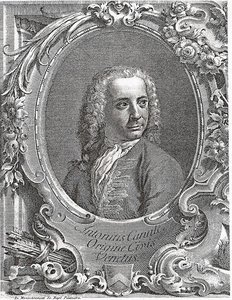
Canaletto
1697 - 1768 , Italië
Snelle feiten
- Artistic Movement Or Style: Vedute Venetiaanse
- Artists Or Movements Influenced By This Artist: ['Bernardo Canal']
- Artists Who Influenced This Artist: ['Giovanni Paolo Pannini']
- Date Of Birth: 18 okt 1697
- Date Of Death: 19 apr 1768
- Full Name: Giovanni Antonio Canal
- Nationality: Italiaans
- Notable Artworks:
- Stonemasons Yard
- Regatta Canal Grande
- Eton College
- Place Of Birth: Venetië, Italië
Gerelateerde artikelen

John Constable's Top 25 Meesterwerken: Landschappen die de Ziel Raaken | OriginalUniqueArt
Ontdek de 25 mooiste schilderijen van John Constable, meester van de Engelse Romantiek. Van idyllische landschappen tot iconische Hay Wain – bewonder zijn techniek en emotie. Museumkwaliteit reproducties & decoratie op OriginalUniqueArt.com.

Evocations of Place: A Historical Journey Through Landscape Art
Explore the rich history of landscape art with OriginalUniqueArt. Discover renowned artists, movements like Impressionism & Romanticism, and expert guidance for collecting timeless pieces. Find your perfect serene escape today!

Giovanni Antonio Canal (Canaletto): A Venetian Master of Light, Space & Societal Observation
Explore the life & art of Giovanni Antonio Canal (Canaletto), a Venetian master renowned for his breathtaking cityscapes. Discover his techniques, legacy, and captivating depictions of 18th-century Venice & London.

Michelangelo Morlaiter: Venetian Landscapes & the Pursuit of Atmospheric Realism
Explore the captivating landscapes of Michelangelo Morlaiter, a key figure in 18th-century Venetian painting. Discover his mastery of atmospheric perspective and lasting influence on Italian art history. Learn more at OriginalUniqueArt.

Romantische Landschappen: Top 10 Meesterwerken voor een Sfeervol Interieur | OriginalUniqueArt.nl
Ontdek de 10 meest iconische meesterwerken van de Romantiek! Reis door de tijd met Caspar David Friedrich, Turner & Delacroix. Laat je inspireren en vind museumkwaliteit kunst reproducties voor een sfeervol interieur op OriginalUniqueArt.com.


