

 Voorvertoning
 Verstuur
 Delen
Delen
 Details bekijken
 Gids
Gids

 Download
 Vergelijkbare items
 Röntgenonderzoek
 Diavoorstelling
 Q&A
Q&A Statistieken
Camera obscura
 Acrylic
- WallArt
- Impressionism
 1700
1700 22.0 x 38.0 cm
 Museo Correr
 Lees meer
Giclée / Kunstafdrukken
Giclée- of canvasafdruk van museumkwaliteit met een snelle productie en flexibele afwerkingsmogelijkheden. ( Bestel handgeschilderde reproductie Schakel over naar digitale afbeeldingen)




P118B €10

P118H €10

P118W €10

P438Z €10

P508JH €12

P508YH €12

P805H €10

P805Z €10

P919BZ €10

P919G €10

P919XJ €10

P959ZH €10

P968JZ €12

W106C €8

W218G €10

W218JH €8

W218Y €10

W307PJ €10

W316G €10

W316PJ €8

W316Y €10

W398PJ €8

W4111J €10

W500HY €15

W500JH €15

W692G €12

W849H €8

W940BG €15

W953PJ €8




Kies uit onze vooraf ingestelde maten die overeenkomen met de originele verhoudingen van het kunstwerk.

Voer de gewenste breedte en hoogte in, passend bij uw lijst of muur. Een afdruk kan alleen worden ingekort en nooit groter worden gemaakt dan het origineel; een formaat met andere verhoudingen zal daarom een deel van de afbeelding verliezen. Wij sturen u een digitaal mockup ter goedkeuring voordat we tot drukwerk overgaan. De afbeelding op deze pagina toont niet de werkelijke uitsnede — dit is alleen te zien op het mockup.
Wereldwijde levering () binnen 2 weken in plaats van de standaard 4/5 weken. (30 oktober)

Gratis wereldwijde expressverzending

Hoogwaardig linnen canvas

Volledige verzendverzekering

Garantie op terugbetaling van invoerrechten

Garantie op exacte kleurweergave

Retourbeleid van 100 dagen (alleen bij defecten)

100% Geld-terug-garantie

Korting bij meerdere afnames
 De optie voor glas is alleen beschikbaar bij een formaat kleiner dan 110 cm.

Camera obscura
Giclée / Kunstafdrukken
Afmetingen reproductie
-


Eindtotaal
€ 72
Canaletto’s Camera Obscura: A Window Into Venetian Vision
The artist Giovanni Antonio Canaletto, commonly known as Canaletto (1697 – 1768), stands as one of the most celebrated figures in eighteenth-century Venetian painting. His meticulous depictions of Venice—the canals shimmering under sunlight, the palaces adorned with opulent decoration—captivate viewers even today. But beyond their aesthetic beauty lies a fascinating secret: Canaletto’s unparalleled accuracy stems from a technique that predates photography – the camera obscura. This ingenious device, essentially a darkened room equipped with a pinhole aperture and a mirror, allowed him to capture the essence of his surroundings with remarkable precision, shaping not only his artistic output but also influencing the broader understanding of perspective and visual representation.- The Device Itself: Canaletto’s camera obscura wasn't merely a tool; it was a conceptual breakthrough. Constructed from wood and glass, it functioned by projecting an inverted image of the outside world onto a surface within—typically tracing paper or canvas—positioned opposite to the pinhole. This method ensured that the artist could faithfully reproduce architectural details and atmospheric effects without resorting to laborious sketching techniques.
- A Reflection of Scientific Curiosity: Canaletto’s embrace of the camera obscura reflects the burgeoning scientific interest in optics during his lifetime. Astronomers and mathematicians alike were experimenting with similar instruments, attempting to unravel the mysteries of light and vision. Canaletto's use of this technique wasn't simply artistic expediency; it represented a conscious engagement with contemporary intellectual debates about how we perceive reality.
- Venetian Landscape Painting: The camera obscura profoundly impacted Canaletto’s style. By allowing him to observe the scene from multiple viewpoints simultaneously, he achieved a level of realism previously unattainable. His paintings—particularly those capturing the grandeur of St Mark's Square and the Doge’s Palace—are characterized by subtle gradations of color, masterful shading, and an astonishingly accurate depiction of architectural proportions.
- Symbolism Beyond Technique: Canaletto’s camera obscura technique wasn’t just about achieving visual accuracy; it also conveyed a deeper symbolic message. The darkened room represented introspection and contemplation—a deliberate distancing from the immediate sensory experience to gain access to a more profound understanding of the world around him. This approach mirrored the philosophical currents of the Enlightenment, emphasizing reason and observation as pathways to knowledge.
- Legacy in Photography: Canaletto’s pioneering use of the camera obscura foreshadowed the invention of photography centuries later. By demonstrating that it was possible to capture an image without direct contact with the subject matter—a feat previously considered impossible—he fundamentally altered our conception of artistic representation and paved the way for a new era of visual art.
Notable Works Featuring Camera Obscura Technique
Canaletto’s mastery of perspective is evident in several iconic paintings, including “The Stonemason’s Yard” (c. 1725), where he meticulously rendered the textures and colors of the building materials with astonishing detail. Similarly, his depiction of St Mark's Square—particularly the Doge’s Palace—captures the shimmering light reflecting off the facades and windows, achieved through careful observation and skillful blending of pigments. These paintings stand as testament to Canaletto’s unwavering commitment to capturing the beauty and complexity of Venice with unparalleled accuracy – a feat made possible by his ingenious use of the camera obscura.Exploring Canaletto's Influence on Later Artists
Canaletto’s innovative approach to landscape painting resonated deeply with artists who followed him, notably Francesco Guardi and Michele Marieschi. These painters adopted similar techniques—primarily employing atmospheric perspective and meticulous detail—to convey the grandeur of Venetian vistas. Canaletto’s legacy extends beyond his own artistic achievements; he established a precedent for realistic representation that continues to inspire artists today, demonstrating that observation and careful technique can unlock profound insights into capturing the essence of visual experience.Reproductions & Inspiration
High-quality reproductions of Canaletto's paintings offer an exceptional opportunity to appreciate his artistic genius and immerse oneself in the atmosphere of eighteenth-century Venice. Consider framing a print alongside a photograph taken from one of Canaletto’s original viewpoints—a powerful gesture that honors both the artist’s pioneering technique and the enduring beauty of Venetian landscapes. Let Canaletto's Camera Obscura serve as a reminder that true artistic vision requires not only skill but also an unwavering dedication to observing and interpreting the world around us.Veelgestelde vragen
Hoe intens zijn de kleuren in "Camera obscura" door Canaletto?
"Camera obscura" door Canaletto heeft een Monochromatic kleurintensiteit.
Wat is de dominante kleur van "Camera obscura" door Canaletto?
Een Amber to Saffron tint loopt door "Camera obscura" door Canaletto.
In welk jaar en binnen welke stroming werd "Camera obscura" gemaakt?
"Camera obscura" door Canaletto dateert uit 1700 en behoort tot de Impressionism.
Biografie kunstenaar
Giovanni Antonio Canal: De Verhalenverteller van Venetië
Giovanni Antonio Canal, beter bekend als Canaletto, was een Venetiaanse kunstenaar wiens naam synoniem staat voor de levendige en gedetailleerde weergave van zijn stad. Geboren in 1697, groeide hij op in een familie met een artistieke traditie – zijn vader was decorontwerper voor het theater – wat hem vroegtijdig introduceerde in de wereld van schilderkunst en compositie. Zijn leven en werk vormen een fascinerende blik in de 18e eeuw, een tijd waarin Venetië, als handels- en culturele centrum, haar schoonheid en complexiteit probeerde vast te leggen op doek.De Jonge Canaletto: Rome en de Oosterse Invloeden
Canaletto’s artistieke reis begon in 1718 met een verblijf in Rome. Daar, onder begeleiding van zijn vader, leerde hij de fijne kneepjes van het schilderen, met name het creëren van overtuigende perspectieven en het vastleggen van licht en schaduw. Een cruciale invloed kwam echter via Giovanni Paolo Pannini, een andere Venetiaanse kunstenaar die bekend stond om zijn topografische schilderijen – gedetailleerde weergaven van stadsgezichten. Pannini’s methode, waarbij nauwkeurige tekeningen werden gebruikt als basis voor de uiteindelijke schildering, werd door Canaletto overgenomen en vormde de kern van zijn eigen stijl. De invloed van de Oostenrijkse kunstenaars was ook voelbaar, met name in het gebruik van kleur en compositie.De Venetiaanse Vedute: Een Stad in Detail
Na terugkeer naar Venetië begon Canaletto zich te onderscheiden door zijn focus op *vedute* – stadsgezichten. Deze werken, die vaak de levendige drukte van de kanalen, de grandeur van de paleizen en de dagelijkse activiteiten van de bevolking weergeven, werden snel populair. In tegenstelling tot eerdere kunstenaars die Venetië vaak idealiseerden, was Canaletto een observator. Hij schilderde de stad zoals hij hem zag – met al haar imperfecties, vervallen gebouwen en drukke straten. Zijn werken zijn niet alleen nauwkeurig, maar ook vol leven en sfeer. Een belangrijk aspect van zijn techniek was het gebruik van een camera obscura, een hulpmiddel dat licht door een klein gat projecteerde op een oppervlak, waardoor hij de perspectieven en verhoudingen met grote precisie kon vastleggen.Canaletto in Engeland: Nieuwe Horizonten
In 1746 reisde Canaletto naar Engeland, waar hij werd uitgenodigd door Joseph “Consul” Smith, een rijke Britse koopman en kunstverzamelaar. Smith was onder de indruk van Canaletto’s werk en kocht er een aanzienlijke hoeveelheid. Canaletto schilderde vervolgens verschillende landschappen en stadsgezichten in Engeland, waaronder Warwick Castle en Alnwick Castle. Deze werken toonden zijn vermogen om zich aan te passen aan nieuwe omgevingen en om de schoonheid van het Britse landschap vast te leggen. Zijn Engelse periode was bijzonder succesvol, mede dankzij Smith’s invloed en de populariteit van Venetiaanse kunst in Groot-Brittannië.Een Erfgoed van Detail en Sfeer
Canaletto’s nalatenschap is immens. Zijn *vedute* zijn niet alleen belangrijke historische documenten, maar ook prachtige voorbeelden van schilderkunst. Zijn werk heeft een grote invloed gehad op latere kunstenaars, waaronder Canaletto II, zijn neef en leerling, die de naam “Canaletto” verder gebruikte om zijn eigen carrière te promoten. De werken van Canaletto bevinden zich in musea over de hele wereld, waaronder het National Gallery in Londen, en blijven een bron van inspiratie voor kunstenaars en liefhebbers. Zijn vermogen om Venetië vast te leggen met zo’n detail en sfeer is ongeëvenaard, waardoor hij tot op de dag van vandaag een van de meest gerespecteerde en geliefde kunstenaars uit de 18e eeuw blijft.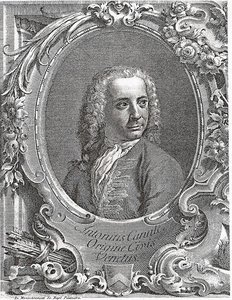
Canaletto
1697 - 1768 , Italië
Belangrijkste feiten
- Artistic Movement Or Style: Vedute Venetiaanse
- Artists Or Movements Influenced By This Artist: ['Bernardo Canal']
- Artists Who Influenced This Artist: ['Giovanni Paolo Pannini']
- Date Of Birth: 18 okt 1697
- Date Of Death: 19 apr 1768
- Full Name: Giovanni Antonio Canal
- Nationality: Italiaans
- Notable Artworks:
- Stonemasons Yard
- Regatta Canal Grande
- Eton College
- Place Of Birth: Venetië, Italië
Gerelateerde artikelen

Giovanni Antonio Canal (Canaletto): A Venetian Master of Light, Space & Societal Observation
Explore the life & art of Giovanni Antonio Canal (Canaletto), a Venetian master renowned for his breathtaking cityscapes. Discover his techniques, legacy, and captivating depictions of 18th-century Venice & London.

The Enduring Power of Painting: A Historical & Contemporary Exploration of Form and Emotion
Explore the rich history & enduring techniques of oil painting with OriginalUniqueArt. Discover masterpieces, learn about art collecting, and find authentic handmade reproductions crafted by skilled artists.

The Enduring Legacy of Oil on Canvas: Technique, History & Aesthetic Impact
Explore the rich history & techniques of oil painting – from Renaissance masters to Impressionism. Discover pigments, layering methods, and why this timeless medium endures. Expert insights for artists & art enthusiasts.

Barokke Pracht: Kunst die Grootsheid in Huis Brengt
Ontdek de barokke pracht! Leer over de geschiedenis, kenmerken en toepassingen van deze weelderige kunststijl in uw interieur. Laat u inspireren door meesters en breng grootsheid in huis.

The Dramatic Flourish: Exploring the Baroque Movement's Enduring Legacy in Art History
Explore the dramatic world of Baroque art! Discover iconic artists like Caravaggio & Rubens, defining techniques, and its lasting impact on art history. Expert insights for collectors & enthusiasts at OriginalUniqueArt.


