

 Voorvertoning
 Verstuur
 Delen
Delen
 Details bekijken

 Download
 Vergelijkbare items
 Röntgenonderzoek
 Diavoorstelling
Mediterranean lobster
 Oil
Oil- WallArt
- Renaissance
 1558
1558- Renaissance
 640.0 x 870.0 cm
 Österreichische Nationalbibliothek
 Lees meer
Giclée / Kunstafdrukken
Giclée- of canvasafdruk van museumkwaliteit met een snelle productie en flexibele afwerkingsmogelijkheden. ( Bestel handgeschilderde reproductie Koop afbeelding)




P118B $10

P118H $10

P118W $10

P438Z $10

P508JH $12

P508YH $12

P805H $10

P805Z $10

P919BZ $10

P919G $10

P919XJ $10

P959ZH $10

P968JZ $12

W106C $8

W218G $10

W218JH $8

W218Y $10

W307PJ $10

W316G $10

W316PJ $8

W316Y $10

W398PJ $8

W4111J $10

W500HY $15

W500JH $15

W692G $12

W849H $8

W940BG $15

W953PJ $8




Kies uit onze vooraf ingestelde maten die overeenkomen met de originele verhoudingen van het kunstwerk.

U kunt uw eigen afmetingen opgeven om in een specifieke lijst of ruimte te passen. Als de door u gekozen maat niet overeenkomt met de proporties van het originele kunstwerk, zullen wij de afbeelding bijsnijden of uitbreiden met een gespiegelde of effen rand. Een digitaal mockup wordt ter goedkeuring naar u verzonden voordat de productie begint.
Houd er rekening mee dat de preview op het scherm de werkelijke bijsneding of uitbreiding niet weergeeft. Alleen de mockup toont de uiteindelijke compositie nauwkeurig.
Hoewel aangepaste maten beschikbaar zijn, raden wij aan een afmeting uit de vooraf bepaalde lijst te kiezen om de originele proporties te behouden.
Wereldwijde levering () binnen 2 weken in plaats van de standaard 4/5 weken. (21 augustus)

Gratis wereldwijde expressverzending

Hoogwaardig linnen canvas

Volledige verzendverzekering

Garantie op terugbetaling van invoerrechten

Garantie op exacte kleurweergave

Retourbeleid van 60 dagen (alleen bij defecten)

100% Geld-terug-garantie

Korting bij meerdere afnames
 De optie voor glas is alleen beschikbaar bij een formaat kleiner dan 110 cm.

Mediterranean lobster
Giclée / Kunstafdrukken
Afmetingen reproductie
-


Eindtotaal
$ 81
Beschrijving verzamelobject
A Glimpse into Renaissance Marine Life: The Mediterranean Lobster
To stand before Giorgio Liberale's depiction of the Mediterranean lobster is to step directly into the vibrant, scientifically curious atmosphere of the 16th century. This monumental oil painting, executed in 1558, transcends mere natural history illustration; it is a profound meditation on life’s intricate beauty, rendered with an almost startling verisimilitude. Liberale, a master whose career bridged the gap between high art and empirical study, captured this magnificent crustacean not just as a subject, but as a living entity caught in time. The sheer scale of the work—a breathtaking 640 x 870 cm—lends it an imposing presence, demanding that the viewer approach with reverence.
Mastery of Texture and Light
The technical brilliance displayed here is nothing short of astonishing. Liberale’s command of oil paint allows the lobster's exoskeleton to appear palpably real. One can almost feel the rough, segmented texture under one's fingertips. The artist has achieved a remarkable depth in the coloration, utilizing rich shades of brown and vibrant orange that seem to absorb and reflect light simultaneously. Observe the claws; they are rendered with such meticulous detail that their sharp edges and natural patterns leap out from the pale, almost ethereal background. This minimalist setting is crucial, serving only to direct the entire focus onto the subject, allowing the viewer's eye to wander over every minute contour of the creature.
Historical Context: Art Meets Science
The creation of this piece in 1558 places it at a fascinating crossroads in intellectual history. The Renaissance was an era where humanism spurred an unprecedented desire to observe and categorize the natural world. Liberale’s work embodies this synergy, suggesting that art and scientific documentation were not separate pursuits but deeply intertwined disciplines. This painting offers us more than just a beautiful image; it is a primary historical document, offering invaluable insight into the Mediterranean ecosystem as understood by the learned minds of the sixteenth century. It speaks to an age fascinated equally by divine artistry and earthly biology.
Symbolism and Enduring Appeal
Beyond its scientific merit, the lobster carries inherent symbolic weight across cultures—representing resilience, vitality, and the deep mysteries of the sea. In this context, Liberale elevates the creature from a mere specimen to an emblem of enduring life force. For the modern collector or designer, owning a reproduction of this piece is acquiring more than just wall decor; it is commissioning a conversation piece steeped in history, artistry, and the untamed majesty of nature. It brings the depth and mystery of the Mediterranean directly into your curated space.
A Reproduction for Your Collection
To bring the grandeur of Liberale’s vision into your home or gallery, we offer high-quality reproductions of this masterpiece. By choosing a hand-painted rendition, you are not simply decorating; you are curating an experience—one that invites contemplation on the passage of time, the perfection of natural design, and the enduring genius of Renaissance masters.
Biografie van de kunstenaar
The Renaissance Visionary of the Deep
Giorgio Liberale (1527–1579) stands as a singular figure in the artistic landscape of the Italian Renaissance, distinguished not merely by his technical prowess but also by his pioneering role in blending art and science. Born in Udine, within the fertile cultural region of Friuli Venezia Giulia, Liberale’s life coincided with an era marked by intense intellectual ferment. This was the age of the humanist revival, a period where figures like Erasmus championed empirical observation alongside philosophical contemplation. Such a worldview, which prioritized the study of the natural world through direct experience, became the very heartbeat of Liberelle's creative soul. While biographical details of his early years remain somewhat fragmentary, his artistic output speaks volumes about a man dedicated to capturing the intricate beauty and biological complexity of the Mediterranean Sea.
The foundations of his mastery were laid during his formative training in Florence, where he apprenticed under the esteemed Giovanni Battista Buonatello. From this mentorship, Liberale absorbed much more than mere brushwork; he inherited a profound appreciation for classical ideals such as proportion, harmony, and anatomical accuracy. While Buonatello was primarily known for his sculptural techniques, Liberale expanded this sculptural sensibility into the realm of painting. He became particularly adept in the delicate use of watercolor and gouache—media that allowed him to pursue a level of transparency and luminosity essential for representing the fluid, translucent nature of marine life. This transition from the solid forms of sculpture to the ethereal textures of aquatic life defines the unique evolution of his artistic identity.
A Masterpiece of Marine Observation
Liberale's distinctive style is characterized by an unparalleled level of detail, a hallmark of what historians often term marine observation. Unlike many of his contemporaries who favored idealized or mythological sea monsters, Liberale sought the truth found in the living creature. His work functions as a bridge between fine art and scientific illustration, documenting marine species with an astonishing, almost modern realism. Through his eyes, the Mediterranean became a gallery of biological wonders, where every texture and anatomical feature was rendered with meticulous care.
His repertoire of subjects showcases a deep fascination with the diverse inhabitants of the sea:
- The Mediterranean Lobster: In his 1558 depictions, Liberale captures the vibrant, armored complexity of the lobster, blending scientific accuracy with a painterly elegance that brings the creature to life.
- Sea Animals: His broader collections of marine life serve as stunning 16th-century scientific illustrations, utilizing detailed watercolor to explore the varied forms of aquatic organisms.
- The Bottlenosed Skate: In works such as his study of the underside of a bottlenosed skate, he demonstrates an incredible ability to capture subtle nuances of light and texture, revealing the hidden complexities of even the most flat and unassuming sea creatures.
Legacy and Historical Significance
The historical significance of Giorgio Liberale lies in his ability to transcend the boundaries of traditional Renaissance portraiture and landscape painting. By turning his gaze toward the depths of the ocean, he contributed to a burgeoning tradition of naturalism that would eventually pave the way for the scientific revolutions of later centuries. His paintings are not merely aesthetic objects; they are historical documents that reflect the 16th-century impulse to categorize, understand, and celebrate the natural world.
Today, Liberale is remembered as a master of detail whose work continues to captivate both art historians and marine enthusiasts alike. His ability to infuse scientific study with profound artistic beauty ensures his place in the canon of Renaissance masters. Through his delicate use of muted tones and precise linework, he invites us to look beneath the surface of the waves and rediscover the silent, magnificent world that exists just out of sight.

giorgio liberale
1527 - 1579 , Italy
Belangrijkste feiten
- Artistic Movement Or Style: Renaissance art
- Artists Or Movements Influenced By This Artist: ['Scientific Illustration']
- Artists Who Influenced This Artist: ['Leonardo da Vinci']
- Date Of Birth: Udine, Italy (1527)
- Date Of Death: 1579
- Full Name: Giorgio Liberale
- Nationality: Italian
- Notable Artworks: ['Sea Animals']
- Place Of Birth: Udine
Gerelateerde artikelen

The Enduring Legacy of Oil on Canvas: Technique, History & Aesthetic Impact
Explore the rich history & techniques of oil painting – from Renaissance masters to Impressionism. Discover pigments, layering methods, and why this timeless medium endures. Expert insights for artists & art enthusiasts.

Silent Narratives: Exploring the Enduring Appeal of Still Life Painting Across Centuries
Explore the rich history of still life painting with OriginalUniqueArt. Discover Dutch Masters, decode vanitas symbolism & learn about collecting timeless art. Expert insights and museum-quality reproductions.
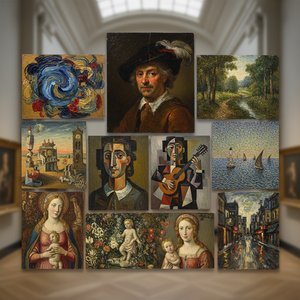
Top 10 Legendarische 'Olieverf op Paneel' Meesterwerken die de Kunst Veranderden | OriginalUniqueArt
Ontdek de 10 legendarische 'olieverf op paneel' meesterwerken die kunstgeschiedenis schreven! Van impressionisme tot abstractie, leer over beroemde kunstenaars en hun iconische werken. Vind museumkwaliteit reproducties & decoratie-inspiratie op OriginalUniqueArt.com.

Oil on Canvas: A Historical & Technical Exploration of a Timeless Artistic Medium
Explore the rich history & enduring techniques of oil painting on canvas. Discover the science behind its longevity, conservation practices, and contemporary relevance. Expert insights for art enthusiasts.

The Enduring Power of Painting: A Historical & Contemporary Exploration of Form and Emotion
Explore the rich history & enduring techniques of oil painting with OriginalUniqueArt. Discover masterpieces, learn about art collecting, and find authentic handmade reproductions crafted by skilled artists.

