Voorvertoning
 Verstuur
 Delen
Delen
 Details bekijken

 Download
 Vergelijkbare items
 Röntgenonderzoek
 Diavoorstelling
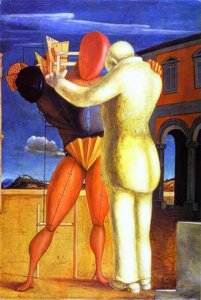
Visitatore di fronte


 Lees meer
Giclée / Kunstafdrukken
Giclée- of canvasafdruk van museumkwaliteit met een snelle productie en flexibele afwerkingsmogelijkheden. ( Bestel handgeschilderde reproductie Koop afbeelding)




P118B $10

P118H $10

P118W $10

P438Z $10

P508JH $12

P508YH $12

P805H $10

P805Z $10

P919BZ $10

P919G $10

P919XJ $10

P959ZH $10

P968JZ $12

W106C $8

W218G $10

W218JH $8

W218Y $10

W307PJ $10

W316G $10

W316PJ $8

W316Y $10

W398PJ $8

W4111J $10

W500HY $15

W500JH $15

W692G $12

W849H $8

W940BG $15

W953PJ $8




Kies uit onze vooraf ingestelde maten die overeenkomen met de originele verhoudingen van het kunstwerk.

U kunt uw eigen afmetingen opgeven om in een specifieke lijst of ruimte te passen. Als de door u gekozen maat niet overeenkomt met de proporties van het originele kunstwerk, zullen wij de afbeelding bijsnijden of uitbreiden met een gespiegelde of effen rand. Een digitaal mockup wordt ter goedkeuring naar u verzonden voordat de productie begint.
Houd er rekening mee dat de preview op het scherm de werkelijke bijsneding of uitbreiding niet weergeeft. Alleen de mockup toont de uiteindelijke compositie nauwkeurig.
Hoewel aangepaste maten beschikbaar zijn, raden wij aan een afmeting uit de vooraf bepaalde lijst te kiezen om de originele proporties te behouden.
Wereldwijde levering () binnen 2 weken in plaats van de standaard 4/5 weken. (30 augustus)

Gratis wereldwijde expressverzending

Hoogwaardig linnen canvas

Volledige verzendverzekering

Garantie op terugbetaling van invoerrechten

Garantie op exacte kleurweergave

Retourbeleid van 60 dagen (alleen bij defecten)

100% Geld-terug-garantie

Korting bij meerdere afnames
 De optie voor glas is alleen beschikbaar bij een formaat kleiner dan 110 cm.

Visitatore di fronte
Giclée / Kunstafdrukken
Afmetingen reproductie
-


Eindtotaal
$ 81
A Glimpse into the Dreamscape: Giorgio de Chirico’s *Visitatore di fronte*
Giorgio de Chirico's 1936 drawing, *Visitatore di fronte*, isn’t merely a portrait; it’s a carefully constructed fragment of a dream, a haunting echo from the artist’s uniquely unsettling vision. This work, rendered in meticulous pencil on paper, captures a solitary figure – a “visitor” or “viewer,” as the title suggests – standing before an indeterminate space, bathed in a diffused light that simultaneously invites and repels. It's a piece deeply rooted in de Chirico’s signature Metaphysical style, a movement he pioneered to explore the subconscious and challenge conventional notions of reality.
The drawing immediately establishes a sense of profound stillness, yet beneath this surface tranquility lies an undercurrent of unease. The man is formally dressed – a dark suit jacket and tie speak to a bygone era, perhaps even hinting at a lost aristocracy – but his posture is subtly off-balance, suggesting a detachment or a quiet melancholy. His gaze is directed outwards, seemingly searching for something just beyond the frame, mirroring the viewer’s own attempt to decipher the scene's enigmatic quality. The background is deliberately vague, composed of geometric shapes and architectural elements that recall de Chirico’s recurring motifs: deserted squares, empty buildings, and a pervasive sense of isolation.
The Language of Line and Shadow
De Chirico’s technique is characterized by an almost obsessive attention to detail within a remarkably restrained palette. The drawing relies heavily on linear representation – precise outlines define the figure's form, his clothing, and the surrounding architecture. However, it’s not simply about accurate depiction; rather, the lines themselves carry symbolic weight. Hatching and cross-hatching are skillfully employed to create subtle gradations of tone, suggesting volume and depth without resorting to traditional shading techniques. This deliberate avoidance of bright highlights contributes to the drawing's overall sense of mystery and ambiguity.
The use of grey tones – ranging from deep blacks to pale beiges – reinforces the melancholic mood. The paper itself plays a crucial role, its visible grain adding texture and a subtle aged quality that further enhances the feeling of timelessness. It’s as if this scene has been unearthed from a forgotten memory, preserved in the delicate tracery of pencil strokes.
Echoes of Nietzsche and the Surreal
To fully appreciate *Visitatore di fronte*, it's essential to understand de Chirico’s intellectual influences. The artist was deeply fascinated by the philosophy of Friedrich Nietzsche, particularly his concepts of the “eternal recurrence” and the “will to power.” These ideas permeated his art, informing his exploration of themes such as alienation, illusion, and the subjective nature of reality. The drawing can be interpreted as a visual representation of this philosophical inquiry – a meditation on the human condition within a world stripped bare of its comforting illusions.
Furthermore, *Visitatore di fronte* anticipates the rise of Surrealism, though de Chirico resisted any easy categorization. He sought to tap into the subconscious through a deliberate distortion of reality, creating images that were both familiar and unsettling. The drawing’s dreamlike quality – the improbable setting, the solitary figure, the pervasive sense of unease – perfectly embodies this approach.
Symbolism and Emotional Resonance
The title itself, *Visitatore di fronte*, is laden with symbolic meaning. “Visitor” suggests an observer, a witness to something beyond our comprehension. “Front” implies a confrontation, a moment of intense scrutiny. The drawing invites us to become that visitor, to contemplate the figure’s expression and attempt to decipher the secrets hidden within this enigmatic space.
Ultimately, *Visitatore di fronte* is not simply a portrait; it's an invitation into de Chirico’s meticulously crafted dreamscape. It evokes feelings of loneliness, contemplation, and perhaps even a touch of melancholy – a poignant reminder of the inherent mysteries that lie beneath the surface of our everyday lives. It stands as a testament to de Chirico’s ability to capture not just what he saw, but also what he *felt*—a profound and enduring exploration of the human psyche.
Biografie van de kunstenaar
Giorgio de Chirico: Een Droomlandschap van de Geest
Giorgio de Chirico, geboren in 1888 in Volos, Griekenland, als zoon van Italiaanse ouders – een Genoese moeder en een Siciliaanse vader – begon zijn artistieke reis met een unieke combinatie van klassieke erfenis en een groeiend gevoel van moderne vervreemding. Zijn vroege opleiding aan de Athenische Polytechnische Academie legde een basis in traditionele technieken, maar het was zijn latere studie in München die zijn creatieve geest werkelijk ontvloog. Daar, midden in de intellectuele fermentatie van Europa vóór de oorlog, ontmoette hij de werken van Arnold Böcklin en Max Klinger, kunstenaars wiens symbolische landschappen en spookachtige beelden een diepe indruk op hem achterlieten. Even invloedrijk waren de filosofische stromingen van die tijd – de schrijfsels van Friedrich Nietzsche, Arthur Schopenhauer en Otto Weininger – die thema’s van existentialisme, de irrationele aard van menselijk verlangen en de subjectieve aard van realiteit onderzochten. Deze ideeën zouden centraal staan in de baanbrekende artistieke visie van de Chirico.De Geboorte van Metafysische Kunst
Omstreeks 1909 begon er een unieke stijl te ontstaan uit de verkenningen van de Chirico – een stijl die hij zelf “Metafysieke” kunst noemde. Dit was niet slechts een stijlinnovatie; het was een diepe poging om de verborgen realiteiten onder de oppervlakte van alledaagse ontmoetingen vast te leggen, om de onheilspellende poëzie te onthullen die in vertrouwdere ruimtes schommelde. Een cruciale gebeurtenis vond plaats tijdens een bezoek aan Florence en een ervaring in Piazza Santa Croce, wat leidde tot zijn iconische ‘Metafysische Plaatsverkeer’ serie. Deze schilderijen kenmerken zich door hun spookachtige stilte, lange dramatische schaduwen, logische perspectieven en de aanwezigheid van klassieke architectuur gecombineerd met onheilspellende elementen zoals gezichtsloze mannekens en reusachtige standbeelden. Het effect is diep verontrustend, roept een gevoel van nostalgie, isolatie en een bijna ondraaglijke heimwee naar iets verloren of ontoegankelijks op. De Chirico richtte de *Scuola Metafisica* op, wat een diepe impact had op Surrealisme, hoewel hij later afstand nam van de interpretaties van zijn werk door deze stroming. Zijn schilderijen waren niet bedoeld als illustraties van dromen, maar eerder als pogingen om realiteit vast te leggen buiten het zichtbare wereld – een rijk waar tijd en ruimte vloeibaar zijn en de grenzen tussen bewustzijn en onbewustzijn vervagen. Bekende werken zoals *De Verjagde Denkbeeld*, *Het Enigma van de Herfstmiddag* en *Het Lied van de Liefde* illustreren deze spookachtige esthetiek, uitnodigend kijkers om na te denken over de mysteries van het bestaan en de kwetsbaarheid van menselijke perceptie.Een Verandering in Stijl en een Duurzaam Erfgoed
Na de Eerste Wereldoorlog, rond 1919, nam de artistieke weg van de Chirico een onverwachte wending. Hij verwierp zijn eerdere metafysische benadering en omarmde daarentegen een meer traditionele neoclassieke of neobaroque stijl. Deze verschuiving werd met aanzienlijke controverse ontvangen; velen betreurden het verlies van de innovatieve geest die zijn vroege werk had gedefinieerd. De Chirico bleef echter vasthoudend aan zijn artistieke keuzes, herhaalde thema’s uit zijn verleden, maar presenteerde ze met een andere esthetische gevoeligheid. Hij bleef schilderen en exposeren gedurende zijn hele leven, verkende verschillende stijlen en onderwerpen terwijl hij tegelijkertijd een consistente toewijding aan vakmanschap en technische vaardigheid behield. Ondanks de kritiek is zijn invloed op latere generaties van kunstenaars niet te overschatten. Zijn innovatieve gebruik van ruimte, perspectief en symboliek daagde conventionele artistieke normen uit en legde de basis voor nieuwe vormen van expressie.Invloeden en Duurzaam Erfgoed
- Gevloed door: Arnold Böcklin, Max Klinger, Friedrich Nietzsche, Arthur Schopenhauer.
- Gevloed door: Surrealisme, met name kunstenaars zoals René Magritte en Salvador Dalí. Zijn werk had ook invloed op latere stromingen zoals Magic Realism, die een verhoogde gevoeligheid voor mysterie en psychologische diepte zocht in alledaagse realiteit.

Giorgio de Chirico
1888 - 1978 , Griekenland
Belangrijkste feiten
- Artistic Movement Or Style: Metafysische kunst
- Artists Or Movements Influenced By This Artist:
- Surrealisme
- René Magritte
- Artists Who Influenced This Artist:
- Arnold Böcklin
- Max Klinger
- Date Of Birth: 10 juli 1888
- Date Of Death: 20 november 1978
- Full Name: Giorgio de Chirico
- Nationality: Italiaans
- Notable Artworks:
- Het Vrezen van de Denkende
- De Enigma van een Herfst Middag
- Het Lied van de Liefde
- Place Of Birth: Volos, Griekenland
Gerelateerde artikelen

Top 10 Witte Meesterwerken: Kunstgeschiedenis & Interieurinspiratie
Ontdek de top 10 witte meesterwerken uit de kunstgeschiedenis! Van Monet tot Mondriaan, bewonder abstracte vormen & serene kleuren. Vind museumkwaliteit reproducties en interieurinspiratie op OriginalUniqueArt.com.
The Nuances of Graphite: Exploring Emotional Depth & Technical Mastery in Pencil Drawing
Explore the captivating world of graphite drawing! Discover its rich history, master essential techniques like chiaroscuro, and learn how artists evoke emotion through this timeless medium. Expert insights for art enthusiasts.
The Alchemy of Graphite: An Expert Guide to Mastering Detail and Depth in Pencil Sketching
Unlock the secrets of graphite sketching with our expert guide for art students. Learn to master pencil grades, create realistic depth, and capture intricate textures through professional techniques designed to elevate your observational drawing skills.

Meesterwerken in Zwart: Top 10 Schilderijen Gedreven door Donkere Tinten | OriginalUniqueArt.nl
Ontdek de kracht van donker! Verlies jezelf in onze top 10 zwarte schilderijen, van Caravaggio tot Manet. Leer over meesterwerken, technieken & emotie. Museumkwaliteit reproducties op OriginalUniqueArt.com – Kunst voor uw interieur.
The Power of Graphite: Mastering Depth, Texture, and Detail in the Art of Pencil Drawing
Explore the profound artistry of graphite drawing. Discover professional techniques for mastering depth, texture, and detail through a lens of art history, from classical sketches to modern masterpieces. Elevate your understanding of the pencil medium with our expert guide.