
 Voorvertoning
 Verstuur
 Delen
Delen
 Details bekijken
 Gids
Gids

 Download
 Vergelijkbare items
 Röntgenonderzoek
 Diavoorstelling
 Vraag & antwoord
 Statistieken
Untitled

- 142.0 x 122.0 cm

 Lees meer
Ontvang een bestand dat klaar is voor drukwerk en de kwaliteit van het online voorbeeld ver overstijgt. Elke digitale afbeelding die wij verkopen, is afkomstig van een high-resolution master uit onze database — meestal tussen de 5.000 en 15.000 pixels breed — zodat u met vertrouwen groot kunt afdrukken, nauwkeurig kunt bijsnijden of fijne details kunt reproduceren.
Geen enkel bestand verlaat ons atelier onbewerkt. Een digitaal expert controleert de kleuren aan de hand van het originele schilderij en corrigeert deze indien nodig, om vervolgens de helderheid en details te verbeteren met professionele retoucheertechnieken — waarbij de penseelstreek en stijl van de kunstenaar altijd strikt worden gerespecteerd. Het resultaat is een afbeelding die oogt als het schilderij zelf, en niet als een gescande foto met een filter.
U keurt de afbeelding goed voordat de bestelling wordt afgerond: onze expert stuurt u binnen 72 uur een e-mail ter beoordeling. Niet tevreden? Vraag om aanpassingen of correcties, of vraag een terugbetaling aan als de kwaliteit niet aan de verwachtingen voldoet.
Dit is de kwaliteit waarop uitgevers, designstudio's, galeries en drukkerijen vertrouwen.
Digitale afbeeldingen
Download een bestand met hoge resolutie voor persoonlijke weergave, afdrukken en creatieve projecten. ( Schakel over naar print Bestel handgeschilderde reproductie)
Inbegrepen bij elke bestelling van een digitale afbeelding
Professionele digitale levering, gegarandeerd
Wanneer u kiest voor OriginalUniqueArt.com, ontvangt u niet alleen een afbeelding – u krijgt een professioneel verbeterd digitaal kunstwerk, met precisie vervaardigd en voorzien van een tevredenheidsgarantie. Dit is alles wat automatisch bij uw bestelling is inbegrepen:

Snelle levering per e-mail
Uw hoogwaardige digitale afbeeldingsbestand wordt binnen 72 uur na bestelling naar u gemaild – klaar voor direct gebruik.

AI-verbeterd digitaal bestand
Uw kunstwerk wordt professioneel geoptimaliseerd met behulp van geavanceerde AI-tools en handmatige bewerkingen, waardoor maximale details, helderheid en kleurnauwkeurigheid worden gegarandeerd.

Gratis levenslange herlevering van digitale bestanden
Je bestand per ongeluk verwijderd of kwijtgeraakt? Geen zorgen – we sturen het u op elk gewenst moment gratis opnieuw toe.

Geen invoerkosten – nooit
Geniet direct van uw kunstwerk zonder invoerrechten, belastingen of verzendkosten – digitale downloads zijn altijd belastingvrij.

Garantie op kleurgetrouwheid
Met behulp van professionele hulpmiddelen en kleurbeheer zorgen wij ervoor dat uw digitale afbeelding de originele kleuren zo nauwkeurig mogelijk weergeeft.

100 dagen tevredenheidsgarantie
Mocht u niet tevreden zijn met uw digitale afbeelding, dan passen wij deze aan of storten wij 100% terug binnen 100 dagen – zonder vragen te stellen.

100% Geld-terug-garantie
Niet tevreden? Ontvang een volledige terugbetaling binnen 100 dagen na ontvangst van uw digitale bestand – zonder vragen te stellen.

Korting bij grote bestellingen
Koop 3 afbeeldingen, bespaar 10% - Koop 5, bespaar 15% - Koop 10+, bespaar 20%. Ideaal voor creatieve projecten, galerieën en bureaus.
Kunstenaarsbiografie
A Life Bridging Worlds: The Artistic Journey of Giorgio Cavallon
Giorgio Cavallon’s story is one of graceful transition and quiet innovation, a testament to the power of artistic vision shaped by both Old World heritage and New World opportunity. Born in 1904 in the small Italian town of Sori, near Vicenza, his early life was uprooted at age sixteen when he immigrated to the United States with his family. This displacement, coupled with a naturalized citizenship achieved in 1929, instilled within him a unique dual perspective – an Italian sensibility filtered through the burgeoning energy of American modernism. He carried this duality not as a conflict, but as a source of nuanced understanding that would subtly permeate his artistic explorations. His initial years were marked by practical necessity; he worked in factories while pursuing private art instruction, demonstrating a dedication to creative growth even amidst challenging circumstances. This commitment led him to the National Academy of Design in New York City in 1926, and subsequently to Provincetown, Massachusetts, where studying under Charles Hawthorne proved pivotal. Hawthorne’s direct painting approach—a focus on observing and capturing light and color directly onto the canvas—laid a foundational element for Cavallon's future style.Formative Influences and the Rise of Abstraction
The 1930s were a period of crucial development for Cavallon, marked by both economic hardship and artistic awakening. His involvement with the Works Progress Administration’s Federal Art Project (WPA/FAP) provided not only employment but also an invaluable mentorship under Arshile Gorky. This exposure to emerging abstract tendencies was transformative, opening his eyes to new possibilities beyond representational art. Simultaneously, he immersed himself in the teachings of Hans Hofmann, attending evening classes from 1934 onwards. Hofmann’s emphasis on the materiality of paint – its texture, weight, and spatial relationships – profoundly shaped Cavallon's understanding of form and color. It was within this intellectual climate that Cavallon co-founded the American Abstract Artists (AAA) in 1936, a group dedicated to championing abstract art at a time when it faced considerable resistance. The AAA’s core belief, articulated by Juan Gris, centered on achieving poetic effect through “beautiful elements” rather than relying on traditional subject matter. This commitment to structural quality and intellectual beauty became a guiding principle in Cavallon's own artistic practice.A Lyrical Geometry: Defining the Cavallon Style
Cavallon’s artistic style evolved gradually, yet consistently demonstrated a lyrical geometric abstraction. He moved away from purely representational imagery, not towards the explosive energy of some of his Abstract Expressionist contemporaries, but toward a more contemplative exploration of form and color. His paintings are characterized by luminous color fields, delicate spatial relationships, and a subtle interplay of light and shadow. While often described as geometric, his abstractions were never rigid or cold; they possessed an organic quality, evoking landscapes and natural phenomena without directly depicting them. There’s a sense of atmosphere and depth in his work, achieved through carefully layered colors and nuanced tonal variations. This ability to suggest rather than state explicitly became a hallmark of his mature style. He wasn't interested in the purely intellectual exercise of geometric form; instead, he sought to imbue those forms with emotional resonance and poetic suggestion.Integration into the New York School and Lasting Legacy
By the late 1940s, Cavallon was firmly integrated into the vibrant artistic community that would become known as the New York School. He joined the “Artists’ Club” in 1949 and participated in the landmark Ninth Street Show in 1951 – a pivotal event that brought national recognition to this new wave of American art. His consistent inclusion in subsequent invitational annuals solidified his position within the movement, though he maintained a distinct artistic voice separate from the more gestural styles of Pollock or de Kooning. Cavallon’s contribution lies not in initiating a radical break with tradition, but in serving as a crucial bridge between earlier abstraction and the full flowering of Abstract Expressionism. He helped pave the way for the acceptance of American art on an international stage, particularly in Paris during the 1950s. Giorgio Cavallon continued to paint and exhibit his work throughout his life, residing in Manhattan until his death in 1989 at the age of eighty-five. His legacy endures as a significant figure in the development of American abstract art—a quiet innovator who demonstrated an unwavering commitment to formal exploration, intellectual rigor, and the enduring power of lyrical abstraction.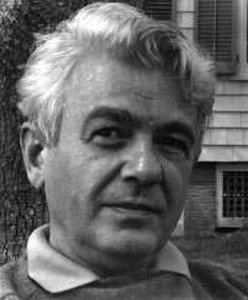
Giorgio Cavallon
1904 - 1989 , Italy
Belangrijkste feiten
- Full Name: Giorgio Cavallon
- Nationality: Italian-American
- Date Of Birth: 1904
- Date Of Death: 1989
- Place Of Birth: Sori, Italy
- Notable Artworks:
- Country Scene
- Untitled (1958)
- Artistic Movement Or Style: Abstract Expressionism
- Artists Who Influenced This Artist:
- Hans Hofmann
- Arshile Gorky
- Charles Hawthorne
- Artists Or Movements Influenced By This Artist: ['Abstract Expressionism']