Northern Renaissance · 1598
Forest Landscape (Gillis van Coninxloo, 1598)
Gillis van Coninxloo (1544–1607) maakte Forest Landscape. Het dateert uit 1598. Het behoort tot de Northern Renaissance-stroming. Het is gemaakt van Oil On Panel. Het is te vinden in Liechtenstein Museum in Wenen, Austria. De afmetingen zijn 42 × 61 cm.
- 1598
- Oil On Panel
- 42 × 61 cm
- Liechtenstein Museum, Wenen

 Voorvertoning

 Met de hand geschilderd olieverfwerk
 Verstuur
 Delen
 Informatieblad


 Download
 Vergelijkbare items
 Röntgenonderzoek
 Diavoorstelling
 Vraag & antwoord

 Statistieken
Forest Landscape, in het kort
- Titel
- Forest Landscape
- Kunstenaar
- Gillis van Coninxloo (1544–1607)
- Geboren in [jaar]
- Antwerpen, België
- Datum
- 1598
- Medium
- Oil On Panel
- Afmetingen
- 42 × 61 cm
- Te zien in
- Liechtenstein Museum, Wenen, Austria
- Beweging
- Northern Renaissance
- Periode
- Early Modern
- Onderwerp
- forest landscape, dark woods, path, village view, atmospheric, tranquility
Wat stelt Forest Landscape voor?
Identification of the Forest Landscape Artwork
The artwork titled Forest Landscape is a painting by the Flemish artist Gillis Van Coninxloo. Executed in 1598, this work is an oil on panel. The physical dimensions of the piece are 42 x 61 cm. It is currently held within the Liechtenstein Museum in Vienna, Austria.
This specific composition depicts a dense woodland environment. The scene features a winding path that leads into a thicket of trees. The foliage consists of various shades of green, while the trunks and branches create a heavy canopy overhead. In the background, a small village is visible through the gaps in the trees, providing a sense of distance within the forest setting.
The subject matter focuses on the natural world, specifically the textures of bark, leaves, and moss. A single, small human figure is positioned beneath a tree within the landscape. The composition utilizes a dark palette of browns, greens, and ochres to define the wooded area. Light filters through the upper branches, creating a contrast between the shadowed recesses of the undergrowth and the illuminated patches of the clearing.
Composition and Visual Elements
The composition is largely symmetrical, organized around a winding path that leads the eye toward the center of the image. This path cuts through a dense woodland, where the trunks and branches of trees intertwine to form a thick canopy overhead. Only a few small patches of sky are visible through the gaps in the foliage. Within this enclosed space, a single tiny human figure reclines beneath a tree, positioned near the center of the scene. The scale of the trees and the surrounding undergrowth dwarfs the figure, emphasizing the vastness of the natural environment.
Color is concentrated in the various hues of green found in the leaves and the mossy textures of the forest floor. These greens contrast with the dark browns and ochres of the tree trunks and the earth. In the background, a small village is visible through the trees, providing a sense of distance and depth. The lighting creates a chiaroscuro effect, with strong contrasts between the deep shadows of the thickets and the light that filters through the canopy onto the path and the reclining figure.
Technique and Artistic Style
The artist utilized oil on panel to establish a sense of depth and a tangible texture across the surface. The application of paint likely involves multiple layers and glazing, a method used to achieve a specific luminosity within the darker sections of the composition. This technique allows light to appear as though it is filtering through the canopy, creating a chiaroscuro effect through the deliberate placement of light and shadow. The resulting atmosphere is defined by a palette of dark colors and a high degree of intricate detail.
The composition is built upon a dense arrangement of ancient oaks and thick undergrowth. There is a clear priority placed on the textural richness of the natural elements, specifically the bark of the trees, the individual leaves, and the presence of moss. These organic forms are rendered with meticulous care, contributing to the overall density of the woodland scene. The interplay of light and shadow defines the verticality of the trunks and the irregular shapes of the foliage, emphasizing the physical presence of the forest environment.
Artistic Influence and Legacy
Gillis Van Coninxloo occupied a central position in the evolution of Northern landscape art. His technical approach functioned as a bridge between the intricate traditions of Mannerism and the atmospheric depth characteristic of the early Baroque. Through his development of the forest landscape, he moved away from panoramic vistas toward intimate, enclosed woodland scenes. This shift prioritized the textural details of bark, leaves, and moss, often submerging small human figures within an expansive, detailed natural environment.
The influence of his method extended to several prominent painters of the period. Jan Brueghel the Elder and Pieter Schoubroeck were among those affected by his stylistic developments. His approach to dense, immersive woodland compositions also impacted the work of Roeland Savery and various other Flemish and Dutch landscape painters. This specific work, created about 1598, represents his technical skill and craftsmanship in rendering the natural world.
In welk museum bevindt Forest Landscape zich?
Liechtenstein Museum
Wenen, Austria
Een Juweel van Weense Barokke Pracht Gelegen in het hart van de historische Weense Ringstraße, bevindt het Liechtenstein Museum zich in een omgeving die evenzeer een meesterwerk is als de schatten die het beschermt. Ondergebracht in het magnifieke Palais Liechtenstein, biedt het museum een meeslepende reis naar de ziel van aristocratische elegantie en de diepgaande erfenis van het Huis Liechtenstein. Wanneer bezoekers het paleisachtige bouwwerk naderen, worden zij begroet door de architectonische grandeur van een vervlogen tijdperstel, waar elke vergulde kroonlijst en elke imposante trap verhalen fluistert van keizerlijke prestige.


Hoogwaardige afbeeldingen van Forest Landscape

Publiek domein: de kunstenaar is overleden in 1607.
Andere formaten, uitsneden en citatie →Gillis van Coninxloo, Forest Landscape (1598), Liechtenstein Museum. Publiek domein
Vragen over Forest Landscape, beantwoord
Waar is "Forest Landscape" door Gillis van Coninxloo tegenwoordig te zien?
"Forest Landscape" door Gillis van Coninxloo is te zien in Liechtenstein Museum, Wenen, Austria. De vermelding van het museum heeft betrekking op het originele werk, niet op reproducties.
In welk jaar werd "Forest Landscape" door Gillis van Coninxloo gemaakt?
"Forest Landscape" door Gillis van Coninxloo werd gemaakt in 1598.
Met welke techniek is "Forest Landscape" door Gillis van Coninxloo vervaardigd?
Gillis van Coninxloo gebruikte de Oil On Panel-techniek voor "Forest Landscape". De techniek bepaalt de materiële aard van het originele werk.
Wat zijn de werkelijke afmetingen van "Forest Landscape" door Gillis van Coninxloo?
"Forest Landscape" heeft in zijn originele vorm de afmetingen 42 x 61 cm. De originele afmetingen dienen als een handig referentiepunt bij het kiezen van de juiste afmeting voor een reproductie.
Wat stelt "Forest Landscape" voor?
De onderwerpen van "Forest Landscape" zijn forest landscape, dark woods, path, village view, atmospheric, tranquility, nature scene, 16th century.
Is "Forest Landscape" vrij van auteursrecht?
Wat betreft het auteursrecht valt "Forest Landscape" onder bevindt zich in het publiek domein - de auteursrechten zijn verlopen.
Wie heeft "Forest Landscape" gemaakt?
"Forest Landscape" is gemaakt door Gillis van Coninxloo. De informatie op deze pagina beschrijft het originele werk van Gillis van Coninxloo.
Tot welke stijl behoort "Forest Landscape"?
"Forest Landscape" is een werk uit de Northern Renaissance. De stroming geeft de artistieke traditie aan waartoe het werk behoort.
Uit welke fase van de carrière van Gillis van Coninxloo is "Forest Landscape"?
Binnen de carrière van Gillis van Coninxloo valt "Forest Landscape" in de Late 16th Century. Deze fase helpt om het werk te vergelijken met andere werken van de kunstenaar.
Over de kunstenaar, Gillis van Coninxloo
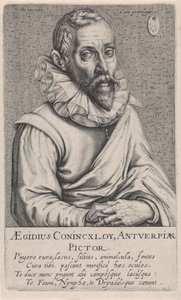
1544–1607, België
Gillis van Coninxloo
Een Meester van het Groene Rijk Gillis van Coninxloo staat als een spilfiguur in de evolutie van de Noordelijke landschapskunst, en dient als een vitale brug tussen de complexe maniëristische tradities en de opkomende atmosferische diepte van de vroege Barok. Geboren in Antwerpen, België, was zijn leven diep verweven met de rijke artistieke traditie van de Lage Landen. Als zoon van een schilder werd hij ondergedompeld in een wereld waarin vakmanschap en natuurlijke observatie van cruciaal belang waren. Zijn vroege opleiding onder meesters zoals Pieter Coecke van Aelst de Jongere en Lenaert Kroes bood hem een rigoureuze basis, maar het was zijn tijd in het atelier van Gillis Mostaert die zijn talent werkelijk liet bloeien, waardoor hij kon bijdragen aan professionele werken terwijl hij zijn unieke visie verfijnde.
Over Gillis van Coninxloo Bekende werken van Gillis van Coninxloo
Ook van Gillis van Coninxloo
 Jonah Preaching to the Ninevites1583
 Woodland with Saint Jerome1583
 Landscape with the judgment of Midas1598
 Landscape with the Judgement of Paris1610
Essays over Forest Landscape
 French Barbizon paintersMasterpieces by Théodore Rousseau and Daubigny define the Barbizon School. Explore the full collection online at OriginalUniqueArt.com.
 Enchanted Woodlands: 10 Masterpieces That Capture the Magic of the ForestExplore iconic forest art by Shishkin, Klimt, and Van Gogh. Discover museum-quality masterpieces on OriginalUniqueArt.com.
 Mastering the Horizon: An Art Historian’s Guide to the World's Most Iconic Landscape PaintingsExplore the profound history of landscape painting with our expert guide. From Impressionist light to Chinese traditions, discover the tech…