Schakel over naar print
 Lees meer







































 Voor kunstwerken of reproducties die aan één zijde groter zijn dan 105 cm (ongeveer 41 inch), wordt de lijst als een losse set verzonden. Deze methode garandeert een veilige levering en voorkomt schade tijdens het transport.


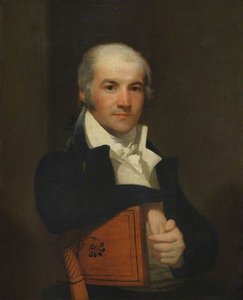
A Vision of American Statesmanship: The Athenaeum Portrait
To gaze upon Gilbert Stuart's depiction of George Washington is not merely to observe a likeness; it is to encounter the very spirit of an era, the embodiment of nascent American ideals. This portrait, painted in 1796, transcends simple portraiture, becoming instead a monumental testament to leadership and enduring vision. Stuart captured the first President of the United States at a pivotal moment—a man whose quiet dignity belied the immense weight of founding a nation. The composition itself draws the viewer into an intimate yet grand encounter, suggesting the profound responsibility that accompanied such historical stature.
Mastery in Neoclassical Portraiture
Gilbert Stuart, a master craftsman of American portraiture, employed techniques deeply rooted in the Neoclassical movement. While the subject matter is intensely personal—a direct gaze meeting the viewer's own—the execution speaks to classical ideals of balance and idealized representation. Notice the subtle rendering of light across Washington’s attire; it falls with an almost sculptural quality, emphasizing the structure beneath the fabric. Stuart possessed a remarkable ability to imbue his subjects with psychological depth. The black and white tonality, characteristic of its classic presentation, strips away the distraction of color, forcing the eye instead toward the nuances of expression—the thoughtful set of the jaw, the steady intelligence in the eyes.
Historical Resonance and Enduring Legacy
The context surrounding this painting adds layers of narrative richness. Commissioned after Stuart’s earlier success with Washington, this work solidified his reputation as the premier chronicler of American greatness. The portrait serves not only as a historical record but also as an artifact of national mythology. It is famously recognized for its influence, having served as the model for the engraving featured on the United States one-dollar bill. Owning or displaying a reproduction of this piece connects the admirer directly to the foundational narrative of American democracy, making it a powerful statement piece for any discerning collector or historically minded interior designer.
Symbolism and Emotional Impact
The symbolism within the portrait is subtle but profound. Washington’s direct gaze acts as an unspoken covenant between the subject and the observer—a challenge, an acknowledgment, and a promise all at once. The background, with its suggestion of depth against the solid form of the man, anchors him firmly in his time while simultaneously elevating him beyond it. It evokes feelings of solemn respect, admiration for fortitude, and a deep appreciation for enduring principles. This painting does not shout its importance; rather, it commands reverence through sheer, masterful execution.
Veelgestelde vragen
Voor welke ruimte en welk gebruik wordt "George Washington (The Athenaeum Portrait)" aanbevolen?
"George Washington (The Athenaeum Portrait)" door Gilbert Stuart wordt aanbevolen voor Accent, bij voorkeur in een Living Room. Gebruik en ruimte bepalen samen waar een reproductie het beste tot zijn recht komt.
In welke stroming en in welk tijdperk kan "George Washington (The Athenaeum Portrait)" door Gilbert Stuart worden geplaatst?
"George Washington (The Athenaeum Portrait)" door Gilbert Stuart behoort tot de Neoclassicism-stroming, uit de Vroegmoderne tijd-periode van de maker.
Waar kan ik een voorproefje van "George Washington (The Athenaeum Portrait)" bekijken?
Op de Voorvertoning-pagina van "George Washington (The Athenaeum Portrait)" kunt u het kunstwerk bekijken voordat u bestelt.
 Voorvertoning
 Verstuur
 Delen
Delen
 Details bekijken
 Gids
Gids

 Download
 Vergelijkbare items
 Röntgenonderzoek
 Diavoorstelling
 Q&A
Q&A Statistieken