
 Verstuur
 Delen
Delen
 Details bekijken

 Download
 Vergelijkbare items
 Diavoorstelling
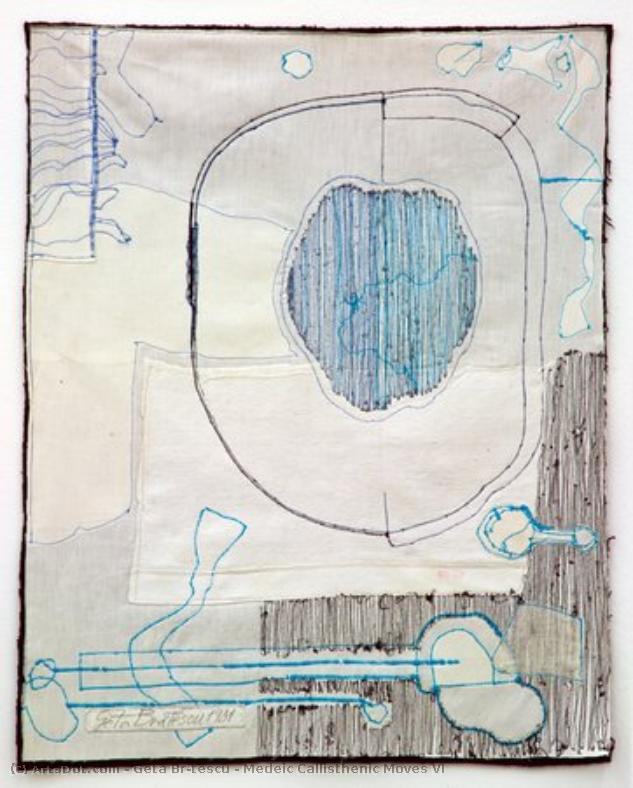
Medeic Callisthenic Moves VI


 Lees meer
Koop een digitale afbeelding in hoge resolutie met verbeterde kwaliteit, die veel superieur is aan de online voorvertoning.
Elk bestand wordt met uiterste precisie voorbereid door onze interne specialisten, met behulp van geavanceerde tools en deskundige handmatige retouche. Wij garanderen dat elke afbeelding een uitzonderlijke helderheid, nauwkeurige kleurweergave en verfijnde details bezit.
Het uiteindelijke bestand wordt binnen 72 uur per e-mail geleverd, geoptimaliseerd voor direct gebruik in professionele, redactionele en printomgevingen. Dit is dezelfde kwaliteit waarop vooraanstaande designstudio's, uitgevers en galerieën vertrouwen.
Digitale afbeeldingen
Download een bestand met hoge resolutie voor persoonlijke weergave, afdrukken en creatieve projecten. ( Bestel print Bestel handgeschilderde reproductie)
Inbegrepen bij elke bestelling van een digitale afbeelding
Professionele digitale levering, gegarandeerd
Wanneer u kiest voor OriginalUniqueArt.com, ontvangt u niet alleen een afbeelding – u krijgt een professioneel verbeterd digitaal kunstwerk, met precisie vervaardigd en voorzien van een tevredenheidsgarantie. Dit is alles wat automatisch bij uw bestelling is inbegrepen:

Snelle levering per e-mail
Uw hoogwaardige digitale afbeeldingsbestand wordt binnen 72 uur na bestelling naar u gemaild – klaar voor direct gebruik.

AI-verbeterd digitaal bestand
Uw kunstwerk wordt professioneel geoptimaliseerd met behulp van geavanceerde AI-tools en handmatige bewerkingen, waardoor maximale details, helderheid en kleurnauwkeurigheid worden gegarandeerd.

Gratis levenslange herlevering van digitale afbeeldingen
Je bestand per ongeluk verwijderd of kwijtgeraakt? Geen zorgen – we sturen het u op elk gewenst moment gratis opnieuw toe.

Geen invoerkosten – nooit
Geniet direct van uw kunstwerk zonder invoerrechten, belastingen of verzendkosten – digitale downloads zijn altijd belastingvrij.

Garantie op kleurgetrouwheid
Met behulp van professionele hulpmiddelen en kleurbeheer zorgen wij ervoor dat uw digitale afbeelding de originele kleuren zo nauwkeurig mogelijk weergeeft.

60 dagen tevredenheidsgarantie
Als u niet tevreden bent met uw digitale afbeelding, passen wij deze aan of storten wij 100% terug binnen 60 dagen – zonder vragen gesteld.

100% Geld-terug-garantie
Niet tevreden? Ontvang binnen 60 dagen na ontvangst van uw digitale bestand uw volledige aankoopbedrag terug – zonder vragen te stellen.

Korting bij grote bestellingen
Koop 3 afbeeldingen, bespaar 10% - Koop 5, bespaar 15% - Koop 10+, bespaar 20%. Ideaal voor creatieve projecten, galerieën en bureaus.
Beschrijving verzamelobject
A Dance of Lines and Shadows
In the delicate, fragmented world of Geta Brătescu, every stroke tells a story of movement and introspection. Her 1981 masterpiece, Medeic Callisthenic Moves VI, serves as a profound window into an abstract realm where geometry meets the organic. At first glance, the viewer is met with a composition that feels both spontaneous and meticulously orchestrated. A large, irregular oval dominates the upper reaches of the canvas, acting as a celestial anchor for the swirling elements below. Within this shape, dense blue hatching creates a sense of concentrated energy, drawing the eye into a rhythmic, pulsating core that contrasts beautifully against the muted, creamy backdrop of the paper.
The artwork operates through a sophisticated interplay of shapes and textures. Rectangles, circles, and wandering lines drift across the surface like celestial debris or perhaps the traces of a forgotten choreography. There is no rigid structure here; instead, Brătescu invites us into a state of quiet contemplation. The use of line is particularly masterful—thin, ethereal filaments delineate delicate forms, while thicker, more assertive marks provide a structural weight that prevents the composition from dissolving into chaos. Through the meticulous application of hatching and cross-hatching, the artist breathes life into a flat surface, creating an illusion of depth and shadow that suggests a world existing just beyond our physical perception.
The Resonance of Abstract Expression
To understand Medeic Callisthenic Moves VI, one must look toward the historical resilience of its creator. Born in Romania during a period of intense political upheaval, Geta Brătescu developed an artistic language that bypassed censorship through the purity of abstraction. This piece, created in the early 1980s, reflects her lifelong exploration of identity and the essence of creative motion. While the title hints at the disciplined rhythm of "callisthenic moves," the visual reality is far more fluid and improvisational. The blue accents—vibrant and clear—act as focal points of clarity amidst a sea of beige and grey, symbolizing perhaps the spark of consciousness or the precision of thought within a complex existence.
For the discerning collector or interior designer, this artwork offers a unique opportunity to introduce a sense of sophisticated minimalism into a space. Its restrained color palette makes it an incredibly versatile piece, capable of anchoring a modern gallery wall or providing a subtle, intellectual layer to a contemporary living room. The work does not demand attention through loud colors or literal imagery; rather, it commands respect through its emotional depth and the quiet strength of its execution. It is an invitation to slow down, to observe the nuances of texture, and to find beauty in the delicate balance between the structured and the free-form.
Owning a reproduction of such a significant work allows one to possess a fragment of Brătescu’s enduring legacy. This piece is more than just an arrangement of ink and paper; it is a testament to the power of the line to convey movement, memory, and the very soul of the artist. Whether viewed as a study in geometric abstraction or a poetic meditation on form, Medeic Callisthenic Moves VI remains a timeless jewel of 20th-century contemporary art.
Kunstenaarsbiografie
A Life Woven in Lines: The Art of Geta Brătescu
Geta Brătescu, a pivotal figure in Romanian contemporary art, lived a life deeply intertwined with the political and artistic currents of 20th-century Europe. Born Georgina Comanescu on May 4, 1926, in Ploiești, Romania, her journey as an artist was marked by resilience, innovation, and a profound exploration of identity, feminism, and the very essence of creative expression. Brătescu’s early intellectual pursuits led her to the University of Bucharest's Faculty of Letters between 1945 and 1949, where she studied under luminaries like George Călinescu and Tudor Vianu—a foundation that instilled in her a lifelong appreciation for literature and its power to inform artistic vision. Simultaneously, she enrolled at the Academy of Fine Arts, studying under Camil Ressu, but her studies were abruptly halted by the rising tide of communism. Deemed ‘of bad origins’ due to her family's property ownership, she faced expulsion, an early encounter with the censorship and political constraints that would shadow much of her career. This initial setback didn’t extinguish her artistic flame; instead, it fueled a period of self-directed learning and experimentation before returning to formal studies at the Institute of Fine Arts 'Nicolae Grigorescu' from 1969 to 1971.The Line as Language: A Multidisciplinary Approach
Brătescu’s artistic practice defied easy categorization, embracing a remarkable range of media—drawing, collage, photography, performance, illustration, and film all served as vehicles for her ideas. However, at the heart of this diverse output lay an unwavering fascination with the line. For Brătescu, the line wasn't merely a formal element; it was a fundamental tool for definition, measurement, and conveying movement—a way to map both physical space and inner states. This preoccupation is vividly apparent in her series of detailed hand studies, where the intricate network of lines captures not just anatomical form but also the expressive potential of the human touch. Her exploration extended beyond static representation into performative realms, using the line to delineate space and trace the boundaries of selfhood. This dedication to the line as a core element permeated all her work, becoming a signature that distinguished her unique artistic voice. She wasn’t interested in grand narratives or monumental statements; rather, she focused on the subtle power of gesture, the intimacy of materials, and the quiet revolutions possible within the confines of the studio.Identity, Feminism, and Resistance
Brătescu's art consistently grappled with complex questions of identity, often through self-portraits and performances that challenged conventional notions of representation. Her work frequently engaged with feminist themes, most notably in her series inspired by the mythological figure of Medea—a character whose story resonated deeply with Brătescu’s own experiences as a woman navigating a patriarchal society. The *Medeic Callisthenic Moves* series, created from scraps of cloth provided by her mother, is particularly poignant, reflecting a complex relationship to femininity and the weight of inherited narratives. Living under a restrictive political regime, Brătescu's art subtly addressed issues of censorship and freedom of expression. Her work often operated within the private sphere as a form of resistance—a quiet rebellion against imposed limitations. *Censored Self Portrait* (1978), a powerful photographic work depicting her mouth and eyes obscured by paper strips, stands as a stark symbol of these constraints, embodying the artist’s struggle to articulate herself in a silenced world. Her studio became a sanctuary, a space for experimentation and self-discovery where she could circumvent official channels and explore forbidden territories.Major Works and Lasting Legacy
Throughout her career, Brătescu produced a body of work that continues to inspire and challenge audiences. *The Studio* (1978), a seminal film created in collaboration with Ion Grigorescu, is a particularly significant piece, exploring the studio space as a site for self-definition and artistic creation—a microcosm of the artist’s inner world. The *Hands* series (1974–76) showcases her mastery of draughtsmanship and symbolic representation, elevating a seemingly mundane subject to profound metaphorical significance. The *Jeu des Formes (Game of Forms)* collages demonstrate her innovative approach to form and composition, continuing her exploration of lines and shapes in unexpected ways. Brătescu’s achievements were recognized late in life but with increasing acclaim. She served as artistic director of the influential Romanian literature and art magazine *Secolul 21*, and a major retrospective of her work was held at the National Museum of Art of Romania in 1999. In 2015, she had her first UK solo exhibition at Tate Liverpool, bringing her work to an international audience, culminating in representing Romania at the 57th Venice Biennale in 2017—a landmark moment in her career. Geta Brătescu passed away in Bucharest in 2018, leaving behind a legacy as a pioneering figure whose multidisciplinary approach and unwavering commitment to artistic freedom continue to resonate with generations of artists. She remains an essential voice for those seeking to challenge conventions and explore the complexities of human experience through art.
Geta Brătescu
1926 - 2018 , Romania
Belangrijkste feiten
- Artistic Movement Or Style: Conceptual art, Performance art
- Artists Or Movements Influenced By This Artist: Romanian contemporary art
- Artists Who Influenced This Artist:
- George Călinescu
- Tudor Vianu
- Aesop
- Faust
- Medea
- Date Of Birth: May 4, 1926
- Date Of Death: 2018
- Full Name: Geta Brătescu
- Nationality: Romanian
- Notable Artworks:
- The Studio
- Hands
- Medeic Callisthenic Moves
- Jeu des Formes
- Censored Self Portrait
- Place Of Birth: Ploiești, Romania

