Schakel over naar print
 Lees meer







































 Voor kunstwerken of reproducties die aan één zijde groter zijn dan 105 cm (ongeveer 41 inch), wordt de lijst als een losse set verzonden. Deze methode garandeert een veilige levering en voorkomt schade tijdens het transport.


Georges Seurat: A Pioneer of Luminosity – Exploring “Sunset”
Georges Pierre Seurat (1859–1891) stands as an undeniable titan amongst Impressionists, yet his legacy transcends the movement’s ephemeral beauty. He wasn't merely capturing a fleeting moment; he was fundamentally reshaping how artists approached color and light—a transformation that cemented his place as one of the progenitors of modern art. His unwavering dedication to scientific principles, specifically optical theory championed by Eugène Chevreuil, fueled his revolutionary technique: Pointillism.
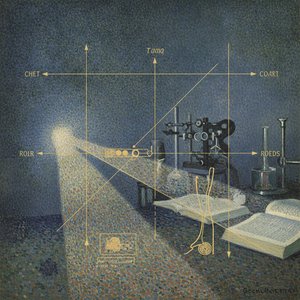
“Sunset,” painted circa 1881 in Fontainebleau Forest, exemplifies this groundbreaking approach. Unlike Impressionists who blended pigments on canvas to achieve tonal harmony, Seurat meticulously applied tiny dots of pure color—often juxtaposed strategically—creating an illusion of luminescence that surpasses mere visual representation. This method wasn’t simply a stylistic preference; it was rooted in the belief that human perception operates through retinal illumination – that our eyes see colors as individual wavelengths of light rather than blended hues.
- Subject Matter: The painting depicts a tranquil forest scene dominated by towering trees silhouetted against a vibrant sunset sky. Scattered cows graze peacefully on the grassy meadow, adding to the idyllic atmosphere.
- Style & Technique: Pointillism is undeniably Seurat’s signature style. Each dot of pigment—typically mixed with turpentine and linseed oil—is placed independently on the canvas, allowing for maximum color saturation and visual vibrancy when viewed from a distance. The artist employed a hexagonal grid to ensure consistent spacing and tonal accuracy.
- Historical Context: “Sunset” emerged during a period of intense artistic experimentation following Impressionism’s initial surge. Artists were actively questioning traditional conventions and seeking new ways to express emotion and perception. Seurat's work signaled a decisive break from Impressionistic subjectivity, prioritizing scientific observation as the basis for artistic creation.
- Symbolism & Emotional Impact: The sunset itself carries profound symbolic weight—representing endings, transitions, and the passage of time. Yet, Seurat’s meticulous rendering imbues it with an almost meditative stillness, inviting contemplation and fostering a sense of serene beauty. It speaks to the artist's fascination with capturing not just what is seen but how it feels to perceive the world.
Reproductions of “Sunset” offer collectors and interior designers alike the opportunity to experience Seurat’s visionary technique firsthand. High-quality prints capture the subtle nuances of color and texture, faithfully recreating the luminous quality that distinguishes this masterpiece from its Impressionist predecessors. Consider framing it in a neutral tone to allow the painting's ethereal glow to shine through—a testament to Seurat’s enduring influence on art history.
Further Exploration: Understanding Pointillism
To truly appreciate “Sunset,” delve deeper into the principles of Pointillism. Researchers like Eugène Chevreuil had begun exploring optical illusions and how color perception works, influencing artists like Seurat. Examining reproductions alongside scientific diagrams illustrating retinal illumination can illuminate the intellectual underpinning of this revolutionary technique.
Veelgestelde vragen
Welke sfeer brengt een reproductie van "Sunset" door Georges Pierre Seurat in een kamer?
Met zijn Sereniteit karakter is "Sunset" een aanrader voor de Woonkamer.
Waar kan ik de afbeelding van "Sunset" door Georges Pierre Seurat downloaden?
"Sunset" door Georges Pierre Seurat kan worden gedownload via de Downloaden-pagina van het kunstwerk, als een digitale afbeelding in hoge resolutie om te downloaden.
Hoeveel mensen bekijken "Sunset"?
Er bestaat een Statistieken-pagina voor "Sunset". Deze brengt de maandelijkse bezoeken aan het kunstwerk en andere werken van de kunstenaar in kaart, met uitsplitsingen naar land en taal.
 Voorvertoning
 Verstuur
 Delen
Delen
 Details bekijken
 Gids
Gids

 Download
 Vergelijkbare items
 Röntgenonderzoek
 Diavoorstelling
 Q&A
Q&A Statistieken