Analytical Cubism · 1929
The Round Table (Georges Braque, 1929)
Georges Braque (1882–1963) maakte The Round Table. Het dateert uit 1929. Het behoort tot de Analytical Cubism-stroming. Het is gemaakt van Acrylic. De afmetingen zijn 144 × 114 cm.
- 1929
- Acrylic
- 144 × 114 cm

 Voorvertoning

 Met de hand geschilderd olieverfwerk
 Verstuur
 Delen
 Informatieblad


 Download
 Vergelijkbare items
 Röntgenonderzoek
 Diavoorstelling
 Vraag & antwoord

 Statistieken
The Round Table, in het kort
- Titel
- The Round Table
- Kunstenaar
- Georges Braque (1882–1963)
- Geboren in [jaar]
- Argenteuil, Frankrijk
- Datum
- 1929
- Medium
- Acrylic
- Afmetingen
- 144 × 114 cm
- Beweging
- Analytical Cubism
- Onderwerp
- bookshelf composition, table setting, fruit symbolism, geometric forms, artist's gesture, spatial illusion
Wat stelt The Round Table voor?
Georges Braque’s “The Round Table”: A Dialogue Between Tradition and Innovation
- Subject Matter and Composition:
- Cubist Style and Technique:
- Historical Context – The Birth of Cubism:
- Symbolic Resonance – Apples, Books, and Spatial Illusion:
- Emotional Impact – Quiet Contemplation and Artistic Exploration
Cubist Style and Technique
Braque, alongside Pablo Picasso, spearheaded the development of Analytical Cubism, characterized by its radical fragmentation of form and simultaneous depiction of multiple viewpoints. Unlike Impressionists who sought to capture fleeting moments of light and color, Cubists aimed to represent objects as they appear to the eye when viewed from various angles simultaneously. In “The Round Table,” this is achieved through meticulous geometric reduction—the table surface and books are broken down into interlocking planes that overlap and intersect, creating a disconcerting yet captivating illusion of depth. The artist’s use of muted earthy tones – browns, ochres, and creams – reinforces the sense of stillness and contemplation inherent in the scene. Careful layering of paint contributes to textural richness without resorting to overtly expressive brushstrokes; Braque prioritizes precision and intellectual rigor over emotive gesture.Historical Context – The Birth of Cubism
The genesis of Cubism can be traced back to Picasso’s groundbreaking “Les Demoiselles d'Avignon” (1907), which shattered established artistic norms by depicting figures rendered in fractured planes and incorporating influences from African sculpture. Braque responded swiftly, furthering the exploration of spatial ambiguity and geometric abstraction. The painting emerged during a period of intense intellectual ferment—the burgeoning influence of Einstein’s theory of relativity challenged Newtonian conceptions of space and time, mirroring the Cubists' desire to dismantle traditional perspectival representations. This artistic rebellion was fueled by a broader cultural shift toward questioning accepted truths and embracing new modes of perception.Symbolic Resonance – Apples, Books, and Spatial Illusion
The inclusion of an apple—a motif frequently revisited in Surrealist art—introduces a subtle element of visual paradox. Traditionally associated with knowledge, temptation, and immortality, the apple’s placement on the table subtly disrupts the geometric order established by Braque's technique. Simultaneously, the books symbolize intellectual pursuit and contemplation – mirroring the figure’s posture and gaze. More importantly, the overall spatial arrangement contributes to a feeling of disorientation—the viewer is invited to consider multiple perspectives simultaneously, reflecting the Cubist preoccupation with challenging conventional visual experience. The careful positioning of objects reinforces the idea that reality itself is multifaceted and elusive.Emotional Impact – Quiet Contemplation and Artistic Exploration
Ultimately, “The Round Table” transcends mere formal innovation; it communicates a profound sense of quiet contemplation. Despite its complex geometric structure, the painting exudes an atmosphere of stillness—suggesting a moment of introspection rather than dramatic action. Braque’s masterful control over color and texture invites viewers to engage in a dialogue with the artwork itself, prompting reflection on themes of knowledge, perception, and artistic endeavor. It stands as a testament to Braque's ability to distill complex ideas into a deceptively simple visual form—a lasting legacy of Cubist artistry that continues to inspire admiration and contemplation today.Hoogwaardige afbeeldingen van The Round Table
Auteursrechtelijk beschermd: deze bestanden zijn uitsluitend voor persoonlijk gebruik en vormen geen licentie voor herpublicatie.
Georges Braque, The Round Table (1929).
Veelgestelde vragen over The Round Table
In welk jaar werd "The Round Table" door Georges Braque gemaakt?
"The Round Table" dateert uit 1929. Deze datum plaatst het werk binnen de carrière van Georges Braque en het betreffende tijdperk.
Met welk medium is "The Round Table" door Georges Braque uitgevoerd?
"The Round Table" is uitgevoerd in Acrylic.
Wat zijn de afmetingen van het originele "The Round Table" door Georges Braque?
De afmetingen van "The Round Table" door Georges Braque zijn 144 x 114 cm. Reproducties kunnen in andere formaten worden besteld met behoud van dezelfde verhoudingen.
Wat stelt "The Round Table" voor?
De thema's die aanwezig zijn in "The Round Table" door Georges Braque omvatten bookshelf composition, table setting, fruit symbolism, geometric forms, artist's gesture, spatial illusion, color palette. Samen vatten zij de onderwerpen van het kunstwerk samen.
Behoort "The Round Table" door Georges Braque tot het publiek domein?
"The Round Table" door Georges Braque valt onder nog steeds auteursrechtelijk beschermd. Deze status bepaalt hoe de afbeelding van het werk mag worden gereproduceerd.
Aan welke kunstenaar wordt "The Round Table" toegeschreven?
"The Round Table" is gemaakt door Georges Braque. De informatie op deze pagina beschrijft het originele werk van Georges Braque.
Tot welke stijl behoort "The Round Table"?
De kunststroming die verbonden is aan "The Round Table" door Georges Braque is Analytical Cubism. Deze classificatie plaatst het werk binnen een context van verwante kunstenaars en kunstwerken.
Tot welke periode in de carrière van Georges Braque behoort "The Round Table"?
Binnen de carrière van Georges Braque valt "The Round Table" in de Analytical Cubism. Deze fase helpt om het werk te vergelijken met andere werken van de kunstenaar.
Op welke leeftijd maakte Georges Braque "The Round Table"?
Georges Braque maakte "The Round Table" op 47-jarige leeftijd. De kunstenaar werd geboren in 1882 en het werk dateert uit 1929.
Over de kunstenaar, Georges Braque
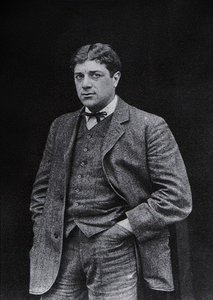
1882–1963, Frankrijk
Georges Braque
Het Vroege Leven, Familie en Opleiding Georges Braque werd in 1882 geboren in Argenteuil, Frankrijk. Zijn vroege jaren werden doorgebracht in Le Havre, in een huishouden dat werd gedefinieerd door de praktische aspecten van decoratie en kleur. Opgegroeid in een familie van schilders en decorateurs, werd hij van jonge leeftijd omringd door de tactiele realiteit van zijn ambacht. Deze opvoeding legde een fundament van technisch vakmanschap dat later een cruciale rol zou spelen in zijn benadering van het canvas.
Ook van Georges Braque
 De Mandoline1910
 De Man met de Gitaar1914
 Huizen Te L’Estaque
 Harbor in Normandie1909
Essays over The Round Table
 Mastering Cubism: The Top 25 Georges Braque ArtworksJourney through the revolutionary world of Georges Braque. Explore 25 iconic Cubist masterpieces, from geometric abstractions to timeless s…
 Deconstructing Reality: Cubism's Revolutionary Impact on 20th-Century ArtExplore the revolutionary world of Cubism with OriginalUniqueArt. Discover Picasso & Braque's groundbreaking techniques, its philosophical …
 Understanding the Difference Between Analytical and Synthetic CubismMaster the differences between Analytical and Synthetic Cubism with our expert guide. Learn to identify these iconic art movements now.