- Home

- Reproductie van olieverfschilderij
- Georges Braque
- The Port Of Le Havre

 Print kopen Koop afbeelding in hoge resolutie
 Verstuur
 Delen
Delen
 Details bekijken
 Toevoegen aan favorieten

 Download
 Vergelijkbare werken
 Röntgenonderzoek
 Diavoorstelling
The Port Of Le Havre


 Lees meer
Handgemaakte olieverfreproductie
Met de hand geschilderd in olieverf op canvas in uw gewenste maat en lijst, op bestelling gemaakt door onze kunstenaars.




P118B $10

P118H $10

P118W $10

P438Z $10

P508JH $12

P508YH $12

P805H $10

P805Z $10

P919BZ $10

P919G $10

P919XJ $10

P959ZH $10

P968JZ $12

W106C $8

W218G $10

W218JH $8

W218Y $10

W307PJ $10

W316G $10

W316PJ $8

W316Y $10

W398PJ $8

W4111J $10

W500HY $15

W500JH $15

W692G $12

W849H $8

W940BG $15

W953PJ $8




Kies uit onze vooraf ingestelde maten die overeenkomen met de originele verhoudingen van het kunstwerk.

U kunt uw eigen afmetingen invoeren om in een specifieke lijst of ruimte te passen. Als de door u gekozen maat niet overeenkomt met de verhoudingen van het originele beeld, zullen we het kunstwerk bijsnijden of het schilderij uitbreiden met extra handgeschilderde elementen. Een digitale mockup wordt ter goedkeuring naar u verzonden voordat de productie begint.
Houd er rekening mee dat de preview op het scherm niet de werkelijke uitsnede of uitbreiding weergeeft. Alleen de mockup toont de uiteindelijke compositie nauwkeurig.
Hoewel aangepaste afmetingen mogelijk zijn, raden we aan een maat uit de vooraf gedefinieerde lijst te selecteren om de originele verhoudingen te behouden.
Na de bestelling zal het team van OriginalUniqueArt.com per e-mail contact opnemen voor instructies en een mockup-voorbeeld sturen.
Wereldwijde levering () binnen 3/4 weken in plaats van de standaard 5 weken. (16 juli). Geen concessies aan de kwaliteit.

Gratis wereldwijde expressverzending

Hoogwaardig linnen canvas

Volledige verzendverzekering

Garantie op terugbetaling van invoerrechten

Garantie op exacte kleurweergave

60 dagen retourbeleid (alleen bij defecten)

100% Geld-terug-garantie

Korting bij meerdere afnames
 De optie voor glas is alleen beschikbaar bij een formaat kleiner dan 110 cm.

The Port Of Le Havre
Techniek reproductie
Afmetingen reproductie
-


Eindtotaal
-
Beschrijving kunstwerk
The Port of Le Havre: A Study in Atmospheric Gray – Georges Braque’s Masterpiece
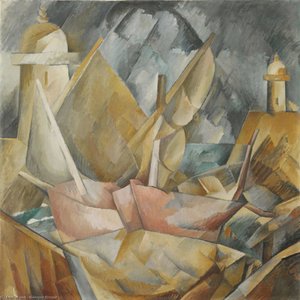
Georges Braque's “The Port of Le Havre” isn’t merely a depiction of a harbor scene; it’s an immersion into a specific mood, a carefully constructed meditation on light, space, and the quiet power of observation. Painted around 1909, during a pivotal period in his artistic development alongside Pablo Picasso, this monochrome masterpiece exemplifies the nascent principles of Cubism while retaining a deeply evocative emotional resonance. The artwork immediately draws the viewer into a world of subtle tonal shifts and fragmented forms, inviting contemplation rather than immediate recognition.
The composition is strikingly simple yet profoundly effective. A dominant horizontal axis – the line of the water, the pier extending towards the center, and the expansive sky – establishes a sense of stillness and vastness. The long pier acts as a powerful diagonal element, guiding the eye into the heart of the scene and creating an illusion of depth that belies the limited palette. Scattered across the water are several sailboats, rendered with loose brushstrokes that suggest movement and subtly hinting at the bustling activity implied by their presence. Braque’s focus isn't on detailed representation but rather on capturing the *feeling* of the harbor – its atmosphere, its scale, and its inherent solitude.
The artwork’s remarkable restraint in color is central to its impact. Braque employs a meticulously controlled grayscale, ranging from delicate washes of light gray in the sky to dense blacks outlining shapes and casting dramatic shadows. This monochromatic approach isn't limiting; instead, it intensifies the sense of form and texture. The artist masterfully utilizes hatching and cross-hatching techniques – visible through careful examination – to build up tonal variations and create a convincing illusion of three-dimensionality. The effect is remarkably tactile; one can almost feel the roughness of the weathered wood of the pier or the choppy surface of the water.
Impressionistic Roots, Cubist Explorations
“The Port of Le Havre” firmly resides within the Impressionist tradition, particularly in its emphasis on capturing fleeting moments and atmospheric effects. However, it also represents a crucial stepping stone towards Braque’s later embrace of Cubism. The loose brushwork, the fragmented forms, and the deliberate distortion of perspective—all hallmarks of Impressionism—are subtly transformed into elements that foreshadow the geometric deconstruction characteristic of Cubism. Braque's early exposure to Paul Cézanne’s work, particularly his exploration of multiple viewpoints and the simplification of natural forms, is clearly evident in this piece. The artist seems to be grappling with how to represent reality not as a static image but as a series of interconnected perspectives.
The diffused lighting, absent of any strong directional source, contributes significantly to the artwork’s subdued mood. This atmospheric quality reinforces the sense of isolation and contemplation that permeates the scene. The vastness of the harbor—a recurring theme in Braque's work—suggests themes of human insignificance against the backdrop of nature’s power. There’s a quiet melancholy woven into the composition, inviting viewers to consider the passage of time and the enduring beauty of the natural world.
Technique and Materials – A Glimpse Behind the Canvas
Based on available research, “The Port of Le Havre” was likely created using ink or watercolor on paper. The rapid brushstrokes and layered washes suggest a technique prioritizing spontaneity and expressive freedom over meticulous detail. The artist’s use of wet-on-wet techniques – blending colors directly on the canvas without allowing them to dry—creates soft transitions and atmospheric effects, further enhancing the sense of depth and atmosphere. It's fascinating to consider how Braque achieved such a nuanced range of tones with such a limited palette; his mastery of color theory is clearly evident.
Further research reveals that this work was created during a period of intense experimentation for Braque, alongside Picasso, as they explored the foundations of Cubism. The influence of Cézanne’s geometric approach to landscape painting is particularly apparent, demonstrating how Braque built upon established artistic traditions while simultaneously forging new paths. The artwork stands as a testament to their collaborative spirit and their shared desire to challenge conventional notions of representation.
A Reproduction for Your Space – Bringing the Mood Home
OriginalUniqueArt offers meticulously crafted hand-painted reproductions of “The Port of Le Havre,” allowing you to bring this evocative masterpiece into your home or office. Our skilled artists faithfully recreate Braque’s atmospheric style, capturing the subtle tonal shifts and fragmented forms with remarkable precision. Whether you appreciate Impressionism, Cubism, or simply seek a piece that evokes a sense of quiet contemplation, our reproduction provides an authentic representation of this iconic artwork. Consider how the muted palette and evocative composition will complement your existing décor, creating a space filled with understated beauty and artistic depth.
Biografie van de kunstenaar
Early Life and Artistic Foundations
Georges Braque, geboren in Argenteuil, Frankrijk, in 1882, begon een pad die diep verweven was met het evoluerende landschap van moderne kunst. Zijn opvoeding binnen een familie van huismeubelmakkers en -afwerkingen stelde hem niet alleen in staat tot technische meesterschap van materialen, maar ook tot een vroeg begrip voor vorm en structuur. Hoewel hij aanvankelijk volgde in zijn vader’s voetsporen, leidde Braque's inherente artistieke neigingen al snel tot formele opleiding aan de École des Beaux-Arts in Le Havre, waarmee hij begon aan zijn reis om een van de meest invloedrijke schilders van de 20e eeuw te worden. Deze basis—een combinatie van praktisch vakmanschap en academische studie—zou cruciaal blijken te zijn wanneer hij later traditionele artistieke conventies ontbond en herinterpreteerde.
Verhuisd naar Parijs in 1902, bleef Braque zijn studies voortzetten aan de Académie Humbert, waarbij hij zich onderdompelde in het levendige kunstenaarsmilieu van de stad. Daar ontmoette hij kunstenaars zoals Marie Laurencin en Francis Picabia, waardoor hij connecties vormde die zijn vroege ontwikkeling zouden beïnvloeden. Zijn eerste werken weerspiegelden de invloed van Impressionisme en Post-Impressionisme, maar een cruciale ontmoeting met de felle kleuren en expressieve vrijheid van Fauvisme in 1905 ontketende een nieuwe richting in zijn artistieke exploratie.
De Omarming van Fauvisme en het Ontstaan van Cubisme
Braque's adoptie van Fauvist principes— gekenmerkt door intense, niet-realistische kleuren en emotionele expressie—wordt levendig verbeeld in schilderijen zoals The Patience. Deze periode zag hem werken met kunstenaars als Henri Matisse en André Derain, waarbij ze experimenteerden met levendige paletten en gestroomlijnde vormen. Echter, Braque's betrokkenheid bij Fauvisme was niet alleen imitatie; hij infuseerde het met een unieke gevoeligheid, temperde de beweging’s ongebreidelde uitbarsting met een meer ingetogen en analytische benadering.
Een keerpunt kwam in 1907, toen hij werd blootgesteld aan de retrospectieve expositie van het werk van Paul Cézanne. Cézanne's nadruk op geometrische vormen en meerdere perspectieven had een diepe impact op Braque, waardoor de weg vrijkwam voor zijn baanbrekende samenwerking met Pablo Picasso. Vanaf 1908 begonnen deze twee artistieke titanen een periode van intens intellectueel uitwisselen die de geboorte gaf aan Cubisme—een revolutionaire beweging die traditionele concepties van representatie verstoorde.
Samen ontwikkelden Braque en Picasso Analytisch Cubisme, waarbij objecten werden ontbonden in fragmentarische geometrische vormen en vanuit meerdere perspectieven tegelijkertijd werden gepresenteerd. Schilderijen zoals Houses at L'Estaque tonen deze vroege fase, die een radicale afwijking van conventioneel perspectief en een focus op de onderliggende structuur van vormen laat zien.
Innovatie door Fragmentatie en Collage
De partnerschap tussen Braque en Picasso ging echter door met het uitbreiden van de grenzen van artistieke expressie, wat leidde tot de ontwikkeling van Synthetisch Cubisme rond 1912. Deze fase zag de introductie van collage—het integreren van real-world materialen zoals krantenknipsels, wallpaper en stof in schilderijen. Deze innovatie daagde de traditionele hiërarchie tussen schilderkunst en beeldhouwkunst uit, waardoor de lijnen tussen kunst en leven vervaagd werden.
Braque's pioniersgebruik van *papier collé* (geplakt papier) markeerde een significante verschuiving in zijn artistieke evolutie. Door fragmenten van alledaagse objecten in zijn composities te integreren, verstoorde hij de illusievolle ruimte van traditionele schilderkunst en introduceerde hij een nieuw niveau van materialiteit en textuur. Deze techniek breidde niet alleen de formele mogelijkheden van kunst uit, maar weerspiegelde ook een groeiend belang voor de relatie tussen representatie en realiteit.
Later Jaren en Erfgoed
Na de oorlog evolueerde Braque's stijl verder dan de strikte grenzen van Cubisme, waarbij elementen van klassieke compositie werden opgenomen en een hernieuwde interesse werd gewekt voor stillevens. Hoewel hij de geometrische invloeden behield die zijn vroege werk hadden gedefinieerd, ontwikkelde hij een meer genuanceerde en contemplatieve benadering van schilderen. Zijn latere landschappen en interieurs worden gekenmerkt door hun serene sfeer en subtiele harmonieën van kleur.
Door zijn hele carrière bleef Braque toegewijd aan het verkennen van de fundamentele principes van vorm, ruimte en representatie. Hij experimenteerde voortdurend met verschillende materialen en technieken, waardoor de grenzen van artistieke expressie werden verlegd tot zijn dood in 1963. Zijn invloed op latere generaties kunstenaars is onbetaalbaar, waardoor de loop van moderne kunst werd gevormd en talloze schilders, beeldhouwers en collagisten inspireerde.
Braque's nalatenschap strekt zich verder uit dan zijn individuele werken; hij veranderde fundamenteel ons begrip van hoe we de wereld om ons heen waarnemen en representeren. Zijn partnerschap met Picasso, gecombineerd met zijn eigen unieke artistieke visie, zette hem op een vaste plaats in de kunstgeschiedenis—een meester die durfde conventies uit te dagen en de mogelijkheden van schilderkunst opnieuw te definiëren.
Invloeden en Bekende Werken
- Invloedrijke personen: Henri Matisse, André Derain, Paul Cézanne
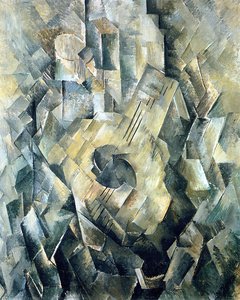
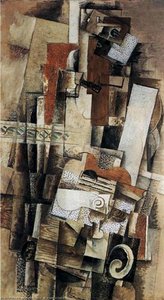
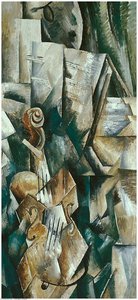
- Belangrijk werk: Houses at L'Estaque, The Patience, Violin and Palette, Mandola
- Impact op de kunstgeschiedenis: Revolutioneerde de 20e-eeuwse kunst door Cubisme; daagde traditionele concepties van perspectief en representatie uit.
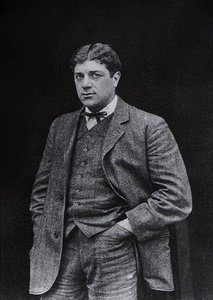
Georges Braque
1882 - 1963 , Frankrijk
Belangrijkste feiten
- Artistic Movement Or Style: Cubisme, Fauvisme
- Artists Or Movements Influenced By This Artist:
- Picasso
- Modern Kunst
- Artists Who Influenced This Artist:
- Matisse
- Derain
- Cézanne
- Date Of Birth: 13 mei 1882
- Date Of Death: 31 augustus 1963
- Full Name: Georges Braque
- Nationality: Frans
- Notable Artworks:
- Houses L'Estaque
- Patience
- Violin Palette
- Place Of Birth: Argenteuil, Frankrijk
Gerelateerde artikelen
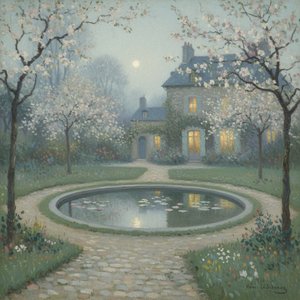
Henri Le Sidaner: Evoking Atmosphere & Intimacy in Post-Impressionist Landscapes
Discover the evocative world of Henri Le Sidaner, a master of Intimist painting. Explore his tranquil landscapes & atmospheric interiors – a celebration of light and intimacy. Learn about his life, style, and lasting legacy.
Eugène Boudin: Capturing Fleeting Moments – A Study of Light, Atmosphere & the Birth of Impressionism
Explore the life & art of Eugène Boudin, a pioneer of plein air painting and key influence on Impressionism. Discover his masterful light studies & atmospheric seascapes – a foundational figure in modern art history.
George Harvey: A Study in American Impressionism & the Poetics of Light
Explore the captivating world of George Harvey, a pivotal figure in American Impressionism & Luminism. Discover his stunning landscapes, artistic journey, and lasting influence on 19th-century art. Learn about provenance & appraisal.

Top 10 Boot Kunstwerken: Meesterwerken & Decoratie Inspiratie | OriginalUniqueArt
Ontdek 10 iconische boot kunstwerken! Van Monet's impressionisme tot Courbet's realisme. Leer over de geschiedenis, techniek & betekenis van deze meesterwerken. Vind museumkwaliteit reproducties en decoratie inspiratie op OriginalUniqueArt.com.
Georges Braque: Pioneering Cubism & the Evolution of Modern Form
Explore the revolutionary art of Georges Braque, a pioneer of Cubism alongside Picasso. Discover his artistic evolution, key works, and lasting impact on modern art. A guide for discerning collectors.