
 Voorvertoning
 Verstuur
 Delen
Delen
 Details bekijken
 Gids
Gids

 Download
 Vergelijkbare items
 Röntgenonderzoek
 Diavoorstelling
 Vraag & antwoord
 Statistieken
At Sunset, Bird XVI

- 45.0 x 68.0 cm


 Lees meer
De kunstwerken die op deze pagina worden weergegeven, zijn beschermd door de auteursrechtwetgeving, wat betekent dat het ons wettelijk niet is toegestaan om identieke reproducties te maken of te verkopen. Deze bescherming wordt gehandhaafd onder internationale overeenkomsten zoals de Conventie van Bern en door nationale wetgeving, waaronder de bepalingen van de Amerikaanse auteurswet - Titel 17. Alle rechten voorbehouden. Reproduceren of distribueren van afbeeldingen is niet toegestaan zonder uitdrukkelijke schriftelijke toestemming van WahooArt.com en de rechthebbenden.
Deze methode voldoet volledig aan de auteursrechtwetgeving, omdat het niet gaat om het kopiëren of dupliceren van het beschermde kunstwerk. In plaats daarvan is er sprake van een creatieve herinterpretatie — een nieuw schilderij dat door het origineel wordt geïnspireerd, maar er niet identiek aan is.
Giclée / Kunstafdrukken
Giclée- of canvasafdruk van museumkwaliteit met een snelle productie en flexibele afwerkingsmogelijkheden. ( Bestel handgeschilderde reproductie Schakel over naar digitale afbeeldingen)




P118B €10

P118H €10

P118W €10

P438Z €10

P508JH €12

P508YH €12

P805H €10

P805Z €10

P919BZ €10

P919G €10

P919XJ €10

P959ZH €10

P968JZ €12

W106C €8

W218G €10

W218JH €8

W218Y €10

W307PJ €10

W316G €10

W316PJ €8

W316Y €10

W398PJ €8

W4111J €10

W500HY €15

W500JH €15

W692G €12

W849H €8

W940BG €15

W953PJ €8




Kies uit onze vooraf ingestelde maten die overeenkomen met de originele verhoudingen van het kunstwerk.

Voer de gewenste breedte en hoogte in, passend bij uw lijst of muur. Een afdruk kan alleen worden ingekort en nooit groter worden gemaakt dan het origineel; een formaat met andere verhoudingen zal daarom een deel van de afbeelding verliezen. Wij sturen u een digitaal mockup ter goedkeuring voordat we tot drukwerk overgaan. De afbeelding op deze pagina toont niet de werkelijke uitsnede — dit is alleen te zien op het mockup.
Wereldwijde levering () binnen 2 weken in plaats van de standaard 4/5 weken. (4 november)

Gratis wereldwijde expressverzending

Hoogwaardig linnen canvas

Volledige verzendverzekering

Garantie op terugbetaling van invoerrechten

Garantie op exacte kleurweergave

Retourbeleid van 100 dagen (alleen bij defecten)

100% Geld-terug-garantie

Korting bij meerdere afnames
 De optie voor glas is alleen beschikbaar bij een formaat kleiner dan 110 cm.

At Sunset, Bird XVI
Giclée / Kunstafdrukken
Afmetingen reproductie
-


Eindtotaal
€ 72
A Symphony of Twilight and Form
In the quiet, evocative depths of Georges Braque’s "At Sunset, Bird XVI," we encounter a moment where the boundaries between the physical world and abstract emotion begin to dissolve. Created in 1958, toward the twilight of his illustrious career, this lithograph serves as a profound meditation on movement and atmosphere. The subject—a bird captured mid-flight against the bleeding hues of a setting sun—is far more than a mere nature study. It is an exploration of freedom and the ephemeral nature of light. As the viewer’s eye follows the expansive stretch of the bird's wings, there is an immediate sense of kinetic energy, a feeling of soaring through a sky that is simultaneously heavy with color and light with spirit. For the discerning collector or interior designer, this piece offers a captivating focal point that brings a sense of rhythmic motion and organic grace to any sophisticated space.
The technical mastery displayed in this work is rooted in Braque’s expert use of lithography, a medium that allows for a level of tonal subtlety often unattainable in traditional oil painting. Through the meticulous application of ink onto stone, Braque achieves a breathtaking gradient of warmth; the vibrant oranges and deep ambers of the sunset do not simply sit upon the paper but seem to glow from within. The artist employs delicate hatching and cross-hatching to build texture, creating a palpable sense of depth that draws the observer into the hazy, atmospheric distance. This precision allows for a striking contrast between the dark, silhouetted form of the bird and the luminous backdrop, a duality that mirrors the tension between the tangible world and the ethereal realm of memory and dreams.
The Legacy of a Cubist Vision
To understand the emotional resonance of "At Sunset, Bird XVI," one must look back at the revolutionary journey of Georges Braque. While he is eternally celebrated as a primary architect of Cubism alongside Pablo Picasso, this later work reveals an artist who had moved beyond the fractured, analytical deconstruction of objects toward a more fluid, Expressionistic sensibility. The intellectual rigor of his early years—the dismantling of perspective and the interrogation of form—has matured here into a poetic synthesis. He no longer seeks to break the world apart, but rather to capture its essential essence through color and gesture. This evolution makes the piece particularly compelling for those who appreciate art that bridges the gap between historical significance and modern aesthetic appeal.
Beyond its visual splendor, the artwork carries a profound symbolic weight. The bird, soaring amidst the transition from day to night, serves as a universal symbol of transcendence and the soul's journey through the cycles of life. The sunset itself, a period of beautiful decay and inevitable change, invites a contemplative mood, making it an ideal selection for spaces designed for reflection, such as libraries, study alcoves, or serene lounge areas. Owning a reproduction of such a masterpiece is not merely about decorating a wall; it is about inviting a piece of art history into one's home—a piece that continues to pulse with the same creative energy and philosophical inquiry that defined the dawn of modern art.
Veelgestelde vragen
Behoort "At Sunset, Bird XVI" van Georges Braque tot het publiek domein, en zo ja, waarom?
"At Sunset, Bird XVI" van Georges Braque is nog steeds auteursrechtelijk beschermd. De auteursrechten worden berekend vanaf het jaar van overlijden van de kunstenaar; Georges Braque is overleden in 1963.
Wat stelt "At Sunset, Bird XVI" door Georges Braque voor?
De thema's die aanwezig zijn in "At Sunset, Bird XVI" door Georges Braque omvatten bird, sunset, abstraction, lithography, geometric, expressionism, color palette. Samen vatten zij de onderwerpen van het kunstwerk samen.
Voor wie is "At Sunset, Bird XVI" door Georges Braque een aanbevolen cadeau?
"At Sunset, Bird XVI" door Georges Braque is een aanrader als cadeau voor Anniversary. Een reproductie van het kunstwerk is een prachtig geschenk.
Biografie kunstenaar
Early Life and Artistic Foundations
Georges Braque, geboren in Argenteuil, Frankrijk, in 1882, begon een pad die diep verweven was met het evoluerende landschap van moderne kunst. Zijn opvoeding binnen een familie van huismeubelmakkers en -afwerkingen stelde hem niet alleen in staat tot technische meesterschap van materialen, maar ook tot een vroeg begrip voor vorm en structuur. Hoewel hij aanvankelijk volgde in zijn vader’s voetsporen, leidde Braque's inherente artistieke neigingen al snel tot formele opleiding aan de École des Beaux-Arts in Le Havre, waarmee hij begon aan zijn reis om een van de meest invloedrijke schilders van de 20e eeuw te worden. Deze basis—een combinatie van praktisch vakmanschap en academische studie—zou cruciaal blijken te zijn wanneer hij later traditionele artistieke conventies ontbond en herinterpreteerde.
Verhuisd naar Parijs in 1902, bleef Braque zijn studies voortzetten aan de Académie Humbert, waarbij hij zich onderdompelde in het levendige kunstenaarsmilieu van de stad. Daar ontmoette hij kunstenaars zoals Marie Laurencin en Francis Picabia, waardoor hij connecties vormde die zijn vroege ontwikkeling zouden beïnvloeden. Zijn eerste werken weerspiegelden de invloed van Impressionisme en Post-Impressionisme, maar een cruciale ontmoeting met de felle kleuren en expressieve vrijheid van Fauvisme in 1905 ontketende een nieuwe richting in zijn artistieke exploratie.
De Omarming van Fauvisme en het Ontstaan van Cubisme
Braque's adoptie van Fauvist principes— gekenmerkt door intense, niet-realistische kleuren en emotionele expressie—wordt levendig verbeeld in schilderijen zoals The Patience. Deze periode zag hem werken met kunstenaars als Henri Matisse en André Derain, waarbij ze experimenteerden met levendige paletten en gestroomlijnde vormen. Echter, Braque's betrokkenheid bij Fauvisme was niet alleen imitatie; hij infuseerde het met een unieke gevoeligheid, temperde de beweging’s ongebreidelde uitbarsting met een meer ingetogen en analytische benadering.
Een keerpunt kwam in 1907, toen hij werd blootgesteld aan de retrospectieve expositie van het werk van Paul Cézanne. Cézanne's nadruk op geometrische vormen en meerdere perspectieven had een diepe impact op Braque, waardoor de weg vrijkwam voor zijn baanbrekende samenwerking met Pablo Picasso. Vanaf 1908 begonnen deze twee artistieke titanen een periode van intens intellectueel uitwisselen die de geboorte gaf aan Cubisme—een revolutionaire beweging die traditionele concepties van representatie verstoorde.
Samen ontwikkelden Braque en Picasso Analytisch Cubisme, waarbij objecten werden ontbonden in fragmentarische geometrische vormen en vanuit meerdere perspectieven tegelijkertijd werden gepresenteerd. Schilderijen zoals Houses at L'Estaque tonen deze vroege fase, die een radicale afwijking van conventioneel perspectief en een focus op de onderliggende structuur van vormen laat zien.
Innovatie door Fragmentatie en Collage
De partnerschap tussen Braque en Picasso ging echter door met het uitbreiden van de grenzen van artistieke expressie, wat leidde tot de ontwikkeling van Synthetisch Cubisme rond 1912. Deze fase zag de introductie van collage—het integreren van real-world materialen zoals krantenknipsels, wallpaper en stof in schilderijen. Deze innovatie daagde de traditionele hiërarchie tussen schilderkunst en beeldhouwkunst uit, waardoor de lijnen tussen kunst en leven vervaagd werden.
Braque's pioniersgebruik van *papier collé* (geplakt papier) markeerde een significante verschuiving in zijn artistieke evolutie. Door fragmenten van alledaagse objecten in zijn composities te integreren, verstoorde hij de illusievolle ruimte van traditionele schilderkunst en introduceerde hij een nieuw niveau van materialiteit en textuur. Deze techniek breidde niet alleen de formele mogelijkheden van kunst uit, maar weerspiegelde ook een groeiend belang voor de relatie tussen representatie en realiteit.
Later Jaren en Erfgoed
Na de oorlog evolueerde Braque's stijl verder dan de strikte grenzen van Cubisme, waarbij elementen van klassieke compositie werden opgenomen en een hernieuwde interesse werd gewekt voor stillevens. Hoewel hij de geometrische invloeden behield die zijn vroege werk hadden gedefinieerd, ontwikkelde hij een meer genuanceerde en contemplatieve benadering van schilderen. Zijn latere landschappen en interieurs worden gekenmerkt door hun serene sfeer en subtiele harmonieën van kleur.
Door zijn hele carrière bleef Braque toegewijd aan het verkennen van de fundamentele principes van vorm, ruimte en representatie. Hij experimenteerde voortdurend met verschillende materialen en technieken, waardoor de grenzen van artistieke expressie werden verlegd tot zijn dood in 1963. Zijn invloed op latere generaties kunstenaars is onbetaalbaar, waardoor de loop van moderne kunst werd gevormd en talloze schilders, beeldhouwers en collagisten inspireerde.
Braque's nalatenschap strekt zich verder uit dan zijn individuele werken; hij veranderde fundamenteel ons begrip van hoe we de wereld om ons heen waarnemen en representeren. Zijn partnerschap met Picasso, gecombineerd met zijn eigen unieke artistieke visie, zette hem op een vaste plaats in de kunstgeschiedenis—een meester die durfde conventies uit te dagen en de mogelijkheden van schilderkunst opnieuw te definiëren.
Invloeden en Bekende Werken
- Invloedrijke personen: Henri Matisse, André Derain, Paul Cézanne
- Belangrijk werk: Houses at L'Estaque, The Patience, Violin and Palette, Mandola
- Impact op de kunstgeschiedenis: Revolutioneerde de 20e-eeuwse kunst door Cubisme; daagde traditionele concepties van perspectief en representatie uit.
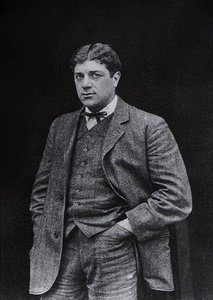
Georges Braque
1882 - 1963 , Frankrijk
Belangrijkste feiten
- Artistic Movement Or Style: Cubisme, Fauvisme
- Artists Or Movements Influenced By This Artist:
- Picasso
- Modern Kunst
- Artists Who Influenced This Artist:
- Matisse
- Derain
- Cézanne
- Date Of Birth: 13 mei 1882
- Date Of Death: 31 augustus 1963
- Full Name: Georges Braque
- Nationality: Frans
- Notable Artworks:
- Houses L'Estaque
- Patience
- Violin Palette
- Place Of Birth: Argenteuil, Frankrijk
Gerelateerde artikelen

Lithography: A Historical Survey of Technique, Artistic Expression & Enduring Legacy
Explore the rich history of lithography – from Senefelder’s invention to its impact on fine art & commercial printing. Discover key artists, techniques, and collecting insights at OriginalUniqueArt.
Feathered Visions: A Historical & Artistic Exploration of Birds in Painting
Explore the rich history of birds in painting! Discover symbolism, artistic movements & master artists like Audubon. High-quality reproductions available at OriginalUniqueArt.
Golden Hours: Sunset Motifs in Western Art History
Explore the captivating history of sunset motifs in Western art! Discover iconic paintings by Monet, Van Gogh & Kuindzhi. Learn about Romanticism, Impressionism & collecting these timeless masterpieces. Expert insights at OriginalUniqueArt.

Mastering Color Theory: How Warm and Cool Hues Transform Your Art Collection
Elevate your collection with expert insights into color theory. Discover how the masterful interplay of warm and cool hues creates emotional resonance and spatial harmony, guiding discerning collectors in selecting museum-quality masterpieces for sophisticated interior curation.

Color Theory Decoded: How Warm and Cool Hues Masterfully Evoke Emotion in Art
Explore the profound connection between color theory and emotion. From Newton to Impressionism, learn how warm and cool hues evoke passion and serenity in art history's greatest masterpieces.


