
 Voorvertoning
 Verstuur
 Delen
Delen
 Details bekijken
 Gids
Gids

 Download
 Vergelijkbare items
 Röntgenonderzoek
 Diavoorstelling
 Statistieken
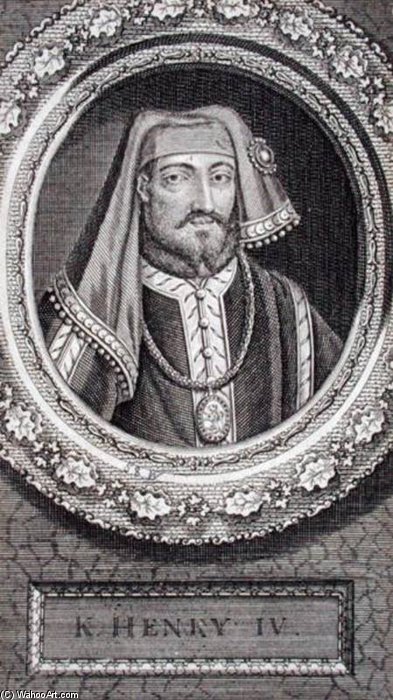
Henry Iv )

 Lees meer
Koop een digitale afbeelding in hoge resolutie met verbeterde kwaliteit, die veel superieur is aan de online voorvertoning.
Elk bestand wordt met uiterste precisie voorbereid door onze interne specialisten, met behulp van geavanceerde tools en deskundige handmatige retouche. Wij garanderen dat elke afbeelding een uitzonderlijke helderheid, nauwkeurige kleurweergave en verfijnde details bezit.
Het uiteindelijke bestand wordt binnen 72 uur per e-mail geleverd, geoptimaliseerd voor direct gebruik in professionele, redactionele en printomgevingen. Dit is dezelfde kwaliteit waarop vooraanstaande designstudio's, uitgevers en galerieën vertrouwen.
Digitale afbeeldingen
Download een bestand met hoge resolutie voor persoonlijke weergave, afdrukken en creatieve projecten. ( Schakel over naar print Bestel handgeschilderde reproductie)
Inbegrepen bij elke bestelling van een digitale afbeelding
Professionele digitale levering, gegarandeerd
Wanneer u kiest voor OriginalUniqueArt.com, ontvangt u niet alleen een afbeelding – u krijgt een professioneel verbeterd digitaal kunstwerk, met precisie vervaardigd en voorzien van een tevredenheidsgarantie. Dit is alles wat automatisch bij uw bestelling is inbegrepen:

Snelle levering per e-mail
Uw hoogwaardige digitale afbeeldingsbestand wordt binnen 72 uur na bestelling naar u gemaild – klaar voor direct gebruik.

AI-verbeterd digitaal bestand
Uw kunstwerk wordt professioneel geoptimaliseerd met behulp van geavanceerde AI-tools en handmatige bewerkingen, waardoor maximale details, helderheid en kleurnauwkeurigheid worden gegarandeerd.

Gratis levenslange herlevering van digitale bestanden
Je bestand per ongeluk verwijderd of kwijtgeraakt? Geen zorgen – we sturen het u op elk gewenst moment gratis opnieuw toe.

Geen invoerkosten – nooit
Geniet direct van uw kunstwerk zonder invoerrechten, belastingen of verzendkosten – digitale downloads zijn altijd belastingvrij.

Garantie op kleurgetrouwheid
Met behulp van professionele hulpmiddelen en kleurbeheer zorgen wij ervoor dat uw digitale afbeelding de originele kleuren zo nauwkeurig mogelijk weergeeft.

100 dagen tevredenheidsgarantie
Mocht u niet tevreden zijn met uw digitale afbeelding, dan passen wij deze aan of storten wij 100% terug binnen 100 dagen – zonder vragen te stellen.

100% Geld-terug-garantie
Niet tevreden? Ontvang een volledige terugbetaling binnen 100 dagen na ontvangst van uw digitale bestand – zonder vragen te stellen.

Korting bij grote bestellingen
Koop 3 afbeeldingen, bespaar 10% - Koop 5, bespaar 15% - Koop 10+, bespaar 20%. Ideaal voor creatieve projecten, galerieën en bureaus.
Kunstenaarsbiografie
George Vertue: The Chronicler of British Art
George Vertue (1684 – 1756) stands as a singular figure in the annals of English engraving and antiquarian scholarship, an artist whose meticulous observations and painstaking reproductions cemented his place as a pivotal contributor to the burgeoning aesthetic sensibilities of the Enlightenment. More than merely a craftsman adept at transferring images from canvas to plate, Vertue was a historian, a collector, and a fervent advocate for preserving Britain’s artistic heritage—a role that profoundly shaped our understanding of the era's visual culture. Born in London amidst the Catholic fervor of his family, Vertue’s early life instilled within him a deep appreciation for detail and accuracy – qualities that would become hallmarks of his artistic practice and intellectual pursuits. His apprenticeship under Michael Vandergucht, a German engraver whose fortunes swiftly declined, provided invaluable experience in mastering the technical skills required to produce exceptional prints. However, it was his association with Godfrey Kneller’s Academy of Painting—where he collaborated closely with Thomas Gibson—that truly nurtured his artistic vision and fostered connections within London's intellectual elite. Gibson’s influence extended beyond mere instruction; Vertue absorbed Gibson’s stylistic sensibilities, particularly his masterful handling of chiaroscuro and his ability to convey psychological depth in portraiture. This careful attention to light and shadow would become a defining characteristic of Vertue’s engravings, mirroring the dramatic aesthetic favored by Gibson and elevating his work beyond mere replication. Vertue’s passion for antiquarian research transcended his professional duties as an engraver. Driven by a desire to document the artistic achievements of Britain's past—particularly those predating the Elizabethan Renaissance—he embarked on a systematic endeavor to compile comprehensive notebooks filled with sketches, drawings, and detailed descriptions of artworks. These notebooks constitute an unparalleled resource for historians studying British art during Vertue’s lifetime, offering invaluable insights into stylistic trends, patronage networks, and artistic tastes. His membership in the Rose and Crown Club alongside luminaries like William Hogarth and Peter Tillmans underscores his position at the forefront of London's artistic discourse. Furthermore, expeditions undertaken with figures such as Edward Harley and Lord Coleraine yielded remarkable visual records of sites across England—a testament to Vertue’s dedication to firsthand observation and scholarly investigation. He meticulously documented Roman sculptures in Pompeii and Herculaneum, capturing their grandeur and preserving them for posterity. Vertue's contribution to British art history reached its zenith through his involvement in *Vetusta Monumenta*, a monumental project aimed at reconstructing Britain's artistic past. He undertook the daunting task of engraving numerous illustrations from classical texts and medieval manuscripts, ensuring their faithful reproduction for posterity. This ambitious undertaking demanded exceptional skill and patience—qualities Vertue possessed in abundance. The resulting prints served as invaluable visual aids for scholars studying antiquity and contributed significantly to the dissemination of knowledge about Britain’s artistic heritage. Following the death of Earl Harley, Vertue benefited from the patronage of Duchess Portland and Frederick, Prince of Wales—the latter commissioning portraits after Van Dyck and recognizing Vertue’s exceptional talent as an engraver. Notably, a portrait of Vertue himself was painted by Gibson in 1715, and his widow generously donated it to the Society of Antiquaries – demonstrating Vertue's enduring legacy within the artistic community. His engraving of Gibson’s portrait stands as a poignant reminder of their collaborative relationship and Gibson’s admiration for Vertue’s artistic prowess. George Vertue’s legacy extends far beyond his technical achievements; he is remembered primarily as a champion of British art history, whose meticulous notebooks continue to inspire scholars today. He played an instrumental role in shaping the aesthetic sensibilities of his time—particularly through his association with Horace Walpole and *Anecdotes of Painting*, establishing himself as one of the foremost figures in documenting and disseminating knowledge about Britain’s artistic heritage. His work remains a cornerstone of understanding the visual culture of the eighteenth century, securing his place among the most influential artists and historians of the era. He is particularly celebrated for his contribution to Walpole's *Anecdotes of Painting*, where he meticulously documented details about British art—a testament to Vertue’s unwavering commitment to preserving Britain’s artistic heritage for future generations.
George Vertue
1684 - 1756 , Verenigd Koninkrijk
Belangrijkste feiten
- Artistic Movement Or Style: Portretgravure
- Artists Or Movements Influenced By This Artist: ['Horace Walpole']
- Artists Who Influenced This Artist:
- Michael Vandergucht
- Thomas Gibson
- Date Of Birth: 1684
- Full Name: George Vertue
- Nationality: Engels
- Notable Artworks:
- William Croft Engraving
- Ben Jonson Engraving
- Koninginne Anne Gravure
- Place Of Birth: London, United Kingdom