

 Bekijk op ware grootte
 Verstuur
 Delen
Delen
 Details bekijken
 Gids voor studentenkunstwerken

 Download
 Vergelijkbare items
 Röntgenonderzoek
 Diavoorstelling
 Statistieken
Labourers


 Lees meer
Handgemaakte olieverfreproductie
Met de hand geschilderd in olieverf op canvas in uw gewenste maat en lijst, op bestelling gemaakt door onze kunstenaars. ( Schakel over naar print Schakel over naar digitale afbeeldingen)




P118B €10

P118H €10

P118W €10

P438Z €10

P508JH €12

P508YH €12

P805H €10

P805Z €10

P919BZ €10

P919G €10

P919XJ €10

P959ZH €10

P968JZ €12

W106C €8

W218G €10

W218JH €8

W218Y €10

W307PJ €10

W316G €10

W316PJ €8

W316Y €10

W398PJ €8

W4111J €10

W500HY €15

W500JH €15

W692G €12

W849H €8

W940BG €15

W953PJ €8




Kies uit onze vooraf ingestelde maten die overeenkomen met de originele verhoudingen van het kunstwerk.

Voer de breedte en de hoogte in die u nodig heeft, passend bij uw lijst of uw muur. Dit is handgeschilderd, dus bij een afmeting met een andere vormverhouding kan de kunstenaar iets meer rondom het schilderij schilderen of juist iets meer weglaten — u kiest zelf. Wij sturen u een digitaal mockup ter goedkeuring voordat het schilderwerk begint. De afbeelding die op deze pagina wordt getoond, is niet het uiteindelijke resultaat — alleen de mockup geeft dit weer.
Na de bestelling zal het team van OriginalUniqueArt.com per e-mail contact opnemen met de klant voor instructies en een mockup-voorbeeld sturen.
Wereldwijde levering () binnen 3 tot 4 weken in plaats van de standaard 5 weken. (22 oktober). Zonder concessies aan de kwaliteit.

Gratis wereldwijde expressverzending

Hoogwaardig linnen canvas

Volledige verzendverzekering

Garantie op terugbetaling van invoerrechten

Garantie op exacte kleurweergave

Retourbeleid van 100 dagen (alleen bij defecten)

100% Geld-terug-garantie

Korting bij meerdere afnames
 De optie voor glas is alleen beschikbaar bij een formaat kleiner dan 110 cm.

Labourers
Reproductiemethode
Formaat reproductie
-


Totaalprijs
€ 262
A Glimpse into Eighteenth-Century Rural Life
George Stubbs’s Labourers is more than just a depiction of farm work; it is a vibrant tableau vivant, a carefully composed meditation on the rhythm and resilience of life in eighteenth-century England. When one gazes upon this oil on canvas from 1761, one is instantly transported away from the clamor of modern existence and into a pastoral scene steeped in earthy warmth. The painting captures a moment of pause—a gathering around a horse-drawn carriage—where labor seems momentarily suspended for conversation or shared contemplation. Stubbs masterfully situates his figures against a backdrop suggesting both cultivated land and the permanence of country architecture, lending the entire composition an air of serene, enduring tranquility.
Mastery in Form and Figure
What elevates Labourers beyond mere genre painting is Stubbs’s unparalleled technical skill. While he was celebrated for his breathtaking studies of equine anatomy—a passion evident in every sinew and muscle depicted—he never allowed this specialization to overshadow the humanity within the scene. Observe the horses; they are rendered with a startling, almost scientific realism, yet they move with palpable life. The men themselves, gathered near the cart, possess an engaging naturalism. Stubbs’s brushwork is bold and expressive, suggesting movement even in repose. This technique allows the viewer to feel the energy humming beneath the surface calm, connecting the physical power of the animals with the subtle nuances of human interaction.
The Symbolism of Community and Industry
Symbolically, this work speaks volumes about the interconnectedness of rural life. The presence of the dog near the foreground anchors the scene in domestic reality, while the carriage itself represents both transport and the structure of community endeavor. It is a celebration of industry, yes, but more profoundly, it is an ode to collaboration. The earthy tones that dominate the palette—the browns of the wood, the muted greens of the foliage, the warm ochres of the clothing—wrap the entire scene in a comforting embrace, suggesting a deep-rooted connection between man, beast, and the land that sustains them.
Bringing History Home: Owning a Masterpiece
For the collector or designer seeking to infuse a space with authentic historical depth, Labourers offers an unparalleled opportunity. Reproducing such a significant work allows one to curate not just art, but a piece of documented history. The ability to own a reproduction means that this narrative—this snapshot of Georgian English life—can grace your walls, inviting contemplation and conversation. It serves as a timeless focal point, grounding any room with the quiet dignity and enduring beauty captured by George Stubbs over two centuries ago.
Vragen & Antwoorden
Voor welke kamer wordt "Labourers" door George Stubbs aanbevolen?
De aanbevolen ruimte voor "Labourers" door George Stubbs is een Living Room. Dit advies kan uiteraard worden aangepast aan uw interieur.
Hoe kan "Labourers" door George Stubbs worden gebruikt in interieurdecoratie?
"Labourers" wordt aanbevolen voor Reflective, en de ideale ruimte hiervoor is een Living Room.
Is "Labourers" gebleven in het geboorteland van de kunstenaar?
Nee - het kunstwerk wordt in het buitenland bewaard. "Labourers" wordt bewaard in Verenigde Staten van Amerika, terwijl George Stubbs werd geboren in Verenigd Koninkrijk.
Biografie van de kunstenaar
Early Life and Artistic Beginnings
George Stubbs, a name synonymous with the majestic depiction of horses, was born on August 25th, 1724, in the bustling port city of Liverpool, England. His early life, shrouded in relative obscurity for much of his formative years – until the age of thirty-five – is largely pieced together from the insightful notes of Ozias Humphry, a fellow artist and close friend who documented Stubbs’s conversations in 1794. Stubbs's father was a leatherworker, a profession that initially shaped his early life, but young George harbored an intense fascination with art, particularly anatomy, a passion ignited by meticulous observation from a very young age. He received a brief apprenticeship under Hamlet Winstanley, a Lancastrian painter and engraver, gaining foundational skills in drawing and composition – though this period was short-lived due to a clash of artistic visions. Stubbs’s early training wasn't formal; instead, he honed his craft through independent study, fueled by an insatiable curiosity about the natural world and a deep understanding of human anatomy, which he pursued diligently at York County Hospital under the tutelage of a surgeon. This dedication laid the groundwork for his revolutionary approach to equine painting.Artistic Development and Groundbreaking Techniques
Stubbs’s artistic journey truly took flight in 1744 when he relocated to York, immersing himself in the study of animal anatomy. This period marked a pivotal shift; he began dissecting horses – a somewhat unorthodox practice at the time – with the assistance of his common-law wife, Mary Spencer. This intimate knowledge of equine musculature and skeletal structure became the cornerstone of his extraordinary ability to capture the power, grace, and dynamism of horses on canvas. His meticulous anatomical studies culminated in the publication of *The Anatomy of the Horse* in 1766, a groundbreaking work that served as a visual encyclopedia for artists seeking to understand the complexities of equine form. The illustrations, now housed at the Royal Academy, were not merely scientific diagrams; they possessed an undeniable artistic merit, demonstrating Stubbs’s exceptional draughtsmanship and his commitment to realism. Furthermore, Stubbs experimented with innovative painting techniques, utilizing enamel on earthenware panels – a method pioneered by Josiah Wedgwood – which allowed him to achieve remarkable detail and luminosity in his works.Royal Patronage and the Rise of a Master
Stubbs's talent quickly garnered recognition among England’s aristocratic elite. The 3rd Duke of Richmond commissioned three monumental paintings in 1759, marking the beginning of Stubbs’s ascent to prominence within the art world. These works, executed for several other dukes and lords, solidified his reputation as a leading painter of horses and established him as a sought-after artist by wealthy patrons. His success culminated in the purchase of a grand residence in Marylebone, London – a testament to his artistic achievements and social standing. Stubbs’s most celebrated masterpiece, *Whistlejacket*, painted in 1762 for the 2nd Marquess of Rockingham, stands as a landmark achievement in art history. The painting's unconventional composition—a prancing horse depicted against a stark, unadorned background—broke with established conventions and demonstrated Stubbs’s willingness to challenge artistic norms. The dramatic portrayal of the horse, imbued with raw power and vitality, cemented his place as a pioneer of the Romantic movement.Legacy and Enduring Influence
George Stubbs's legacy extends far beyond his individual paintings; he fundamentally transformed the way horses were depicted in art. His anatomical precision, combined with his masterful understanding of equine behavior and movement, created images that are both scientifically accurate and emotionally resonant. *A Lion Attacking a Horse*, painted around 1762, exemplifies this fusion of realism and Romanticism, capturing the primal struggle between predator and prey with breathtaking intensity. Stubbs’s influence can be seen in countless subsequent works by artists who sought to emulate his skill and vision. His anatomical studies remained a vital resource for generations of equine painters, while his innovative techniques paved the way for new approaches to painting. Today, George Stubbs is recognized as one of the greatest animal painters in history – an artist whose work continues to captivate and inspire audiences worldwide. His paintings are proudly displayed in prestigious museums across Europe, including the National Gallery in London, a testament to his enduring artistic merit.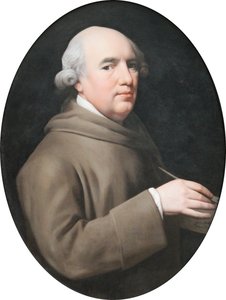
George Stubbs
1724 - 1806 , Verenigd Koninkrijk
Snelle feiten
- Artistic Movement Or Style: Romantiek, Paardkunst
- Artists Or Movements Influenced By This Artist: ['Joshua Reynolds']
- Artists Who Influenced This Artist: ['Hamlet Winstanley']
- Date Of Birth: 25 aug 1724
- Date Of Death: 10 jul 1806
- Full Name: George Stubbs
- Nationality: Engels
- Notable Artworks:
- Whistlejacket
- Lioned aanval
- Anatomie paard
- Place Of Birth: Liverpool, VK
Gerelateerde artikelen

Georges Seurat's Meesterwerken: 25 Iconische Schilderijen voor Kunstliefhebbers | OriginalUniqueArt
Ontdek de 25 meesterwerken van Georges Seurat! Duik in Pointillisme, Impressionisme & chromoluminarism. Bewonder 'A Sunday on La Grande Jatte' en meer. Museumkwaliteit kunst reproducties op OriginalUniqueArt.com.
The Noble Steed on Canvas: A Historical & Artistic Exploration of Horse Painting Across Cultures
Explore the rich history of horse painting! Discover masterpieces from Stubbs to Munnings & learn about symbolism, techniques & artists. Find museum-quality reproductions at OriginalUniqueArt.

Sir George Clausen: Capturing Edwardian Life & British Impressionism's Nuances
Explore the luminous world of Sir George Clausen, a leading British Impressionist painter. Discover his captivating scenes of Edwardian life, rural England & poignant war art. Learn about his legacy and find high-quality reproductions at OriginalUniqueArt.

Georges Braque's Top 25 Meesterwerken: Cubisme & Kunst voor uw Interieur
Ontdek de 25 meest iconische meesterwerken van Georges Braque, pionier van het Cubisme. Lees over zijn techniek, inspiratie & de impact op moderne kunst. Vind museumkwaliteit reproducties en verrijk uw interieur met OriginalUniqueArt.com!
George Stubbs: Anatomical Precision & Romantic Vision in 18th-Century British Art
Explore the captivating world of George Stubbs, the 18th-century master renowned for his anatomical precision & Romantic animal paintings. Discover his legacy and investment potential.


