

 Voorvertoning
 Verstuur
 Delen
Delen
 Details bekijken
 Gids
Gids

 Download
 Vergelijkbare items
 Röntgenonderzoek
 Diavoorstelling
 Statistieken
Horse Devoured by a Lion
 Oil On Canvas
- WallArt
- Romanticism
 1763
1763- Early Modern
 3.0 x 69.0 cm
 Tate Britain
 Lees meer
Koop een digitale afbeelding in hoge resolutie met verbeterde kwaliteit, die veel superieur is aan de online voorvertoning.
Elk bestand wordt met uiterste precisie voorbereid door onze interne specialisten, met behulp van geavanceerde tools en deskundige handmatige retouche. Wij garanderen dat elke afbeelding een uitzonderlijke helderheid, nauwkeurige kleurweergave en verfijnde details bezit.
Het uiteindelijke bestand wordt binnen 72 uur per e-mail geleverd, geoptimaliseerd voor direct gebruik in professionele, redactionele en printomgevingen. Dit is dezelfde kwaliteit waarop vooraanstaande designstudio's, uitgevers en galerieën vertrouwen.
Digitale afbeeldingen
Download een bestand met hoge resolutie voor persoonlijke weergave, afdrukken en creatieve projecten. ( Schakel over naar print Bestel handgeschilderde reproductie)
Inbegrepen bij elke bestelling van een digitale afbeelding
Professionele digitale levering, gegarandeerd
Wanneer u kiest voor OriginalUniqueArt.com, ontvangt u niet alleen een afbeelding – u krijgt een professioneel verbeterd digitaal kunstwerk, met precisie vervaardigd en voorzien van een tevredenheidsgarantie. Dit is alles wat automatisch bij uw bestelling is inbegrepen:

Snelle levering per e-mail
Uw hoogwaardige digitale afbeeldingsbestand wordt binnen 72 uur na bestelling naar u gemaild – klaar voor direct gebruik.

AI-verbeterd digitaal bestand
Uw kunstwerk wordt professioneel geoptimaliseerd met behulp van geavanceerde AI-tools en handmatige bewerkingen, waardoor maximale details, helderheid en kleurnauwkeurigheid worden gegarandeerd.

Gratis levenslange herlevering van digitale bestanden
Je bestand per ongeluk verwijderd of kwijtgeraakt? Geen zorgen – we sturen het u op elk gewenst moment gratis opnieuw toe.

Geen invoerkosten – nooit
Geniet direct van uw kunstwerk zonder invoerrechten, belastingen of verzendkosten – digitale downloads zijn altijd belastingvrij.

Garantie op kleurgetrouwheid
Met behulp van professionele hulpmiddelen en kleurbeheer zorgen wij ervoor dat uw digitale afbeelding de originele kleuren zo nauwkeurig mogelijk weergeeft.

100 dagen tevredenheidsgarantie
Mocht u niet tevreden zijn met uw digitale afbeelding, dan passen wij deze aan of storten wij 100% terug binnen 100 dagen – zonder vragen te stellen.

100% Geld-terug-garantie
Niet tevreden? Ontvang een volledige terugbetaling binnen 100 dagen na ontvangst van uw digitale bestand – zonder vragen te stellen.

Korting bij grote bestellingen
Koop 3 afbeeldingen, bespaar 10% - Koop 5, bespaar 15% - Koop 10+, bespaar 20%. Ideaal voor creatieve projecten, galerieën en bureaus.
The Primal Drama of Survival
To stand before George Stubbs's "Horse Devoured by a Lion" is to be thrust into the very heart of a visceral, untamed struggle. Completed in 1763, this masterpiece transcends mere animal portraiture, capturing a moment of raw, breathtaking violence that freezes time itself. The scene is one of profound tension: a horse, caught in its final, agonizing breaths, is relentlessly overtaken by the predatory force of a lion. There is no escape within this frame, only the inevitable triumph of brute strength over vulnerability. Stubbs does not merely observe this encounter; he orchestrates it, using the rugged, rocky landscape of Creswell Crags to mirror the chaotic and unforgiving nature of the conflict unfolding in the center of the canvas.
The emotional weight of the piece lies in its ability to evoke a sense of the sublime—that specific Romantic era fascination with beauty intertwined with terror. As the viewer, one feels an instinctive pull toward the central struggle, drawn by the sheer energy radiating from the lion’s powerful jaws and the horse's desperate, yielding form. It is a painting that demands attention, making it a commanding focal point for any collection or a sophisticated statement piece in a curated interior designed to provoke thought and conversation.
Mastery of Anatomy and Light
Stubbs’s technical brilliance is rooted in his unique background as an anatomist. His years spent studying dissection under the surgeon Charles Atkinson allowed him to render musculature with a startling, scientific precision that few of his contemporaries could match. In this work, every sinew of the struggling horse and every ripple of the lion's powerful frame is articulated with breathtaking verisimilitude. This anatomical accuracy does not strip the painting of its soul; rather, it grounds the drama in a terrifying reality, making the violence feel palpably real.
The artist employs a dramatic use of light and shadow, reminiscent of the chiaroscuro techniques found in classical masters, to heighten the narrative tension. Strong contrasts illuminate the textures of the scene—the coarse, thick fur of the predator, the smooth, sweating skin of the prey, and the jagged, unforgiving surfaces of the surrounding rocks. The color palette is a sophisticated arrangement of earthy tones, where deep browns, golds, and blacks create a brooding atmosphere, punctuated by highlights that guide the eye through the composition's dynamic movement. For the discerning collector, the depth of texture achieved in this oil on canvas offers a rich, tactile experience that remains captivating even in high-quality reproduction.
A Timeless Allegory of Power
Beyond its surface-level spectacle, "Horse Devoured by a Lion" serves as a profound allegory. While inspired by classical motifs Stubbs encountered during his travels to Rome, the painting speaks to universal themes of mortality and the cyclical nature of life and death. The lion represents an unstoppable, primordial force, while the horse embodies innocence and the fragility of existence when confronted with the overwhelming power of nature. It is a meditation on the loss of control and the inevitable confrontation between strength and weakness.
For interior designers and art enthusiasts alike, this work offers more than just aesthetic beauty; it provides a narrative depth that can transform a space. Whether placed in a grand library or a contemporary gallery setting, the painting’s ability to evoke feelings of awe, horror, and reverence makes it an enduring icon of the Romantic movement. It remains a testament to Stubbs's ability to translate biological reality into a profound exploration of the human condition, making it a timeless acquisition for those who appreciate art that challenges the spirit.
Veelgestelde vragen
Kan ik "Horse Devoured by a Lion" door George Stubbs bekijken voordat ik bestel?
Een voorproefje van "Horse Devoured by a Lion" door George Stubbs is beschikbaar op de Voorvertoning-pagina van het kunstwerk.
Waar kan ik een print van "Horse Devoured by a Lion" door George Stubbs kopen?
Een print van "Horse Devoured by a Lion" door George Stubbs kan rechtstreeks worden besteld op de Fine Art Print-pagina: een fine art print op katoenen canvas of archiefwaardig canvaspapier.
Waar kan ik statistieken vinden over "Horse Devoured by a Lion" door George Stubbs?
De Statistieken-pagina van "Horse Devoured by a Lion" door George Stubbs toont statistieken over de publieksbezoeken: het aantal maandelijkse bezoeken aan dit kunstwerk, een vergelijking met de meest bekeken werken van de kunstenaar en de herkomst van de bezoekers.
Kunstenaarsbiografie
Early Life and Artistic Beginnings
George Stubbs, a name synonymous with the majestic depiction of horses, was born on August 25th, 1724, in the bustling port city of Liverpool, England. His early life, shrouded in relative obscurity for much of his formative years – until the age of thirty-five – is largely pieced together from the insightful notes of Ozias Humphry, a fellow artist and close friend who documented Stubbs’s conversations in 1794. Stubbs's father was a leatherworker, a profession that initially shaped his early life, but young George harbored an intense fascination with art, particularly anatomy, a passion ignited by meticulous observation from a very young age. He received a brief apprenticeship under Hamlet Winstanley, a Lancastrian painter and engraver, gaining foundational skills in drawing and composition – though this period was short-lived due to a clash of artistic visions. Stubbs’s early training wasn't formal; instead, he honed his craft through independent study, fueled by an insatiable curiosity about the natural world and a deep understanding of human anatomy, which he pursued diligently at York County Hospital under the tutelage of a surgeon. This dedication laid the groundwork for his revolutionary approach to equine painting.Artistic Development and Groundbreaking Techniques
Stubbs’s artistic journey truly took flight in 1744 when he relocated to York, immersing himself in the study of animal anatomy. This period marked a pivotal shift; he began dissecting horses – a somewhat unorthodox practice at the time – with the assistance of his common-law wife, Mary Spencer. This intimate knowledge of equine musculature and skeletal structure became the cornerstone of his extraordinary ability to capture the power, grace, and dynamism of horses on canvas. His meticulous anatomical studies culminated in the publication of *The Anatomy of the Horse* in 1766, a groundbreaking work that served as a visual encyclopedia for artists seeking to understand the complexities of equine form. The illustrations, now housed at the Royal Academy, were not merely scientific diagrams; they possessed an undeniable artistic merit, demonstrating Stubbs’s exceptional draughtsmanship and his commitment to realism. Furthermore, Stubbs experimented with innovative painting techniques, utilizing enamel on earthenware panels – a method pioneered by Josiah Wedgwood – which allowed him to achieve remarkable detail and luminosity in his works.Royal Patronage and the Rise of a Master
Stubbs's talent quickly garnered recognition among England’s aristocratic elite. The 3rd Duke of Richmond commissioned three monumental paintings in 1759, marking the beginning of Stubbs’s ascent to prominence within the art world. These works, executed for several other dukes and lords, solidified his reputation as a leading painter of horses and established him as a sought-after artist by wealthy patrons. His success culminated in the purchase of a grand residence in Marylebone, London – a testament to his artistic achievements and social standing. Stubbs’s most celebrated masterpiece, *Whistlejacket*, painted in 1762 for the 2nd Marquess of Rockingham, stands as a landmark achievement in art history. The painting's unconventional composition—a prancing horse depicted against a stark, unadorned background—broke with established conventions and demonstrated Stubbs’s willingness to challenge artistic norms. The dramatic portrayal of the horse, imbued with raw power and vitality, cemented his place as a pioneer of the Romantic movement.Legacy and Enduring Influence
George Stubbs's legacy extends far beyond his individual paintings; he fundamentally transformed the way horses were depicted in art. His anatomical precision, combined with his masterful understanding of equine behavior and movement, created images that are both scientifically accurate and emotionally resonant. *A Lion Attacking a Horse*, painted around 1762, exemplifies this fusion of realism and Romanticism, capturing the primal struggle between predator and prey with breathtaking intensity. Stubbs’s influence can be seen in countless subsequent works by artists who sought to emulate his skill and vision. His anatomical studies remained a vital resource for generations of equine painters, while his innovative techniques paved the way for new approaches to painting. Today, George Stubbs is recognized as one of the greatest animal painters in history – an artist whose work continues to captivate and inspire audiences worldwide. His paintings are proudly displayed in prestigious museums across Europe, including the National Gallery in London, a testament to his enduring artistic merit.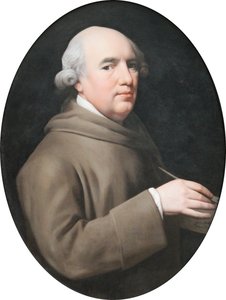
George Stubbs
1724 - 1806 , Verenigd Koninkrijk
Belangrijkste feiten
- Artistic Movement Or Style: Romantiek, Paardkunst
- Artists Or Movements Influenced By This Artist: ['Joshua Reynolds']
- Artists Who Influenced This Artist: ['Hamlet Winstanley']
- Date Of Birth: 25 aug 1724
- Date Of Death: 10 jul 1806
- Full Name: George Stubbs
- Nationality: Engels
- Notable Artworks:
- Whistlejacket
- Lioned aanval
- Anatomie paard
- Place Of Birth: Liverpool, VK