

 Voorvertoning
 Verstuur
 Delen
Delen
 Details bekijken
 Gids
Gids

 Download
 Vergelijkbare items
 Röntgenonderzoek
 Diavoorstelling
 Statistieken
Finished study for


 Lees meer
Ontvang een bestand dat klaar is voor drukwerk en de kwaliteit van het online voorbeeld ver overstijgt. Elke digitale afbeelding die wij verkopen, is afkomstig van een high-resolution master uit onze database — meestal tussen de 5.000 en 15.000 pixels breed — zodat u met vertrouwen groot kunt afdrukken, nauwkeurig kunt bijsnijden of fijne details kunt reproduceren.
Geen enkel bestand verlaat ons atelier onbewerkt. Een digitaal expert controleert de kleuren aan de hand van het originele schilderij en corrigeert deze indien nodig, om vervolgens de helderheid en details te verbeteren met professionele retoucheertechnieken — waarbij de penseelstreek en stijl van de kunstenaar altijd strikt worden gerespecteerd. Het resultaat is een afbeelding die oogt als het schilderij zelf, en niet als een gescande foto met een filter.
U keurt goed voordat het proces wordt afgerond: onze expert stuurt de afbeelding binnen 72 uur per e-mail naar u toe ter beoordeling. Niet tevreden? Vraag om verbeteringen of correcties, of vraag een terugbetaling aan als de kwaliteit niet voldoet.
Dit is de kwaliteit waarop uitgevers, designstudio's, galeries en drukkerijen vertrouwen.
Digitale afbeeldingen
Download een bestand met hoge resolutie voor persoonlijke weergave, afdrukken en creatieve projecten. ( Schakel over naar print Bestel handgeschilderde reproductie)
Inbegrepen bij elke bestelling van een digitale afbeelding
Professionele digitale levering, gegarandeerd
Wanneer u kiest voor OriginalUniqueArt.com, ontvangt u niet alleen een afbeelding – u krijgt een professioneel verbeterd digitaal kunstwerk, met precisie vervaardigd en voorzien van een tevredenheidsgarantie. Dit is alles wat automatisch bij uw bestelling is inbegrepen:

Snelle levering per e-mail
Uw hoogwaardige digitale afbeeldingsbestand wordt binnen 72 uur na bestelling naar u gemaild – klaar voor direct gebruik.

AI-verbeterd digitaal bestand
Uw kunstwerk wordt professioneel geoptimaliseerd met behulp van geavanceerde AI-tools en handmatige bewerkingen, waardoor maximale details, helderheid en kleurnauwkeurigheid worden gegarandeerd.

Gratis levenslange herlevering van digitale bestanden
Je bestand per ongeluk verwijderd of kwijtgeraakt? Geen zorgen – we sturen het u op elk gewenst moment gratis opnieuw toe.

Geen invoerkosten – nooit
Geniet direct van uw kunstwerk zonder invoerrechten, belastingen of verzendkosten – digitale downloads zijn altijd belastingvrij.

Garantie op kleurgetrouwheid
Met behulp van professionele hulpmiddelen en kleurbeheer zorgen wij ervoor dat uw digitale afbeelding de originele kleuren zo nauwkeurig mogelijk weergeeft.

100 dagen tevredenheidsgarantie
Mocht u niet tevreden zijn met uw digitale afbeelding, dan passen wij deze aan of storten wij 100% terug binnen 100 dagen – zonder vragen te stellen.

100% Geld-terug-garantie
Niet tevreden? Ontvang een volledige terugbetaling binnen 100 dagen na ontvangst van uw digitale bestand – zonder vragen te stellen.

Korting bij grote bestellingen
Koop 3 afbeeldingen, bespaar 10% - Koop 5, bespaar 15% - Koop 10+, bespaar 20%. Ideaal voor creatieve projecten, galerieën en bureaus.
George Stubbs’ Anatomical Precision: A Window into the Romantic Horse
George Stubbs' “Finished Study for The First Anatomical Table of the Muscles…of the Horse,” created in 1758, is far more than a mere scientific illustration; it’s a profound meditation on life, death, and the sublime beauty of the animal kingdom. This remarkably detailed graphite and charcoal drawing offers an intimate glimpse into the mind of one of history's most visionary artists, revealing not just the mechanics of equine anatomy but also Stubbs’ deep-seated fascination with capturing the essence of movement and emotion within his subjects.
Stubbs’ journey to this level of anatomical understanding was a deliberate one. Initially trained as a currier – a leatherworker – he recognized early on that true artistic representation demanded an intimate knowledge of the forms he sought to depict. He abandoned his family trade and, driven by an almost obsessive curiosity, apprenticed himself to Charles Atkinson, a surgeon at York County Hospital, immersing himself in the study of human anatomy. This foundational experience proved invaluable when he turned his attention to horses, creatures that had long captivated him. Stubbs’ relentless dissection of dozens of equine corpses – a practice considered somewhat morbid at the time – yielded an unparalleled understanding of muscle structure, skeletal alignment, and the subtle nuances of movement. The resulting drawings are not simply accurate representations; they are infused with a palpable sense of vitality.
A Romantic Vision of the Beast
“Finished Study” firmly places Stubbs within the burgeoning Romantic movement, a period characterized by an emphasis on emotion, imagination, and the power of nature. Unlike earlier depictions of horses that often prioritized idealized beauty or heroic narratives, Stubbs’ work focuses on the raw physicality of the animal – its strength, vulnerability, and inherent wildness. The skeletal structure is rendered with meticulous precision, yet it's not presented as a cold, lifeless arrangement. Instead, the lines suggest a dynamic tension, hinting at the potential for movement and action. The drawing anticipates the dramatic, almost theatrical compositions that would later define Romantic painting, particularly in Stubbs’ monumental equine paintings like “Whistlejacket.”
Furthermore, the choice of subject matter itself is significant. Horses were not merely beasts of burden or symbols of power; they represented a connection to the untamed wilderness – a realm of primal instinct and boundless energy. Stubbs' dedication to anatomical accuracy reflects a broader Romantic interest in understanding the natural world through scientific observation, but it’s coupled with an appreciation for the sublime—that feeling of awe and wonder inspired by confronting something vast and powerful.
Technique and Symbolism
The drawing’s power lies not only in its subject matter but also in Stubbs' masterful technique. The use of precise, linear hatching creates a remarkable sense of volume and depth, transforming the skeletal structure into a tangible presence on the page. Subtle variations in line density suggest the contours of muscle tissue beneath the bone, conveying a remarkable level of realism. The grayscale palette – devoid of color – emphasizes form and structure, lending the image an almost sculptural quality.
Beyond its technical merits, “Finished Study” carries symbolic weight. The depiction of death—represented through the skeletal remains—can be interpreted as a meditation on mortality and the cyclical nature of life. Yet, it’s not presented in a morbid light; rather, it serves to highlight the underlying beauty and inherent dignity of the animal form. The drawing ultimately celebrates the enduring power of nature and the artist's ability to capture its essence with both scientific rigor and artistic sensitivity.
A Legacy of Anatomical Mastery
George Stubbs’ “Finished Study for The First Anatomical Table of the Muscles…of the Horse” stands as a testament to his unparalleled skill and profound understanding of the animal world. It is a pivotal work in art history, bridging the gap between scientific observation and artistic expression. Reproductions of this remarkable drawing offer a unique opportunity to appreciate Stubbs’ genius and to contemplate the enduring power of nature—a timeless subject that continues to inspire artists and captivate audiences today.
Veelgestelde vragen
Hoe kan ik "Finished study for" door George Stubbs bekijken als een diavoorstelling?
"Finished study for" door George Stubbs is te bekijken als een diavoorstelling op de Diavoorstelling-pagina van het kunstwerk.
Kan ik "Finished study for" door George Stubbs op mijn eigen muur bekijken voordat ik het koop?
De AR-weergave-pagina van "Finished study for" door George Stubbs maakt gebruik van augmented reality om het kunstwerk op een compatibel apparaat in uw eigen ruimte te tonen.
Waarvoor wordt een reproductie van "Finished study for" door George Stubbs aanbevolen?
Een reproductie van "Finished study for" door George Stubbs wordt aanbevolen voor Reflective. Dit advies is gebaseerd op het onderwerp, de sfeer en de kleuren van het werk.
Kunstenaarsbiografie
Early Life and Artistic Beginnings
George Stubbs, a name synonymous with the majestic depiction of horses, was born on August 25th, 1724, in the bustling port city of Liverpool, England. His early life, shrouded in relative obscurity for much of his formative years – until the age of thirty-five – is largely pieced together from the insightful notes of Ozias Humphry, a fellow artist and close friend who documented Stubbs’s conversations in 1794. Stubbs's father was a leatherworker, a profession that initially shaped his early life, but young George harbored an intense fascination with art, particularly anatomy, a passion ignited by meticulous observation from a very young age. He received a brief apprenticeship under Hamlet Winstanley, a Lancastrian painter and engraver, gaining foundational skills in drawing and composition – though this period was short-lived due to a clash of artistic visions. Stubbs’s early training wasn't formal; instead, he honed his craft through independent study, fueled by an insatiable curiosity about the natural world and a deep understanding of human anatomy, which he pursued diligently at York County Hospital under the tutelage of a surgeon. This dedication laid the groundwork for his revolutionary approach to equine painting.Artistic Development and Groundbreaking Techniques
Stubbs’s artistic journey truly took flight in 1744 when he relocated to York, immersing himself in the study of animal anatomy. This period marked a pivotal shift; he began dissecting horses – a somewhat unorthodox practice at the time – with the assistance of his common-law wife, Mary Spencer. This intimate knowledge of equine musculature and skeletal structure became the cornerstone of his extraordinary ability to capture the power, grace, and dynamism of horses on canvas. His meticulous anatomical studies culminated in the publication of *The Anatomy of the Horse* in 1766, a groundbreaking work that served as a visual encyclopedia for artists seeking to understand the complexities of equine form. The illustrations, now housed at the Royal Academy, were not merely scientific diagrams; they possessed an undeniable artistic merit, demonstrating Stubbs’s exceptional draughtsmanship and his commitment to realism. Furthermore, Stubbs experimented with innovative painting techniques, utilizing enamel on earthenware panels – a method pioneered by Josiah Wedgwood – which allowed him to achieve remarkable detail and luminosity in his works.Royal Patronage and the Rise of a Master
Stubbs's talent quickly garnered recognition among England’s aristocratic elite. The 3rd Duke of Richmond commissioned three monumental paintings in 1759, marking the beginning of Stubbs’s ascent to prominence within the art world. These works, executed for several other dukes and lords, solidified his reputation as a leading painter of horses and established him as a sought-after artist by wealthy patrons. His success culminated in the purchase of a grand residence in Marylebone, London – a testament to his artistic achievements and social standing. Stubbs’s most celebrated masterpiece, *Whistlejacket*, painted in 1762 for the 2nd Marquess of Rockingham, stands as a landmark achievement in art history. The painting's unconventional composition—a prancing horse depicted against a stark, unadorned background—broke with established conventions and demonstrated Stubbs’s willingness to challenge artistic norms. The dramatic portrayal of the horse, imbued with raw power and vitality, cemented his place as a pioneer of the Romantic movement.Legacy and Enduring Influence
George Stubbs's legacy extends far beyond his individual paintings; he fundamentally transformed the way horses were depicted in art. His anatomical precision, combined with his masterful understanding of equine behavior and movement, created images that are both scientifically accurate and emotionally resonant. *A Lion Attacking a Horse*, painted around 1762, exemplifies this fusion of realism and Romanticism, capturing the primal struggle between predator and prey with breathtaking intensity. Stubbs’s influence can be seen in countless subsequent works by artists who sought to emulate his skill and vision. His anatomical studies remained a vital resource for generations of equine painters, while his innovative techniques paved the way for new approaches to painting. Today, George Stubbs is recognized as one of the greatest animal painters in history – an artist whose work continues to captivate and inspire audiences worldwide. His paintings are proudly displayed in prestigious museums across Europe, including the National Gallery in London, a testament to his enduring artistic merit.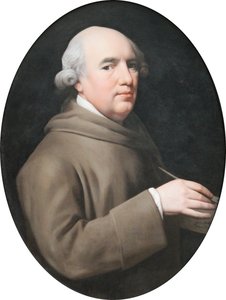
George Stubbs
1724 - 1806 , Verenigd Koninkrijk
Belangrijkste feiten
- Artistic Movement Or Style: Romantiek, Paardkunst
- Artists Or Movements Influenced By This Artist: ['Joshua Reynolds']
- Artists Who Influenced This Artist: ['Hamlet Winstanley']
- Date Of Birth: 25 aug 1724
- Date Of Death: 10 jul 1806
- Full Name: George Stubbs
- Nationality: Engels
- Notable Artworks:
- Whistlejacket
- Lioned aanval
- Anatomie paard
- Place Of Birth: Liverpool, VK