

 Bekijk op ware grootte
 Verstuur
 Delen
Delen
 Details bekijken
 Gids voor studentenkunstwerken

 Download
 Vergelijkbare items
 Röntgenonderzoek
 Diavoorstelling
 Statistieken
De Grosvenor Hunt


 Lees meer
Giclée / Kunstafdrukken
Giclée- of canvasafdruk van museumkwaliteit met een snelle productie en flexibele afwerkingsmogelijkheden. ( Koop handgeschilderd kunstwerk Schakel over naar digitale afbeeldingen)




P118B €10

P118H €10

P118W €10

P438Z €10

P508JH €12

P508YH €12

P805H €10

P805Z €10

P919BZ €10

P919G €10

P919XJ €10

P959ZH €10

P968JZ €12

W106C €8

W218G €10

W218JH €8

W218Y €10

W307PJ €10

W316G €10

W316PJ €8

W316Y €10

W398PJ €8

W4111J €10

W500HY €15

W500JH €15

W692G €12

W849H €8

W940BG €15

W953PJ €8




Kies uit onze vooraf ingestelde maten die overeenkomen met de originele verhoudingen van het kunstwerk.

U kunt uw eigen afmetingen opgeven om in een specifieke lijst of ruimte te passen. Als de door u gekozen maat niet overeenkomt met de proporties van het originele kunstwerk, zullen wij de afbeelding bijsnijden of uitbreiden met een gespiegelde of effen rand. Een digitaal mockup wordt ter goedkeuring naar u verzonden voordat de productie begint.
Houd er rekening mee dat de preview op het scherm de werkelijke bijsneding of uitbreiding niet weergeeft. Alleen de mockup toont de uiteindelijke compositie nauwkeurig.
Hoewel aangepaste maten beschikbaar zijn, raden wij aan een afmeting uit de vooraf bepaalde lijst te kiezen om de originele proporties te behouden.
Wereldwijde levering () binnen 2 weken in plaats van de standaard 4/5 weken. (10 oktober)

Gratis wereldwijde expressverzending

Hoogwaardig linnen canvas

Volledige verzendverzekering

Garantie op terugbetaling van invoerrechten

Garantie op exacte kleurweergave

Retourbeleid van 100 dagen (alleen bij defecten)

100% Geld-terug-garantie

Korting bij meerdere afnames
 De optie voor glas is alleen beschikbaar bij een formaat kleiner dan 110 cm.

De Grosvenor Hunt
Giclée / Kunstafdrukken
Formaat reproductie
-


Totaalprijs
€ 70
Een meeslepende scène van de 18e-eeuwse jachttraditie
Dompel uzelf onder in een levendige weergave van een quintessentiële Britse jachtscène uit de 18e eeuw. Dit meesterlijke werk legt een dynamisch moment van kameraadschap en actie vast, waarbij ruiters, gehuld in kostuums uit die tijd, door een weelderig landschap navigeren onder een bladerdak van levendige herfstkleuren. De scène ademt energie en doelgerichtheid uit, wat de culturele betekenis van de jacht als zowel een sport als een sociaal ritueel tijdens dit tijdperk weerspiegelt. De gedetailleerde weergave van paarden, honden en menselijke figuren nodigt de kijker uit om de spanning en traditie van een vervlogen tijdperk te ervaren, waardoor het een aangrijpend middelpunt vormt voor zowel verzamelaars als liefhebbers.Exquise stijl en techniek
Dit olieverfschilderij, met uiterste precisie gecreëerd, is een schoolvoorbeeld van het realisme en de technische beheersing die zo kenmerkend waren voor deze periode. De kunstenaar maakt gebruik van gelaagde glazuren, fijn penseelwerk en subtiele tonale gradaties om een levensechte weergave van texturen te bereiken—van de ruwe schors van de centrale boom tot de vloeiende stoffen van de kleding van de jagers. De compositie brengt activiteit en rust in evenwicht door gebruik te maken van nauwkeurige lijnen en organische vormen om het oog van de toeschouwer door de scène te leiden. Het warme, gouden licht suggereert de late namiddag, wat diepte en een nostalgische gloed toevoegt die de emotionele resonantie van het werk versterkt.Historische context en artistieke betekenis
Dit werk, in 1762 geschilderd door de beroemde Engelse kunstenaar George Stubbs, weerspiegelt de fascinatie van die tijd voor de natuur, anatomie en het landelijke leven. Stubbs, gevierd om zijn anatomische nauwkeurigheid en meesterlijke afbeeldingen van paarden, tilt deze scène boven loutere documentatie uit naar een kunstwerk dat de band tussen mens en dier en de traditie van de jacht viert. Het schilderij is waarschijnlijk tentoongesteld tijdens de invloedrijke expositie van 1762 van de Society of Artists of Great Britain, waardoor het een prominente plek kreeg binnen het levendige artistieke landschap van het Groot-Brittannië tijdens de Verlichting. Het gedetailleerde realisme en de levendige compositie maken het tot een belangrijk voorbeeld van de landschaps- en genreschilderkunst uit het Georgische tijdperk.Symboliek en emotionele impact
Naast de visuele aantrekkingskracht is de scène rijk aan symbolische betekenis. De grote, stevige boom in het midden kan staan voor stabiliteit en het verstrijken van de tijd, die als een anker dient voor de levendige activiteit eronder. De jachtscène zelf kan symbool staan voor de beheersing van de natuur, traditie en overleving, waarbij thema's als kameraadschap, vaardigheid en de oeroude verbinding tussen mens en dier worden opgeroepen. Het warme herfstpalet roept gevoelens van nostalgie, reflectie en de vergankelijkheid van het leven op, wat de kijker uitnodigt om na te denken over de harmonie en de spanning die inherent zijn aan de interactie tussen de mens en de natuurlijke wereld.Een tijdloze toevoeging aan elke ruimte
Of het nu wordt tentoongesteld in een verfijnde galerie, een stijlvolle woonkamer of een elegant kantoor, deze hoogwaardige reproductie biedt een venster op de Britse cultuur en artistieke excellentie van de 18e eeuw. De levendige kleuren, het gedetailleerde realisme en het evocatieve verhaal maken het tot een inspirerend middelpunt dat gesprekken en bewondering oproept. Perfect voor kunstliefhebbers, verzamelaars en interieurontwerpers die op zoek zijn naar een stuk dat historische diepgang combineert met esthetische schoonheid; dit schilderij belooft elke omgeving te verheffen met zijn tijdloze charme en artistieke integriteit.Vragen & Antwoorden
Is "De Grosvenor Hunt" door George Stubbs een schilderij, een tekening of een prent?
"De Grosvenor Hunt" is een Wanddecoratie-werk.
Hoe wordt de stemming van "De Grosvenor Hunt" door George Stubbs beschreven?
De algehele stemming van "De Grosvenor Hunt" door George Stubbs is Nostalgisch. De stemming beschrijft de algemene atmosfeer van het werk.
In welk jaar werd "De Grosvenor Hunt" door George Stubbs gemaakt?
"De Grosvenor Hunt" dateert uit 1762. Deze datum plaatst het werk binnen de carrière van George Stubbs en de betreffende tijdperk.
Wie is de kunstenaar achter "De Grosvenor Hunt"?
"De Grosvenor Hunt" wordt toegeschreven aan George Stubbs.
Hoe populair is "De Grosvenor Hunt" binnen Romantic Landscape Painting?
Binnen de Romantic Landscape Painting-stroming heeft "De Grosvenor Hunt" een Gerenommeerd populariteitsniveau.
Welk gebruik en welke ruimte worden aanbevolen voor "De Grosvenor Hunt" door George Stubbs?
"De Grosvenor Hunt" wordt aanbevolen voor Gespreksstof, en de ideale ruimte hiervoor is een Woonkamer.
Hoe oud was George Stubbs bij het creëren van "De Grosvenor Hunt" in 1762?
Toen "De Grosvenor Hunt" werd gemaakt in 1762, was George Stubbs - geboren in 1724 - 38 jaar oud.
Biografie van de kunstenaar
Early Life and Artistic Beginnings
George Stubbs, a name synonymous with the majestic depiction of horses, was born on August 25th, 1724, in the bustling port city of Liverpool, England. His early life, shrouded in relative obscurity for much of his formative years – until the age of thirty-five – is largely pieced together from the insightful notes of Ozias Humphry, a fellow artist and close friend who documented Stubbs’s conversations in 1794. Stubbs's father was a leatherworker, a profession that initially shaped his early life, but young George harbored an intense fascination with art, particularly anatomy, a passion ignited by meticulous observation from a very young age. He received a brief apprenticeship under Hamlet Winstanley, a Lancastrian painter and engraver, gaining foundational skills in drawing and composition – though this period was short-lived due to a clash of artistic visions. Stubbs’s early training wasn't formal; instead, he honed his craft through independent study, fueled by an insatiable curiosity about the natural world and a deep understanding of human anatomy, which he pursued diligently at York County Hospital under the tutelage of a surgeon. This dedication laid the groundwork for his revolutionary approach to equine painting.Artistic Development and Groundbreaking Techniques
Stubbs’s artistic journey truly took flight in 1744 when he relocated to York, immersing himself in the study of animal anatomy. This period marked a pivotal shift; he began dissecting horses – a somewhat unorthodox practice at the time – with the assistance of his common-law wife, Mary Spencer. This intimate knowledge of equine musculature and skeletal structure became the cornerstone of his extraordinary ability to capture the power, grace, and dynamism of horses on canvas. His meticulous anatomical studies culminated in the publication of *The Anatomy of the Horse* in 1766, a groundbreaking work that served as a visual encyclopedia for artists seeking to understand the complexities of equine form. The illustrations, now housed at the Royal Academy, were not merely scientific diagrams; they possessed an undeniable artistic merit, demonstrating Stubbs’s exceptional draughtsmanship and his commitment to realism. Furthermore, Stubbs experimented with innovative painting techniques, utilizing enamel on earthenware panels – a method pioneered by Josiah Wedgwood – which allowed him to achieve remarkable detail and luminosity in his works.Royal Patronage and the Rise of a Master
Stubbs's talent quickly garnered recognition among England’s aristocratic elite. The 3rd Duke of Richmond commissioned three monumental paintings in 1759, marking the beginning of Stubbs’s ascent to prominence within the art world. These works, executed for several other dukes and lords, solidified his reputation as a leading painter of horses and established him as a sought-after artist by wealthy patrons. His success culminated in the purchase of a grand residence in Marylebone, London – a testament to his artistic achievements and social standing. Stubbs’s most celebrated masterpiece, *Whistlejacket*, painted in 1762 for the 2nd Marquess of Rockingham, stands as a landmark achievement in art history. The painting's unconventional composition—a prancing horse depicted against a stark, unadorned background—broke with established conventions and demonstrated Stubbs’s willingness to challenge artistic norms. The dramatic portrayal of the horse, imbued with raw power and vitality, cemented his place as a pioneer of the Romantic movement.Legacy and Enduring Influence
George Stubbs's legacy extends far beyond his individual paintings; he fundamentally transformed the way horses were depicted in art. His anatomical precision, combined with his masterful understanding of equine behavior and movement, created images that are both scientifically accurate and emotionally resonant. *A Lion Attacking a Horse*, painted around 1762, exemplifies this fusion of realism and Romanticism, capturing the primal struggle between predator and prey with breathtaking intensity. Stubbs’s influence can be seen in countless subsequent works by artists who sought to emulate his skill and vision. His anatomical studies remained a vital resource for generations of equine painters, while his innovative techniques paved the way for new approaches to painting. Today, George Stubbs is recognized as one of the greatest animal painters in history – an artist whose work continues to captivate and inspire audiences worldwide. His paintings are proudly displayed in prestigious museums across Europe, including the National Gallery in London, a testament to his enduring artistic merit.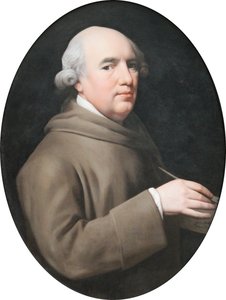
George Stubbs
1724 - 1806 , Verenigd Koninkrijk
Snelle feiten
- Artistic Movement Or Style: Romantiek, Paardkunst
- Artists Or Movements Influenced By This Artist: ['Joshua Reynolds']
- Artists Who Influenced This Artist: ['Hamlet Winstanley']
- Date Of Birth: 25 aug 1724
- Date Of Death: 10 jul 1806
- Full Name: George Stubbs
- Nationality: Engels
- Notable Artworks:
- Whistlejacket
- Lioned aanval
- Anatomie paard
- Place Of Birth: Liverpool, VK
Gerelateerde artikelen

Sir George Clausen: Capturing Edwardian Life & British Impressionism's Nuances
Explore the luminous world of Sir George Clausen, a leading British Impressionist painter. Discover his captivating scenes of Edwardian life, rural England & poignant war art. Learn about his legacy and find high-quality reproductions at OriginalUniqueArt.

Georges Braque's Top 25 Meesterwerken: Cubisme & Kunst voor uw Interieur
Ontdek de 25 meest iconische meesterwerken van Georges Braque, pionier van het Cubisme. Lees over zijn techniek, inspiratie & de impact op moderne kunst. Vind museumkwaliteit reproducties en verrijk uw interieur met OriginalUniqueArt.com!
George Stubbs: Anatomical Precision & Romantic Vision in 18th-Century British Art
Explore the captivating world of George Stubbs, the 18th-century master renowned for his anatomical precision & Romantic animal paintings. Discover his legacy and investment potential.

The Enduring Legacy of Oil on Canvas: Technique, History & Aesthetic Impact
Explore the rich history & techniques of oil painting – from Renaissance masters to Impressionism. Discover pigments, layering methods, and why this timeless medium endures. Expert insights for artists & art enthusiasts.

Georges Seurat's Meesterwerken: 25 Iconische Schilderijen voor Kunstliefhebbers | OriginalUniqueArt
Ontdek de 25 meesterwerken van Georges Seurat! Duik in Pointillisme, Impressionisme & chromoluminarism. Bewonder 'A Sunday on La Grande Jatte' en meer. Museumkwaliteit kunst reproducties op OriginalUniqueArt.com.


