

 Voorvertoning
 Verstuur
 Delen
Delen
 Details bekijken
 Gids
Gids

 Download
 Vergelijkbare items
 Röntgenonderzoek
 Diavoorstelling
 Statistieken
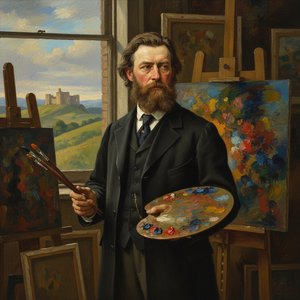
John Trayner, Lord Trayner
 Acryl op canvas
- Wanddecoratie
- Canadian Impressionism
 135.0 x 100.0 cm
 University of Dundee
 Lees meer
Handgemaakte olieverfreproductie
Met de hand geschilderd in olieverf op canvas in uw gewenste maat en lijst, op bestelling gemaakt door onze kunstenaars. ( Schakel over naar print Schakel over naar digitale afbeeldingen)




P118B €10

P118H €10

P118W €10

P438Z €10

P508JH €12

P508YH €12

P805H €10

P805Z €10

P919BZ €10

P919G €10

P919XJ €10

P959ZH €10

P968JZ €12

W106C €8

W218G €10

W218JH €8

W218Y €10

W307PJ €10

W316G €10

W316PJ €8

W316Y €10

W398PJ €8

W4111J €10

W500HY €15

W500JH €15

W692G €12

W849H €8

W940BG €15

W953PJ €8




Kies uit onze vooraf ingestelde maten die overeenkomen met de originele verhoudingen van het kunstwerk.

Voer de breedte en hoogte in die u nodig heeft, passend bij uw lijst of uw muur. Omdat dit handgeschilderd is, kan de kunstenaar bij een afmeting met een andere beeldverhouding iets meer rondom het schilderij schilderen of juist iets meer weglaten — u kiest zelf. Wij sturen u een digitaal mockup ter goedkeuring voordat het schilderwerk begint. De afbeelding die op deze pagina wordt getoond, is niet het uiteindelijke resultaat — alleen de mockup geeft dit weer.
Na de bestelling zal het team van OriginalUniqueArt.com per e-mail contact opnemen met de klant voor instructies en een mockup-voorbeeld sturen.
Wereldwijde levering () binnen 3 tot 4 weken in plaats van de standaard 5 weken. (27 oktober). Zonder concessies aan de kwaliteit.

Gratis wereldwijde expressverzending

Hoogwaardig linnen canvas

Volledige verzendverzekering

Garantie op terugbetaling van invoerrechten

Garantie op exacte kleurweergave

Retourbeleid van 100 dagen (alleen bij defecten)

100% Geld-terug-garantie

Korting bij meerdere afnames
 De optie voor glas is alleen beschikbaar bij een formaat kleiner dan 110 cm.

John Trayner, Lord Trayner
Druktechniek
Afmetingen reproductie
-


Eindtotaal
€ 263
Een Portret van Eenheid en Digniteit: Een Analyse van John Trayner, Lord Trayner door George Reid
George Reid (1845–1918), een Schotse kunstenaar die zijn wortels vindt in het prachtige landschap van Noordwest-Canada, werd geboren in Wingham, Ontario, en vormde zo zijn artistieke visie. Zijn begin was gevormd door het eenvoudige leven op het boerderijgebied – een achtergrond die hij later terug zou vinden met aangenaam detail en emotionele diepte in zijn schilderijen. Ondanks zijn aanvankelijke aarzeling erkende Reid's vader uiteindelijk zijn groeiende talent, waardoor hij studie kon volgen aan de Centrale Ontario School voor Kunst in Toronto in 1879 onder begeleiding van Robert Harris. Deze fundamentele periode gaf hem een respect voor gevestigde technieken en representatieve kunst, maar ontstakte binnen Reid ook een verlangen naar het verkennen buiten imitatie. Hij zocht verdere verbetering aan de Pennsylvania Academy of the Fine Arts tussen 1882 en 1885, waar hij onder invloed stond van Thomas Eakins – een meester in realisme en anatomische nauwkeurigheid.
Reid’s kunstenaarschap werd gekenmerkt door een diepe waardering voor zowel historische gebeurtenissen als persoonlijke ervaringen. Hij wilde zijn werk niet alleen technisch perfect uitvoeren, maar ook een gevoel van emotionele resonantie oproepen bij de kijker. Zijn stijl ontwikkelde zich tot een combinatie van impressionistische kleurgebruik en realistisch detail, waarbij hij een prachtige balans vond tussen natuurlijke schoonheid en artistieke expressie.
Het Onderwerp: Een Symbool van Macht en Beleefdheid
Het schilderij vertegenwoordigt een portret van John Trayner (1834–1929), Lord Trayner, een prominente jurist en politicus die een belangrijke rol speelde in de geschiedenis van zowel Schotland als Australië. Reid’s kunstenaarschap werd gekenmerkt door een diepe waardering voor zowel historische gebeurtenissen als persoonlijke ervaringen. Hij wilde zijn werk niet alleen technisch perfect uitvoeren, maar ook een gevoel van emotionele resonantie oproepen bij de kijker.
De figuur wordt afgebeeld in een rode robe met een witte halsband, wat wijst op een hoge functie binnen het juridische systeem en een gevoel van staatswelvaart. Een witte pruil draagt hij op zijn hoofd, een kenmerkende stijl voor juristen in veel landen, terwijl zijn ogen recht naar de kijker gericht zijn – een directe uitnodiging tot contemplatie en zelfreflectie.
Techniek en Stijl: Een Laatspel van Licht en Schaduw
Reid gebruikte olie op doek als primaire techniek, waarbij hij zorgvuldig aandacht besteedde aan het gebruik van licht en schaduw om een gevoel van drie-dimensionaliteit te creëren. Zijn stijl ontwikkelde zich tot een combinatie van impressionistische kleurgebruik en realistisch detail, waarbij hij een prachtige balans vond tussen natuurlijke schoonheid en artistieke expressie.
De kleuren zijn gedempte aardetinten die perfect aanvullen de rode robe en dragen bij aan het algemene gevoel van sereniteit en waardigheid. Een subtiele schaduw wordt ondergebracht achter de figuur, waardoor een gevoel van diepte wordt toegevoegd aan de compositie.
Historische Context en Symbolisme: Een Echo van Zijn Tijd
Het werk werd voltooid rond 1893 en is een prachtige illustratie van het impressionistische beweging tijdens het einde van de 19e eeuw. Reid’s kunstenaarschap werd gekenmerkt door een diepe waardering voor zowel historische gebeurtenissen als persoonlijke ervaringen. Hij wilde zijn werk niet alleen technisch perfect uitvoeren, maar ook een gevoel van emotionele resonantie oproepen bij de kijker.
De afbeelding vangt een moment van stil contemplatie en staat binnen een omgeving die een gevoel van eerbied en belangrijkheid uitdraagt – een prachtige manier om terug te kijken naar een tijd waarin kunstenaars zoals Reid een belangrijke rol speelden bij het vormgeven van nationale identiteit en culturele bewustzijn.
De Signatuur: Een Bewijs van Authenticiteit
Het schilderij is ondertekend door de kunstenaar “George Reid” in de rechter onderhoek, wat een bewijs biedt van zijn authenticiteit en bevestigt zijn betrokkenheid bij het kunstenaarschap. De signatuur suggereert dat Reid een professionele kunstenaar was tijdens zijn tijd.
Een prachtige manier om terug te kijken naar een tijd waarin kunstenaars zoals Reid een belangrijke rol speelden bij het vormgeven van nationale identiteit en culturele bewustzijn.
Veelgestelde vragen
Hoeveel licht lijken de kleuren van "John Trayner, Lord Trayner" te reflecteren?
"John Trayner, Lord Trayner" door George Reid heeft een luminantie van Donker. Luminantie beschrijft hoeveel licht de kleuren lijken te reflecteren.
Waar kan ik kunstwerken vinden die lijken op "John Trayner, Lord Trayner" door George Reid?
Op de pagina Vergelijkbare werken van "John Trayner, Lord Trayner" door George Reid vindt u gerelateerde kunstwerken.
Voor welke kamer wordt "John Trayner, Lord Trayner" door George Reid aanbevolen?
De aanbevolen ruimte voor "John Trayner, Lord Trayner" door George Reid is een Woonkamer. Dit advies kan uiteraard worden aangepast aan uw interieur.
Biografie kunstenaar
Early Life and Artistic Foundations
George Agnew Reid emerged from the fertile landscapes of rural Canada West, born in 1860 in Wingham, Ontario – a place that would profoundly shape his artistic vision. His beginnings weren’t steeped in formal training but rather in the rhythms of farm life; a setting he’d later revisit with poignant detail and emotional depth in his paintings. Though initially hesitant about his son's aspirations, Reid’s father eventually recognized and supported his burgeoning talent, allowing him to pursue studies at the Central Ontario School of Art in Toronto in 1879 under the tutelage of Robert Harris. This foundational period instilled a respect for established techniques and representational art, yet it also ignited within Reid a desire to explore beyond mere imitation. He sought further refinement at Philadelphia’s Pennsylvania Academy of the Fine Arts from 1882 to 1885, where he fell under the powerful influence of Thomas Eakins – a master of realism and anatomical accuracy whose dedication to truthful representation would remain a guiding principle throughout Reid's career. Equally significant during this time was his meeting and subsequent marriage to Mary Hiester Reid, herself a gifted artist; their union forged a lifelong artistic partnership built on mutual respect and creative exchange. Reid’s early exposure to illustrated books and magazines, coupled with the encouragement of his grandfather, sparked an initial interest in art – a passion initially viewed skeptically by his father, who believed such pursuits were unsuitable for a “robust” young man destined for a life of labor. This early conflict ultimately fueled Reid's determination to pursue his artistic ambitions.A Blossoming Style: Genre Painting and Narrative Depth
Upon returning to Canada, Reid’s artistic focus shifted from portraiture towards genre painting – a style that allowed him to explore the narratives embedded within everyday life. This wasn’t merely a change in subject matter; it represented a deepening of his artistic intent. He sought to capture not just appearances but also the emotional realities of ordinary people and their experiences. Works like *The Foreclosure of the Mortgage* (1893) exemplify this shift, depicting a scene of rural hardship with remarkable sensitivity and psychological depth. The painting isn’t simply a record of a difficult situation; it's an exploration of loss, resilience, and the human cost of economic instability. Reid masterfully blended the precision he had absorbed during his Parisian academic training with subtle Impressionistic touches – a delicate interplay of light and atmosphere that imbued his canvases with realism and emotional resonance. He wasn’t simply recording scenes; he was interpreting them, imbuing them with a narrative power that resonated deeply with viewers. His paintings became windows into the lives of ordinary Canadians, particularly those in rural Ontario, offering glimpses into their joys, struggles, and enduring spirit. He possessed an exceptional ability to observe and capture the nuances of human emotion, translating these observations onto canvas with remarkable skill – often portraying subjects with a quiet dignity and understated grace.European Influences and Artistic Development
Reid’s artistic journey continued across the Atlantic, immersing himself in the vibrant art scenes of Paris at the Académies Julian and Colarossi, and undertaking focused study at the Prado Museum in Madrid between 1888-1889. These experiences broadened his understanding of European masters – from the meticulous realism of Spanish painters like Velázquez to the atmospheric Impressionism of Monet and Renoir. He absorbed techniques in composition, color theory, and brushwork, integrating these influences into his own distinctive style. His time in Paris also fostered a greater appreciation for artistic freedom and experimentation, encouraging him to move beyond strict academic conventions. The influence of Jean-Joseph Benjamin-Constant is particularly evident in Reid’s later works, characterized by their elegant compositions and evocative use of light and shadow. The Prado Museum provided access to an unparalleled collection of European art, allowing Reid to study the techniques and styles of masters such as Goya and El Greco – artists who profoundly shaped his artistic sensibilities.Career Highlights and Educational Leadership
Back in Canada, Reid established himself as a leading figure in the Canadian art community. He was elected to the Royal Canadian Academy of Arts in 1889, solidifying his position within the burgeoning national art scene. However, his contributions extended far beyond individual artworks. He played a crucial role in establishing Toronto’s Art Gallery of Ontario (AGO) and advocating for public funding of the arts. He also served as Principal of the Central Ontario School of Art and Design (later OCAD University) from 1912 to 1918, shaping the institution into a leading center for artistic training in Canada. During this period, he championed accessibility to art education, believing that everyone should have the opportunity to develop their creative potential. Reid’s commitment to fostering a vibrant cultural landscape extended beyond his administrative duties; he continued to produce significant works throughout his career, including murals and commissioned pieces for public buildings – reflecting his belief in the power of art to enrich society.Legacy and Lasting Influence
George Agnew Reid's legacy extends far beyond his individual paintings; he was a catalyst for change within the Canadian art world, fostering a distinctly national artistic identity while simultaneously embracing international influences. His mentor, Thomas Eakins, instilled in him a commitment to realism and anatomical accuracy, while his time in Paris exposed him to the innovative techniques of Impressionism – elements that he skillfully integrated into his own unique style. He played a crucial role in establishing a visual language that reflected the Canadian experience, depicting Ontario landscapes and rural life with both sensitivity and authenticity. As an educator and administrator, Reid nurtured generations of Canadian artists, shaping the future of art education within the country. His artworks continue to be held in esteemed public and private collections across Canada – a testament to their enduring artistic merit and historical significance. He died in 1947, leaving behind a body of work that continues to captivate and inspire, solidifying his place as one of Canada’s most important and influential artists. His ability to combine academic rigor with emotional depth created works that resonate with viewers on a profound level, reflecting the social realities of his time and offering enduring insights into the human condition.
George Reid
1860 - 1947 , Canada
Belangrijkste feiten
- Artistic Movement Or Style: Genre schilderkunst
- Artists Or Movements Influenced By This Artist: ['Impressionisme']
- Artists Who Influenced This Artist: ['Eakins']
- Date Of Birth: 25 juli 1860
- Date Of Death: 23 aug 1947
- Full Name: George Agnew Reid
- Nationality: Canadees
- Notable Artworks:
- Mortgagement
- Spynie Castle
- Place Of Birth: Wingham, Canada
Gerelateerde artikelen
George Paul Chalmers: Rediscovering the Angus Rembrandt & Scottish Colourist Roots
Explore the captivating world of George Paul Chalmers (1833-1878), a pivotal Scottish painter. Discover his landscapes, portraits & connection to the Aesthetic Movement and Colourists. Learn about this 'Angus Rembrandt's' legacy with OriginalUniqueArt.

Georges Braque's Top 25 Meesterwerken: Cubisme & Kunst voor uw Interieur
Ontdek de 25 meest iconische meesterwerken van Georges Braque, pionier van het Cubisme. Lees over zijn techniek, inspiratie & de impact op moderne kunst. Vind museumkwaliteit reproducties en verrijk uw interieur met OriginalUniqueArt.com!

John Constable's Top 25 Meesterwerken: Landschappen die de Ziel Raaken | OriginalUniqueArt
Ontdek de 25 mooiste schilderijen van John Constable, meester van de Engelse Romantiek. Van idyllische landschappen tot iconische Hay Wain – bewonder zijn techniek en emotie. Museumkwaliteit reproducties & decoratie op OriginalUniqueArt.com.

Georges Seurat's Meesterwerken: 25 Iconische Schilderijen voor Kunstliefhebbers | OriginalUniqueArt
Ontdek de 25 meesterwerken van Georges Seurat! Duik in Pointillisme, Impressionisme & chromoluminarism. Bewonder 'A Sunday on La Grande Jatte' en meer. Museumkwaliteit kunst reproducties op OriginalUniqueArt.com.

John Singer Sargent's Top 25 Meesterwerken: Portretten & Schilderijen voor uw Interieur | OriginalUniqueArt
Ontdek de 25 mooiste meesterwerken van John Singer Sargent! Van elegante portretten tot impressionistische schilderijen – leer over zijn leven, techniek & impact. Museumkwaliteit reproducties voor uw interieur op OriginalUniqueArt.com.


