() ·

Een schilderij speciaal voor u gemaakt, met de hand

Landscape

Handgemaakte olieverfreproductie

Met de hand geschilderd in olieverf op canvas in uw gewenste maat en lijst, op bestelling gemaakt door onze kunstenaars. ( Schakel over naar print Schakel over naar digitale afbeeldingen)

Beschrijving verzamelobject

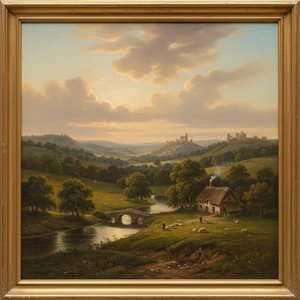
George Howland Beaumont's 'Landscape' (1825) captures a serene rural scene with vibrant colors and detailed brushwork, reflecting Romantic ideals. Explore this beautiful painting by a British art patron.

Biografie kunstenaar

Sir George Beaumont (1753-1827) was een Britse kunstverzamelaar & amateur schilder die de Nationale Galerie heeft opgericht. Ontdek zijn landschappen, oude meestercollectie & nalatenschap!

vanaf ·

Hoofdstuk 1

Hoe groot moet het zijn?

Schuif om de afmetingen te wijzigen; de afbeelding aan de linkerzijde toont de lijst in de werkelijke breedte. De oorspronkelijke verhoudingen blijven behouden.

Standaardformaat
op maat gemaakt
CM
INCH

Kies uit onze vooraf ingestelde maten die overeenkomen met de originele verhoudingen van het kunstwerk.

breedte
hoogte

Voer de breedte en hoogte in die u nodig heeft, passend bij uw lijst of uw muur. Omdat dit handgeschilderd is, kan de kunstenaar bij een afmeting met een andere beeldverhouding iets meer rondom het schilderij schilderen of juist iets meer weglaten — u kiest zelf. Wij sturen u een digitaal mockup ter goedkeuring voordat het schilderwerk begint. De afbeelding die op deze pagina wordt getoond, is niet het uiteindelijke resultaat — alleen de mockup geeft dit weer.


Hoofdstuk 2

Hoe moet het worden geleverd?

Kies de randen van het canvas

Kies uw lijst

Corner sample of the WhiteWrap canvas edge finish, stretched on massief hout bars
Wit €1
Corner sample of the BlurSideWrap canvas edge finish, stretched on massief hout bars
Vervagende randen €1
Corner sample of the ExtendedWrap canvas edge finish, stretched on massief hout bars
Doorlopende rand €1
Corner sample of the P118B picture frame: gegoten polystyreen, 5 cm wide and 3 cm thick
P118B €10
Corner sample of the P118H picture frame: gegoten polystyreen, 5 cm wide and 3 cm thick
P118H €10
Corner sample of the P118W picture frame: gegoten polystyreen, 5 cm wide and 3 cm thick
P118W €10
Corner sample of the P438Z picture frame: gegoten polystyreen, 5.5 cm wide and 3.5 cm thick
P438Z €10
Corner sample of the P508JH picture frame: gegoten polystyreen, 7 cm wide and 3.5 cm thick
P508JH €12
Corner sample of the P508YH picture frame: gegoten polystyreen, 7 cm wide and 3.5 cm thick
P508YH €12
Corner sample of the P805H picture frame: gegoten polystyreen, 5 cm wide and 3.5 cm thick
P805H €10
Corner sample of the P805Z picture frame: gegoten polystyreen, 5 cm wide and 3.5 cm thick
P805Z €10
Corner sample of the P919BZ picture frame: gegoten polystyreen, 7 cm wide and 3.5 cm thick
P919BZ €10
Corner sample of the P919G picture frame: gegoten polystyreen, 7 cm wide and 3.5 cm thick
P919G €10
Corner sample of the P919XJ picture frame: gegoten polystyreen, 7 cm wide and 3.5 cm thick
P919XJ €10
Corner sample of the P959ZH picture frame: gegoten polystyreen, 5 cm wide and 3 cm thick
P959ZH €10
Corner sample of the P968JZ picture frame: gegoten polystyreen, 6 cm wide and 4 cm thick
P968JZ €12
Corner sample of the W106C picture frame: massief hout, 5 cm wide and 3 cm thick
W106C €8
Corner sample of the W218G picture frame: massief hout, 5 cm wide and 3 cm thick
W218G €10
Corner sample of the W218JH picture frame: massief hout, 5 cm wide and 3 cm thick
W218JH €8
Corner sample of the W218Y picture frame: massief hout, 5 cm wide and 3 cm thick
W218Y €10
Corner sample of the W307PJ picture frame: massief hout, 6 cm wide and 3 cm thick
W307PJ €10
Corner sample of the W316G picture frame: massief hout, 6 cm wide and 3 cm thick
W316G €10
Corner sample of the W316PJ picture frame: massief hout, 6 cm wide and 3 cm thick
W316PJ €8
Corner sample of the W316Y picture frame: massief hout, 6 cm wide and 3 cm thick
W316Y €10
Corner sample of the W398PJ picture frame: massief hout, 5 cm wide and 3 cm thick
W398PJ €8
Corner sample of the W4111J picture frame: massief hout, 6.5 cm wide and 3.5 cm thick
W4111J €10
Corner sample of the W500HY picture frame: massief hout, 7 cm wide and 5 cm thick
W500HY €15
Corner sample of the W500JH picture frame: massief hout, 7 cm wide and 5 cm thick
W500JH €15
Corner sample of the W692G picture frame: massief hout, 8 cm wide and 4 cm thick
W692G €12
Corner sample of the W849H picture frame: massief hout, 5 cm wide and 3 cm thick
W849H €8
Corner sample of the W940BG picture frame: massief hout, 7.5 cm wide and 4.5 cm thick
W940BG €15
Corner sample of the W953PJ picture frame: massief hout, 6 cm wide and 3.5 cm thick
W953PJ €8
Corner sample of the H24-GOLD picture frame: gesneden hout met gesso, 10 cm wide and 6 cm thick
H24-GOLD €30
Corner sample of the H24-SILVER picture frame: gesneden hout met gesso, 10 cm wide and 6 cm thick
H24-SILVER €30
Corner sample of the H36-GOLD picture frame: gesneden hout met gesso, 15 cm wide and 6.5 cm thick
H36-GOLD €45
Corner sample of the H36-SILVER picture frame: gesneden hout met gesso, 15 cm wide and 6.5 cm thick
H36-SILVER €45
Lijstvoorbeeld
Ingelijst

Lijstrand: . Totale afmetingen inclusief lijst: .

Hoofdstuk 3

Wie schildert het, en moet er iets veranderen?

Voorbeelden van wat aangepast kan worden: Vervang het gezicht door een foto van de klant; Voeg een huisdier toe (bijv. vervang de kat door een hond); Voeg een verborgen boodschap toe aan de achtergrond; Wijzig het landschap of de elementen in de achtergrond.
Na de bestelling zal het team van OriginalUniqueArt.com per e-mail contact opnemen met de klant voor instructies en een mockup-voorbeeld verstrekken

Wereldwijde levering () binnen 3 tot 4 weken in plaats van de standaard 5 weken. (4 november). Zonder concessies aan de kwaliteit.

Hoofdstuk 4

De laatste hand aan

Een naambordje, zoals in een museum?

Details van de gegraveerde bronzen plaat

This elegant plaque features the artist's name and the title of the artwork, finely engraved for a timeless presentation.

It is made from bronze with a refined, elegant finish. The text is precisely laser-engraved for a sharp and permanent result. Measuring 9x2 cm, the plaque is compact yet easy to read. It's built to be durable and scratch-resistant, offering a professional, museum-quality look. Mounting is simple thanks to the included adhesive backing.

Details transparante acrylplaat

The plaque includes essential engraved details such as the artist's name, the title of the artwork, the date it was created, the type of media used-like oil on canvas or watercolor-a brief description of the piece, and a QR code that links to the complete artwork information.

It is crafted from clear acrylic, offering a sleek, modern appearance. The text is UV-engraved in black to ensure strong visual contrast. With a size of 10x15 cm, it ensures optimal readability. It comes equipped with two metal hooks for secure wall mounting. The plaque is designed to be weather-resistant, making it suitable for various environments, and it includes interactive features that work seamlessly with smartphone scanning.

Details zwarte acrylplaat

This elegant plaque includes engraved information such as the artist's name, the title of the artwork, the date it was created, the type of media used (like oil on canvas or watercolor), a short description of the artwork, and a QR code for quick access to more information.

The plaque itself is made from refined black acrylic with a premium finish. The text is laser-engraved in white for high contrast and readability. Its size is 10x15 cm, designed to be easy to read. It comes with two metal hooks for professional mounting. The design is sleek and fits any interior style. It is also weather-resistant and durable, with built-in digital integration for mobile compatibility.

Een beschermende vernis?

Wanneer heeft u het nodig?

Hoofdstuk 5

Uw schilderij, zoals u het heeft besteld

Landscape

Druktechniek

Afmetingen reproductie

-

Geselecteerde topkunstenaars

Meer detail, verfijning en extra productietijd

-

Lijst voor reproductie

-

-

Voor kunstwerken of reproducties die aan één zijde groter zijn dan 105 cm (ongeveer 41 inch), wordt de lijst als een losse set verzonden. Deze methode garandeert een veilige levering en voorkomt schade tijdens het transport.

Professionele montage vereist - dit is geen doe-het-zelfproduct.
De set moet worden gemonteerd en het canvas moet worden gespannen door een ervaren professionele lijstenmaker, met gebruik van houtlijm (niet inbegrepen), een doekspanter en klemmen om de sponningen recht te houden terwijl de lijm droogt. Onjuiste montage of een ongelijkmatige spanning op het canvas kan het kunstwerk permanent beschadigen en wordt niet gedekt door onze garantie.

  • Alle massief houten onderdelen zijn inbegrepen, nauwkeurig op maat gesneden voor montage.

  • Te monteren met de meegeleverde schroeven, plus houtlijm voor de hoekverbindingen, die niet wordt meegeleverd en door uw lijstenmaker moet worden aangeschaft.

  • Professioneel gereedschap is vereist en niet inbegrepen: een spanner voor canvas en klemmen om de latten recht te houden terwijl de lijm droogt.

Belangrijk:
De hoekverbindingen vereisen houtlijm, de latten moeten met lijmklemmen worden vastgehouden tot de lijm volledig is opgedroogd, en het spannen van het canvas op het samengestelde frame vereist een doekspanter. Geen van deze artikelen is inbegrepen in de set. Wij adviseren u om een ervaren professionele lijstenmaker te raadplegen voordat u deze maat bestelt.

Naamplaatje

-

-

Beschermende vernislaag

Glanzende vernis (versterkt de kleuren en biedt bescherming tegen licht en vocht)

-

Mijn kunstwerk aanpassen

Voorbeelden van aanpassingen: vervang het gezicht door een eigen foto; voeg een huisdier toe (bijv. vervang de kat door een hond); verwerk een verborgen boodschap in de achtergrond; wijzig het landschap of andere elementen op de achtergrond.

-

Spoedlevering

Wereldwijde levering () binnen 3 tot 4 weken in plaats van de standaard 5 weken. (4 november). Geen concessies aan de kwaliteit.

-

Spoedlevering

Wereldwijde levering naar binnen 5 weken. (11 november).

Inbegrepen

Eindtotaal

€ 267

Totaalprijs € 267

De optie voor glas is alleen beschikbaar bij een formaat kleiner dan 110 cm.

Inbegrepen bij elke bestelling

  • Gratis wereldwijde expressverzending
  • Hoogwaardig linnen canvas
  • Volledige verzendverzekering
  • Garantie op terugbetaling van invoerrechten
  • Garantie op exacte kleurweergave
  • Retourbeleid van 100 dagen (alleen bij defecten)
  • 100% Geld-terug-garantie
  • Korting bij meerdere afnames

A Window on the Soul: George Howland Beaumont’s ‘Landscape’

George Howland Beaumont's “Landscape,” painted in 1825, isn’t merely a depiction of a rural scene; it’s an invitation into a world steeped in Romantic sensibility and a profound appreciation for the natural world. This oil on canvas transports us to a tranquil valley, bathed in the soft light of a late afternoon, where the subtle interplay of color and form speaks volumes about the artist's vision and his deep connection to the English countryside.

Beaumont, a prominent figure in British art during the early 19th century, was more than just an amateur painter; he was a dedicated collector and connoisseur. His journey through Italy ignited a passion for the Old Masters, particularly the landscapes of Claude Lorrain and other Baroque masters. This influence is strikingly evident in “Landscape,” where the composition echoes classical principles – a balanced arrangement of elements, a sense of depth achieved through atmospheric perspective, and an emphasis on harmonious color palettes. The painting’s roots lie firmly within the Romantic movement, but Beaumont tempered its more dramatic tendencies with a refined elegance and a meticulous attention to detail.

The Language of Light and Color

Beaumont masterfully employs light as his primary tool, creating a sense of luminous serenity. Notice how he captures the diffuse glow filtering through the trees, casting long shadows that dance across the foreground. The color palette is restrained yet rich – predominantly blues and greens dominate, punctuated by earthy browns and ochres in the distant hills. These colors aren’t applied with brute force; instead, they are layered delicately to build depth and atmosphere. The artist's use of glazing techniques—thin layers of translucent paint—allows light to penetrate through the surface, giving the scene an almost ethereal quality.

A key element is the subtle rendering of texture. The rough bark of the central tree, the undulating contours of the hills, and even the suggestion of grass beneath the figures are all conveyed with remarkable sensitivity. Beaumont’s brushstrokes aren't overtly expressive; they are controlled and deliberate, contributing to the painting’s overall sense of quiet contemplation.

Figures in a Pastoral Setting

Two figures, positioned near the base of the large tree, add a touch of human presence to this otherwise solitary landscape. Their postures suggest an activity—perhaps a simple task or a moment of shared observation—but their identities remain deliberately ambiguous. They aren’t presented as heroes or protagonists; rather, they are integrated seamlessly into the scene, serving as reminders of humanity's place within the vastness of nature. This subtle inclusion invites viewers to contemplate their own relationship with the natural world.

The placement of these figures also contributes to the painting’s sense of depth and perspective. They appear smaller in scale than the towering tree, reinforcing the impression of a distant horizon and emphasizing the grandeur of the landscape. The composition guides the eye through the scene, drawing us into the heart of the valley.

A Legacy of Romantic Vision

“Landscape” stands as a testament to George Howland Beaumont’s artistic skill and his profound appreciation for the beauty of the English countryside. It embodies the core tenets of the Romantic movement—a reverence for nature, an emphasis on emotion and imagination, and a fascination with the sublime. Beaumont's work continues to resonate today, offering viewers a moment of tranquility and a reminder of the enduring power of art to capture the essence of our world.

Reproductions of this piece offer a wonderful opportunity to bring this evocative landscape into your home or office, allowing you to experience its beauty and serenity firsthand. Consider framing it in a classic style to complement its timeless appeal.

Veelgestelde vragen

Behoort "Landscape" door George Howland Beaumont tot het publiek domein?

Wat betreft het auteursrecht valt "Landscape" onder bevindt zich in het publiek domein - de auteursrechten zijn verlopen.

Voor welke kamer wordt "Landscape" door George Howland Beaumont aanbevolen, gezien de kleuren?

De Earthy kleuren van "Landscape" door George Howland Beaumont passen perfect bij de aanbevolen ruimte: een Living Room.

Welk gevoel roepen de kleuren van "Landscape" door George Howland Beaumont op?

Het Earthy palet van "Landscape" door George Howland Beaumont vloeit prachtig samen met de Melancholic emotionele toon. Kleur is een van de manieren waarop een kunstwerk gevoel overbrengt.

Meer over dit schilderij

Voorvertoning Bekijk in AR Schakel over naar print Schakel over naar digitale afbeeldingen Verstuur
Details bekijken Gids Toevoegen aan favorieten Download Vergelijkbare items Röntgenonderzoek Diavoorstelling Vraag & antwoord Statistieken

In cijfers

  • 1825het jaar waarin het werd geschilderd
  • 29lijsten om uit te kiezen
  • standaardmaten, in hun eigen verhoudingen
  • 5weken om te schilderen en te leveren
George Howland Beaumont

George Howland Beaumont

1753 - 1827, Verenigd Koninkrijk

Snelle feiten over George Howland Beaumont

  • Artistic Movement Or Style: Romantiek
  • Artists Or Movements Influenced By This Artist: ['John Constable']
  • Artists Who Influenced This Artist:
    • Alexander Cozens
    • Richard Wilson
  • Date Of Birth: 1753
  • Date Of Death: 1827
  • Full Name: George Howland Beaumont
  • Nationality: Britse
  • Notable Artworks:
    • Landschap
    • Een uitzicht bij Keswick
  • Place Of Birth: Dunmow, Verenigd Koninkrijk

Biografie kunstenaar

A Life Dedicated to Art: The World of George Howland Beaumont

Sir George Howland Beaumont, born in 1753 amidst the tranquil Essex countryside of Great Dunmow, was a figure whose life embodied the evolving tastes and passions of late 18th and early 19th-century Britain. Inheriting both a baronetcy and an estate at a young age, Beaumont’s path wasn't immediately destined for artistic pursuits. However, his education at Eton College included initial training in landscape painting under Alexander Cozens, sparking a lifelong fascination with the visual arts—a fascination that would define his entire existence. This early exposure served as merely a prelude to the transformative experience of the Grand Tour undertaken in 1782 alongside his wife, Margaret. Italy and its rich artistic heritage proved pivotal; Beaumont’s eyes were opened to the masterpieces of the Old Masters, igniting within him not only an appreciation but also a fervent desire to collect and understand these works—a passion that would fuel his endeavors for decades to come. This journey laid the foundation for a life dedicated to art—both as a discerning collector and a committed, though often self-critical, painter.

Cultivating Taste: Collection, Patronage, and Artistic Development

Upon his return to England, Beaumont embarked on building an impressive collection of Old Master paintings, a pursuit driven by genuine passion despite limited financial resources. Central to this collection was Claude Lorrain’s *A Landscape with Hagar and the Angel*, a painting that became deeply cherished and representative of Beaumont's aesthetic ideals—a piece he would frequently transport during his travels in a specially designed case, safeguarding its beauty and contemplating its profound symbolism. He wasn’t merely acquiring objects; he was assembling a visual library, a testament to his evolving understanding of artistic excellence. Simultaneously, Beaumont began exhibiting his own work at the Royal Academy from 1794 to 1825, establishing himself as a respected amateur within London’s art circles—a recognition that underscored his dedication to honing his craft and sharing his vision with fellow artists. His social life flourished alongside his artistic endeavors, centered around his residence at 34 Grosvenor Square and a period serving as Tory MP for Beer Alston (1790-1796)—positions that afforded him access to influential circles and allowed him to champion causes he believed in passionately. This commitment extended beyond politics; Beaumont actively participated in committees overseeing monumental projects like St. Paul’s Cathedral, demonstrating his belief in the importance of public art and its role in shaping national identity. His artistic style was profoundly influenced by Alexander Cozens, Richard Wilson, and Thomas Hearne—artists who championed a Romantic aesthetic characterized by emotional intensity and an idealized depiction of nature. Beaumont's landscapes captured the grandeur of the English countryside with meticulous detail and imbued them with spiritual resonance—a stylistic hallmark that would endure throughout his career. Notably, he frequently visited the Lake District with Margaret, documenting its breathtaking vistas and capturing their ethereal beauty on canvas. Despite initial skepticism regarding his early efforts – *A View of Keswick* (1779) – Beaumont persevered in pursuing excellence, constantly refining his technique and striving to convey profound emotion through his paintings. He remained a staunch defender of academic traditions, voicing criticism against artists who embraced radical experimentation—particularly J.M.W. Turner whose bold use of color challenged the established conventions of the time.

A Patron’s Vision: Supporting British Artists

Beaumont's influence extended beyond his own artistic output; he served as a generous patron of younger British painters, fostering their careers and nurturing new talent—a role that cemented his legacy as a champion of artistic innovation. One particularly noteworthy relationship was with John Constable—whom Beaumont welcomed to study his collection of Old Masters at Coleorton Hall, Leicestershire. This visit inspired Constable’s iconic painting *The Hay Wain* (1821), capturing the idyllic beauty of the English countryside and embodying Beaumont's Romantic sensibilities. The painting itself became a symbol of the era, reflecting Beaumont’s belief in the transformative power of art and its ability to inspire awe and wonder. Furthermore, Beaumont spearheaded the establishment of the British Institution in 1806—a groundbreaking initiative aimed at providing artists with a platform for showcasing their work and fostering dialogue within the artistic community.

The Founding of the National Gallery

Perhaps Beaumont’s most enduring contribution to British art history lies in his instrumental role in establishing the National Gallery. Recognizing a critical need for a public gallery dedicated to showcasing Old Master paintings—a conviction rooted in his lifelong appreciation for artistic excellence—he made a bold proposal to Parliament in 1823: he would donate sixteen paintings from his personal collection on condition that they also purchase John Julius Angerstein’s collection and secure suitable premises. This audacious undertaking galvanized support for the gallery project, culminating in its triumphant opening in May 1824—a moment Beaumont regarded as profoundly satisfying and a testament to his unwavering belief in the importance of art for national culture. His foresight ensured that masterpieces from across Europe would be accessible to all Britons, enriching artistic appreciation and shaping the cultural landscape for generations to come. Beaumont’s legacy continues to resonate today—not only within the walls of the gallery he championed but also in ongoing discussions about artistic taste, public access to culture, and the preservation of our shared artistic heritage. He remains a compelling figure—a gentleman amateur who profoundly shaped British art history through his passion, discernment, and unwavering dedication.

Snelle feiten

  • Subject or theme: Landscape scene
  • Dimensions: 45 x 38 cm
  • Influences:
    • Cozen's
    • Italian masters
  • Title: Landscape
  • Notable elements: Tree, figures, hills

Kunstquiz

Er is slechts één goed antwoord op elke vraag.

Vraag 1:
What is the primary subject matter of George Howland Beaumont’s ‘Landscape’?
Vraag 2:
In what year was George Howland Beaumont’s ‘Landscape’ painted?
Vraag 3:
George Howland Beaumont was known for his role as:
Vraag 4:
The painting ‘Landscape’ reflects which artistic movement?
Vraag 5:
What is the approximate size of George Howland Beaumont’s ‘Landscape’?