

 Bekijk op ware grootte
 Verstuur
 Delen
Delen
 Details bekijken

 Download
 Vergelijkbare werken
 Röntgenonderzoek
 Diavoorstelling
Wolf Point


 Lees meer
Koop een digitale afbeelding in hoge resolutie met verbeterde kwaliteit, die veel superieur is aan de online voorvertoning.
Elk bestand wordt met uiterste precisie voorbereid door onze interne specialisten, met behulp van geavanceerde tools en deskundige handmatige retouche. Wij garanderen dat elke afbeelding een uitzonderlijke helderheid, nauwkeurige kleurweergave en verfijnde details bezit.
Het uiteindelijke bestand wordt binnen 72 uur per e-mail geleverd, geoptimaliseerd voor direct gebruik in professionele, redactionele en printomgevingen. Dit is dezelfde kwaliteit waarop topontwerpstudio's, uitgevers en galerieën vertrouwen.
Digitale afbeeldingen
Download een bestand met hoge resolutie voor persoonlijke weergave, afdrukken en creatieve projecten. ( Bestel een print Bestel een handgeschilderde reproductie van dit verzamelobject)
Inbegrepen bij elke bestelling van een digitale afbeelding
Professionele digitale levering, gegarandeerd
Wanneer u kiest voor OriginalUniqueArt.com, ontvangt u niet alleen een afbeelding – u krijgt een professioneel verbeterd digitaal kunstwerk, met precisie vervaardigd en voorzien van een tevredenheidsgarantie. Dit is alles wat automatisch bij uw bestelling is inbegrepen:

Direct per e-mail ontvangen
Uw hoogwaardige digitale afbeeldingsbestand wordt binnen 72 uur na bestelling naar u gemaild – klaar voor direct gebruik.

Met AI verbeterd digitaal bestand
Uw kunstwerk wordt professioneel geoptimaliseerd met behulp van geavanceerde AI-tools en handmatige bewerkingen, waardoor maximale details, helderheid en kleurnauwkeurigheid worden gegarandeerd.

Gratis levenslange herlevering
Je bestand per ongeluk verwijderd of kwijtgeraakt? Geen zorgen – we sturen het u op elk gewenst moment gratis opnieuw toe.

Geen invoerkosten – nooit
Geniet direct van uw kunstwerk zonder invoerrechten, belastingen of verzendkosten – digitale downloads zijn altijd belastingvrij.

Garantie op kleurgetrouwheid
Met behulp van professionele hulpmiddelen en kleurbeheer zorgen wij ervoor dat uw digitale afbeelding de originele kleuren zo nauwkeurig mogelijk weergeeft.

60 dagen tevredenheidsgarantie
Als u niet tevreden bent met uw digitale afbeelding, passen wij deze aan of storten wij 100% terug binnen 60 dagen – zonder vragen gesteld.

100% Geld-terug-garantie
Niet tevreden? Ontvang binnen 60 dagen na ontvangst van uw digitale bestand uw volledige aankoopbedrag terug – zonder vragen te stellen.

Korting bij grote bestellingen
Koop 3 afbeeldingen, bespaar 10% - Koop 5, bespaar 15% - Koop 10+, bespaar 20%. Ideaal voor creatieve projecten, galerieën en bureaus.
Biografie van de kunstenaar
The Architect of Molecular Innovation
In the grand tapestry of the nineteenth century, where the soot of the Industrial Revolution met the burgeoning light of scientific inquiry, few figures cast a shadow as profound yet specialized as George Edward Davis. Born in the historic enclave of Eton, Buckinghamshire, in 1850, Davis was not an artist of the brush, but rather an architect of the unseen. While his contemporaries were capturing the fleeting light of the English landscape on canvas, Davis was meticulously mapping the complex, invisible flows of chemical reactions that would eventually give birth to a new discipline: chemical engineering. His life story is one of remarkable transition, moving from the tactile, traditional craft of bookbinding—an apprenticeship he began at the tender age of fourteen—to the rigorous, transformative world of industrial chemistry.
The evolution of Davis’s intellect was fueled by a relentless curiosity that could not be contained by the leather and glue of his early training. Driven by an innate passion for the molecular, he sought higher learning at the Slough Mechanics Institute and later at the prestigious Royal School of Mines in London. This period of intense academic immersion provided him with the theoretical scaffolding necessary to navigate the burgeoning chemical landscape of the United Kingdom. As he moved through the industrial heartlands around Manchester, Davis did not merely observe the progress of science; he became its primary navigator, applying a meticulous attention to detail that mirrored the precision of a master engraver.
A Legacy Written in Industry and Science
The true brilliance of George Edward Davis lay in his ability to bridge the gap between pure laboratory chemistry and the massive, roaring scale of industrial production. His career was marked by a series of monumental achievements that reshaped the very infrastructure of modern manufacturing. From his early days as an inspector for the Alkali Act of 1863—a pioneering piece of environmental legislation—to his transformative role as manager at the Lichfield Chemical Company, Davis demonstrated an unparalleled capacity for innovation. It was during this tenure that he designed and constructed facilities featuring what was then the tallest chimney in the United Kingdom, a towering symbol of his ability to manifest scientific theory into physical, monumental reality.
Beyond the construction of chimneys and chemical plants, Davis’s intellectual contributions were equally enduring. He is widely revered as the founding father of chemical engineering, a title earned through his seminal lectures and his landmark 1901 publication, "A Handbook of Chemical Engineering." This work served as a foundational text, codifying the principles of unit operations that remain central to the field today. His influence extended into the very fabric of scientific community building; he was instrumental in the formation of the Society of Chemical Industry in 1881 and founded the Chemical Trade Journal, ensuring that the rapid advancements of his era were documented and shared among his peers.
Even within the realm of pure science, Davis found a secondary passion in the delicate art of microscopy. As a founding member and former President of the Manchester Microscopical Society, he approached the microscopic world with the same reverence an artist might approach a fine detail in a portrait. His work as an amateur microscopist, characterized by skillfully prepared slides and influential publications like Practical Microscopy, showcased a man who found beauty in the minute and profound meaning in the infinitesimal. Through his dual mastery of the industrial and the microscopic, George Edward Davis left behind a legacy that continues to underpin the technological and scientific foundations of our modern world.
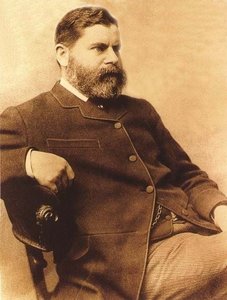
george edward davis
1850 - 1907 , United Kingdom
Kerngegevens
- Artistic Movement Or Style: Chemical engineering art
- Artists Or Movements Influenced By This Artist:
- George Chinnery
- Sir Alfred James Munnings
- Artists Who Influenced This Artist: ['Nicholas Leblanc']
- Date Of Birth: July 27, 1850
- Date Of Death: April 20, 1907
- Full Name: George Edward Davis
- Nationality: British
- Notable Artworks: ['Wolf Point']
- Place Of Birth: Eton, United Kingdom

