

 Bekijk op ware grootte
 Verstuur
 Delen
Delen
 Details bekijken
 Gids voor studentenkunstwerken

 Download
 Vergelijkbare items
 Röntgenonderzoek
 Diavoorstelling
 Statistieken
Houqua
 Oil On Canvas
- WallArt
- British Romantic Painting
 1843
1843- 19th Century
 64.0 x 46.0 cm
 Metropolitan Museum of Art
 Lees meer
Handgemaakte olieverfreproductie
Met de hand geschilderd in olieverf op canvas in uw gewenste maat en lijst, op bestelling gemaakt door onze kunstenaars. ( Schakel over naar print Schakel over naar digitale afbeeldingen)




P118B $10

P118H $10

P118W $10

P438Z $10

P508JH $12

P508YH $12

P805H $10

P805Z $10

P919BZ $10

P919G $10

P919XJ $10

P959ZH $10

P968JZ $12

W106C $8

W218G $10

W218JH $8

W218Y $10

W307PJ $10

W316G $10

W316PJ $8

W316Y $10

W398PJ $8

W4111J $10

W500HY $15

W500JH $15

W692G $12

W849H $8

W940BG $15

W953PJ $8




Kies uit onze vooraf ingestelde maten die overeenkomen met de originele verhoudingen van het kunstwerk.

U kunt uw eigen afmetingen invoeren om in een specifieke lijst of ruimte te passen. Als de door u gekozen maat niet overeenkomt met de verhoudingen van het originele beeld, zullen we het kunstwerk bijsnijden of het schilderij uitbreiden met extra handgeschilderde elementen. Een digitale mockup wordt ter goedkeuring naar u verzonden voordat de productie begint.
Houd er rekening mee dat de preview op het scherm niet de werkelijke uitsnede of uitbreiding weergeeft. Alleen de mockup toont de uiteindelijke compositie nauwkeurig.
Hoewel aangepaste afmetingen mogelijk zijn, raden we aan een maat uit de vooraf gedefinieerde lijst te selecteren om de originele verhoudingen te behouden.
Na de bestelling zal het team van OriginalUniqueArt.com per e-mail contact opnemen met de klant voor instructies en een mockup-voorbeeld sturen.
Wereldwijde levering () binnen 3 tot 4 weken in plaats van de standaard 5 weken. (26 september). Zonder concessies aan de kwaliteit.

Gratis wereldwijde expressverzending

Hoogwaardig linnen canvas

Volledige verzendverzekering

Garantie op terugbetaling van invoerrechten

Garantie op exacte kleurweergave

Retourbeleid van 100 dagen (alleen bij defecten)

100% Geld-terug-garantie

Korting bij meerdere afnames
 De optie voor glas is alleen beschikbaar bij een formaat kleiner dan 110 cm.

Houqua
Reproductiemethode
Formaat reproductie
-


Totaalprijs
$ 300
A Glimpse into Mid-19th Century Opulence
In the quiet, dignified presence of George Chinnery’s “Houqua,” we are transported back to the year 1843, a pivotal era of cultural intersection in Southeast Asia. This masterful portrait is far more than a mere likeness of a prominent figure; it is a window into a world where British colonial influence and Chinese mercantile prestige met in a delicate dance of diplomacy and trade. The subject, Houqua, sits with an air of profound composure upon a vibrant crimson couch, his posture radiating the quiet confidence of a man accustomed to both respect and immense responsibility. As one gaz and observes the meticulously arranged interior, there is an immediate sense of being invited into a private moment of aristocratic repose, making this piece an extraordinary centerpiece for any collection that values historical depth and narrative richness.
The artistry of Chinnery shines through his sophisticated use of chiaroscuro, where the dramatic interplay of light and shadow breathes life into the textures of the scene. The artist’s training at the Royal Academy Schools in London is evident in the way he sculpts form through oil on canvas, capturing the heavy, luxurious folds of traditional Chinese attire with breathtaking precision. Every brushstroke serves to highlight the contrast between the soft glow illuminating the subject's face and the deep, velvety shadows that anchor him within his opulent surroundings. For the discerning collector or interior designer, this technique offers a visual depth that commands attention, providing a focal point that changes character depending on the lighting of the room.
Symbolism and the Art of Cultural Exchange
Beyond the technical brilliance, “Houqua” is steeped in symbolic meaning, acting as a visual record of the burgeoning British East India Company’s presence in Asia. The choice of a vibrant red couch is not merely aesthetic; it serves as a powerful anchor for the composition, symbolizing wealth, status, and the vitality of the era's trade routes. Scattered throughout the scene are subtle yet significant nods to Chinese artistic conventions—a vase brimming with delicate blossoms and strategically placed bowls that suggest a refined, cosmopolitan lifestyle. These elements weave a story of cultural exchange, where European oil painting techniques were used to document and romanticize the splendor of the Orient.
The emotional impact of the work lies in its ability to evoke a sense of nostalgia and reverence for a lost age of elegance. There is a palpable stillness in Houqua’s gaze, a meditative quality that invites the viewer to contemplate the complexities of history and the individual lives shaped by global shifts. Whether placed in a grand library, a sophisticated study, or a curated gallery space, a high-quality reproduction of this painting brings with it an atmosphere of intellectual curiosity and timeless grace. It is an investment not just in art, but in a piece of history that continues to resonate with the themes of identity, prestige, and the enduring beauty of human connection.
Biografie van de kunstenaar
Early Life and Training (1774-1801)
George Chinnery, a name inextricably linked to the vibrant landscapes and captivating portraits of 19th-century India and China, was born in London on January 5, 1774. His lineage held a fascinating connection to the world of communication – his father, a skilled practitioner of the Gurney system of shorthand, instilled in young George an appreciation for rapid note-taking and visual observation. This early exposure would prove profoundly influential in shaping Chinnery’s artistic approach, particularly his meticulous documentation of subjects through quick sketches and detailed notes.
Recognizing the potential within his son, Chinnery ensured George received a formal artistic education at the Royal Academy Schools in London. Here, he honed the foundational skills necessary for classical painting – mastering perspective, anatomy, and color theory. While this training provided him with a robust understanding of Western artistic conventions, it was ultimately in Asia that Chinnery’s unique style would truly blossom, absorbing influences from both Eastern and Western traditions.
Life in Asia: India and China (1802-1852)
In 1802, a pivotal moment arrived when Chinnery embarked on a journey to Madras (now Chennai), South India. This marked the beginning of a remarkable decades-long sojourn within the British community, transforming him into the preeminent painter of his time in that region. He quickly established himself as a sought-after portraitist, capturing the likenesses of prominent figures – from colonial officials and merchants to local dignitaries and their families. These portraits offer invaluable insights into the social dynamics and cultural exchanges characteristic of colonial society.
However, Chinnery’s career wasn't solely defined by commissioned portraits. He possessed a keen eye for detail and an adventurous spirit, leading him to document the landscapes and people of Bengal and later, Southern China. A significant turning point came in 1825 when, facing mounting debts, he relocated to Macau, a bustling trading port on the coast of Guangdong province. Here, he continued his artistic pursuits, painting portraits of European merchants, Chinese residents, and intrepid sea captains – his style evolving under the influence of the local artistic traditions.
A brief but significant visit in 1846 took him to Hong Kong, a newly established British colony. During this six-month period, he meticulously documented the burgeoning city’s architecture, people, and daily life through a series of detailed sketches and watercolors, providing a crucial visual record of its early development.
Artistic Style and Techniques
Chinnery's artistic identity is most readily defined by his masterful portraiture. He possessed an extraordinary ability to capture not just physical likenesses but also the personalities and emotions of his subjects. His portraits are characterized by a remarkable sensitivity, a subtle understanding of human expression, and an impressive level of technical detail.
Yet, Chinnery’s work transcends simple imitation of Western portraiture. It is deeply rooted in what we now recognize as “Orientalism” – the depiction of Eastern cultures through a European artistic lens. However, unlike many of his contemporaries, Chinnery demonstrated a genuine empathy and observational acuity that went beyond mere exoticization. He wasn't simply portraying ‘the Orient’; he was engaging with it, understanding its nuances, and reflecting its beauty in his art.
He primarily worked in oil paint and watercolor, employing both mediums to achieve diverse effects. Furthermore, Chinnery’s unique approach involved the use of a modified version of the Gurney shorthand system – a method he adapted for quick note-taking during his sketches. This practice allowed him to record observations about his subjects, their surroundings, and even his own artistic process, providing invaluable contextual information that has been unearthed through careful analysis of his notebooks.
Major Achievements and Historical Significance
George Chinnery’s legacy extends far beyond the confines of his individual paintings. He stands as a truly unique figure in 19th-century art history – the only Western painter to establish a significant artistic presence in Southern China during that era. This position afforded him unparalleled access to a diverse range of subjects, from wealthy merchants and local dignitaries to everyday laborers and rural communities.
His paintings offer an extraordinary window into colonial life in India and Macau, providing a rich tapestry of social interactions, cultural exchanges, and the evolving relationship between Europeans and Asians. They are not merely aesthetically pleasing; they are invaluable historical documents, offering insights into the daily lives, customs, and perspectives of people who were often marginalized or overlooked.
Furthermore, Chinnery’s influence extended beyond his own artistic output. His style was closely imitated by Cantonese artist Lam Qua, demonstrating a cross-cultural exchange of artistic techniques and ideas. His work also found its way into popular culture – notably, the character Aristotle Quance in James Clavell's epic novel Tai-Pan drew inspiration from Chinnery’s life and art.
Death and Legacy (1852 - Present)
George Chinnery passed away on May 30, 1852, in Macau. His remains were interred in the Old Protestant Cemetery within the city. Today, substantial collections of his drawings reside in prestigious institutions worldwide – including the Victoria and Albert Museum, the British Museum, the Peabody Essex Museum, and several museums in Hong Kong and Macau.
Chinnery’s legacy continues to be celebrated through ongoing exhibitions that showcase the breadth and depth of his artistic talent. His paintings remain a testament to his remarkable journey – from a young artist trained in London to a pioneering chronicler of life in India and China, leaving behind a rich and enduring contribution to art history.
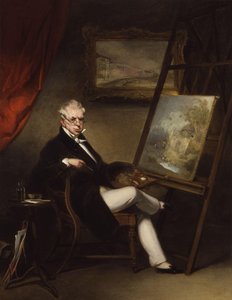
George Chinnery
1774 - 1852 , Verenigd Koninkrijk
Snelle feiten
- Artistic Movement Or Style: Orientalisme, Portretkunst
- Artists Or Movements Influenced By This Artist: ['Gurney systeem']
- Artists Who Influenced This Artist: ['Lam Qua']
- Date Of Birth: 5 jan 1774
- Date Of Death: 30 mei 1852
- Full Name: George Chinnery
- Nationality: Engels
- Notable Artworks:
- Portretten
- Landschappen
- Place Of Birth: Londen, Verenigd Koninkrijk
Gerelateerde artikelen

Raja Ravi Varma: Bridging Tradition & Modernity in 19th-Century Indian Art
Explore the life & art of Raja Ravi Varma, a pioneer who fused European techniques with Indian iconography. Discover his iconic paintings, lasting legacy, and influence on modern Indian art at OriginalUniqueArt.

Sir George Clausen: Capturing Edwardian Life & British Impressionism's Nuances
Explore the luminous world of Sir George Clausen, a leading British Impressionist painter. Discover his captivating scenes of Edwardian life, rural England & poignant war art. Learn about his legacy and find high-quality reproductions at OriginalUniqueArt.
George Hayter: Portraiture, Power & Victorian Society's Canvas
Explore the life & work of George Hayter, Queen Victoria’s Principal Painter. Discover his iconic Victorian portraits, historical masterpieces, and lasting impact on British art history. Learn more at OriginalUniqueArt.

Georges Braque's Top 25 Meesterwerken: Cubisme & Kunst voor uw Interieur
Ontdek de 25 meest iconische meesterwerken van Georges Braque, pionier van het Cubisme. Lees over zijn techniek, inspiratie & de impact op moderne kunst. Vind museumkwaliteit reproducties en verrijk uw interieur met OriginalUniqueArt.com!

Georges Seurat's Meesterwerken: 25 Iconische Schilderijen voor Kunstliefhebbers | OriginalUniqueArt
Ontdek de 25 meesterwerken van Georges Seurat! Duik in Pointillisme, Impressionisme & chromoluminarism. Bewonder 'A Sunday on La Grande Jatte' en meer. Museumkwaliteit kunst reproducties op OriginalUniqueArt.com.
