
 Voorvertoning
 Verstuur
 Delen
Delen
 Details bekijken
 Gids
Gids

 Download
 Vergelijkbare items
 Röntgenonderzoek
 Diavoorstelling
 Vraag & antwoord
 Statistieken
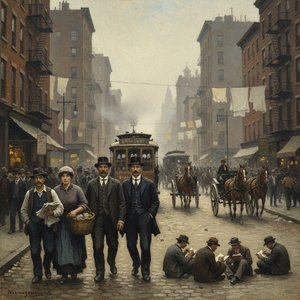
Noontime, St. Botolph Street, Boston


 Lees meer
Giclée / Kunstafdrukken
Giclée- of canvasafdruk van museumkwaliteit met een snelle productie en flexibele afwerkingsmogelijkheden. ( Bestel handgeschilderde reproductie Schakel over naar digitale afbeeldingen)




P118B €10

P118H €10

P118W €10

P438Z €10

P508JH €12

P508YH €12

P805H €10

P805Z €10

P919BZ €10

P919G €10

P919XJ €10

P959ZH €10

P968JZ €12

W106C €8

W218G €10

W218JH €8

W218Y €10

W307PJ €10

W316G €10

W316PJ €8

W316Y €10

W398PJ €8

W4111J €10

W500HY €15

W500JH €15

W692G €12

W849H €8

W940BG €15

W953PJ €8




Kies uit onze vooraf ingestelde maten die overeenkomen met de originele verhoudingen van het kunstwerk.

Voer de gewenste breedte en hoogte in, passend bij uw lijst of muur. Een afdruk kan alleen worden ingekort en nooit groter worden gemaakt dan het origineel; een formaat met andere verhoudingen zal daarom een deel van de afbeelding verliezen. Wij sturen u een digitaal mockup ter goedkeuring voordat we tot drukwerk overgaan. De afbeelding op deze pagina toont niet de werkelijke uitsnede — dit is alleen te zien op het mockup.
Wereldwijde levering () binnen 2 weken in plaats van de standaard 4/5 weken. (5 november)

Gratis wereldwijde expressverzending

Hoogwaardig linnen canvas

Volledige verzendverzekering

Garantie op terugbetaling van invoerrechten

Garantie op exacte kleurweergave

Retourbeleid van 100 dagen (alleen bij defecten)

100% Geld-terug-garantie

Korting bij meerdere afnames
 De optie voor glas is alleen beschikbaar bij een formaat kleiner dan 110 cm.

Noontime, St. Botolph Street, Boston
Giclée / Kunstafdrukken
Afmetingen reproductie
-


Eindtotaal
€ 72
Noontime in Boston: A Study of Urban Life by George Benjamin Luks
George Benjamin Luks’s “Noontime, St. Botolph Street, Boston,” painted in 1923, isn't merely a depiction of a rainy afternoon; it’s a poignant snapshot of American urban life at the cusp of modernity. Housed within the Museum of Fine Arts, Boston, this oil on canvas offers a rare glimpse into the everyday rhythms and quiet dramas unfolding amidst the bustling streets of early 20th-century Boston. Luks, a key figure in the Ashcan School movement, rejected the idealized portrayals favored by the National Academy of Design, instead choosing to capture the gritty reality of working-class life with unflinching honesty and remarkable empathy.
The painting immediately draws the eye to its central figure – a man navigating the rain-slicked sidewalk, clutching an umbrella and a worn suitcase. His posture suggests both weariness and determination, hinting at a journey, perhaps a temporary escape or a return home. Around him, a carefully constructed tableau of ordinary individuals unfolds: a woman hurrying past with her own umbrella, a group pausing beneath awnings, and the subtle suggestion of activity in the background – a bench occupied by a solitary figure, a chair leaning against a building. These aren’t grand historical scenes or heroic narratives; they are fragments of human experience, rendered with remarkable detail and psychological insight.
A Masterclass in Realist Technique
Luks's distinctive style is immediately apparent in the painting’s bold brushstrokes and vibrant color palette. He masterfully employs a technique that blends elements of realism and impressionism, capturing not just the visual appearance of the scene but also its atmosphere—the dampness, the muted light filtering through the clouds, and the sense of movement inherent in a busy street. The use of loose, expressive brushwork creates a dynamic energy, contrasting with the carefully observed details of the figures and their surroundings. Note particularly how he uses color to evoke the feeling of rain – subtle blues, grays, and greens dominate, punctuated by the brighter tones of umbrellas and clothing.
The artist’s attention to light and shadow is equally impressive. The wet pavement reflects the diffused sunlight, creating a shimmering effect that adds depth and realism to the scene. Luks skillfully uses chiaroscuro – the contrast between light and dark – to sculpt the figures and define their forms, drawing the viewer's eye to key elements within the composition. The subtle play of light on the wet pavement is particularly evocative, suggesting both the discomfort of the rain and the beauty of its reflection.
Contextualizing a Moment in Time
“Noontime, St. Botolph Street, Boston” was created during a period of significant social and economic change in America. The early 20th century witnessed rapid industrialization, urbanization, and immigration, leading to the growth of densely populated cities like Boston and the emergence of new working-class communities. Luks’s painting reflects this reality, portraying the lives of ordinary people struggling to make a living in an increasingly complex world. The inclusion of the suitcase suggests themes of migration and displacement – common experiences for many immigrants arriving in America at the time.
Furthermore, understanding the context of Boston itself is crucial. St. Botolph Street was a vibrant, working-class neighborhood during this period, a microcosm of the larger urban landscape. The painting’s location within the city's historical fabric adds another layer of meaning to the scene, reminding us of the rich and often overlooked history of everyday life in America.
Symbolism and Emotional Resonance
Beyond its realistic depiction of urban life, “Noontime, St. Botolph Street, Boston” carries a subtle emotional resonance. The solitary figure with the suitcase embodies themes of loneliness, uncertainty, and the challenges of navigating an unfamiliar city. The rain itself can be interpreted as a symbol of cleansing or renewal, suggesting that even in difficult circumstances, there is always the possibility for hope. Luks’s ability to capture these nuanced emotions through his masterful technique and keen observation makes this painting a truly enduring work of art.
OriginalUniqueArt offers meticulously crafted hand-painted reproductions of “Noontime, St. Botolph Street, Boston,” allowing you to bring this captivating scene into your home or office. Each reproduction is created by skilled artists using archival quality materials, ensuring that the beauty and detail of Luks’s original work are faithfully preserved for generations to come.
Veelgestelde vragen
Uit welke materialen bestaat "Noontime, St. Botolph Street, Boston" en in welke stijl is het uitgevoerd?
"Noontime, St. Botolph Street, Boston" is vervaardigd in Oil On Canvas, in de Ashcan School-stijl.
Wie is de maker van "Noontime, St. Botolph Street, Boston" en uit welk jaar stamt het werk?
George Luks maakte "Noontime, St. Botolph Street, Boston" in 1923.
Zijn de kleuren van "Noontime, St. Botolph Street, Boston" door George Luks levendig of juist gedempt?
"Noontime, St. Botolph Street, Boston" door George Luks is vastgelegd met een Balanced Soft verzadiging en een Balanced intensiteit.
Biografie kunstenaar
A Life Forged in the Crucible of American Realism
George Benjamin Luks, a name inextricably linked to the vibrant and often gritty reality of early 20th-century America, was more than simply a painter; he was a keen observer, a storyteller, and a vital voice for the marginalized. Born in Williamsport, Pennsylvania, in 1867, into a family steeped in both Polish heritage and German musical tradition – his father a physician, his mother an amateur musician – Luks’s upbringing instilled within him a profound empathy for the human experience, particularly the struggles of ordinary people. This sensitivity would become the cornerstone of his artistic vision, shaping his subject matter, technique, and ultimately, his enduring legacy. His early years were far from conventional; before dedicating himself to canvas, he and his brother found success as vaudeville performers, honing their observational skills and developing a deep understanding of human character – a skill that would prove invaluable in capturing the nuances of life on stage and later, on canvas. This period fostered a love for performance and spectacle, elements subtly infused into the dynamic compositions of his paintings, creating a sense of immediacy and drama.European Influences and the Dawn of an Artistic Voice
Luks’s formal artistic education began at the Pennsylvania Academy of the Fine Arts, but it was his subsequent travels through Europe that truly ignited his creative spirit. He immersed himself in the works of the Old Masters – Velázquez and Hals, in particular, captivated him with their masterful use of light, shadow, and characterization – absorbing their techniques and philosophies. However, Luks wasn’t merely a diligent student; he was actively synthesizing these influences into something uniquely his own. His time spent studying at the Düsseldorf School of Art provided further exposure to European artistic trends, particularly in portraiture and landscape painting. Upon returning to America, he found work as an illustrator for various newspapers and magazines, including *Puck* and *The Philadelphia Press*. This experience proved transformative, exposing him directly to the bustling streets, diverse populations, and stark realities of urban life – subjects that would become the central focus of his artistic output. Crucially, he connected with a group of like-minded artists—Robert Henri, John Sloan, William Glackens—who shared a rejection of academic conventions and a desire to depict the world as they saw it, honestly and without pretense. This collective spirit gave rise to what would become known as the Ashcan School, a movement that challenged the established art world and celebrated the beauty in the mundane.The Ashcan School: Capturing the Soul of New York
The Ashcan School, emerging in the early 20th century, represented a radical shift in American painting. Rejecting the idealized subjects and polished techniques of academic art, these artists sought to portray the realities of urban life – the poverty, the overcrowding, the grit – with unflinching honesty. Luks was a central figure within this movement, alongside Henri, Sloan, Glackens, and others. His paintings are characterized by their vigorous brushwork, bold compositions, and often-unflattering portrayal of New York City’s working class. He didn't shy away from depicting the hardships faced by laborers, immigrants, and marginalized communities. The Cabby, for example, is a powerful depiction of a weary cab driver, his face etched with the toll of long hours and difficult conditions, yet radiating a quiet dignity. Similarly, Sulky Boy captures the vulnerability and introspection of youth, offering a poignant glimpse into the lives of young working-class children. Luks’s technique was as distinctive as his subject matter; he employed a thick impasto style, applying paint liberally to the canvas, creating a textured surface that seemed to vibrate with energy. His use of color was often muted, reflecting the grimy realities of urban life, but punctuated by flashes of brilliance – a vibrant red scarf, a splash of sunlight – that drew the viewer’s eye and added depth to his scenes.A Voice for the Underrepresented and Lasting Legacy
Beyond his artistic achievements, Luks was also a passionate advocate for American art and artists. He taught at the Art Students League of New York, inspiring generations of young painters to embrace their own unique voices and perspectives. His influence can be seen in the work of countless subsequent artists who sought to capture the spirit of the urban experience – from Edward Hopper’s evocative cityscapes to the social realism of later American painters. Luks wasn't simply interested in documenting reality; he sought to convey its emotional weight, its inherent drama. He wanted his paintings to be felt as much as seen. He also briefly pursued a career as a comic artist, continuing the popular “Hogan’s Alley” strip for *The New York World* after Richard F. Outcault left the newspaper – a testament to his versatility and ability to capture human character in various forms. George Benjamin Luks died in 1933, leaving behind a body of work that continues to resonate with viewers today. His paintings are not merely historical documents; they are powerful testaments to the human condition, reminders of the struggles and triumphs of those whose stories might otherwise have been forgotten. He remains a vital figure in American art history, a champion of realism, and a voice for the underrepresented.Key Works
* *The Cabby* (1903) * *Sulky Boy* (1905) * *Coal Mining Town* (1907) * *The Spielers* (1905) * *The Wrestlers* (1905)
George Luks
1867 - 1933 , Verenigde Staten van Amerika
Belangrijkste feiten
- Artistic Movement Or Style: Ashcan School, Realisme
- Artists Or Movements Influenced By This Artist: ['American Modernism']
- Artists Who Influenced This Artist:
- Velázquez
- Hals
- Manet
- Date Of Birth: 1867
- Date Of Death: 1933
- Full Name: George Benjamin Luks
- Nationality: Amerikaans
- Notable Artworks:
- The Cabby
- Sulky Boy
- Place Of Birth: Williamsport, USA
Gerelateerde artikelen
The Ashcan School: Realism, Urban Life & the Democratization of American Art
Explore the revolutionary Ashcan School! Discover how artists like Henri & Sloan challenged tradition with gritty realism, capturing urban life in early 20th-century America. Learn about their impact on American art history.

Romantic Realism's Finest: 10 Masterpieces for Your Home | OriginalUniqueArt
Explore 10 defining masterpieces of Romantic Realism! Discover Courbet, Millet & Daumier's powerful paintings—capturing emotion and social realities. Find museum-quality reproductions for your home at OriginalUniqueArt.com.

Georges Braque's Top 25 Meesterwerken: Cubisme & Kunst voor uw Interieur
Ontdek de 25 meest iconische meesterwerken van Georges Braque, pionier van het Cubisme. Lees over zijn techniek, inspiratie & de impact op moderne kunst. Vind museumkwaliteit reproducties en verrijk uw interieur met OriginalUniqueArt.com!

Georges Seurat's Meesterwerken: 25 Iconische Schilderijen voor Kunstliefhebbers | OriginalUniqueArt
Ontdek de 25 meesterwerken van Georges Seurat! Duik in Pointillisme, Impressionisme & chromoluminarism. Bewonder 'A Sunday on La Grande Jatte' en meer. Museumkwaliteit kunst reproducties op OriginalUniqueArt.com.

Concrete Visions: Exploring the Urban Landscape in Painting – From Realism to Contemporary Art
Explore the evolution of cityscape painting from Realism to contemporary art with OriginalUniqueArt. Discover key artists & invest in timeless urban visions. Expert guidance, museum-quality reproductions.
