

 Voorvertoning
 Verstuur
 Delen
Delen
 Details bekijken

 Download
 Vergelijkbare items
 Röntgenonderzoek
 Diavoorstelling
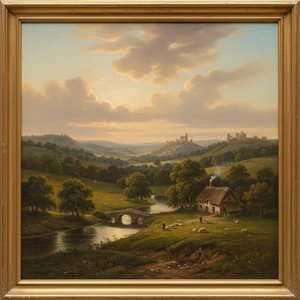
Landscape with a Ruined Tower
 Oil On Canvas
- WallArt
- Romantic Pastoral
 100.0 x 125.0 cm
 National Trust
 Lees meer
Handgemaakte olieverfreproductie
Met de hand geschilderd in olieverf op canvas in uw gewenste maat en lijst, op bestelling gemaakt door onze kunstenaars. ( Bestel print Koop afbeelding)




P118B $10

P118H $10

P118W $10

P438Z $10

P508JH $12

P508YH $12

P805H $10

P805Z $10

P919BZ $10

P919G $10

P919XJ $10

P959ZH $10

P968JZ $12

W106C $8

W218G $10

W218JH $8

W218Y $10

W307PJ $10

W316G $10

W316PJ $8

W316Y $10

W398PJ $8

W4111J $10

W500HY $15

W500JH $15

W692G $12

W849H $8

W940BG $15

W953PJ $8




Kies uit onze vooraf ingestelde maten die overeenkomen met de originele verhoudingen van het kunstwerk.

U kunt uw eigen afmetingen invoeren om in een specifieke lijst of ruimte te passen. Als de door u gekozen maat niet overeenkomt met de verhoudingen van het originele beeld, zullen we het kunstwerk bijsnijden of het schilderij uitbreiden met extra handgeschilderde elementen. Een digitale mockup wordt ter goedkeuring naar u verzonden voordat de productie begint.
Houd er rekening mee dat de preview op het scherm niet de werkelijke uitsnede of uitbreiding weergeeft. Alleen de mockup toont de uiteindelijke compositie nauwkeurig.
Hoewel aangepaste afmetingen mogelijk zijn, raden we aan een maat uit de vooraf gedefinieerde lijst te selecteren om de originele verhoudingen te behouden.
Na de bestelling zal het team van OriginalUniqueArt.com per e-mail contact opnemen met de klant voor instructies en een mockup-voorbeeld sturen.
Wereldwijde levering () binnen 3 tot 4 weken in plaats van de standaard 5 weken. (21 augustus). Zonder concessies aan de kwaliteit.

Gratis wereldwijde expressverzending

Hoogwaardig linnen canvas

Volledige verzendverzekering

Garantie op terugbetaling van invoerrechten

Garantie op exacte kleurweergave

Retourbeleid van 60 dagen (alleen bij defecten)

100% Geld-terug-garantie

Korting bij meerdere afnames
 De optie voor glas is alleen beschikbaar bij een formaat kleiner dan 110 cm.

Landscape with a Ruined Tower
Druktechniek
Afmetingen reproductie
-


Eindtotaal
$ 300
Beschrijving kunstwerk
George Barret the Elder’s “Landscape with a Ruined Tower”: A Vision of English Pastoral
“Landscape with a Ruined Tower,” painted circa 1762-1784 by George Barret the Elder, is more than just a depiction of a rural scene; it's a carefully constructed meditation on time, memory, and the fading grandeur of the English countryside. Barret, an Irish artist who established himself as a leading figure in London’s art world, masterfully captures a moment suspended between decay and enduring beauty, reflecting the philosophical currents of his era – particularly the influence of Edmund Burke's exploration of the sublime.
The painting immediately draws the eye to the imposing ruin itself: a weathered tower rising from a gently sloping hillside, partially obscured by a dense copse of trees. Its stones, rendered in muted ochres and browns, speak of centuries spent exposed to the elements, hinting at forgotten histories and lost power. The tower isn’t merely a structural element; it's a potent symbol – a visual representation of decline, yet simultaneously imbued with an undeniable sense of solemn dignity. This deliberate juxtaposition is central to Barret’s artistic vision.
A Painterly Echo of Burke’s Sublime
Barret’s approach to landscape painting was profoundly shaped by Edmund Burke's philosophical treatise, *A Philosophical Enquiry into the Origin of Our Ideas of the Sublime and Beautiful*. Burke argued that experiences of awe and terror – what he termed the “sublime” – could be found not just in dramatic events but also in the contemplation of vastness, decay, and solitude. Barret translates this philosophical concept onto canvas with remarkable skill.
Notice how the artist employs atmospheric perspective—the subtle blurring of distant elements to create a sense of depth and recession. The hazy blue sky, punctuated by wisps of cloud, contributes to the painting’s overall mood of melancholy and contemplation. The careful use of light and shadow further emphasizes the tower's weathered state, highlighting its vulnerability against the backdrop of the seemingly eternal landscape. This isn’t a vibrant celebration of nature; it’s an exploration of its quieter, more profound aspects.
Details of Technique and Composition
Barret was initially influenced by engravings of classical Italianate scenes, reworking them with his own distinctive style. The composition is carefully balanced, drawing the eye towards the tower while simultaneously establishing a sense of spaciousness. The placement of the trees, the gentle curve of the hillside, and the distant body of water all contribute to this harmonious arrangement.
The artist’s brushwork is remarkably controlled, particularly in rendering the textures of stone and foliage. He employs a delicate layering technique—thin glazes of paint applied over dry underlayers—to achieve a luminous quality that captures the subtle nuances of light and shadow. The details are meticulously observed, from the individual stones of the tower to the leaves rustling in the breeze. This attention to detail elevates the painting beyond mere representation, transforming it into a carefully considered work of art.
Symbolism and Emotional Resonance
Beyond its technical merits, “Landscape with a Ruined Tower” resonates deeply on an emotional level. The ruined tower evokes a sense of loss—the passing of time, the decline of empires, and the inevitable decay of all things. Yet, it also possesses a certain beauty in its weathered state, suggesting that even in ruin, there is still value to be found.
The painting invites us to contemplate our own mortality and the fleeting nature of existence. It’s a poignant reminder that beauty can be discovered not only in moments of triumph but also in the quiet contemplation of decay. It's a timeless image, speaking to universal themes of memory, loss, and the enduring power of the natural world – making it a compelling subject for collectors and interior designers seeking pieces with depth and emotional resonance.
Biografie van de kunstenaar
George Barret Sr.: Life & Legacy
George Barret Sr., born between 1728 and 1732 in Libertyville, Ireland – the son of a cloth merchant – stands as a pivotal figure in the history of British landscape painting. His artistic journey began humbly, apprenticed initially as a staymaker before discovering an innate talent for drawing that would propel him to international acclaim. This early aptitude secured him a place at Robert West’s Academy in Dublin around 1747, generously funded by the Royal Dublin Society, where he honed his skills and established himself as a promising young artist. Furthermore, his friendship with Edmund Burke – forged during Burke's formative years at Trinity College – proved to be an enduring bond that would shape Barret’s artistic vision and personal life.Early Artistic Development & Influences
- Barret’s initial paintings frequently depicted idealized classical landscapes and mythological figures, reflecting the intellectual currents of his time.
- A profound influence stemmed from Edmund Burke's philosophical treatise *A Philosophical Enquiry into the Origin of Our Ideas of the Sublime and Beautiful*. Burke’s exploration of awe and terror – concepts central to the sublime – directly informed Barret’s artistic approach, encouraging him to imbue his landscapes with a sense of grandeur and emotional resonance.
- He commenced his artistic career by meticulously reworking engravings of Italianate scenes created by artists like Claude Lorrain, demonstrating an unwavering commitment to established stylistic conventions. Despite portraying Italian vistas, there's no documented evidence suggesting Barret ever undertook personal expeditions to Italy itself.
Move to London and Rise to Prominence
- Driven by aspirations for greater artistic opportunities, Barret relocated to London in 1762 – a decisive step that swiftly cemented his position as one of the era’s foremost landscape painters.
- His exceptional talent quickly garnered recognition within the Society of Artists of Great Britain and attracted considerable patronage from influential art collectors.
- Perhaps most notably, Barret played an instrumental role in establishing the Royal Academy in 1768 – a landmark event that fundamentally reshaped British artistic practice and solidified his legacy as a visionary innovator.
Artistic Style and Themes
- Barret’s stylistic evolution mirrored broader trends within Romanticism, transitioning from meticulously crafted Italianate landscapes to more expressive depictions of English and Irish scenery.
- He undertook extensive travels throughout England, Wales, Scotland, and Ireland – undertaking commissions and capturing the breathtaking beauty of diverse terrains. His canvases frequently showcased idyllic views, picturesque countryside vistas, and dramatic waterfalls like *The Powerscourt Waterfall*, meticulously rendered with a keen eye for detail.
- Barret’s paintings weren't merely visual representations; they conveyed narratives and evoked emotions through carefully considered compositions and tonal palettes. Figures within the landscape – often subtly integrated into the scenery – added depth and scale to his works, reflecting the Romantic preoccupation with capturing the sublime experience of encountering nature.
Later Life & Patronage
- Barret’s personal life was marked by challenges; he suffered from asthma, necessitating a move to Westbourne Green in 1772 for improved health conditions. Despite achieving considerable financial success during his lifetime, Barret struggled with money management and occasionally faced periods of hardship.
- A testament to Burke's unwavering friendship and support, Edmund Burke championed Barret’s cause – securing him the prestigious role of Master Painter at Chelsea Hospital in 1782 – which he held until his untimely death in 1784. His legacy continues to inspire artists and scholars alike, ensuring that George Barret Sr.’s contribution to British art history remains vividly remembered.

George Barret Sr.
1732 - 1784 , Ierland
Belangrijkste feiten
- Artistic Movement Or Style: Romanticism
- Artists Or Movements Influenced By This Artist: Claude Lorrain
- Artists Who Influenced This Artist: Edmund Burke
- Date Of Birth: 1732
- Full Name: George Barret Sr.
- Nationality: Irish
- Notable Artworks:
- The Powerscourt Waterfall
- A Prospect of Southwick Park
- Llyn Nantlle
- North Side of Danson
- Place Of Birth: Libertyville, Ireland
Gerelateerde artikelen

Georges Braque's Top 25 Meesterwerken: Cubisme & Kunst voor uw Interieur
Ontdek de 25 meest iconische meesterwerken van Georges Braque, pionier van het Cubisme. Lees over zijn techniek, inspiratie & de impact op moderne kunst. Vind museumkwaliteit reproducties en verrijk uw interieur met OriginalUniqueArt.com!
George Barret the Elder: Pioneering British Pastoral Painting & Landscape's Rise
Explore the life & art of George Barret Sr., a pioneer of British pastoral painting. Discover his influence on Romantic landscape art, patronage, and collecting tips from OriginalUniqueArt.

Georges Seurat's Meesterwerken: 25 Iconische Schilderijen voor Kunstliefhebbers | OriginalUniqueArt
Ontdek de 25 meesterwerken van Georges Seurat! Duik in Pointillisme, Impressionisme & chromoluminarism. Bewonder 'A Sunday on La Grande Jatte' en meer. Museumkwaliteit kunst reproducties op OriginalUniqueArt.com.

Idyllic Visions: Exploring the Pastoral Scene in Art History – From Arcadia to Modern Interpretations
Explore the captivating history of pastoral art from classical Arcadia to modern masterpieces. Discover key artists like Millet & Cole at OriginalUniqueArt. Find serene landscape paintings for your home.
Idyllic Visions: Exploring the Pastoral Tradition in Western Art – Themes, Techniques & Enduring Appeal
Explore the rich history of pastoral art from classical Arcadia to contemporary interpretations. Discover key artists, themes & collecting tips at OriginalUniqueArt.



