
 Voorvertoning
 Verstuur
 Delen
Delen
 Details bekijken

 Download
 Vergelijkbare items
 Röntgenonderzoek
 Diavoorstelling
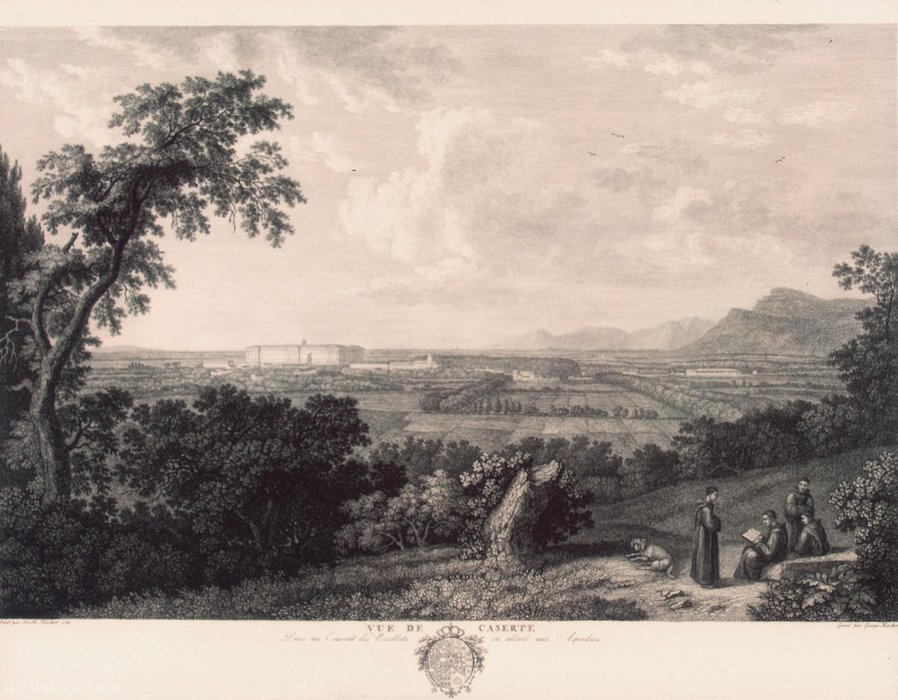
View of Caserta

 Lees meer
Handgemaakte olieverfreproductie
Met de hand geschilderd in olieverf op canvas in uw gewenste maat en lijst, op bestelling gemaakt door onze kunstenaars. ( Bestel print Koop afbeelding)




































Kies uit onze vooraf ingestelde maten die overeenkomen met de originele verhoudingen van het kunstwerk.

U kunt uw eigen afmetingen invoeren om in een specifieke lijst of ruimte te passen. Als de door u gekozen maat niet overeenkomt met de verhoudingen van het originele beeld, zullen we het kunstwerk bijsnijden of het schilderij uitbreiden met extra handgeschilderde elementen. Een digitale mockup wordt ter goedkeuring naar u verzonden voordat de productie begint.
Houd er rekening mee dat de preview op het scherm niet de werkelijke uitsnede of uitbreiding weergeeft. Alleen de mockup toont de uiteindelijke compositie nauwkeurig.
Hoewel aangepaste afmetingen mogelijk zijn, raden we aan een maat uit de vooraf gedefinieerde lijst te selecteren om de originele verhoudingen te behouden.
Na de bestelling zal het team van OriginalUniqueArt.com per e-mail contact opnemen met de klant voor instructies en een mockup-voorbeeld sturen.
Wereldwijde levering () binnen 3 tot 4 weken in plaats van de standaard 5 weken. (18 augustus). Zonder concessies aan de kwaliteit.

Gratis wereldwijde expressverzending

Hoogwaardig linnen canvas

Volledige verzendverzekering

Garantie op terugbetaling van invoerrechten

Garantie op exacte kleurweergave

Retourbeleid van 60 dagen (alleen bij defecten)

100% Geld-terug-garantie

Korting bij meerdere afnames
 De optie voor glas is alleen beschikbaar bij een formaat kleiner dan 110 cm.

View of Caserta
Druktechniek
Afmetingen reproductie
-


Eindtotaal
$ 325
Biografie van de kunstenaar
Georg Abraham Hackert: A Romantic Observer of Hungary and Berlin
Georg Abraham Hackert (1755-1805) stands as a pivotal figure in the transition between the late Baroque and the burgeoning Romanticism of German art. Born in Prenzlau, Prussia – now part of Germany – his life was inextricably linked to the shifting political landscape of 18th-century Europe, particularly through his extensive travels and artistic engagements in Hungary and Berlin. Hackert’s work isn't defined by grand, heroic narratives; instead, he offered a remarkably intimate and observant portrayal of everyday life, rural landscapes, and the remnants of history – a style that resonated deeply with the Romantic sensibility’s focus on emotion, nature, and the past.Early Life and Artistic Training
Hackert's early artistic training remains somewhat shrouded in mystery, though it’s known he began his career as an assistant to Johann Christian Fieger, a painter working in Berlin. This initial apprenticeship provided him with foundational skills in portraiture and decorative painting. However, Hackert quickly developed a fascination with engraving, a medium that allowed him to meticulously capture detail and explore the interplay of light and shadow – qualities crucial to his later landscape work. He honed his engraving skills under the tutelage of Johann Christian Fieger’s assistant, Carl Wilhelm von Nauck, further solidifying his technical expertise. Crucially, Hackert's early exposure to Prussian court life and the burgeoning interest in archaeological discoveries—particularly Roman ruins—would profoundly shape his artistic vision.Hungary: A Landscape of Transformation
In 1778, Hackert embarked on a pivotal journey to Hungary, commissioned by Frederick the Great of Prussia to document the country’s landscape and its transformation following the Habsburg-Turkish War. This extended sojourn proved transformative, both artistically and personally. He spent nearly two decades immersed in Hungarian life, capturing scenes of rural communities, peasant labor, and the dramatic beauty of the Hungarian plains. Unlike many artists who idealized nature, Hackert presented a more nuanced view – one that acknowledged the hardships faced by the peasantry while simultaneously celebrating the region’s rugged charm. His etchings and engravings from this period, such as “View of Vietri” and “View of the Environs of Carpentras,” are characterized by their meticulous detail, atmospheric perspective, and a subtle sense of melancholy. He wasn't simply recording scenery; he was attempting to capture the spirit of a people and a land undergoing significant change.Berlin: Portraits and Historical Scenes
Returning to Berlin in 1798, Hackert established himself as a respected portrait painter and continued his work on historical subjects. He produced numerous portraits of prominent figures, demonstrating a keen ability to capture character and personality. His engagement with the Prussian court provided him with access to luxurious settings and opulent costumes, which he rendered with remarkable accuracy. Simultaneously, he revisited themes from his Hungarian period, creating engravings that explored the ruins of Roman sites – a fascination rooted in his earlier experiences. Works like “Ruins of the Augustan Bridge at Narni” exemplify this blend of historical awareness and Romantic sensibility, presenting ancient structures not as relics of a distant past but as evocative reminders of human ambition and decay.Legacy and Influence
Georg Abraham Hackert’s legacy lies in his ability to bridge the gap between Neoclassicism and Romanticism. He was a master of observation, meticulously documenting the details of everyday life and the beauty of the natural world. His work anticipated many of the key themes of the Romantic movement – the importance of emotion, the fascination with nature, and the exploration of the past—though he did so through a distinctly German lens. His detailed engravings served as models for later generations of landscape artists, while his portraits offered insightful glimpses into the personalities of 18th-century Europe. Hackert’s influence can be seen in the works of Caspar David Friedrich and other prominent Romantic painters who followed in his footsteps, solidifying his place as a significant figure in the development of German art. His work continues to resonate today through its evocative depictions of human experience and the enduring power of landscape.
georg abraham hackert
1755 - 1805 , Germany
Belangrijkste feiten
- Artistic Movement Or Style: Romanticism
- Artists Or Movements Influenced By This Artist: ['Romantic Landscapes']
- Artists Who Influenced This Artist: ['Philipp the Younger']
- Date Of Birth: 1755
- Date Of Death: 1805
- Full Name: Georg Abraham Hackert
- Nationality: German
- Notable Artworks:
- View of Vietri
- View of Carpentras
- Ruins of Narni Bridge
- Place Of Birth: Prenzlau, Germany
Gerelateerde artikelen

Engraving: A Historical Survey of Technique, Artistic Expression & Enduring Legacy
Explore the rich history of engraving with OriginalUniqueArt. Discover techniques, iconic artists like Dürer & Callot, collecting tips, and expert guidance for preserving your art investment. Learn about intaglio printing & more!

Katsushika Hokusai's 25 Meesterwerken: Japanse Kunst voor uw Interieur | OriginalUniqueArt
Ontdek de 25 meesterwerken van Katsushika Hokusai, de Japanse Ukiyo-e kunstenaar! Reis door zijn iconische prints zoals 'The Great Wave' en Mount Fuji. Vind museumkwaliteit reproducties & inspiratie voor uw interieur op OriginalUniqueArt.com.
Top 10 Landschappen in de Kunstgeschiedenis: Schilderijen & Decoratie Inspiratie
Ontdek de top 10 landschapschilderijen van Monet, Van Gogh & meer! Duik in de geschiedenis en betekenis achter deze iconische kunstwerken. Vind museumkwaliteit reproducties & interieurinspiratie op OriginalUniqueArt.com.
Top 10 Legendarische Graveerkunstwerken die de Kunst voor Altijd Veranderden | OriginalUniqueArt
Ontdek de 10 meest legendarische graveerkunstwerken die de kunstgeschiedenis veranderden! Van Rembrandt tot Goya, leer over techniek & betekenis. Museumkwaliteit reproducties voor uw interieur op OriginalUniqueArt.com.

Romantische Landschappen: Top 10 Meesterwerken voor een Sfeervol Interieur | OriginalUniqueArt.nl
Ontdek de 10 meest iconische meesterwerken van de Romantiek! Reis door de tijd met Caspar David Friedrich, Turner & Delacroix. Laat je inspireren en vind museumkwaliteit kunst reproducties voor een sfeervol interieur op OriginalUniqueArt.com.

