

 Bekijk op ware grootte
 Verstuur
 Delen
Delen
 Details bekijken
 Gids voor studentenkunstwerken

 Download
 Vergelijkbare items
 Röntgenonderzoek
 Diavoorstelling
 Statistieken
Night Rider
 Color Field Painting
 1983
1983 71.0 x 101.0 cm
 Lees meer
De kunstwerken die op deze pagina worden weergegeven, zijn beschermd door de auteursrechtwetgeving, wat betekent dat het ons wettelijk niet is toegestaan om identieke reproducties te maken of te verkopen. Deze bescherming wordt gehandhaafd onder internationale overeenkomsten zoals de Conventie van Bern en door nationale wetgeving, waaronder de bepalingen van de Amerikaanse auteurswet - Titel 17. Alle rechten voorbehouden. Reproduceren of distribueren van afbeeldingen is niet toegestaan zonder uitdrukkelijke schriftelijke toestemming van WahooArt.com en de rechthebbenden.
Deze methode voldoet volledig aan de auteursrechtwetgeving, omdat het niet gaat om het kopiëren of dupliceren van het beschermde kunstwerk. In plaats daarvan is er sprake van een creatieve herinterpretatie — een nieuw schilderij dat door het origineel wordt geïnspireerd, maar er niet identiek aan is.
Giclée / Kunstafdrukken
Giclée- of canvasafdruk van museumkwaliteit met een snelle productie en flexibele afwerkingsmogelijkheden. ( Koop handgeschilderd kunstwerk Schakel over naar digitale afbeeldingen)




































Kies uit onze vooraf ingestelde maten die overeenkomen met de originele verhoudingen van het kunstwerk.

Voer de breedte en de hoogte in die u nodig heeft, passend bij uw lijst of uw muur. Een afdruk kan alleen worden ingekort, nooit groter worden gemaakt dan het origineel, waardoor een formaat met een andere verhouding een deel van de afbeelding verliest. Wij sturen u een digitaal mockup ter goedkeuring voordat we iets drukken. De afbeelding op deze pagina toont niet de werkelijke uitsnede — dit is alleen te zien op het mockup.
Wereldwijde levering () binnen 2 weken in plaats van de standaard 4/5 weken. (24 oktober)

Gratis wereldwijde expressverzending

Hoogwaardig linnen canvas

Volledige verzendverzekering

Garantie op terugbetaling van invoerrechten

Garantie op exacte kleurweergave

Retourbeleid van 100 dagen (alleen bij defecten)

100% Geld-terug-garantie

Korting bij meerdere afnames
 De optie voor glas is alleen beschikbaar bij een formaat kleiner dan 110 cm.

Night Rider
Giclée / Kunstafdrukken
Formaat reproductie
-


Totaalprijs
€ 71
The Artist and His Style
Gene Davis was a major figure in 20th-century American painting, known for his contribution to the color abstraction movement. His early paintings and drawings display a distinct improvisational quality, which he maintained throughout his career. Color was a crucial element in his work, and he often compared himself to a jazz musician who plays by ear, describing his approach to painting as 'playing by eye.'The Painting
The Night Rider painting features a map of the United States with various symbols and images drawn on top of it. The use of red and other bold colors creates a sense of energy and movement, drawing the viewer's eye across the canvas. The painting is characterized by its complex scheme, which lends itself to sustained periods of viewing.Other Notable Works
Some of Gene Davis' other notable works include Red Line, Christmas Tree, and Black Mask. These paintings demonstrate his experimentation with color and form, and his ability to create complex and engaging compositions.- Night Rider by Gene Davis
- Red Line by Gene Davis
- Gene Davis on Wikipedia
The Smithsonian American Art Museum is one of the premier institutions for American art, with a collection that includes works by Gene Davis, Aaron Sopher, and other notable artists. Visitors to the museum can see Night Rider and other works by Gene Davis in person, and experience the beauty and complexity of his art firsthand.
Vragen & Antwoorden
Welke nationale herkomst ligt ten grondslag aan de Color Field Painting van "Night Rider"?
"Night Rider" werd gecreëerd door Gene Davis, geboren in Verenigde Staten van Amerika, binnen de Color Field Painting-stroming. De herkomst van de kunstenaar verbindt het werk met Color Field Painting, zoals beoefend door kunstenaars uit Verenigde Staten van Amerika.
Wat is de dominante kleur van "Night Rider" door Gene Davis?
"Night Rider" neigt naar een Warm Sunset Tones tint.
Wat is de luminantie van "Night Rider" door Gene Davis?
De luminantie die is vastgesteld voor "Night Rider" door Gene Davis is Luminous.
Biografie van de kunstenaar
De Architect van Kleur: Het Leven en de Nalatenschap van Gene Davis
In het levendige weefsel van de Amerikaanse abstractie uit het midden van de vorige eeuw, schijnen weinig draden zo helder of zo ritmisch als die van Gene Davis. Als pionier van de Color Field-beweging bezat Davis het unieke vermogen om het canvas te transformatie tot een ritmische ervaring van licht en beweging. Geboren in Washington, D.C. in 1920, was zijn weg naar het worden van een centrale figuur binnen de Washington Color School niet er een van onmiddellijke abstractie, maar eerder een geleidelijke evolutie, gevormd door een scherp observatievermogen. Voordat hij de penseel ooit aanstuurde om zijn iconische strepen te creëren, werkte Davis als sportjournalist, een beroep dat een scherpe focus vereiste op beweging, energie en het zich ontvouwende drama van live evenementen—elementen die later hun weg zouden vinden naar de pulserende verticaliteit van zijn schilderijen.
De zaden van zijn abstracte taal werden geplant door een diepe betrokkenheid bij het Europees modernisme. Tijdens zijn vormende jaren vond Davis diepe inspiratie in de werken van Paul Klee en Arshile Gorky, kunstenaars die lieten zien hoe vorm kon worden gedestilleerd tot pure emotie en symbolische gewicht. Door zichzelf onder te dompelen in de meesterwerken van de Phillips Collection, begon hij te begrijpen dat kleur niet slechts een onderwerp diende; kleur was het onderwerp. Dit besef zette hem op een pad weg van traditionele representatie en richting een revolutionaire manier van kijken, waarbij de grenzen tussen vorm en tint begonnen op te lossen in pure, chromatische energie.
Het Ritme van de Streeppartij: Innovatie en Techniek
Het jaar 1958 markeerde een seismische verschuiving in de carrière van Davis en de bredere koers van de Amerikaanse kunst. Het was tijdens deze periode dat hij begon met het produceren van zijn gevierde acrylstrepen-schilderijen, een techniek die zijn onmiskenbare handtekening zou worden. Door afstand te nemen van de zware, gebarende texturen van het Abstract Expressionisme, omarmde Davis de vlakke, lichtgevende kwaliteiten van acrylverf. Zijn composities bevatten vaak monumentale verticale kleurbanden die tegen elkaar leken te vibreren, waardoor een gevoel van optische beweging ontstond dat de kijker in een hypnotiserende, ritmische trance trok.
Deze werken waren veel meer dan eenvoudige geometrische oefeningen; het waren verkenningen van ruimte en perceptie. Door gebruik te maken van de benadering van de Washington Color School, benadrukte Davis de voorrang van kleur, waarbij hij elke streep liet interagerende met zijn buur door subtiele verschuivingen in waarde en verzadiging. Zijn techniek maakte een unieke vorm van "ademen" binnen het schilderij mogelijk, waarbij het oog wordt aangemoedigd om verticaal over het canvas te dansen. Deze beheersing van herhaling en ritme stelde hem in staat de essentie van stedelijke energie en natuurlijk licht vast te leggen, waarbij hij de chaos van de moderne wereld vertaalde naar een gestructureerde, maar diep vloeiende, visuele taal.
Een Blijvende Indruk op de Amerikaanse Abstractie
Als hoeksteen van de Washington Color School, samen met tijdgenoten als Morris Louis en Kenneth Nuthland, hielp Gene Davis de grenzen van de post-painterly abstractie te herdefiniëren. Zijn werk stond als een testament voor de kracht van terughoudendheid en de oneindige mogelijkheden die worden gevonden binnen een beperkt palet. Zelfs in zijn latere werken, zoals het evocatieve Night Rider uit 1983, is zijn vermogen om gewaagde tinten te mengen met complexe beeldtaal zichtbaar, wat bewijst dat zijn meesterschap in kleur diepe, symbolische verhalen kon ondersteunen.
De historische betekenis van Gene Davis ligt in zijn rol als een brug tussen de intense emotionaliteit van de vroege abstractie en de koele, berekende precisie van de latere Color Field-schilderkunst. Zijn nalatenschap is te vinden in elk canvas dat de zintuiglijke ervaring van kleur prioriteit geeft boven de weergave van vorm. Door zijn ritmische strepen liet hij een visuele symfonie achter die wereldwijd blijft resoneren bij verzamelaars en kunstliefhebbers, als een herinnering dat kunst zowel diep eenvoudig als oneindig complex kan zijn.

Gene Davis
1920 - 1985 , Verenigde Staten van Amerika
Snelle feiten
- Artistic Movement Or Style: Color Field Painting
- Artists Who Influenced This Artist:
- Paul Klee
- Arshile Gorky
- Date Of Birth: August 22, 1920
- Date Of Death: April 6, 1985
- Full Name: Gene Bernard Davis
- Nationality: Amerikaans
- Notable Artworks:
- Black Grey Beat
- Blue Freak-Out
- Place Of Birth: Washington, D.C.
Gerelateerde artikelen

Stuart Davis: Modernist Abstraction & the Vibrant Spirit of the Jazz Age
Explore the vibrant world of Stuart Davis, a pioneer of American Modernism. Discover his jazz-inspired paintings, signature style & investment potential. Expert insights for art collectors.

Gene Davis: Chromatic Explorations of Color Field Painting & the Washington Color School
Explore the vibrant world of Gene Davis and the Washington Color School. Discover his iconic stripe paintings, innovative techniques, and lasting impact on American abstract art. A deep dive for collectors & enthusiasts.

Top 10 Meesterwerken van de Geometrische Abstractie | OriginalUniqueArt.nl
Ontdek de 10 meest invloedrijke meesterwerken van de geometrische abstractie! Van Mondriaan tot Malevich, leer over kunstenaars, technieken & kleuren. Museumkwaliteit reproducties op OriginalUniqueArt.com – voor een unieke interieurstijl.

Top 10 Abstract Expressionisme Meesterwerken: Kunst voor uw Interieur | OriginalUniqueArt.com
Ontdek de 10 meest invloedrijke werken van Abstract Expressionisme! Leer over Jackson Pollock, Mark Rothko & meer. Museumkwaliteit kunst reproducties voor uw interieur. Bekijk de collectie op OriginalUniqueArt.com.
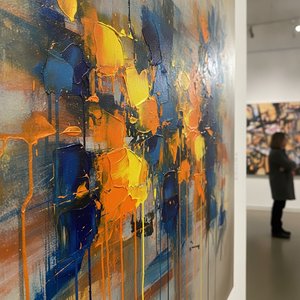
Beyond the Lines: Mastering the High-Impact World of Contemporary Abstraction
Master the high-impact world of contemporary abstraction. Discover how bold colors, textures, and modern movements like Abstract Expressionism can transform your space with premium, high-energy art curated for the design-conscious professional.