
 Print kopen Bestel schilderij
 Verstuur
 Delen
Delen
 Details bekijken
 Toevoegen aan favorieten

 Download
 Vergelijkbare werken
 Röntgenonderzoek
 Diavoorstelling
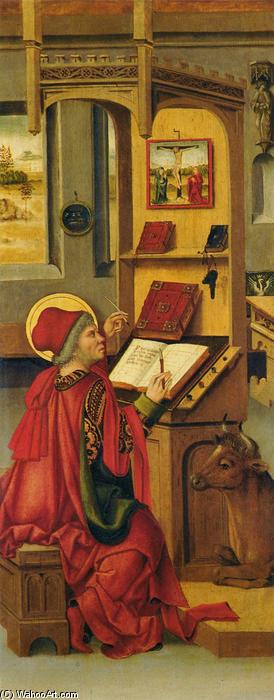
St Luke
 1477
1477 77.0 x 32.0 cm
 Museo Thyssen-Bornemisza
 Lees meer
Koop een digitale afbeelding met hoge resolutie en verbeterde kwaliteit, die veel superieur is aan de online voorvertoning.
Elk bestand wordt met uiterste precisie voorbereid door onze interne specialisten, met behulp van geavanceerde tools en deskundige handmatige retouche. Wij garanderen dat elke afbeelding een uitzonderlijke helderheid, nauwkeurige kleurweergave en verfijnde details bezit.
Het uiteindelijke bestand wordt binnen 72 uur per e-mail geleverd, geoptimaliseerd voor direct gebruik in professionele, redactionele en printomgevingen. Dit is dezelfde kwaliteit waarop topontwerpstudio's, uitgevers en galerieën vertrouwen.
Digitale afbeeldingen
Download een bestand met hoge resolutie voor persoonlijke weergave, afdrukken en creatieve projecten.
Inbegrepen bij elke bestelling van een digitale afbeelding
Professionele digitale levering, gegarandeerd
Wanneer u kiest voor OriginalUniqueArt.com, ontvangt u niet alleen een afbeelding – u krijgt een professioneel verbeterd digitaal kunstwerk, met precisie vervaardigd en voorzien van een tevredenheidsgarantie. Dit is alles wat automatisch bij uw bestelling is inbegrepen:

Snelle digitale levering
Uw hoogwaardige digitale afbeeldingsbestand wordt binnen 72 uur na bestelling naar u gemaild – klaar voor direct gebruik.

Met AI verbeterd digitaal bestand
Uw kunstwerk wordt professioneel geoptimaliseerd met behulp van geavanceerde AI-tools en handmatige bewerkingen, waardoor maximale details, helderheid en kleurnauwkeurigheid worden gegarandeerd.

Gratis levenslange herlevering van digitale afbeeldingen
Je bestand per ongeluk verwijderd of kwijtgeraakt? Geen zorgen – we sturen het u op elk gewenst moment gratis opnieuw toe.

Geen invoerkosten - Altijd
Geniet direct van uw kunstwerk zonder invoerrechten, belastingen of verzendkosten – digitale downloads zijn altijd belastingvrij.

Garantie op kleurgetrouwheid
Met behulp van professionele hulpmiddelen en kleurbeheer zorgen wij ervoor dat uw digitale afbeelding de originele kleuren zo nauwkeurig mogelijk weergeeft.

60 dagen tevredenheidsgarantie
Als u niet tevreden bent met uw digitale afbeelding, passen wij deze aan of storten wij 100% terug binnen 60 dagen – zonder vragen gesteld.

100% Geld-terug-garantie
Niet tevreden? Ontvang binnen 60 dagen na ontvangst van uw digitale bestand uw volledige aankoopbedrag terug – zonder vragen te stellen.

Korting bij grote bestellingen
Koop 3 afbeeldingen, bespaar 10% - Koop 5, bespaar 15% - Koop 10+, bespaar 20%. Ideaal voor creatieve projecten, galerieën en bureaus.
Beschrijving verzamelobject
The Artist and His Style
Gabriel Mälesskircher was a renowned German painter who lived and worked in Munich during the 15th century. His style is characterized by a strong narrative sense and a high degree of realism, evident in his depiction of everyday objects. The St Luke painting is a prime example of his work, showcasing his ability to capture the essence of his subjects.The Painting's Significance
The St Luke painting is part of a series of altarpieces commissioned by the Benedictine monastery in Tegernsee. This particular painting depicts St Luke, one of the four Evangelists, engaged in writing or reading from a book. The level of detail and realism in this painting is remarkable, making it a standout piece in Mälesskircher's oeuvre. Key Features of the Painting:- The use of oil on panel, which allows for a high level of detail and texture
- The depiction of St Luke in a quiet, contemplative moment, highlighting his role as a writer and scholar
- The inclusion of everyday objects, such as books and a desk, which adds to the painting's sense of realism
The St Luke painting by Gabriel Mälesskircher is a testament to the artist's skill and craftsmanship. Its level of detail, realism, and historical significance make it a must-see for art enthusiasts and historians alike. For more information on Mälesskircher and his work, visit OriginalUniqueArt.com.
Kunstenaarsbiografie
Gabriel Mälesskircher (1425 – 1495): The Silent Maestro of Bavarian Renaissance
Gabriel Mälesskircher remains a figure shrouded in scholarly debate, yet undeniably pivotal to the artistic landscape of late fifteenth-century Bavaria. While overshadowed by contemporaries like Albrecht Dürer and Hans Holbein, Mälesskircher’s contribution to German art—particularly his monumental altarpieces—continues to fascinate historians and inspire artists today. His legacy rests on a singular achievement: transforming the austere piety of his era into emotionally resonant narratives imbued with subtle Flemish influences.
- Early Life & Training: Precise biographical details remain elusive, fueled by scant surviving documentation. Evidence suggests he was born around 1425/30 in Munich, though definitive records are absent. His formative years were spent apprenticed to Hans Folz, a prominent Nuremberg painter known for his meticulous realism and mastery of oil paint—a stylistic approach that would profoundly shape Mälesskircher’s artistic sensibilities.
- Munich School & Patronage: Mälesskircher established himself as a leading figure within Munich's burgeoning artistic community. He served as Guild Master of St Luke, demonstrating his commitment to craftmanship and upholding the standards of artistic excellence. Crucially, he secured prestigious commissions from influential patrons like Duke Sigismund of Bavaria and Abbot Konrad Ayrinschmalz of Tegernsee Abbey—relationships that propelled him to the forefront of Bavarian art.
- The Tegernsee Altarpieces: Mälesskircher’s magnum opus comprises thirteen altarpieces executed for Tegernsee Abbey between 1473 and 1478. These monumental canvases represent a watershed moment in German Renaissance painting, showcasing his unparalleled skill in depicting biblical narratives with dramatic intensity and psychological depth. The Tavola della Vergine (Virgin Mary) and Saint Quirinus are considered masterpieces of their time, reflecting the artist’s profound understanding of humanist ideals and visual storytelling.
- Influence & Legacy: Mälesskircher's workshop fostered collaboration with talented artists like Michael Wolgemut—a formative influence on Albrecht Dürer—solidifying Bavaria’s position as a crucible for artistic innovation. His distinctive style, characterized by meticulous detail and emotive expression, continues to inspire artists exploring the complexities of human experience within religious contexts.
Despite his prolific output during his lifetime, Mälesskircher's oeuvre suffered significant losses due to fires—a tragic circumstance that robbed posterity of invaluable artworks. Nevertheless, surviving fragments—primarily altarpieces housed in museums across Europe—stand as testament to his artistic genius and enduring contribution to the history of German Renaissance art.

gabriel mälesskircher
1425 - 1495
Belangrijkste feiten
- Artistic Movement Or Style: Second Munich School of Painting
- Artists Or Movements Influenced By This Artist: ['Albrecht Dürer']
- Artists Who Influenced This Artist: ['Hans Baldung Grien']
- Date Of Death: 1495
- Full Name: Gabriel Mälesskircher
- Nationality: German
- Notable Artworks:
- Saint John the Evangelist
- Saint Mark the Evangelist
- Place Of Birth: ?, Bavaria


