
 Voorvertoning
 Verstuur
 Delen
Delen
 Details bekijken
 Gids
Gids

 Download
 Vergelijkbare items
 Röntgenonderzoek
 Diavoorstelling
 Vraag & antwoord
 Statistieken
Composition No. 15

- 150.0 x 125.0 cm

 Lees meer
De kunstwerken die op deze pagina worden weergegeven, zijn beschermd door de auteursrechtwetgeving, wat betekent dat het ons wettelijk niet is toegestaan om identieke reproducties te maken of te verkopen. Deze bescherming wordt gehandhaafd onder internationale overeenkomsten zoals de Conventie van Bern en door nationale wetgeving, waaronder de bepalingen van de Amerikaanse auteurswet - Titel 17. Alle rechten voorbehouden. Reproduceren of distribueren van afbeeldingen is niet toegestaan zonder uitdrukkelijke schriftelijke toestemming van WahooArt.com en de rechthebbenden.
Deze methode voldoet volledig aan de auteursrechtwetgeving, omdat het niet gaat om het kopiëren of dupliceren van het beschermde kunstwerk. In plaats daarvan is er sprake van een creatieve herinterpretatie — een nieuw schilderij dat door het origineel wordt geïnspireerd, maar er niet identiek aan is.
Giclée / Kunstafdrukken
Giclée- of canvasafdruk van museumkwaliteit met een snelle productie en flexibele afwerkingsmogelijkheden. ( Bestel handgeschilderde reproductie Schakel over naar digitale afbeeldingen)




































Kies uit onze vooraf ingestelde maten die overeenkomen met de originele verhoudingen van het kunstwerk.

Voer de gewenste breedte en hoogte in, passend bij uw lijst of muur. Een afdruk kan alleen worden ingekort en nooit groter worden gemaakt dan het origineel; een formaat met andere verhoudingen zal daarom een deel van de afbeelding verliezen. Wij sturen u een digitaal mockup ter goedkeuring voordat we tot drukwerk overgaan. De afbeelding op deze pagina toont niet de werkelijke uitsnede — dit is alleen te zien op het mockup.
Wereldwijde levering () binnen 2 weken in plaats van de standaard 4/5 weken. (8 november)

Gratis wereldwijde expressverzending

Hoogwaardig linnen canvas

Volledige verzendverzekering

Garantie op terugbetaling van invoerrechten

Garantie op exacte kleurweergave

Retourbeleid van 100 dagen (alleen bij defecten)

100% Geld-terug-garantie

Korting bij meerdere afnames
 De optie voor glas is alleen beschikbaar bij een formaat kleiner dan 110 cm.

Composition No. 15
Giclée / Kunstafdrukken
Afmetingen reproductie
-


Eindtotaal
€ 72
Biografie kunstenaar
Friedrich Vordemberge-Gildewart: Architect of Geometric Abstraction
Born in Osnabrück, Germany, in 1899, Friedrich Vordemberge-Gildewart’s artistic journey was a radical departure from traditional representation, charting instead a course toward pure abstraction and the exploration of geometric forms. His life, intertwined with the burgeoning movements of De Stijl and Abstraction-Création, reflects a profound engagement with modernism's quest for universal visual language. From his early studies in architecture and sculpture at Hanover’s prestigious art institutions to his eventual exile from Germany due to the rise of Nazism, Vordemberge-Gildewart’s career was marked by both artistic innovation and personal displacement.
Vordemberge-Gildewart's formative years were deeply influenced by the intellectual currents swirling around him. He initially studied architecture and sculpture, disciplines that instilled in him a meticulous understanding of structure and form – qualities he would later translate into his abstract compositions. Crucially, he became involved with *Gruppe K* (K for Konstructivismus) in Hanover, a group dedicated to exploring constructivist principles within the context of German art. This association exposed him to the ideas of El Lissitzky, a Russian pioneer of geometric abstraction, and provided a crucial foundation for his later work. His time in Hanover also coincided with his encounter with Theo van Doesburg, one of the founders of De Stijl, a movement that championed a reductive aesthetic based on primary colors, black, white, and bold geometric shapes. This exposure to De Stijl’s philosophy – emphasizing universal harmony through simplified forms – profoundly shaped Vordemberge-Gildewart's artistic vision.
The Rise of Geometric Abstraction
Vordemberge-Gildewart’s artistic development during the 1920s witnessed a pivotal shift toward abstraction. He began experimenting with non-objective compositions, moving away from representational imagery and embracing a purely visual language built upon geometric elements. His early works, such as “Composition No. 15” (1925), demonstrate this transition – dynamic arrangements of intersecting lines, rectangles, and circles that eschew any illusionistic depth or narrative content. These paintings weren’t merely decorative; they were explorations of spatial relationships, color theory, and the inherent balance within geometric forms.
His involvement with De Stijl extended beyond mere stylistic influence. He actively participated in the group's theoretical discussions, contributing to their exploration of universal harmony and the potential of abstract art to transcend cultural boundaries. He also formed the ‘Abstrakten Hannover’ group alongside Kurt Schwitters and Carl Buchheister, further solidifying his position within the avant-garde artistic landscape of Germany. This period saw him experimenting with collage techniques, incorporating paper and other materials into his paintings to create layered textures and complex visual rhythms.
Exile and Artistic Evolution
The rise of Nazism in Germany dramatically altered Vordemberge-Gildewart’s trajectory. His work was deemed “degenerate” by the regime, leading to its confiscation and his forced exile in 1937. This displacement marked a significant turning point in his career, propelling him to Amsterdam where he continued to develop his abstract style, albeit under challenging circumstances.
In Amsterdam, Vordemberge-Gildewart’s artistic practice evolved further. He embraced the principles of Abstraction-Création, a group that sought to revitalize abstraction after a period of relative decline. He explored new techniques and materials, including collage, creating works that combined geometric forms with textural elements. His later paintings, such as “Composition No. 154” (1946), demonstrate a refined mastery of color and composition, characterized by a sense of quiet contemplation and understated elegance. Despite the hardships he faced during World War II, Vordemberge-Gildewart remained committed to his artistic vision, producing a significant body of work that continues to resonate with viewers today.
Legacy and Influence
Friedrich Vordemberge-Gildewart’s contribution to the development of abstract art is undeniable. He was one of the first artists to dedicate his entire career to an exclusively abstract style, pioneering a visual language based on geometric forms and color relationships. His work profoundly influenced subsequent generations of abstract painters, including Josef Albers and Barnett Newman. His exploration of spatial relationships and dynamic compositions established new possibilities for non-representational art, demonstrating that abstraction could be both intellectually stimulating and aesthetically compelling.
Vordemberge-Gildewart’s legacy extends beyond his individual artworks. He played a crucial role in shaping the theoretical foundations of De Stijl and Abstraction-Création, contributing to the broader discourse on modernism and the potential of art to express universal truths. His story serves as a poignant reminder of the challenges faced by artists during times of political upheaval and the enduring power of artistic vision to transcend adversity.

Belangrijkste feiten
- Full Name: Friedrich Vordemberge-Gildewart
- Nationality: German
- Date Of Birth: 1899
- Date Of Death: December 19, 1962
- Place Of Birth: Osnabrück, Germany
- Notable Artworks:
- Composition No. 15
- Composition No. 104
- Composition No. 154
- Artistic Movement Or Style: Neo-Plasticism (De Stijl)
- Artists Who Influenced This Artist:
- Theo van Doesburg
- Kurt Schwitters
- Artists Or Movements Influenced By This Artist:
- El Lissitzky
- De Stijl
Gerelateerde artikelen

25 Iconic Masterpieces by Valentin Laurent de Courcey: The Ultimate Art Deco Collection
Explore 25 iconic works by Valentin de Courcey. Discover high Art Deco fashion masterpieces on OriginalUniqueArt.com.
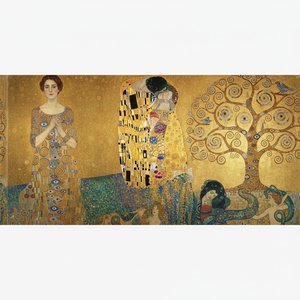
Gustav Klimt's Top 25 Meesterwerken: Kunst, Geschiedenis & Decoratie | OriginalUniqueArt
Ontdek de top 25 meesterwerken van Gustav Klimt! Van 'De Kus' tot iconische portretten, duik in zijn gouden fase & symbolisme. Vind museumkwaliteit Klimt reproducties en inspiratie voor uw interieur op OriginalUniqueArt.com.

Golden Splendor: The Top 25 Masterpieces by Gustav Klimt
Immerse yourself in the golden splendor of Gustav Klimt. Explore 25 iconic masterpieces from the Vienna Secession, featuring breathtaking Art Nouveau textures and gold leaf beauty. Find museum-quality reproductions for your decor. Discover all masterpieces on OriginalUniqueArt.com.

Golden Splendor: The 25 Most Iconic Masterpieces by Gustav Klimt
Immerse yourself in the golden splendor of Gustav Klimt. Explore 25 iconic Art Nouveau masterpieces, from The Kiss to his legendary portraits. Discover the stories behind these timeless works and find museum-quality art reproductions at OriginalUniqueArt.com.

Golden Splendor: The 25 Most Iconic Masterpieces by Gustav Klimt
Immerse yourself in the golden splendor of Gustav Klimt. Explore 25 iconic Art Nouveau masterpieces, from The Kiss to his legendary portraits. Discover the stories behind these timeless works and find museum-quality art reproductions on OriginalUniqueArt.com.