

 Bekijk op ware grootte
 Verstuur
 Delen
Delen
 Details bekijken
 Gids voor studentenkunstwerken

 Download
 Vergelijkbare items
 Röntgenonderzoek
 Diavoorstelling
 Statistieken
My Birth


 Lees meer
Giclée / Kunstafdrukken
Giclée- of canvasafdruk van museumkwaliteit met een snelle productie en flexibele afwerkingsmogelijkheden. ( Koop handgeschilderd kunstwerk Schakel over naar digitale afbeeldingen)




P118B €10

P118H €10

P118W €10

P438Z €10

P508JH €12

P508YH €12

P805H €10

P805Z €10

P919BZ €10

P919G €10

P919XJ €10

P959ZH €10

P968JZ €12

W106C €8

W218G €10

W218JH €8

W218Y €10

W307PJ €10

W316G €10

W316PJ €8

W316Y €10

W398PJ €8

W4111J €10

W500HY €15

W500JH €15

W692G €12

W849H €8

W940BG €15

W953PJ €8




Kies uit onze vooraf ingestelde maten die overeenkomen met de originele verhoudingen van het kunstwerk.

U kunt uw eigen afmetingen opgeven om in een specifieke lijst of ruimte te passen. Als de door u gekozen maat niet overeenkomt met de proporties van het originele kunstwerk, zullen wij de afbeelding bijsnijden of uitbreiden met een gespiegelde of effen rand. Een digitaal mockup wordt ter goedkeuring naar u verzonden voordat de productie begint.
Houd er rekening mee dat de preview op het scherm de werkelijke bijsneding of uitbreiding niet weergeeft. Alleen de mockup toont de uiteindelijke compositie nauwkeurig.
Hoewel aangepaste maten beschikbaar zijn, raden wij aan een afmeting uit de vooraf bepaalde lijst te kiezen om de originele proporties te behouden.
Wereldwijde levering () binnen 2 weken in plaats van de standaard 4/5 weken. (10 oktober)

Gratis wereldwijde expressverzending

Hoogwaardig linnen canvas

Volledige verzendverzekering

Garantie op terugbetaling van invoerrechten

Garantie op exacte kleurweergave

Retourbeleid van 100 dagen (alleen bij defecten)

100% Geld-terug-garantie

Korting bij meerdere afnames
 De optie voor glas is alleen beschikbaar bij een formaat kleiner dan 110 cm.

My Birth
Giclée / Kunstafdrukken
Formaat reproductie
-


Totaalprijs
€ 70
A Visceral Genesis: Unpacking ‘My Birth’ by Frida Kahlo
Frida Kahlo's “My Birth,” painted in 1932, isn’t merely a depiction of childbirth; it’s a profoundly intimate and unsettling exploration of selfhood, pain, and the very act of creation. This oil on metal canvas, measuring just 30 x 34 centimeters, pulsates with raw emotion and surreal imagery—a testament to Kahlo's unflinching honesty in confronting her own biography and the turbulent currents of her life. The painting immediately confronts the viewer with a startling scene: a woman’s head, enormous and shrouded in white cloth, emerging from a gaping, uterus-shaped portal within a bed. Beneath her lies a bloodied figure, seemingly lifeless, while above, a ghostly image of a weeping Virgin Mary hangs as a silent witness to this extraordinary event. It's a tableau that defies easy interpretation, inviting us into the depths of Kahlo’s psyche and forcing us to confront uncomfortable truths about birth, mortality, and the female experience.
Kahlo’s artistic choices are deliberate and layered with symbolism. The selection of metal as her support—a stark contrast to the traditional canvas—adds a chilling intensity to the scene. Metal, cold and unyielding, mirrors the physical pain Kahlo endured throughout her life, particularly following the devastating bus accident that irrevocably altered her trajectory. The blood pooling beneath the figure suggests not just the act of birth but also a profound sense of loss and vulnerability. The inclusion of the Virgin Mary is equally significant; it’s a nod to Kahlo's Catholic upbringing, yet she’s presented as an observer rather than a savior—a poignant reminder of her isolation and the struggle to find solace in faith amidst personal suffering. The painting isn’t simply about giving birth; it’s about *becoming*, about emerging from a difficult and painful process into a new state of being.
Mexican Roots and Surrealist Echoes
“My Birth” is deeply rooted in Mexican folk art and pre-Columbian mythology, elements that consistently informed Kahlo’s artistic vision. The painting echoes the style of *ex-voto* retablos—small devotional paintings created by pilgrims as offerings to religious figures—a tradition prevalent in Mexico. These retablos often depicted personal stories of miraculous healing or divine intervention, and Kahlo adapts this format to explore her own experience of suffering and resilience. Furthermore, the image of the weeping Virgin Mary draws upon Aztec symbolism, referencing Tlazolteotl, a goddess associated with childbirth, menstruation, and the underworld—a powerful figure representing both creation and destruction. This blending of indigenous and Catholic iconography reflects Kahlo’s complex identity as a Mexican woman navigating a rapidly changing world.
Crucially, “My Birth” aligns itself with the burgeoning Surrealist movement, though Kahlo resisted being strictly categorized within its confines. The dreamlike quality of the composition—the distorted scale, the unsettling imagery—evokes the principles of automatism and irrationality championed by André Breton and other surrealists. However, unlike many European surrealists who explored abstract or fantastical landscapes, Kahlo grounds her surrealism in intensely personal experience, transforming her own pain and trauma into a visual language that is both deeply affecting and uniquely Mexican.
A Legacy of Self-Portraiture and Feminist Iconography
“My Birth” stands as one of many powerful self-portraits created by Frida Kahlo—a recurring motif throughout her oeuvre. These paintings weren’t simply representations of her physical appearance; they were explorations of her inner world, chronicling her struggles with illness, heartbreak, and identity. Kahlo deliberately placed herself at the center of this scene, asserting agency over her own narrative and challenging traditional depictions of women in art. Her willingness to confront difficult subjects—pain, sexuality, and mortality—made her a groundbreaking figure for feminist artists who followed in her footsteps.
Today, “My Birth” continues to resonate with audiences worldwide, serving as a poignant reminder of Kahlo’s resilience, creativity, and unwavering commitment to self-expression. It's a painting that demands attention, provoking reflection on the complexities of birth, identity, and the enduring power of art to transform personal suffering into universal truth. OriginalUniqueArt offers meticulously crafted hand-painted reproductions of this iconic masterpiece, allowing you to experience its emotional depth and artistic brilliance in stunning detail.
Vragen & Antwoorden
Aan welke kunstenaar wordt "My Birth" toegeschreven?
"My Birth" is gemaakt door Frida Kahlo. De informatie op deze pagina beschrijft het originele werk van Frida Kahlo.
Welke kleur valt het meest op in "My Birth"?
De dominante kleur van "My Birth" door Frida Kahlo is Rosy Brown (#b1a38d).
Uit welke periode stamt "My Birth"?
"My Birth" door Frida Kahlo dateert uit de Modern-periode. Deze periode biedt de historische context van het werk.
Is "My Birth" beschikbaar als een fine art print?
Om een print van "My Birth" door Frida Kahlo te bemachtigen, kunt u deze eenvoudig bestellen op deze pagina: een fine art print op katoenen canvas of archiefwaardig canvaspapier.
Welke stemming en emotie komen samen in "My Birth"?
"My Birth" door Frida Kahlo roept een Melancholic gevoel op binnen een algeheel Dramatic stemmigheid.
Wie verkoopt handgeschilderde reproducties van "My Birth" door Frida Kahlo?
Met de handgeschilderde reproducties van "My Birth" door Frida Kahlo kunt u terecht op deze website: een met de hand geschilderde olieverfreproductie op linnen canvas, te bestellen via deze pagina.
Waar kan ik "My Birth" door Frida Kahlo downloaden?
De afbeelding van "My Birth" door Frida Kahlo kan worden gedownload via de Downloaden pagina van het kunstwerk: een download van een digitale afbeelding in hoge resolutie.
Biografie van de kunstenaar
Magdalena Carmen Frida Kahlo y Calderón: Een Leven Gesmeed in Pijn en Passie
Frida Kahlo, een naam die synoniem staat voor kracht, kwetsbaarheid en onverzettelijkheid, was meer dan slechts een kunstenaar; ze was een symbool van de menselijke geest. Geboren op 6 juli 1907 in Coyoacán, Mexico-Stad, werd haar leven gekenmerkt door fysiek lijden en emotionele ontberingen, ervaringen die onlosmakelijk verweven raakten met de intens persoonlijke en symbolische beelden waarvoor ze wereldwijd bewonderd wordt. Haar vader, Guillermo Kahlo, een Duitse-Mexicaanse fotograaf, stimuleerde haar intellectuele nieuwsgierigheid en artistieke aanleg vanaf jonge leeftijd. Echter, Frida’s jeugd werd getekend door ziekte; op zesjarige leeftijd contracteerde ze polio, wat resulteerde in een permanente loopplast en impact had op haar fysieke ontwikkeling. Deze vroege confrontatie met kwetsbaarheid zou een terugkerend thema worden in haar werk, haar perspectief vormend op het lichaam, pijn en veerkracht. Zelfs voordat het verwoestende ongeluk dat een groot deel van haar artistieke traject definieerde, had Frida een scherp bewustzijn van haar eigen fysicaliteit en de inherente breekbaarheid ervan.Het Gebroken Lichaam, De Bloeiende Kunst
In 1925 veranderde een tragisch busongeluk Frida’s leven voorgoed. Ze liep catastrofale verwondingen op – breuken in haar wervelkolom, bekken en been, onder andere. Gedurende een lange periode van herstel, vaak bedlegerig en ingezwachteld, vond ze troost en expressie door het schilderen. Haar moeder zorgde voor een ezel die geschikt was om te gebruiken terwijl ze lag, waardoor de beperkingen van haar fysieke toestand werden getransformeerd in een ruimte voor artistieke verkenning. Het was tijdens deze periode dat Frida begon met zelfportretten, met een onwrikbare intensiteit. Onmogelijk om naar buiten te gaan, richtte ze haar blik naar binnen, documenteerde nauwgezet haar eigen beeld als middel om haar pijn, zowel fysiek als emotioneel, te begrijpen en te confronteren. Deze vroege werken waren niet louter representaties van haar uiterlijk; ze waren viscerale verkenningen van identiteit, kwetsbaarheid en de blijvende kracht van de menselijke geest. Het ongeluk was niet slechts een tragedie; het was een katalysator die haar artistieke potentieel ontgrendelde, haar dwong om haar eigen sterfelijkheid te confronteren en betekenis te vinden in lijden.Een Stormachtige Verbinding en Artistiek Bloeien
Frida’s leven nam een nieuwe keerpunt in 1929 toen ze trouwde met de gerenommeerde Mexicaanse muurschilder Diego Rivera. Hun relatie was een gepassioneerd maar stormachtig avontuur, gekenmerkt door intense liefde, ontrouw, artistieke rivaliteit en periodes van scheiding en verzoening. Ondanks de emotionele turbulentie bleek Rivera een belangrijke invloed op Frida’s artistieke ontwikkeling. Hij moedigde haar unieke visie aan, bood constructieve kritiek terwijl hij de rauwe kracht en originaliteit van haar werk erkende. Onder zijn begeleiding, en door haar eigen onophoudelijke experimenten, begon Frida's stijl samen te komen, elementen van Mexicaanse volkskunst, realisme en surrealisme combinerend tot een kenmerkende visuele taal. Haar schilderijen werden steeds symbolischer, waarbij thema’s als identiteit, het menselijk lichaam, pijn, dood en de complexiteit van vrouwelijke ervaringen werden verkend. Ze vermeed het om haar eigen lijden af te beelden; in plaats daarvan omarmde ze het als een centraal thema in haar werk, persoonlijke trauma transformeerend in universele verklaringen over de menselijke conditie.Symbolen van Lijden, Veerkracht en Identiteit
Frida Kahlo staat wellicht het meest bekend om haar zelfportretten, die gekenmerkt worden door hun onverbiddelijke eerlijkheid en symbolische diepte. Werken zoals De Twee Frida's (1939), een krachtige weergave van haar dubbele identiteit na haar scheiding van Rivera, laten haar vermogen zien om interne conflicten te externaliseren door middel van opvallende visuele metaforen. Zelfportret met Distelketting en Kolibri (1940) is doordrenkt van symboliek – de distels vertegenwoordigen pijn, de kolibri symbool voor hoop en veerkracht, en de zwarte kat een voortbode van pech. De Gebroken Kolom (1944), een hartverscheurend portret van haar fysisch lijden, toont Frida’s torso opengebroken om een instortende Ionische kolom in plaats van haar wervelkolom te onthullen, samengehouden door riemen en doorboord met spijkers. Zelfs Henry Ford Hospital (1932), een rauwe en diep persoonlijke weergave van haar miskraam, toont haar bereidheid om taboes met onwrikbare eerlijkheid te confronteren. Deze schilderijen zijn niet louter representaties van pijn; ze zijn daden van verzet, verklaringen van zelfstandigheid in het aangezicht van tegenspoed.Een Blijvend Erfgoed
Frida Kahlo’s invloed reikt verder dan de wereld van kunst. Ze was een cultureel icoon die traditionele genderrollen en maatschappelijke verwachtingen uitdaagde door haar leven en werk. Haar omarming van de Mexicaanse cultuur en identiteit hielp het profiel ervan op internationaal niveau te verhogen, en haar onwrikbare weergave van pijn resoneerde met publieken over de hele wereld, waardoor ze een symbool werd van veerkracht en kracht. Ze werd een belangrijk figuur voor Chicanos in de Verenigde Staten, die hun culturele erfgoed en worstelingen vertegenwoordigde. Hoewel ze weigerde te worden gecategoriseerd als Surrealist, vertoont haar werk overeenkomsten met het onderzoek door deze beweging naar het onderbewuste en droomachtige beelden. Vandaag de dag wordt Frida Kahlo gevierd als een van de belangrijkste kunstenaars van de 20e eeuw, wiens nalatenschap generaties blijft inspireren om hun identiteit te omarmen, tegenspoed te confronteren en zichzelf authentiek uit te drukken. Haar kunst blijft een getuigenis van de blijvende kracht van de menselijke geest om schoonheid en betekenis te vinden, zelfs in de donkerste tijden.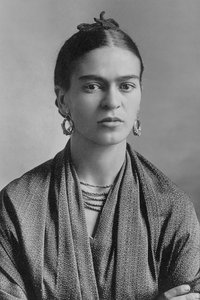
Frida Kahlo
1907 - 1954 , Mexico
Snelle feiten
- Artistic Movement Or Style: Surrealisme, volkskunst
- Artists Or Movements Influenced By This Artist:
- Chicano kunst
- Feministische kunstenaars
- Artists Who Influenced This Artist:
- Mexicaanse volkskunstenaars
- Europese renaissance schilders
- Date Of Birth: 6 juli 1907
- Date Of Death: 1954
- Full Name: Magdalena Carmen Frida Kahlo y Calderón
- Nationality: Mexicaans
- Notable Artworks:
- De twee Frida's
- Zelfportret met doornenkraag
- De gebroken kolom
- Henry Ford ziekenhuis
- Place Of Birth: Coyoacán, Mexico
Gerelateerde artikelen
Revolution on Canvas: Exploring the Socio-Political Power & Artistic Legacy of Mexican Muralism
Explore the powerful world of Mexican muralism! Discover Diego Rivera, Frida Kahlo & Orozco's revolutionary art, social impact & lasting legacy. Expert insights & high-quality reproductions at OriginalUniqueArt.
Unveiling Frida Kahlo: A Journey Through Her Most Iconic Masterpieces and the Soul of Mexican Surrealism
Embark on a profound journey through Frida Kahlo's most iconic masterpieces. Discover the deep symbolism, Mexican heritage, and resilient spirit behind her legendary works in this expert art-historical exploration designed for true art enthusiasts.
Frida Kahlo: A Life Painted – Surrealism, Identity & Autobiographical Narrative
Explore the life & art of Frida Kahlo – a journey through surrealism, identity, pain, and resilience. Discover her autobiographical masterpieces & lasting feminist legacy with OriginalUniqueArt.
Top 10 Surrealistische Meesterwerken: Kunst voor uw Interieur | OriginalUniqueArt.nl
Ontdek de 10 meest iconische surrealistische meesterwerken van Dalí, Magritte & Miró. Duik in hun droomwereld en symboliek! Museumkwaliteit kunst reproducties voor uw interieur op OriginalUniqueArt.com.
Diego Rivera: A Revolutionary Vision of Mexican Identity Through Muralism
Explore the revolutionary murals of Diego Rivera and his profound impact on Mexican art & identity. Discover his techniques, iconic works like 'Man at the Crossroads,' and lasting legacy with OriginalUniqueArt.


