
 Voorvertoning
 Verstuur
 Delen
Delen
 Details bekijken

 Download
 Vergelijkbare items
 Röntgenonderzoek
 Diavoorstelling
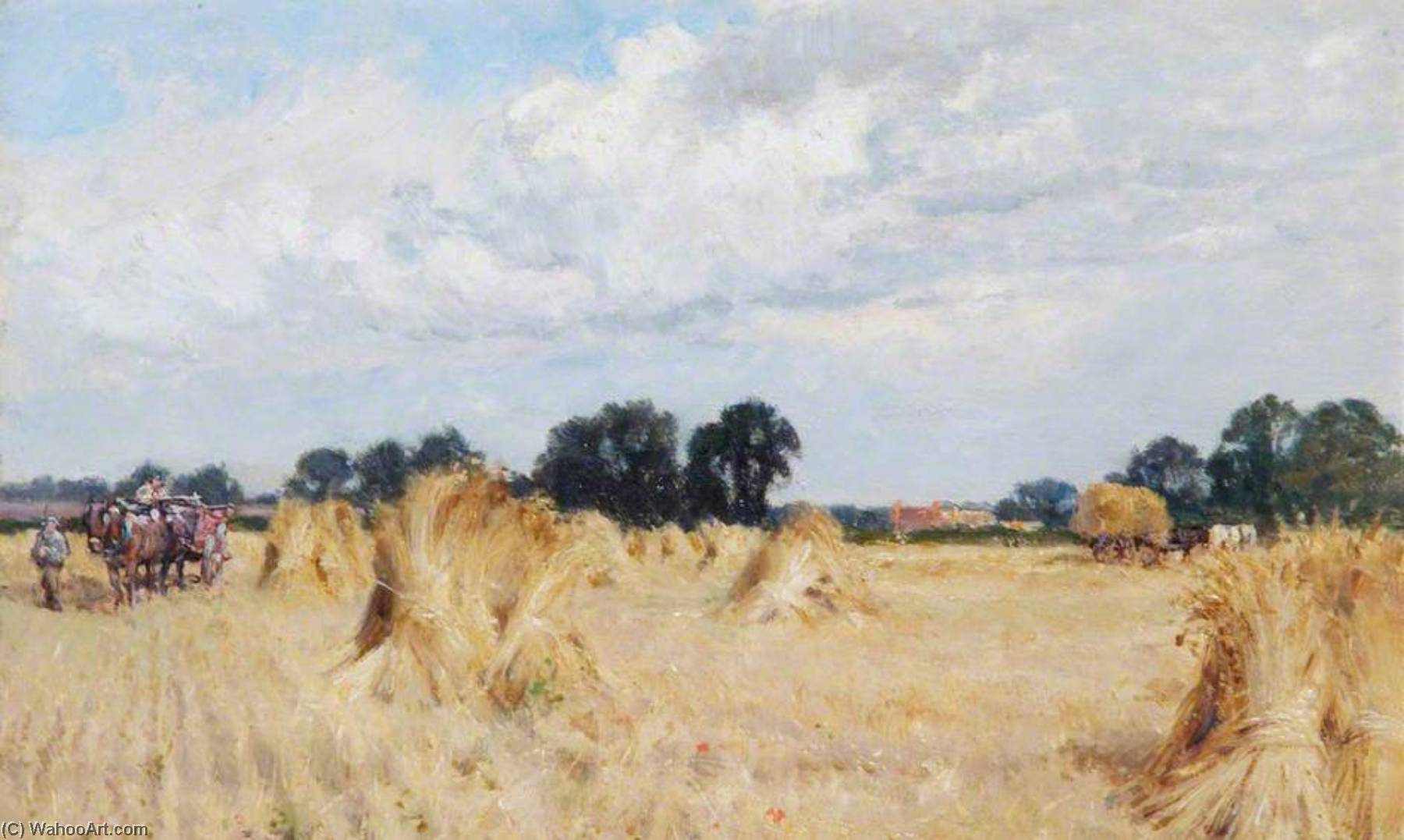
Cornfield
 23.0 x 34.0 cm
 Lees meer
Handgemaakte olieverfreproductie
Met de hand geschilderd in olieverf op canvas in uw gewenste maat en lijst, op bestelling gemaakt door onze kunstenaars. ( Bestel print Koop afbeelding)




































Kies uit onze vooraf ingestelde maten die overeenkomen met de originele verhoudingen van het kunstwerk.

U kunt uw eigen afmetingen invoeren om in een specifieke lijst of ruimte te passen. Als de door u gekozen maat niet overeenkomt met de verhoudingen van het originele beeld, zullen we het kunstwerk bijsnijden of het schilderij uitbreiden met extra handgeschilderde elementen. Een digitale mockup wordt ter goedkeuring naar u verzonden voordat de productie begint.
Houd er rekening mee dat de preview op het scherm niet de werkelijke uitsnede of uitbreiding weergeeft. Alleen de mockup toont de uiteindelijke compositie nauwkeurig.
Hoewel aangepaste afmetingen mogelijk zijn, raden we aan een maat uit de vooraf gedefinieerde lijst te selecteren om de originele verhoudingen te behouden.
Na de bestelling zal het team van OriginalUniqueArt.com per e-mail contact opnemen met de klant voor instructies en een mockup-voorbeeld sturen.
Wereldwijde levering () binnen 3 tot 4 weken in plaats van de standaard 5 weken. (14 augustus). Zonder concessies aan de kwaliteit.

Gratis wereldwijde expressverzending

Hoogwaardig linnen canvas

Volledige verzendverzekering

Garantie op terugbetaling van invoerrechten

Garantie op exacte kleurweergave

Retourbeleid van 60 dagen (alleen bij defecten)

100% Geld-terug-garantie

Korting bij meerdere afnames
 De optie voor glas is alleen beschikbaar bij een formaat kleiner dan 110 cm.

Cornfield
Druktechniek
Afmetingen reproductie
-


Eindtotaal
$ 300
Biografie van de kunstenaar
Frederick William Newton Whitehead: A Dorset Painter of Light and Landscape
Frederick William Newton Whitehead, a name perhaps less familiar than some of his contemporaries, nevertheless holds a significant place in the history of 19th-century British landscape painting. Born in Leamington Spa in 1853, Whitehead’s artistic journey was deeply intertwined with the natural beauty of the West Midlands and, crucially, the evocative landscapes of Dorset – a region that would become the very heart of his creative output. His life wasn't one of grand salons or formal training; instead, it unfolded through a series of formative experiences, shaped by familial connections to the art world, early influences from local artists, and ultimately, an immersion in the rhythms of rural life. Whitehead’s story is not simply that of a painter, but of an observer, a recorder, and a passionate advocate for the quiet grandeur of the English countryside.Early Influences and Artistic Foundations
Whitehead's artistic development began within a family deeply rooted in the world of art. His father, William Whitehead, was a Carver & Gilder, Picture Dealer, Restorer and Artists’ Colourman – a position that exposed young Frederick to the materials, techniques, and appreciation for fine art from an early age. Crucially, he received his initial artistic instruction from Richard Rothwell, an Irish artist who spent time living at the Whitehead family home in Leamington Spa. Rothwell's influence is evident in Whitehead’s early works – a preference for detailed observation and a certain sensitivity to light and shadow. Later, he studied under John Burgess, another prominent Leamington artist, gaining further experience in capturing the nuances of local scenery. However, it was his time spent in Paris with his sister Elizabeth that truly broadened his artistic horizons, introducing him to the Impressionist movement and fostering a greater appreciation for *plein air* painting – working directly from nature. This exposure proved pivotal, shaping his approach to landscape depiction and establishing a core principle of his style: an intimate connection between the artist and the subject.Dorset and the Pursuit of Light
Following his return to England, Whitehead established himself in Dorset, a region he would come to love deeply and paint with unwavering devotion. It was here that he forged a unique artistic identity, characterized by a remarkable ability to capture the ephemeral qualities of light and atmosphere. He wasn’t simply depicting landscapes; he was attempting to convey the *feeling* of being within them – the warmth of the sun on stone, the coolness of a shaded valley, the shifting patterns of mist over distant hills. Whitehead's Dorset paintings are often described as “atmospheric,” reflecting his meticulous attention to detail in rendering light and shadow, creating an illusion of depth and movement. He frequently travelled with his two dogs and a small portable studio, known affectionately as "The Baby Elephant," allowing him to work directly from the landscape, responding instinctively to changing conditions. This direct engagement with nature is evident in the immediacy and freshness of his brushstrokes.Subject Matter and Artistic Style
Whitehead’s subject matter was predominantly focused on the rural landscapes of Dorset – rolling hills, dramatic coastlines, picturesque villages, and expansive fields. He frequently depicted scenes of everyday life: shepherds tending their flocks, farmers working in their fields, cottages nestled amongst the trees. However, his paintings are not merely topographical representations; they are imbued with a sense of poetry and nostalgia. Whitehead’s style can be characterized as a blend of Realism and Impressionism. While he meticulously observed and rendered the details of his subjects – the texture of stone walls, the foliage of trees, the folds of clothing – he also employed loose brushstrokes and vibrant colors to capture the fleeting effects of light and atmosphere. His use of color was particularly noteworthy; he favored muted tones—greens, browns, blues—to create a sense of harmony with the natural world. He often worked in watercolor, allowing for delicate washes and subtle gradations of tone, but also utilized oils to achieve richer colors and greater luminosity.Legacy and Historical Significance
Frederick William Newton Whitehead’s contribution to British landscape painting may not be as widely recognized as some of his contemporaries, yet his work holds a quiet significance. He represents a crucial link between the more formal traditions of the Victorian art world and the emerging Impressionist movement. His dedication to *plein air* painting and his profound appreciation for the beauty of the English countryside established him as a key figure in the development of British landscape art. His paintings are now held in public collections, including the Leamington Spa Art Gallery & Museum, testament to their enduring appeal. Whitehead’s legacy lies not only in his individual works but also in his embodiment of a particular artistic ethos – one rooted in observation, sensitivity, and a deep connection with the natural world. He serves as a reminder that true beauty can be found in the simplest of landscapes, patiently revealed through the artist's discerning eye and skilled hand.
frederick william newton whitehead
1853 - 1938
Belangrijkste feiten
- Artistic Movement Or Style: Landscape painting
- Artists Or Movements Influenced By This Artist: ['Constable']
- Artists Who Influenced This Artist:
- Thomas Baker
- John Burgess
- Date Of Birth: 1853
- Date Of Death: 1938
- Full Name: Frederick William Newton Whitehead
- Nationality: British
- Notable Artworks:
- Cattle in a Country Lane
- Purbeck Hills from River Frome
- Cottage in Landscape
- Place Of Birth: Leamington Spa, England

