
() ·
Een schilderij speciaal voor u gemaakt, met de hand
Handgemaakte olieverfreproductie
Met de hand geschilderd in olieverf op canvas in uw gewenste maat en lijst, op bestelling gemaakt door onze kunstenaars. ( Schakel over naar print Schakel over naar digitale afbeeldingen)
Biografie kunstenaar
Frederick William Davis is an American maritime artist renowned for capturing breathtaking coastal landscapes and ship paintings of the 19th century. His evocative depictions showcase a masterful blend of realism and Romanticism, establishing him as a pivotal figure in American landscape art history.
 Lees meer
vanaf ·
Hoofdstuk 1
Hoe groot moet het zijn?
Schuif om de afmetingen te wijzigen; de afbeelding aan de linkerzijde toont de lijst in de werkelijke breedte. De oorspronkelijke verhoudingen blijven behouden.
Kies uit onze vooraf ingestelde maten die overeenkomen met de originele verhoudingen van het kunstwerk.

Voer de breedte en hoogte in die u nodig heeft, passend bij uw lijst of uw muur. Omdat dit handgeschilderd is, kan de kunstenaar bij een afmeting met een andere beeldverhouding iets meer rondom het schilderij schilderen of juist iets meer weglaten — u kiest zelf. Wij sturen u een digitaal mockup ter goedkeuring voordat het schilderwerk begint. De afbeelding die op deze pagina wordt getoond, is niet het uiteindelijke resultaat — alleen de mockup geeft dit weer.
Hoofdstuk 2
Hoe moet het worden geleverd?
Kies de randen van het canvas
Kies uw lijst

Wit €1

Vervagende randen €1

Doorlopende rand €1

P118B €10

P118H €10

P118W €10

P438Z €10

P508JH €12

P508YH €12

P805H €10

P805Z €10

P919BZ €10

P919G €10

P919XJ €10

P959ZH €10

P968JZ €12

W106C €8

W218G €10

W218JH €8

W218Y €10

W307PJ €10

W316G €10

W316PJ €8

W316Y €10

W398PJ €8

W4111J €10

W500HY €15

W500JH €15

W692G €12

W849H €8

W940BG €15

W953PJ €8

H24-GOLD €30

H24-SILVER €30

H36-GOLD €45

H36-SILVER €45
Ingelijst
Lijstrand: . Totale afmetingen inclusief lijst: .
Hoofdstuk 3
Wie schildert het, en moet er iets veranderen?
Na de bestelling zal het team van OriginalUniqueArt.com per e-mail contact opnemen met de klant voor instructies en een mockup-voorbeeld verstrekken
Wereldwijde levering () binnen 3 tot 4 weken in plaats van de standaard 5 weken. (5 november). Zonder concessies aan de kwaliteit.
Hoofdstuk 4
De laatste hand aan
Een naambordje, zoals in een museum?
Details van de gegraveerde bronzen plaat
This elegant plaque features the artist's name and the title of the artwork, finely engraved for a timeless presentation.
It is made from bronze with a refined, elegant finish. The text is precisely laser-engraved for a sharp and permanent result. Measuring 9x2 cm, the plaque is compact yet easy to read. It's built to be durable and scratch-resistant, offering a professional, museum-quality look. Mounting is simple thanks to the included adhesive backing.
Details transparante acrylplaat
The plaque includes essential engraved details such as the artist's name, the title of the artwork, the date it was created, the type of media used-like oil on canvas or watercolor-a brief description of the piece, and a QR code that links to the complete artwork information.
It is crafted from clear acrylic, offering a sleek, modern appearance. The text is UV-engraved in black to ensure strong visual contrast. With a size of 10x15 cm, it ensures optimal readability. It comes equipped with two metal hooks for secure wall mounting. The plaque is designed to be weather-resistant, making it suitable for various environments, and it includes interactive features that work seamlessly with smartphone scanning.
Details zwarte acrylplaat
This elegant plaque includes engraved information such as the artist's name, the title of the artwork, the date it was created, the type of media used (like oil on canvas or watercolor), a short description of the artwork, and a QR code for quick access to more information.
The plaque itself is made from refined black acrylic with a premium finish. The text is laser-engraved in white for high contrast and readability. Its size is 10x15 cm, designed to be easy to read. It comes with two metal hooks for professional mounting. The design is sleek and fits any interior style. It is also weather-resistant and durable, with built-in digital integration for mobile compatibility.
Een beschermende vernis?
Wanneer heeft u het nodig?
Hoofdstuk 5
Uw schilderij, zoals u het heeft besteld

Sharpening the Saw
Druktechniek
Afmetingen reproductie
-

Geselecteerde topkunstenaars
Meer detail, verfijning en extra productietijd
-

Lijst voor reproductie
-
-
Voor kunstwerken of reproducties die aan één zijde groter zijn dan 105 cm (ongeveer 41 inch), wordt de lijst als een losse set verzonden. Deze methode garandeert een veilige levering en voorkomt schade tijdens het transport.
Professionele montage vereist - dit is geen doe-het-zelfproduct.
De set moet worden gemonteerd en het canvas moet worden gespannen door een ervaren professionele lijstenmaker, met gebruik van houtlijm (niet inbegrepen), een doekspanter en klemmen om de sponningen recht te houden terwijl de lijm droogt. Onjuiste montage of een ongelijkmatige spanning op het canvas kan het kunstwerk permanent beschadigen en wordt niet gedekt door onze garantie.
 Voor kunstwerken of reproducties die aan één zijde groter zijn dan 105 cm (ongeveer 41 inch), wordt de lijst als een losse set verzonden. Deze methode garandeert een veilige levering en voorkomt schade tijdens het transport.
Alle massief houten onderdelen zijn inbegrepen, nauwkeurig op maat gesneden voor montage.
Te monteren met de meegeleverde schroeven, plus houtlijm voor de hoekverbindingen, die niet wordt meegeleverd en door uw lijstenmaker moet worden aangeschaft.
Professioneel gereedschap is vereist en niet inbegrepen: een spanner voor canvas en klemmen om de latten recht te houden terwijl de lijm droogt.
Belangrijk:
De hoekverbindingen vereisen houtlijm, de latten moeten met lijmklemmen worden vastgehouden tot de lijm volledig is opgedroogd, en het spannen van het canvas op het samengestelde frame vereist een doekspanter. Geen van deze artikelen is inbegrepen in de set. Wij adviseren u om een ervaren professionele lijstenmaker te raadplegen voordat u deze maat bestelt.

Naamplaatje
-
-

Beschermende vernislaag
Glanzende vernis (versterkt de kleuren en biedt bescherming tegen licht en vocht)
-

Mijn kunstwerk aanpassen
Voorbeelden van aanpassingen: vervang het gezicht door een eigen foto; voeg een huisdier toe (bijv. vervang de kat door een hond); verwerk een verborgen boodschap in de achtergrond; wijzig het landschap of andere elementen op de achtergrond.
-

Spoedlevering
Wereldwijde levering () binnen 3 tot 4 weken in plaats van de standaard 5 weken. (5 november). Geen concessies aan de kwaliteit.
-
Spoedlevering
Wereldwijde levering naar binnen 5 weken. (12 november).
Inbegrepen
Eindtotaal
€ 268
De optie voor glas is alleen beschikbaar bij een formaat kleiner dan 110 cm.
Inbegrepen bij elke bestelling
- Gratis wereldwijde expressverzending
- Hoogwaardig linnen canvas
- Volledige verzendverzekering
- Garantie op terugbetaling van invoerrechten
- Garantie op exacte kleurweergave
- Retourbeleid van 100 dagen (alleen bij defecten)
- 100% Geld-terug-garantie
- Korting bij meerdere afnames


 Voorvertoning
 Verstuur
 Delen
Delen
 Details bekijken
 Gids
Gids

 Download
 Vergelijkbare items
 Röntgenonderzoek
 Diavoorstelling
 Vraag & antwoord
 Statistieken
In cijfers
- 1867het jaar waarin het werd geschilderd
- 29lijsten om uit te kiezen
- standaardmaten, in hun eigen verhoudingen
- 5weken om te schilderen en te leveren
Over het origineel

Dit kunstwerk is auteursrechtelijk beschermd
De kunstwerken die op deze pagina worden weergegeven, zijn beschermd door de auteursrechtwetgeving, wat betekent dat het ons wettelijk niet is toegestaan om identieke reproducties te maken of te verkopen. Deze bescherming wordt gehandhaafd onder internationale overeenkomsten zoals de Conventie van Bern en door nationale wetgeving, waaronder de bepalingen van de Amerikaanse auteurswet - Titel 17. Alle rechten voorbehouden. Reproduceren of distribueren van afbeeldingen is niet toegestaan zonder uitdrukkelijke schriftelijke toestemming van WahooArt.com en de rechthebbenden.
Als een respectvol en legaal alternatief bieden wij op maat gemaakte, handgeschilderde kunstwerken aan die geïnspireerd zijn op het origineel. Onze bekwame en professionele kunstenaars bestuderen zorgvuldig de stijl, sfeer en artistieke essentie van het origineel om een nieuw, uniek werk te creëren dat dezelfde emotie oproept – terwijl het een op zichzelf staande, originele creatie blijft.
Deze methode voldoet volledig aan de auteursrechtwetgeving, omdat het niet gaat om het kopiëren of dupliceren van het beschermde kunstwerk. In plaats daarvan is er sprake van een creatieve herinterpretatie — een nieuw schilderij dat door het origineel wordt geïnspireerd, maar er niet identiek aan is.
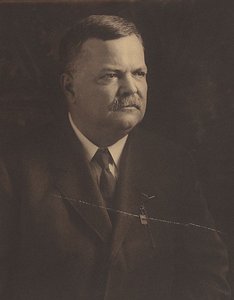
Snelle feiten over Frederick William Davis
- Full Name: Frederick William Davis
- Nationality: American
- Place Of Birth: United States
- Notable Artworks: ['The Tempest']
- Artistic Movement Or Style: Maritime Art
- Artists Who Influenced This Artist: ['Winslow Homer']
- Artists Or Movements Influenced By This Artist: ['Hudson River School']
Biografie kunstenaar
The Luminous Legacy of Frederick William Davis
Frederick William Davis stands as a singular figure in the burgeoning landscape of American Impressionist painting—a testament to an artistic vision nurtured amidst the rugged, mist-shrouded beauty of the Pacific Northwest. Born circa 1860, Davis emerged during a transformative era in American art, carving out a niche that balanced the precision of realism with the ethereal qualities of light and atmosphere. While history often highlights contemporaries such as Thomas Moran or Frederic Remington, Davis occupied a vital space within a smaller, influential cohort of artists dedicated to capturing the fleeting essence of coastal environments through a lens of profound sensitivity.
His formative years in Seattle, Washington, provided a rich tapestry of visual inspiration. During the late Victorian era, a period defined by both rapid industrial expansion and a romanticized fascination with the American frontier, Davis found his muse in the churning waters of the Puget Sound and its surrounding islands. His early explorations into watercolor landscapes revealed an immediate, instinctive ability to translate the sensory experience of moisture, light, and salt air onto paper. This foundational period was not merely about documentation but about an emotional response to the landscape, a trait that would define his lifelong pursuit of atmospheric perspective.
As his technical mastery deepened, Davis looked toward the masters of Europe to refine his approach. He was profoundly influenced by the Impressionist luminaries Claude Monet and Camille Pissarro, meticulously studying their revolutionary use of broken color and layered brushwork. By integrating these techniques, he achieved a remarkable synthesis: a style that maintained a sense of structural realism while embracing the expressive, shimmering qualities of light. This evolution allowed him to move beyond simple representation, instead inviting the viewer to feel the temperature of the breeze and the weight of the coastal fog.
A Journey Through Light and Instruction
The trajectory of Davis’s career was marked by a significant migration eastward, leading him to the vibrant art scene of New York City in 1893. This transition proved pivotal for both his personal development and his contribution to American art education. Establishing himself as a respected instructor at the prestigious Pratt Institute, Davis became a conduit for Impressionist ideals, disseminating his stylistic principles to a new generation of aspiring painters. His role as an educator ensured that the nuances of light-centric painting and the importance of color theory would continue to resonate within the American academic tradition.
Despite his presence in the urban art centers of the East Coast, Davis’s heart remained tethered to the natural grandeur of the American landscape. His versatility as a painter allowed him to traverse diverse terrains, from the rugged, salt-sprayed coastlines of Maine to the serene, rolling vistas of Vermont's Green Mountains. This breadth of subject matter showcased an unwavering commitment to portraying nature with both precision and poetic grace. Whether depicting the maritime drama of a ship navigating coastal swells or the quiet stillness of a mountain glade, his work remained anchored in a deep respect for the organic world.
The historical significance of Frederick William Davis lies in his ability to bridge the gap between the traditional landscape traditions of the 19th century and the modern, sensory-driven approach of Impressionism. His paintings serve as more than mere windows into the past; they are enduring studies of how light interacts with the physical world. Through his evocative use of color and his dedication to capturing the ephemeral, Davis helped establish a uniquely American maritime and coastal aesthetic that continues to captivate collectors and historians alike.