

 Bekijk op ware grootte
 Verstuur
 Delen
Delen
 Details bekijken
 Gids voor studentenkunstwerken

 Download
 Vergelijkbare items
 Röntgenonderzoek
 Diavoorstelling
 Statistieken
Zinc Yellow
 Oil On Canvas
- WallArt
- Abstract Expressionism
 1959
1959- Modern
 236.0 x 201.0 cm
 Chrysler Museum of Art
 Lees meer
De kunstwerken die op deze pagina worden weergegeven, zijn beschermd door de auteursrechtwetgeving, wat betekent dat het ons wettelijk niet is toegestaan om identieke reproducties te maken of te verkopen. Deze bescherming wordt gehandhaafd onder internationale overeenkomsten zoals de Conventie van Bern en door nationale wetgeving, waaronder de bepalingen van de Amerikaanse auteurswet - Titel 17. Alle rechten voorbehouden. Reproduceren of distribueren van afbeeldingen is niet toegestaan zonder uitdrukkelijke schriftelijke toestemming van WahooArt.com en de rechthebbenden.
Als een respectvol en legaal alternatief bieden wij op maat gemaakte, handgeschilderde kunstwerken aan die geïnspireerd zijn op het origineel. Onze bekwame en professionele kunstenaars bestuderen zorgvuldig de stijl, sfeer en artistieke essentie van het origineel om een nieuw, uniek werk te creëren dat dezelfde emotie oproept – terwijl het een op zichzelf staande, originele creatie blijft.
Deze methode voldoet volledig aan de auteursrechtwetgeving, omdat het niet gaat om het kopiëren of dupliceren van het beschermde kunstwerk. In plaats daarvan is er sprake van een creatieve herinterpretatie — een nieuw schilderij dat door het origineel wordt geïnspireerd, maar er niet identiek aan is.
Handgemaakte olieverfreproductie
Met de hand geschilderd in olieverf op canvas in uw gewenste maat en lijst, op bestelling gemaakt door onze kunstenaars. ( Schakel over naar print Schakel over naar digitale afbeeldingen)




P118B €10

P118H €10

P118W €10

P438Z €10

P508JH €12

P508YH €12

P805H €10

P805Z €10

P919BZ €10

P919G €10

P919XJ €10

P959ZH €10

P968JZ €12

W106C €8

W218G €10

W218JH €8

W218Y €10

W307PJ €10

W316G €10

W316PJ €8

W316Y €10

W398PJ €8

W4111J €10

W500HY €15

W500JH €15

W692G €12

W849H €8

W940BG €15

W953PJ €8




Kies uit onze vooraf ingestelde maten die overeenkomen met de originele verhoudingen van het kunstwerk.

U kunt uw eigen afmetingen invoeren om in een specifieke lijst of ruimte te passen. Als de door u gekozen maat niet overeenkomt met de verhoudingen van het originele beeld, zullen we het kunstwerk bijsnijden of het schilderij uitbreiden met extra handgeschilderde elementen. Een digitale mockup wordt ter goedkeuring naar u verzonden voordat de productie begint.
Houd er rekening mee dat de preview op het scherm niet de werkelijke uitsnede of uitbreiding weergeeft. Alleen de mockup toont de uiteindelijke compositie nauwkeurig.
Hoewel aangepaste afmetingen mogelijk zijn, raden we aan een maat uit de vooraf gedefinieerde lijst te selecteren om de originele verhoudingen te behouden.
Na de bestelling zal het team van OriginalUniqueArt.com per e-mail contact opnemen met de klant voor instructies en een mockup-voorbeeld sturen.
Wereldwijde levering () binnen 3 tot 4 weken in plaats van de standaard 5 weken. (13 oktober). Zonder concessies aan de kwaliteit.

Gratis wereldwijde expressverzending

Hoogwaardig linnen canvas

Volledige verzendverzekering

Garantie op terugbetaling van invoerrechten

Garantie op exacte kleurweergave

Retourbeleid van 100 dagen (alleen bij defecten)

100% Geld-terug-garantie

Korting bij meerdere afnames
 De optie voor glas is alleen beschikbaar bij een formaat kleiner dan 110 cm.

Zinc Yellow
Reproductiemethode
Formaat reproductie
-


Totaalprijs
€ 259
A Symphony of Contrast: The Raw Power of Zinc Yellow
In the pantheon of Abstract Expressionism, few works command the immediate, visceral attention of a room quite like Franz Kline’s Zinc Yellow. Completed in 1959, this monumental canvas serves as a breathtaking masterclass in reductive abstraction, where the boundaries between color and form dissolve into a singular, energetic event. At first glance, the viewer is met with an expansive, luminous field of yellow that seems to vibrate against the stark, structural interruptions of dark grey and black. It is not merely a painting; it is a physical presence. The work eschews traditional subject matter in favor of pure, unadulterated movement, inviting the observer to move beyond the search for recognizable figures and instead surrender to the rhythmic tension of the brushstrokes themselves.
The brilliance of this piece lies in its deceptive simplicity. While it may appear as a spontaneous outburst of emotion—a hallmark of the Action Painting movement—the composition is actually a result of profound, deliberate planning. Kline often utilized small oil studies to map out the architectural weight of his larger works, ensuring that each jagged stroke and heavy block of pigment achieved a perfect, precarious balance. This tension between spontaneity and control creates an intoxicating visual experience; the eye is pulled diagonally across the canvas, caught in a dance between the light-filled yellow expanse and the gravity-defying black forms that anchor the composition.
The Architecture of Emotion: Technique and Texture
To stand before a reproduction of Zinc Yellow is to witness the tactile legacy of the New York School. Kline was a master of impasto, applying oil paints with such density that the canvas transforms into a topographical map of artistic struggle. The thick, sculptural layers of pigment create palpable ridges and valleys, catching the light and casting minute shadows that change as one moves around the piece. This heavy application of paint lends the work a sense of permanence and weight, making it an ideal centerpiece for sophisticated interiors where texture is as vital as color.
The palette is intentionally restrained, yet its impact is maximalist. By limiting his vocabulary to the high-contrast relationship between yellow, black, and white, Kline achieves a clarity that transcends time. The white highlights do not merely sit atop the dark masses; they puncture them, acting as breaths of light that prevent the heavy blacks from becoming stagnant. For the collector or interior designer, this piece offers a unique versatility. Its bold, graphic nature allows it to anchor a minimalist modern space with authority, while its rich, painterly texture provides a necessary warmth and soul to more austere architectural settings.
A Legacy of Movement and Modernity
Historically, Zinc Yellow emerged from a period of intense artistic revolution. As part of the New York School, Kline worked alongside titans like Jackson Pollock and Willem de Kooning, yet he carved out a niche that was uniquely his own. While others sought total abstraction through drips and splatters, Kline utilized the language of structural geometry to convey emotional intensity. His work carries the echoes of the Old Masters—the dramatic chiaroscuro of Rembrandt and the commanding presence of Velázquez—reimagined for a mid-century world grappling with new forms of expression.
Ultimately, the enduring appeal of this masterpiece lies in its ability to evoke a sense of emotional release. There is a primal energy within these strokes that resonates with the human spirit, reflecting both the chaos and the underlying order of our existence. Whether viewed as a study in color theory or an exploration of gestural freedom, Zinc Yellow remains a profound statement of modern identity. It is a work that does not just decorate a wall; it transforms an environment, offering a window into the vigorous, searching heart of one of art history's most compelling visionaries.
Vragen & Antwoorden
Welke verzadiging en intensiteit vertoont "Zinc Yellow" door Franz Kline?
De kleuren van "Zinc Yellow" door Franz Kline vertonen een Clear Color Presence verzadiging met een Vivid intensiteit.
Welke emotie straalt het Abstract Expressionism-werk "Zinc Yellow" uit?
Binnen de Abstract Expressionism-stroming is "Zinc Yellow" vastgelegd met een Energetic toon.
In welke ruimte wordt het tonen van "Zinc Yellow" aanbevolen, gezien het kleurenpalet?
De Pastels kleuren van "Zinc Yellow" door Franz Kline passen perfect bij de aanbevolen ruimte: een Living Room.
Welke nationale herkomst ligt ten grondslag aan de Abstract Expressionism van "Zinc Yellow"?
"Zinc Yellow" werd gecreëerd door Franz Kline, geboren in Verenigde Staten van Amerika, binnen de Abstract Expressionism-stroming. De herkomst van de kunstenaar verbindt het werk met Abstract Expressionism, zoals beoefend door kunstenaars uit Verenigde Staten van Amerika.
Waar kan ik een voorproefje van "Zinc Yellow" bekijken?
Op de Voorvertoning-pagina van "Zinc Yellow" kunt u het kunstwerk bekijken voordat u bestelt.
Hoe wordt de stemming van "Zinc Yellow" door Franz Kline beschreven?
"Zinc Yellow" heeft een Bold atmosfeer.
Hoe kan ik "Zinc Yellow" door Franz Kline bekijken als een diavoorstelling?
Er is een diavoorstelling beschikbaar: de Diavoorstelling-pagina van "Zinc Yellow" door Franz Kline.
Hoe bekend is "Zinc Yellow" van Franz Kline?
Het populariteitsniveau dat is vastgelegd voor "Zinc Yellow" door Franz Kline is Iconic.
Biografie van de kunstenaar
Franz Kline (1910-1962): Pioneer of Abstract Expressionism
Franz Kline, a pivotal figure in the Abstract Expressionist movement, remains an artist whose work resonates with raw power and emotional depth. Born in Wilkes-Barre, Pennsylvania, in 1910, his life was marked by early hardship – the suicide of his father when he was just seven years old cast a long shadow, influencing a sensibility that would later find expression in the stark contrasts defining his art. This formative experience led to a nomadic youth and eventual enrollment at Girard College, a Philadelphia boarding school for boys who had lost their fathers. It was here, amidst structured discipline, that Kline’s artistic inclinations began to surface, nurtured by traditional training in illustration and drafting. He continued his studies at Boston University and later honed his skills at the Heatherley School of Fine Art in London, immersing himself in the works of the Old Masters – Rembrandt, Velázquez, El Greco, Goya, Dürer – and absorbing the nuances of Japanese prints. These early influences, though seemingly distant from his eventual abstract style, laid a foundation for his understanding of composition, light, and the expressive potential of line.Early Life and Influences
Kline’s childhood was profoundly shaped by tragedy—the untimely death of his father instilled in him a sensitivity to loss that would permeate his artistic vision. He moved to Lehighton, Pennsylvania, where he attended high school, developing an interest in drawing and drafting as formative experiences. His fascination with the visual arts deepened during his time at Boston University, where he studied art alongside fellow artists who were exploring similar innovations. Simultaneously, Kline’s immersion in European art traditions—particularly Rembrandt’s masterful use of chiaroscuro and Velázquez’s meticulous observation of detail—provided him with invaluable technical skills and aesthetic sensibilities. The influence of Japanese prints, characterized by their bold lines and flattened perspective, further broadened his artistic horizons, introducing him to a visual language that prioritized simplicity and expressive gesture. These influences would prove crucial in shaping Kline’s distinctive approach to abstraction.From Representation to Simplification: The Emergence of Abstract Expressionism
Kline’s artistic journey didn’t begin with abstraction. Initially, he pursued figurative painting—creating landscapes, cityscapes, portraits, and murals—capturing the world around him with a meticulous attention to detail. However, his work began to evolve in response to encounters with influential artists like Willem de Kooning, who encouraged him to experiment with larger canvases and bolder brushstrokes. De Kooning’s suggestion to project Kline’s sketches onto a wall using a Bell-Opticon projector—an act that dramatically enlarged the image — transforming it into its essential strokes — proved transformative for Kline. This experience unlocked his latent potential for abstraction, prompting him to abandon representational concerns in favor of pure gesture and line. He embraced the principles of Action Painting championed by Harold Rosenberg, recognizing that art should be an active process—a confrontation between artist and material—rather than merely a passive reflection of reality.The Language of Black and White: Defining Kline’s Aesthetic
Kline’s mature style is instantly recognizable for its monochromatic palette—primarily black on white. This wasn’t a limitation but a deliberate choice, reflecting his belief that the white was as crucial as the black in conveying emotion and creating visual tension. He meticulously crafted his paintings using acrylic paints on large canvases, applying broad brushstrokes with house-painting brushes to achieve an effect of monumental scale and textural richness. His technique involved projecting Kline’s sketches onto a wall using a Bell-Opticon projector—an act that dramatically enlarged the image — transforming it into its essential strokes — proving revelatory for Kline. He saw his method less as a means to express himself than as a way to create a physical engagement with the viewer, mirroring the approach of Action Painters like Jackson Pollock and Willem de Kooning. The resulting works weren’t merely paintings; they were *events* — energetic confrontations between darkness and light, control and chaos. Kline’s unwavering commitment to this aesthetic—characterized by stark contrasts and simplified forms—established him as a cornerstone of American Abstract Expressionism.Legacy and Recognition
Franz Kline achieved international acclaim during his lifetime, becoming one of the most celebrated figures in the New York School alongside Pollock, de Kooning, Robert Motherwell, John Ferren, and Lee Krasner. His paintings were exhibited at prestigious galleries like Egan Gallery and Sidney Janis Gallery, participated in the Venice Biennale in 1960 (receiving the Italian Ministry of Public Instruction Prize), and taught at Black Mountain College and Pratt Institute. Kline’s influence extended beyond Abstract Expressionism, subtly shaping the development of Minimalism—a movement that sought to reduce art to its elemental forms. His rejection of narrative content resonated with artists like Donald Judd and Richard Serra, who championed a pared-down aesthetic focused on geometric precision and materiality. Despite his tragically premature death in 1962 from rheumatic heart disease, Kline’s legacy continues to inspire artists today—a testament to a life dedicated to artistic exploration and a singular contribution to the history of modern art.
Franz Kline
1910 - 1962 , Verenigde Staten van Amerika
Snelle feiten
- Artistic Movement Or Style: Abstract Expressionisme
- Artists Or Movements Influenced By This Artist: ['Minimalisme']
- Artists Who Influenced This Artist:
- Rembrandt
- Velasquez
- El Greco
- De Kooning
- Date Of Birth: 23 mei 1910
- Date Of Death: 13 mei 1962
- Full Name: Franz Kline
- Nationality: Amerikaans
- Notable Artworks:
- Lehighton
- Palladio
- Kitzker
- Place Of Birth: Wilkes-Barre, USA
Gerelateerde artikelen

Meesterwerken in Zwart: Top 10 Schilderijen Gedreven door Donkere Tinten | OriginalUniqueArt.nl
Ontdek de kracht van donker! Verlies jezelf in onze top 10 zwarte schilderijen, van Caravaggio tot Manet. Leer over meesterwerken, technieken & emotie. Museumkwaliteit reproducties op OriginalUniqueArt.com – Kunst voor uw interieur.

Kandinsky's Meesterwerken: 25 Abstracte Kunstparels voor uw Interieur | OriginalUniqueArt
Ontdek de 25 meest iconische werken van Wassily Kandinsky! Duik in zijn abstracte wereld vol kleur, expressionisme & spirituele diepgang. Vind museumkwaliteit reproducties en interieurinspiratie op OriginalUniqueArt.com.

Top 10 Abstract Expressionisme Meesterwerken: Kunst voor uw Interieur | OriginalUniqueArt.com
Ontdek de 10 meest invloedrijke werken van Abstract Expressionisme! Leer over Jackson Pollock, Mark Rothko & meer. Museumkwaliteit kunst reproducties voor uw interieur. Bekijk de collectie op OriginalUniqueArt.com.
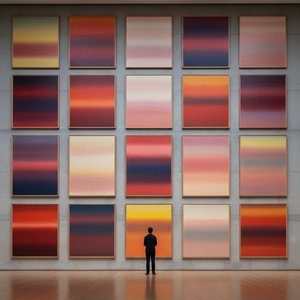
Mark Rothko's Top 25 Meesterwerken: Kleur, Emotie & Abstracte Kunst voor uw Interieur
Ontdek de top 25 meesterwerken van Mark Rothko! Duik diep in zijn emotionele kleurveldschilderijen en abstract expressionisme. Vind museumkwaliteit Rothko reproducties & interieurinspiratie op OriginalUniqueArt.com.

Top 10 Meesterwerken van de Geometrische Abstractie | OriginalUniqueArt.nl
Ontdek de 10 meest invloedrijke meesterwerken van de geometrische abstractie! Van Mondriaan tot Malevich, leer over kunstenaars, technieken & kleuren. Museumkwaliteit reproducties op OriginalUniqueArt.com – voor een unieke interieurstijl.
