

 Verstuur
 Delen
Delen
 Details bekijken

 Download
 Vergelijkbare werken
 Diavoorstelling
1970 (New Year
 Gelatin Silver Print
- Photo
- Bauhaus
 1970
1970- Modern
 17.0 x 12.0 cm
 Bauhaus Dessau Stiftung
 Lees meer
Giclée / Kunstafdrukken
Giclée- of canvasafdruk van museumkwaliteit met een snelle productie en flexibele afwerkingsmogelijkheden. ( Bestel een handgeschilderde reproductie van dit verzamelobject Naar afbeelding wisselen)




































Kies uit onze vooraf ingestelde maten die overeenkomen met de originele verhoudingen van het kunstwerk.

U kunt uw eigen afmetingen opgeven om in een specifieke lijst of ruimte te passen. Als de door u gekozen maat niet overeenkomt met de proporties van het originele kunstwerk, zullen wij de afbeelding bijsnijden of uitbreiden met een gespiegelde of effen rand. Een digitaal mockup wordt ter goedkeuring naar u verzonden voordat de productie begint.
Houd er rekening mee dat de preview op het scherm de werkelijke bijsneding of uitbreiding niet weergeeft. Alleen de mockup toont de uiteindelijke compositie nauwkeurig.
Hoewel aangepaste maten beschikbaar zijn, raden wij aan een afmeting uit de vooraf bepaalde lijst te kiezen om de originele proporties te behouden.
Wereldwijde levering () binnen 2 weken in plaats van de standaard 4/5 weken. (8 augustus)

Gratis wereldwijde expressverzending

Hoogwaardig linnen canvas

Volledige verzendverzekering

Garantie op terugbetaling van invoerrechten

Garantie op exacte kleurweergave

60 dagen retourbeleid (alleen bij defecten)

100% Geld-terug-garantie

Korting bij meerdere afnames
 De optie voor glas is alleen beschikbaar bij een formaat kleiner dan 110 cm.

1970 (New Year
Giclée / Kunstafdrukken
Formaat reproductie
-


Totaalprijs
$ 81
Beschrijving verzamelobject
A Moment Frozen in Time: The Essence of Franz Ehrlich’s 1970
In the quiet intersection of memory and minimalism, Franz Ehrlich’s "1970 (New Year)" stands as a profound meditation on the passage of time. This evocative work, captured through the delicate medium of a gelatin silver print, presents us with an intimate glimpse into the artist's contemplative universe. At first glance, the eye is drawn to the stark, monochromatic simplicity of a single chair, its round seat bearing the enigmatic number 19. There is a haunting stillness in this composition, a sense of a world paused, where the weight of a new decade begins to settle upon the objects we inhabit. The interplay of light and shadow within this black and white photograph breathes life into the wooden textures and metal framework, transforming a simple piece of furniture into a vessel for profound reflection.
The technical mastery behind this piece lies in its ability to evoke depth through subtle tonal gradations. As a gelatin silver print, the work possesses a rich, velvety quality that allows the viewer to feel the grain of the wood and the cold strength of the metal. Ehrlich, a man whose life was shaped by the rigorous discipline of the Bauhaus, utilizes a compositional language that is both sparse and deeply intentional. Every line serves a purpose, guiding the viewer's gaze toward the central motif—the number 19—which acts as a symbolic anchor. This numerical mark, nestled within the circular seat, suggests a countdown, a marking of progress, or perhaps a quiet celebration of survival and continuity amidst the shifting tides of history.
To understand the emotional resonance of "1970," one must consider the historical soul of its creator. Franz Ehrlich’s journey was one of immense resilience; having navigated the political upheavals of 20th-century Germany and the hardships of imprisonment, his art often carries an undercurrent of quiet strength and structural integrity. In this work, we see the legacy of the Bauhaus movement—the marriage of form and function—reimagined through a lens of personal introspection. The chair is not merely an object of utility; it is a symbol of stability and presence. For the collector or the interior designer, this piece offers more than just aesthetic beauty; it provides a focal point of intellectual depth, making it an ideal centerpiece for spaces that value modernism, historical gravity, and the poetic power of minimalism.
Integrating a high-quality reproduction of this masterpiece into a curated collection allows for a continuous dialogue with the avant-garde past. Whether placed in a contemporary gallery setting or a sophisticated residential study, "1970 (New Year)" invites conversation about identity, time, and the enduring beauty of the essential. It is a work that does not shout for attention but rather commands it through its dignified restraint, offering an eternal sense of peace to any environment it graces.
Biografie van de kunstenaar
vroege jaren en opleiding
Franz Ehrlich, een vooraanstaande Duitse architect, kalligraaf en grafisch ontwerper, werd geboren in 1907. Zijn vormende jaren werden gekenmerkt door een aangeboren aanleg voor de kunsten, wat hem ertoe bracht om van 1927 tot 1930 in te schrijven bij het Bauhaus in Dessau. Deze prestigieuze instelling speelde een cruciale rol in de vorming van Ehrlichs artistieke perspectief en introduceerde hem in de avant-garde bewegingen van die tijd.artistieke carrière en communistische verbondenheid
Ehrlichs band met de communistische partij had een diepgaande impact op zijn leven en carrière. In 1935 werd hij gearresteerd en gevangen gezet door het nazi-regime, een gebeurtenis die de koers van zijn artistieke ambities ingrijpend veranderde. Ondanks deze enorme uitdagingen bleef Ehrlich bijdragen aan de kunstwereld, waarmee hij een nalatenschap achterliet die zowel inspirerend als aangrijpend is.opmerkelijke werken
Enkele van Ehrlichs meest bijzondere werken omvatten:- 800 jaar. Das Buch [Het Boek]. Grondplan en aanzichten (expositie-displayrekken, Leipziger Messe), een getuigenis van zijn innovatieve benadering van ontwerp en architectuur.
- Uitvoering van het huis van prof. dr. Baumann (funderingplan), waarin zijn expertise in architectonische planning naar voren komt.
- 1933 (foto-sculpturaal advertentieproject), een unieke versmelting van fotografie en beeldhouwkunst die zijn experimentele aard onderstreept.
musea en collecties met het werk van Ehrlich
OriginalUniqueArt.com herbergt een uitgebreide collectie van Ehrlichs werken, waaronder de bovengenoemde stukken. Ook de Bauhaus Dessau Foundation (Dessau-Roßlau, Duitsland) vormt een belangrijk depot van zijn artistieke inspanningen.nalatenschap en impact
De bijdragen van Franz Ehrlich aan de kunstwereld zijn veelzijdig en weerspiegelen zijn brede scala aan interesses en talenten. Zijn ervaringen, zowel creatief als persoonlijk, bieden waardevolle inzichten in het snijvlak van kunst en politiek tijdens een cruciaal moment in de Duitse geschiedenis.- Bekijk meer van de werken van Ehrlich op https://OriginalUniqueArt.com/@/franz-ehrlich
- Ontdek de Bauhaus Dessau Foundation en haar collectie via Bauhaus Dessau Foundation (Dessau-Roßlau, Duitsland)
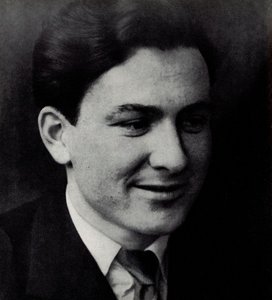
Franz Ehrlich
1907 - 1984 , Duitsland
Snelle feiten
- Artistic Movement Or Style: Bauhaus, Expressionisme
- Artists Or Movements Influenced By This Artist:
- Bauhaus
- Jonge Communistische Bond
- Artists Who Influenced This Artist:
- Walter Gropius
- Moholy-Nagy
- Klee
- Joost Schmidt
- Date Of Birth: 1907
- Date Of Death: 1984
- Full Name: Franz Ehrlich
- Nationality: Duits
- Notable Artworks:
- 800 YRS. FRAMEWORK WALL 3
- Untitled (HKB I of II)
- Schilderij met viool
- Place Of Birth: Reuth, Duitsland
Gerelateerde artikelen

Top 10 Witte Meesterwerken: Kunstgeschiedenis & Interieurinspiratie
Ontdek de top 10 witte meesterwerken uit de kunstgeschiedenis! Van Monet tot Mondriaan, bewonder abstracte vormen & serene kleuren. Vind museumkwaliteit reproducties en interieurinspiratie op OriginalUniqueArt.com.

Meesterwerken in Zwart: Top 10 Schilderijen Gedreven door Donkere Tinten | OriginalUniqueArt.nl
Ontdek de kracht van donker! Verlies jezelf in onze top 10 zwarte schilderijen, van Caravaggio tot Manet. Leer over meesterwerken, technieken & emotie. Museumkwaliteit reproducties op OriginalUniqueArt.com – Kunst voor uw interieur.
Kazimir Malevich's Top 25 Meesterwerken: Abstracte Kunst voor Uw Interieur | OriginalUniqueArt
Ontdek de 25 meest iconische werken van Kazimir Malevich, pionier van het suprematisme en abstracte kunst. Van 'Zwarte Vierkant' tot 'Witte op Wit', leer over zijn invloedrijke stijl & koop museumkwaliteit reproducties voor uw interieur. Explore the full collection online!
Top 10 Minimalistische Kunstwerken voor een Rustige Interieurstijl | OriginalUniqueArt.com
Ontdek 10 minimalistische kunstwerken van Malevich tot Rothko. Laat u inspireren door abstracte vormen, rustige kleuren & de kracht van eenvoud. Museumkwaliteit reproducties op OriginalUniqueArt.com.
Shadow & Soul: Why Black & White Photography Remains the Ultimate Power Move in Modern Art
Discover why black & white photography remains a powerful force in contemporary art. Explore the impact of light, shadow, and texture through a visual journey of monochrome mastery and learn how to elevate your space with timeless grayscale aesthetics.



