

 Bekijk op ware grootte
 Verstuur
 Delen
Delen
 Details bekijken
 Gids voor studentenkunstwerken

 Download
 Vergelijkbare items
 Röntgenonderzoek
 Diavoorstelling
 Statistieken
Three Monkeys Stealing Fruit
 Oil On Canvas
- WallArt
- Baroque
 1640
1640 98.0 x 147.0 cm
 Louvre
 Lees meer
Giclée / Kunstafdrukken
Giclée- of canvasafdruk van museumkwaliteit met een snelle productie en flexibele afwerkingsmogelijkheden. ( Koop handgeschilderd kunstwerk Schakel over naar digitale afbeeldingen)




P118B €10

P118H €10

P118W €10

P438Z €10

P508JH €12

P508YH €12

P805H €10

P805Z €10

P919BZ €10

P919G €10

P919XJ €10

P959ZH €10

P968JZ €12

W106C €8

W218G €10

W218JH €8

W218Y €10

W307PJ €10

W316G €10

W316PJ €8

W316Y €10

W398PJ €8

W4111J €10

W500HY €15

W500JH €15

W692G €12

W849H €8

W940BG €15

W953PJ €8




Kies uit onze vooraf ingestelde maten die overeenkomen met de originele verhoudingen van het kunstwerk.

U kunt uw eigen afmetingen opgeven om in een specifieke lijst of ruimte te passen. Als de door u gekozen maat niet overeenkomt met de proporties van het originele kunstwerk, zullen wij de afbeelding bijsnijden of uitbreiden met een gespiegelde of effen rand. Een digitaal mockup wordt ter goedkeuring naar u verzonden voordat de productie begint.
Houd er rekening mee dat de preview op het scherm de werkelijke bijsneding of uitbreiding niet weergeeft. Alleen de mockup toont de uiteindelijke compositie nauwkeurig.
Hoewel aangepaste maten beschikbaar zijn, raden wij aan een afmeting uit de vooraf bepaalde lijst te kiezen om de originele proporties te behouden.
Wereldwijde levering () binnen 2 weken in plaats van de standaard 4/5 weken. (10 oktober)

Gratis wereldwijde expressverzending

Hoogwaardig linnen canvas

Volledige verzendverzekering

Garantie op terugbetaling van invoerrechten

Garantie op exacte kleurweergave

Retourbeleid van 100 dagen (alleen bij defecten)

100% Geld-terug-garantie

Korting bij meerdere afnames
 De optie voor glas is alleen beschikbaar bij een formaat kleiner dan 110 cm.

Three Monkeys Stealing Fruit
Giclée / Kunstafdrukken
Formaat reproductie
-


Totaalprijs
€ 70
A Symphony of Abundance: Frans Snyders’ “Three Monkeys Stealing Fruit”
Frans Snyders' "Three Monkeys Stealing Fruit," painted around 1640-1649, isn’t merely a depiction of mischievous primates; it’s a vibrant microcosm of Renaissance abundance and the intoxicating allure of earthly delights. Born in Antwerp during a period of artistic ferment, Snyders emerged as a master of still life, animal painting, and dynamic market scenes – genres he elevated with an unparalleled sense of theatricality and sensory detail. This particular work, housed within the Louvre’s collection, exemplifies his signature style: a riotous celebration of textures, colors, and movement that draws the viewer into a world brimming with sensual pleasure.
The painting immediately assaults the senses. A table laden with an astonishing array of fruit – plump apples, glistening grapes, and vibrant pears – dominates the composition. These aren’t simply objects; they are symbols of prosperity, fertility, and the fleeting nature of earthly pleasures. Snyders meticulously renders each piece, capturing the subtle variations in color, texture, and sheen with a remarkable level of realism. The artist's masterful use of chiaroscuro – the dramatic interplay of light and shadow – further enhances the sense of depth and volume, making the fruit appear almost tangible to the viewer.
The Theater of Animal Life
At the heart of this opulent tableau stand three monkeys, engaged in a brazen act of theft. These aren’t caricatures; they are portrayed with an intelligence that hints at cunning and mischief. Their postures are dynamic, their eyes gleaming with anticipation, and their movements suggest a carefully orchestrated plan. Snyders wasn't simply depicting animals; he was exploring the primal instincts – greed, curiosity, and playful rebellion – that reside within them. The monkeys’ actions serve as a subtle commentary on human desires and the temptation to indulge in worldly pleasures.
Snyders’ skill extends beyond mere representation. He imbues the scene with a palpable sense of drama and movement. The composition is carefully balanced, drawing the eye from one element to another. The monkeys' gestures, the scattering of fruit, and even the subtle shadows create an illusion of continuous action – as if the viewer has stumbled upon a secret moment in a bustling marketplace.
A Master of His Time
Snyders’ work is deeply rooted in the artistic traditions of Antwerp during the 17th century. He was influenced by artists like Pieter Brueghel the Younger, whose depictions of peasant life and market scenes provided a foundation for Snyders' own explorations of everyday subjects. However, Snyders pushed beyond mere imitation, developing his own distinctive style characterized by an exuberant energy and a profound appreciation for the beauty of the natural world. His collaboration with Peter Paul Rubens, particularly during the lavish decorations for the Spanish court, further cemented his reputation as one of the most important artists of his generation.
Symbolism and Emotional Resonance
Beyond its visual appeal, “Three Monkeys Stealing Fruit” is rich in symbolic meaning. The act of theft represents a challenge to established order – a reminder that even in the midst of abundance, there will always be those who seek to acquire more. The monkeys themselves can be interpreted as symbols of temptation and folly, urging viewers to consider the consequences of their desires. Yet, despite its cautionary message, the painting ultimately evokes a sense of joy and delight. The sheer profusion of fruit, combined with the monkeys’ playful antics, creates an atmosphere of lightheartedness and exuberance – a celebration of life's simple pleasures.
Reproductions of this captivating artwork offer a remarkable opportunity to bring Snyders’ vibrant vision into your home or office. A hand-painted reproduction captures not only the visual details but also the artist’s masterful use of light, shadow, and color, creating an immersive experience that transports you back to 17th-century Antwerp.
Vragen & Antwoorden
In welk jaar werd "Three Monkeys Stealing Fruit" gemaakt?
De creatie van "Three Monkeys Stealing Fruit" door Frans Snyders dateert uit 1640.
Welk onderwerp en welke sfeer combineert "Three Monkeys Stealing Fruit" door Frans Snyders?
"Three Monkeys Stealing Fruit" door Frans Snyders verbeeldt monkeys, fruit, theft, baroque, animals, snyders, antwerp in een Dramatic stemming. Het onderwerp en de atmosfeer beschrijven samen het werk.
Is "Three Monkeys Stealing Fruit" beschikbaar als een fine art print?
Een print van "Three Monkeys Stealing Fruit" door Frans Snyders kan rechtstreeks worden besteld op deze pagina: een fine art print op katoenen canvas of archiefwaardig canvaspapier.
Waar past "Three Monkeys Stealing Fruit" binnen het oeuvre van Frans Snyders?
Binnen het oeuvre van Frans Snyders past "Three Monkeys Stealing Fruit" binnen de Baroque-stijl, samen met de thema's van baroque exuberance, flemish tradition, abundance, market scenes, life, animal studies, hunting motifs, rubens’ collaboration.
Welke techniek is gebruikt voor "Three Monkeys Stealing Fruit" door Frans Snyders?
Frans Snyders gebruikte de Oil On Canvas-techniek voor "Three Monkeys Stealing Fruit". De techniek bepaalt de materiële aard van het originele werk.
Op welke leeftijd maakte Frans Snyders "Three Monkeys Stealing Fruit"?
Toen "Three Monkeys Stealing Fruit" werd gemaakt in 1640, was Frans Snyders - geboren in 1579 - 61 jaar oud.
Wie heeft "Three Monkeys Stealing Fruit" gemaakt?
"Three Monkeys Stealing Fruit" is gemaakt door Frans Snyders. De informatie op deze pagina beschrijft het originele werk van Frans Snyders.
Biografie van de kunstenaar
Een Meester van de Overvloed: Het Leven en Werk van Frans Snyders
Frans Snyders, geboren in Antwerpen in 1579, neemt een unieke en levendige positie in binnen het pantheon van Vlaamse barokschilders. Terwijl namen als Rubens en Van Dijck vaak de discussies over deze periode domineren, was Snyders’ bijdrage – een verbluffende specialisatie in stillevens, dierenschilderingen en bruisende markttafereelen – niet minder significant. Hij schilderde niet louter objecten; hij vierde overvloed, genoot van textuur en ving een vluchtig moment van aardse vreugde. Zijn vader, Jan Snijders, runde een populaire herberg waar kunstenaars graag kwamen, waardoor de jonge Frans al vroeg ondergedompeld werd in een wereld vol creatieve energie. Deze omgeving bevorderde ongetwijfeld zijn artistieke aanleg en het wordt zelfs gezegd dat de gerenommeerde schilder Frans Floris ooit zijn fortuin binnen die muren verspilde – een kleurrijk verhaal dat hint naar de levendige sfeer waarin Snyders opgroeide. Hij begon zijn opleiding bij Pieter Bruegel de Jongere, waar hij lessen leerde over compositie en detail, waarna hij zijn vaardigheden verfijnde onder Hendrick van Balen, die ook Anthony van Dyck begeleidde. Deze solide basis stelde hem in staat om in 1602 meester te worden binnen het Antwerpse Sint-Lucasgilde, waarmee de formele start van zijn productieve carrière een feit was.Samenwerking en Innovatie: Snyders’ Artistieke Ontwikkeling
Snyders’ artistieke reis was er geen van solitaire inspanning; samenwerking stond centraal in zijn praktijk. Hij vestigde zich snel als een gewilde partner voor vooraanstaande kunstenaars van die tijd, met name Peter Paul Rubens. Hun relatie bleek opmerkelijk vruchtbaar, waarbij Snyders vaak de taak kreeg om de dieren en stillevenselementen binnen Rubens’ grootschalige composities te schilderen. Het jachtpaviljoen Torre de la Parada in Spanje getuigt van hun gecombineerde genialiteit – Snyders voerde er meer dan zestig dierschilderijen uit op basis van ontwerpen van Rubens. Deze samenwerking ging niet alleen over het uitvoeren van opdrachten; het was een dynamische uitwisseling van ideeën, die beide kunstenaars naar nieuwe niveaus van technische en expressieve prestaties duwde. Naast Rubens werkte Snyders ook samen met Anthony van Dyck, Jacob Jordaens en Abraham Janssens, wat zijn veelzijdigheid en aanpassingsvermogen aantoont. Hij was echter niet louter een accessoire voor deze meesters. Hij pionierde met een eigen stijl gekenmerkt door dynamische composities, een meesterlijke weergave van texturen – van de glans van fruit tot de ruwe huid van wild – en een levendig gevoel van realisme dat zijn onderwerpen tot leven bracht. Snyders bedacht in feite het onafhankelijke dier-stillevensgenre, waarbij hij verder ging dan traditionele afbeeldingen van jachttrofeeën om de inherente schoonheid en vitaliteit van de natuurlijke wereld te verkennen.Een Feest voor de Ogen: Thema’s en Technieken
De kernonderwerpen in Snyders’ werk draaien om aardse genoegens – de overvloed van de markt, de spanning van de jacht, de eenvoudige elegantie van een goed gevulde voorraadkast. Zijn markttafereelen zijn bijzonder boeiend, vol met figuren, overvolle manden en een bijna tastbare energie. Hij schuwt het niet om de realiteit van voedselproductie af te beelden; naast onberispelijk fruit en groenten kan men geplukte vogels of vers gevangen vis aantreffen, wat kijkers herinnert aan de cyclus van leven en voeding. Zijn stillevens zijn geen statische arrangementen, maar dynamische displays die uitnodigen tot interactie. Snyders bezat een buitengewoon vermogen om licht en schaduw vast te leggen, waardoor hij een gevoel van diepte en volume creëerde dat zijn onderwerpen bijna tastbaar maakt. Hij gebruikte een losse, schilderachtige penseelstreek, vooral bij het weergeven van vacht en veren, waarmee hij een opmerkelijk niveau van realisme bereikte zonder artistieke expressie op te offeren. De Voorraadkast is bijvoorbeeld een verbluffend voorbeeld van deze techniek – een chaotische maar harmonieuze rangschikking van voedingsmiddelen en keukengerei, badend in dramatisch licht. De aandacht van de kunstenaar voor detail is minutieus, maar voelt nooit overdreven pietluttig aan; integendeel, het draagt bij aan het algehele gevoel van overvloed en vitaliteit.Nalatenschap en Blijvende Invloed
De impact van Frans Snyders op de ontwikkeling van stillevens en dierschilderkunst reikt verder dan zijn eigen levenstijd. Hij zette een nieuwe standaard voor realisme en dynamiek in deze genres, waardoor hij generaties kunstenaars beïnvloedde die hem volgden. Zijn werk baande de weg voor latere meesters als Jean-Baptiste Oudry en François Desportes, die de kunst van het dierenportret verder verfijnden. Snyders’ invloed is ook zichtbaar in de Nederlandse Gouden Eeuw stillevens traditie, waar kunstenaars als Willem Claeszoon Heda en Pieter Claesz een vergelijkbare focus op textuur, licht en compositie omarmden. Hij was niet alleen een bekwame technicus, maar ook een scherpzinnige observator van de natuurlijke wereld, die haar schoonheid en complexiteit met opmerkelijke gevoeligheid vastlegde. Zijn schilderijen blijven tot op de dag van vandaag publiek boeien, bieden een blik in het levendige artistieke landschap van 17e-eeuws Antwerpen en herinneren ons aan de blijvende kracht van kunst om de eenvoudige genoegens van het leven te vieren. Zijn uitgebreide collectie, verworven door Matthijs Musson na zijn dood in 1657, zorgde ervoor dat zijn nalatenschap kunstenaars nog eeuwenlang zou blijven inspireren.
Frans Snyders
1579 - 1657 , België
Snelle feiten
- Artistic Movement Or Style: Barok
- Artists Or Movements Influenced By This Artist: ['Jean-Baptiste Oudry']
- Artists Who Influenced This Artist: ['Pieter Brueghel II']
- Date Of Birth: 1579
- Date Of Death: 1657
- Full Name: Frans Snyders
- Nationality: Vlaams
- Notable Artworks: ['De Voorraadkamer']
- Place Of Birth: Antwerpen, België
Gerelateerde artikelen
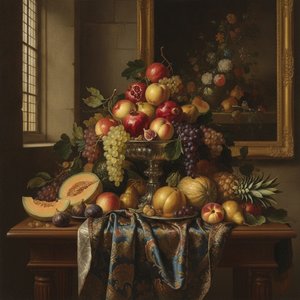
Nature's Bounty: The Art History of Fruit Arrangement Masterpieces and the Baroque Still Life Tradition
Explore the profound beauty of fruit arrangement masterpieces. From Dutch Golden Age opulence to Baroque chiaroscuro, discover the art history, symbolism, and timeless elegance of classical still life paintings for the discerning collector.

The Bountiful Still Life: Symbolism & Artistic Representation of Fruit Across Art History
Explore the rich history of still life painting & the symbolism of fruit across art movements. Discover masterpieces from Caravaggio to Cézanne with OriginalUniqueArt – expert guidance & museum-quality reproductions.
Animalia: De Blijvende Aanwezigheid van Dieren in Kunst en Interieurontwerp
Ontdek de betekenis en schoonheid van dierenkunst door de eeuwen heen. Laat u inspireren voor uw interieur met onze collectie schilderijen & reproducties bij .

Silent Narratives: Exploring the Enduring Appeal of Still Life Painting Across Centuries
Explore the rich history of still life painting with OriginalUniqueArt. Discover Dutch Masters, decode vanitas symbolism & learn about collecting timeless art. Expert insights and museum-quality reproductions.
Beastly Brushstrokes: A Historical Journey Through Animal Painting & Aesthetic Movements
Explore the rich history of animal painting across cultures & movements. Discover iconic artists, symbolism, collecting trends & expert art consultation at OriginalUniqueArt.com.
