Text size

() ·

A painting made for you, by hand

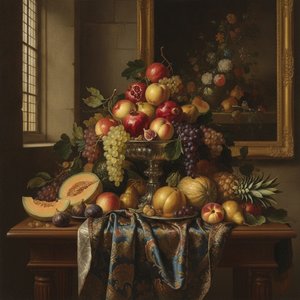
Fruit Stall

Handgemaakte olieverfreproductie

Met de hand geschilderd in olieverf op canvas in uw gewenste maat en lijst, op bestelling gemaakt door onze kunstenaars. ( Schakel over naar print Schakel over naar digitale afbeeldingen)

Beschrijving verzamelobject

Experience the vibrant abundance of Frans Snyders' 'Fruit Stall' (1618). A dynamic Baroque masterpiece showcasing a bustling marketplace filled with fresh produce and captivating figures.

Biografie kunstenaar

Snyders' Artistieke Ontwikkeling</h2> Snyders' artistieke reis was er geen van eenzame inspanning; samenwerking stond centraal in zijn praktijk. Hij vestigde zich snel als een gewilde partner voor vooraanstaande kunstenaars van die tijd

from ·

Chapter 1

How large should it be?

Slide to change the size; the picture on the left shows the frame at its real width. The proportions of the original are kept.

Standaardformaat
op maat gemaakt
CM
INCH

Kies uit onze vooraf ingestelde maten die overeenkomen met de originele verhoudingen van het kunstwerk.

breedte
hoogte

Voer de breedte en hoogte in die u nodig heeft, passend bij uw lijst of uw muur. Omdat dit handgeschilderd is, kan de kunstenaar bij een afmeting met een andere beeldverhouding iets meer rondom het schilderij schilderen of juist iets meer weglaten — u kiest zelf. Wij sturen u een digitaal mockup ter goedkeuring voordat het schilderwerk begint. De afbeelding die op deze pagina wordt getoond, is niet het uiteindelijke resultaat — alleen de mockup geeft dit weer.


Chapter 2

How should it arrive?

Choose the edges of the stretched canvas

Choose your frame

Corner sample of the WhiteWrap canvas edge finish, stretched on massief hout bars
White €1
Corner sample of the BlurSideWrap canvas edge finish, stretched on massief hout bars
Blurside €1
Corner sample of the ExtendedWrap canvas edge finish, stretched on massief hout bars
Extended €1
Corner sample of the P118B picture frame: gegoten polystyreen, 5 cm wide and 3 cm thick
P118B €10
Corner sample of the P118H picture frame: gegoten polystyreen, 5 cm wide and 3 cm thick
P118H €10
Corner sample of the P118W picture frame: gegoten polystyreen, 5 cm wide and 3 cm thick
P118W €10
Corner sample of the P438Z picture frame: gegoten polystyreen, 5.5 cm wide and 3.5 cm thick
P438Z €10
Corner sample of the P508JH picture frame: gegoten polystyreen, 7 cm wide and 3.5 cm thick
P508JH €12
Corner sample of the P508YH picture frame: gegoten polystyreen, 7 cm wide and 3.5 cm thick
P508YH €12
Corner sample of the P805H picture frame: gegoten polystyreen, 5 cm wide and 3.5 cm thick
P805H €10
Corner sample of the P805Z picture frame: gegoten polystyreen, 5 cm wide and 3.5 cm thick
P805Z €10
Corner sample of the P919BZ picture frame: gegoten polystyreen, 7 cm wide and 3.5 cm thick
P919BZ €10
Corner sample of the P919G picture frame: gegoten polystyreen, 7 cm wide and 3.5 cm thick
P919G €10
Corner sample of the P919XJ picture frame: gegoten polystyreen, 7 cm wide and 3.5 cm thick
P919XJ €10
Corner sample of the P959ZH picture frame: gegoten polystyreen, 5 cm wide and 3 cm thick
P959ZH €10
Corner sample of the P968JZ picture frame: gegoten polystyreen, 6 cm wide and 4 cm thick
P968JZ €12
Corner sample of the W106C picture frame: massief hout, 5 cm wide and 3 cm thick
W106C €8
Corner sample of the W218G picture frame: massief hout, 5 cm wide and 3 cm thick
W218G €10
Corner sample of the W218JH picture frame: massief hout, 5 cm wide and 3 cm thick
W218JH €8
Corner sample of the W218Y picture frame: massief hout, 5 cm wide and 3 cm thick
W218Y €10
Corner sample of the W307PJ picture frame: massief hout, 6 cm wide and 3 cm thick
W307PJ €10
Corner sample of the W316G picture frame: massief hout, 6 cm wide and 3 cm thick
W316G €10
Corner sample of the W316PJ picture frame: massief hout, 6 cm wide and 3 cm thick
W316PJ €8
Corner sample of the W316Y picture frame: massief hout, 6 cm wide and 3 cm thick
W316Y €10
Corner sample of the W398PJ picture frame: massief hout, 5 cm wide and 3 cm thick
W398PJ €8
Corner sample of the W4111J picture frame: massief hout, 6.5 cm wide and 3.5 cm thick
W4111J €10
Corner sample of the W500HY picture frame: massief hout, 7 cm wide and 5 cm thick
W500HY €15
Corner sample of the W500JH picture frame: massief hout, 7 cm wide and 5 cm thick
W500JH €15
Corner sample of the W692G picture frame: massief hout, 8 cm wide and 4 cm thick
W692G €12
Corner sample of the W849H picture frame: massief hout, 5 cm wide and 3 cm thick
W849H €8
Corner sample of the W940BG picture frame: massief hout, 7.5 cm wide and 4.5 cm thick
W940BG €15
Corner sample of the W953PJ picture frame: massief hout, 6 cm wide and 3.5 cm thick
W953PJ €8
Corner sample of the H24-GOLD picture frame: gesneden hout met gesso, 10 cm wide and 6 cm thick
H24-GOLD €30
Corner sample of the H24-SILVER picture frame: gesneden hout met gesso, 10 cm wide and 6 cm thick
H24-SILVER €30
Corner sample of the H36-GOLD picture frame: gesneden hout met gesso, 15 cm wide and 6.5 cm thick
H36-GOLD €45
Corner sample of the H36-SILVER picture frame: gesneden hout met gesso, 15 cm wide and 6.5 cm thick
H36-SILVER €45
Lijstvoorbeeld
Ingelijst

Moulding: . Overall size with the frame: .

Chapter 3

Who paints it, and should anything change?

Examples of what can be changed: Replace face with customer photo; Add pet (e.g., replace cat with dog); Include hidden message in background; Change background landscape or elements.
After order, OriginalUniqueArt.com team will email client for instructions and provide a mockup preview

Wereldwijde levering () binnen 3 tot 4 weken in plaats van de standaard 5 weken. (1 november). Zonder concessies aan de kwaliteit.

Chapter 4

The finishing touches

A nameplate, as in a museum?

Details van de gegraveerde bronzen plaat

This elegant plaque features the artist's name and the title of the artwork, finely engraved for a timeless presentation.

It is made from bronze with a refined, elegant finish. The text is precisely laser-engraved for a sharp and permanent result. Measuring 9x2 cm, the plaque is compact yet easy to read. It's built to be durable and scratch-resistant, offering a professional, museum-quality look. Mounting is simple thanks to the included adhesive backing.

Details transparante acrylplaat

The plaque includes essential engraved details such as the artist's name, the title of the artwork, the date it was created, the type of media used-like oil on canvas or watercolor-a brief description of the piece, and a QR code that links to the complete artwork information.

It is crafted from clear acrylic, offering a sleek, modern appearance. The text is UV-engraved in black to ensure strong visual contrast. With a size of 10x15 cm, it ensures optimal readability. It comes equipped with two metal hooks for secure wall mounting. The plaque is designed to be weather-resistant, making it suitable for various environments, and it includes interactive features that work seamlessly with smartphone scanning.

Details zwarte acrylplaat

This elegant plaque includes engraved information such as the artist's name, the title of the artwork, the date it was created, the type of media used (like oil on canvas or watercolor), a short description of the artwork, and a QR code for quick access to more information.

The plaque itself is made from refined black acrylic with a premium finish. The text is laser-engraved in white for high contrast and readability. Its size is 10x15 cm, designed to be easy to read. It comes with two metal hooks for professional mounting. The design is sleek and fits any interior style. It is also weather-resistant and durable, with built-in digital integration for mobile compatibility.

A protective varnish?

When do you need it?

Chapter 5

Your painting, as you ordered it

Fruit Stall

Druktechniek

Afmetingen reproductie

-

Geselecteerde topkunstenaars

Meer detail, verfijning en extra productietijd

-

Lijst voor reproductie

-

-

Voor kunstwerken of reproducties die aan één zijde groter zijn dan 105 cm (ongeveer 41 inch), wordt de lijst als een losse set verzonden. Deze methode garandeert een veilige levering en voorkomt schade tijdens het transport.

Professionele montage vereist - dit is geen doe-het-zelfproduct.
De set moet worden gemonteerd en het canvas moet worden gespannen door een ervaren professionele lijstenmaker, met gebruik van houtlijm (niet inbegrepen), een doekspanter en klemmen om de sponningen recht te houden terwijl de lijm droogt. Onjuiste montage of een ongelijkmatige spanning op het canvas kan het kunstwerk permanent beschadigen en wordt niet gedekt door onze garantie.

  • Alle massief houten onderdelen zijn inbegrepen, nauwkeurig op maat gesneden voor montage.

  • Te monteren met de meegeleverde schroeven, plus houtlijm voor de hoekverbindingen, die niet wordt meegeleverd en door uw lijstenmaker moet worden aangeschaft.

  • Professioneel gereedschap is vereist en niet inbegrepen: een spanner voor canvas en klemmen om de latten recht te houden terwijl de lijm droogt.

Belangrijk:
De hoekverbindingen vereisen houtlijm, de latten moeten met lijmklemmen worden vastgehouden tot de lijm volledig is opgedroogd, en het spannen van het canvas op het samengestelde frame vereist een doekspanter. Geen van deze artikelen is inbegrepen in de set. Wij adviseren u om een ervaren professionele lijstenmaker te raadplegen voordat u deze maat bestelt.

Naamplaatje

-

-

Beschermende vernislaag

Glanzende vernis (versterkt de kleuren en biedt bescherming tegen licht en vocht)

-

Mijn kunstwerk aanpassen

Voorbeelden van aanpassingen: vervang het gezicht door een eigen foto; voeg een huisdier toe (bijv. vervang de kat door een hond); verwerk een verborgen boodschap in de achtergrond; wijzig het landschap of andere elementen op de achtergrond.

-

Spoedlevering

Wereldwijde levering () binnen 3 tot 4 weken in plaats van de standaard 5 weken. (1 november). Geen concessies aan de kwaliteit.

-

Spoedlevering

Wereldwijde levering naar binnen 5 weken. (8 november).

Inbegrepen

Eindtotaal

€ 267

Totaalprijs € 267

De optie voor glas is alleen beschikbaar bij een formaat kleiner dan 110 cm.

Included with every order

  • Gratis wereldwijde expressverzending
  • Hoogwaardig linnen canvas
  • Volledige verzendverzekering
  • Garantie op terugbetaling van invoerrechten
  • Garantie op exacte kleurweergave
  • Retourbeleid van 100 dagen (alleen bij defecten)
  • 100% Geld-terug-garantie
  • Korting bij meerdere afnames

Frans Snyders’ “Fruit Stall”: A Baroque Symphony of Abundance

Frans Snyders' "Fruit Stall," painted in 1618, isn’t merely a depiction of a marketplace scene; it’s a vibrant, teeming microcosm of the world as perceived through the lens of the Dutch Golden Age. This monumental oil on canvas, now residing within the esteemed Hermitage Museum in St. Petersburg, is a testament to Snyders' mastery of capturing dynamic movement and overwhelming abundance – hallmarks of his unique artistic vision. The painting immediately assaults the senses with its sheer density: overflowing baskets brimming with an astonishing variety of produce—apples gleaming ruby red, plump bananas, vibrant carrots, and even broccoli—all vying for attention amidst a bustling crowd.

Snyders’ style firmly anchors this work within the Baroque period. Rejecting the cool rationality of Mannerism, he embraced dramatic lighting, intense color palettes, and an almost theatrical approach to composition. Notice how light dramatically illuminates specific elements – a particularly luscious apple or a merchant's outstretched hand – while plunging other areas into shadow, creating a powerful sense of depth and volume. The figures themselves are not idealized; they’re rendered with a remarkable realism that captures the weariness of labor, the shrewdness of commerce, and the casual interactions of everyday life. The painting is less about presenting a perfect scene than it is about conveying the raw energy and sensory overload of a busy marketplace.

A Masterclass in Composition and Detail

Snyders’ genius lies not just in his ability to paint realistically, but in his masterful orchestration of elements. The composition is deliberately chaotic yet meticulously balanced. The eye is drawn from the foreground figures – a man and woman engaged in what appears to be a transaction – through a complex network of baskets, tables, and bodies, ultimately leading to a distant, hazy background. This layering creates an incredible sense of spatial depth, pulling the viewer directly into the heart of the scene. Every detail, from the individual wrinkles on the merchants’ faces to the texture of the fruit skins, is rendered with painstaking accuracy – a testament to Snyders' meticulous observation and technical skill.

The inclusion of seemingly mundane objects—a wheelbarrow laden with goods, a simple wooden table, a collection of earthenware jugs—adds layers of symbolic meaning. These elements represent not just the practicalities of trade but also the fundamental values of prosperity, community, and sustenance. The abundance depicted is a deliberate celebration of life’s earthly pleasures, reflecting the optimism and material wealth that characterized the Dutch Republic during this period.

Symbolism and the Renaissance Spirit

Beyond its immediate visual impact, “Fruit Stall” resonates with deeper symbolic themes rooted in Renaissance thought. The profusion of goods can be interpreted as a metaphor for earthly riches and the fleeting nature of material possessions – a common preoccupation of artists during this era. The presence of both merchants and customers highlights the interconnectedness of society and the importance of trade in fostering economic growth. Furthermore, Snyders’ depiction of everyday life reflects the Renaissance humanist interest in portraying humanity in all its complexity and imperfection.

Interestingly, the painting's composition echoes earlier works like Johann Zoffany’s “A Florentine Fruit Stall,” demonstrating a shared fascination with capturing the dynamism of market scenes. However, Snyders injects his own distinctive Baroque flair, imbuing the scene with an unparalleled sense of drama and vitality. The inclusion of elements such as the passion fruit (a symbol of fertility and resurrection) subtly elevates the painting beyond a simple depiction of commerce, hinting at deeper spiritual and philosophical themes.

Bringing “Fruit Stall” into Your Space

Reproductions of Snyders’ "Fruit Stall" offer a remarkable opportunity to bring this captivating scene into your home or office. Whether you opt for a high-quality print on canvas, aluminum, or even watercolor paper, you'll experience the painting's vibrant colors and dynamic composition in stunning detail. Consider framing it within a classic Baroque style frame to further enhance its historical context. “Fruit Stall” is more than just a beautiful image; it’s a window into a bygone era—a celebration of abundance, commerce, and the enduring spirit of human creativity.

Veelgestelde vragen

Uit welke materialen bestaat "Fruit Stall" en in welke stijl is het uitgevoerd?

In "Fruit Stall" komen de Oil On Canvas-techniek en de Baroque-stroming samen.

Hoe intens zijn de kleuren in "Fruit Stall" door Frans Snyders?

De kleurintensiteit van "Fruit Stall" is Balanced. Intensiteit geeft aan hoe krachtig de kleuren overkomen.

Waar kan ik een voorproefje van "Fruit Stall" bekijken?

Op de Voorvertoning-pagina van "Fruit Stall" kunt u het kunstwerk bekijken voordat u bestelt.

More about this painting

Voorvertoning Bekijk in AR Schakel over naar print Schakel over naar digitale afbeeldingen Verstuur
Details bekijken Gids Toevoegen aan favorieten Download Vergelijkbare items Röntgenonderzoek Diavoorstelling Q&A Statistieken

In numbers

  • 1618the year it was painted
  • 29frames to choose from
  • standard sizes, in its own proportions
  • 5weeks to paint and deliver it
Frans Snyders

Frans Snyders

1579 - 1657, België

Quick facts about Frans Snyders

  • Artistic Movement Or Style: Barok
  • Artists Or Movements Influenced By This Artist: ['Jean-Baptiste Oudry']
  • Artists Who Influenced This Artist: ['Pieter Brueghel II']
  • Date Of Birth: 1579
  • Date Of Death: 1657
  • Full Name: Frans Snyders
  • Nationality: Vlaams
  • Notable Artworks: ['De Voorraadkamer']
  • Place Of Birth: Antwerpen, België

Biografie kunstenaar

Een Meester van de Overvloed: Het Leven en Werk van Frans Snyders

Frans Snyders, geboren in Antwerpen in 1579, neemt een unieke en levendige positie in binnen het pantheon van Vlaamse barokschilders. Terwijl namen als Rubens en Van Dijck vaak de discussies over deze periode domineren, was Snyders’ bijdrage – een verbluffende specialisatie in stillevens, dierenschilderingen en bruisende markttafereelen – niet minder significant. Hij schilderde niet louter objecten; hij vierde overvloed, genoot van textuur en ving een vluchtig moment van aardse vreugde. Zijn vader, Jan Snijders, runde een populaire herberg waar kunstenaars graag kwamen, waardoor de jonge Frans al vroeg ondergedompeld werd in een wereld vol creatieve energie. Deze omgeving bevorderde ongetwijfeld zijn artistieke aanleg en het wordt zelfs gezegd dat de gerenommeerde schilder Frans Floris ooit zijn fortuin binnen die muren verspilde – een kleurrijk verhaal dat hint naar de levendige sfeer waarin Snyders opgroeide. Hij begon zijn opleiding bij Pieter Bruegel de Jongere, waar hij lessen leerde over compositie en detail, waarna hij zijn vaardigheden verfijnde onder Hendrick van Balen, die ook Anthony van Dyck begeleidde. Deze solide basis stelde hem in staat om in 1602 meester te worden binnen het Antwerpse Sint-Lucasgilde, waarmee de formele start van zijn productieve carrière een feit was.

Samenwerking en Innovatie: Snyders’ Artistieke Ontwikkeling

Snyders’ artistieke reis was er geen van solitaire inspanning; samenwerking stond centraal in zijn praktijk. Hij vestigde zich snel als een gewilde partner voor vooraanstaande kunstenaars van die tijd, met name Peter Paul Rubens. Hun relatie bleek opmerkelijk vruchtbaar, waarbij Snyders vaak de taak kreeg om de dieren en stillevenselementen binnen Rubens’ grootschalige composities te schilderen. Het jachtpaviljoen Torre de la Parada in Spanje getuigt van hun gecombineerde genialiteit – Snyders voerde er meer dan zestig dierschilderijen uit op basis van ontwerpen van Rubens. Deze samenwerking ging niet alleen over het uitvoeren van opdrachten; het was een dynamische uitwisseling van ideeën, die beide kunstenaars naar nieuwe niveaus van technische en expressieve prestaties duwde. Naast Rubens werkte Snyders ook samen met Anthony van Dyck, Jacob Jordaens en Abraham Janssens, wat zijn veelzijdigheid en aanpassingsvermogen aantoont. Hij was echter niet louter een accessoire voor deze meesters. Hij pionierde met een eigen stijl gekenmerkt door dynamische composities, een meesterlijke weergave van texturen – van de glans van fruit tot de ruwe huid van wild – en een levendig gevoel van realisme dat zijn onderwerpen tot leven bracht. Snyders bedacht in feite het onafhankelijke dier-stillevensgenre, waarbij hij verder ging dan traditionele afbeeldingen van jachttrofeeën om de inherente schoonheid en vitaliteit van de natuurlijke wereld te verkennen.

Een Feest voor de Ogen: Thema’s en Technieken

De kernonderwerpen in Snyders’ werk draaien om aardse genoegens – de overvloed van de markt, de spanning van de jacht, de eenvoudige elegantie van een goed gevulde voorraadkast. Zijn markttafereelen zijn bijzonder boeiend, vol met figuren, overvolle manden en een bijna tastbare energie. Hij schuwt het niet om de realiteit van voedselproductie af te beelden; naast onberispelijk fruit en groenten kan men geplukte vogels of vers gevangen vis aantreffen, wat kijkers herinnert aan de cyclus van leven en voeding. Zijn stillevens zijn geen statische arrangementen, maar dynamische displays die uitnodigen tot interactie. Snyders bezat een buitengewoon vermogen om licht en schaduw vast te leggen, waardoor hij een gevoel van diepte en volume creëerde dat zijn onderwerpen bijna tastbaar maakt. Hij gebruikte een losse, schilderachtige penseelstreek, vooral bij het weergeven van vacht en veren, waarmee hij een opmerkelijk niveau van realisme bereikte zonder artistieke expressie op te offeren. De Voorraadkast is bijvoorbeeld een verbluffend voorbeeld van deze techniek – een chaotische maar harmonieuze rangschikking van voedingsmiddelen en keukengerei, badend in dramatisch licht. De aandacht van de kunstenaar voor detail is minutieus, maar voelt nooit overdreven pietluttig aan; integendeel, het draagt bij aan het algehele gevoel van overvloed en vitaliteit.

Nalatenschap en Blijvende Invloed

De impact van Frans Snyders op de ontwikkeling van stillevens en dierschilderkunst reikt verder dan zijn eigen levenstijd. Hij zette een nieuwe standaard voor realisme en dynamiek in deze genres, waardoor hij generaties kunstenaars beïnvloedde die hem volgden. Zijn werk baande de weg voor latere meesters als Jean-Baptiste Oudry en François Desportes, die de kunst van het dierenportret verder verfijnden. Snyders’ invloed is ook zichtbaar in de Nederlandse Gouden Eeuw stillevens traditie, waar kunstenaars als Willem Claeszoon Heda en Pieter Claesz een vergelijkbare focus op textuur, licht en compositie omarmden. Hij was niet alleen een bekwame technicus, maar ook een scherpzinnige observator van de natuurlijke wereld, die haar schoonheid en complexiteit met opmerkelijke gevoeligheid vastlegde. Zijn schilderijen blijven tot op de dag van vandaag publiek boeien, bieden een blik in het levendige artistieke landschap van 17e-eeuws Antwerpen en herinneren ons aan de blijvende kracht van kunst om de eenvoudige genoegens van het leven te vieren. Zijn uitgebreide collectie, verworven door Matthijs Musson na zijn dood in 1657, zorgde ervoor dat zijn nalatenschap kunstenaars nog eeuwenlang zou blijven inspireren.

Snelle feiten

  • Movement: Baroque
  • Title: Fruit Stall
  • Year: 1618
  • Location: Hermitage, St. Petersburg
  • Subject or theme: Market scene
  • Artistic style: Still life

Kunstquiz

Er is slechts één goed antwoord op elke vraag.

Vraag 1:
What is the primary subject matter of Frans Snyders’ ‘Fruit Stall’?
Vraag 2:
In what year was ‘Fruit Stall’ painted?
Vraag 3:
Frans Snyders was known for his specialization in which of the following art forms?
Vraag 4:
The image description mentions a ‘wheelbarrow’ in the scene. What does this likely symbolize?
Vraag 5:
Frans Snyders’ artistic style is most closely associated with which period?
Ontdek kunstwerken georganiseerd op thema, stijl en kenmerk.