

 Voorvertoning
 Verstuur
 Delen
Delen
 Details bekijken

 Download
 Vergelijkbare items
 Röntgenonderzoek
 Diavoorstelling
 Statistieken
Standing Nude Girl


 Lees meer
Giclée / Kunstafdrukken
Giclée- of canvasafdruk van museumkwaliteit met een snelle productie en flexibele afwerkingsmogelijkheden. ( Bestel handgeschilderde reproductie Schakel over naar digitale afbeelding)




P118B $10

P118H $10

P118W $10

P438Z $10

P508JH $12

P508YH $12

P805H $10

P805Z $10

P919BZ $10

P919G $10

P919XJ $10

P959ZH $10

P968JZ $12

W106C $8

W218G $10

W218JH $8

W218Y $10

W307PJ $10

W316G $10

W316PJ $8

W316Y $10

W398PJ $8

W4111J $10

W500HY $15

W500JH $15

W692G $12

W849H $8

W940BG $15

W953PJ $8




Kies uit onze vooraf ingestelde maten die overeenkomen met de originele verhoudingen van het kunstwerk.

U kunt uw eigen afmetingen opgeven om in een specifieke lijst of ruimte te passen. Als de door u gekozen maat niet overeenkomt met de proporties van het originele kunstwerk, zullen wij de afbeelding bijsnijden of uitbreiden met een gespiegelde of effen rand. Een digitaal mockup wordt ter goedkeuring naar u verzonden voordat de productie begint.
Houd er rekening mee dat de preview op het scherm de werkelijke bijsneding of uitbreiding niet weergeeft. Alleen de mockup toont de uiteindelijke compositie nauwkeurig.
Hoewel aangepaste maten beschikbaar zijn, raden wij aan een afmeting uit de vooraf bepaalde lijst te kiezen om de originele proporties te behouden.
Wereldwijde levering () binnen 2 weken in plaats van de standaard 4/5 weken. (16 september)

Gratis wereldwijde expressverzending

Hoogwaardig linnen canvas

Volledige verzendverzekering

Garantie op terugbetaling van invoerrechten

Garantie op exacte kleurweergave

Retourbeleid van 100 dagen (alleen bij defecten)

100% Geld-terug-garantie

Korting bij meerdere afnames
 De optie voor glas is alleen beschikbaar bij een formaat kleiner dan 110 cm.

Standing Nude Girl
Giclée / Kunstafdrukken
Afmetingen reproductie
-


Eindtotaal
$ 81
A Whisper of Grace: François Boucher’s “Standing Nude Girl”
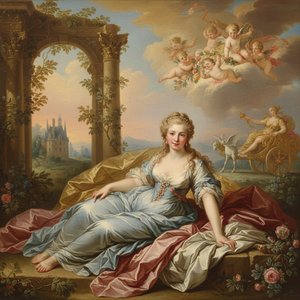
François Boucher's "Standing Nude Girl" isn’t merely a depiction of a female figure; it’s an immersion into the heart of Rococo elegance, a delicate dance between vulnerability and poised beauty. Painted in the mid-18th century, this pastel masterpiece captures a fleeting moment of quiet contemplation, radiating an ethereal quality that transcends its historical context and speaks directly to our enduring fascination with the human form. The artwork immediately draws the eye with its soft, diffused light – a hallmark of Boucher’s masterful technique – bathing the figure in a gentle luminescence that seems to emanate from within. The palette is restrained yet exquisitely nuanced; muted pinks, blues, and greens blend seamlessly, creating an atmosphere of serene intimacy rather than overt sensuality.
A Study in Rococo Style and Technique
Boucher’s work firmly establishes him as a pivotal figure within the Rococo movement. This style, flourishing during the reign of Louis XV, prioritized grace, charm, and playful ornamentation over the grand formality of its predecessor, the Baroque. “Standing Nude Girl” embodies these principles perfectly. The composition is deliberately shallow, focusing intently on the subject’s form and expression, while subtly suggesting a surrounding environment – a hint of drapery, a suggestion of roses at her feet – without overwhelming the central figure. Boucher's technique is characterized by meticulous layering of pastel chalks, building up tone and texture with astonishing precision. Notice how he utilizes delicate hatching to define the contours of the body, creating an illusion of volume and movement. The smooth transitions between light and shadow contribute significantly to the artwork’s dreamlike quality, a testament to Boucher's ability to capture fleeting moments of beauty with remarkable subtlety.
Symbolism and the Allure of the Ideal
The pose itself is deeply resonant. The woman stands slightly turned, her gaze directed towards the viewer – an invitation to connect, a subtle acknowledgment of our presence. Her posture exudes both confidence and vulnerability; she’s not overtly provocative but rather embodies a quiet dignity. The draped cloth, voluminous yet elegantly arranged, serves as more than just drapery—it frames her form, emphasizing its curves and creating a sense of movement. The inclusion of roses at the base adds another layer of symbolism, traditionally associated with love, beauty, and fertility – elements frequently interwoven into Rococo art to celebrate the pleasures of life and the ideals of feminine grace. The overall effect is one of idealized beauty, reflecting the prevailing artistic conventions of the time, where the female nude was often depicted as a symbol of virtue, innocence, and classical harmony.
A Legacy of Elegance: Boucher’s Influence and Enduring Appeal
François Boucher's “Standing Nude Girl” represents more than just a beautiful painting; it’s a window into the artistic sensibilities of 18th-century France. His work profoundly influenced generations of artists, shaping the course of Rococo art and establishing him as one of its most celebrated masters. Today, reproductions of this captivating artwork continue to resonate with viewers, offering a glimpse into a world of refined beauty and timeless elegance. The painting’s enduring appeal lies in its ability to evoke a sense of serenity, wonder, and appreciation for the exquisite details of human form and artistic skill. It's a testament to Boucher's genius – a whisper of grace that continues to captivate audiences centuries later.
Biografie van de kunstenaar
François Boucher: De Verfijnde Meester van de Rococo
François Boucher (1703-1770) was een figuur van onschatbare waarde in de Franse kunstgeschiedenis, erkend als een van de meest briljante schilders van het Rococo-tijdperk. Zijn werk straalt de elegantie, sensualiteit en speelse geest uit die deze invloedrijke stijl kenmerken. Boucher was meer dan alleen een kunstenaar; hij was een architect van dromen, een meester in het creëren van een wereld van verfijnde schoonheid en idyllische harmonie.
Een Jeugd Geometeerd door de Vader
Boucher’s leven begon in Parijs, op 29 september 1703. Zijn vader, Nicolas Boucher, was zelf een getalenteerde decoratiewerende, en het was aan hem dat François zijn eerste artistieke stappen zette. Al vroeg toonde de jonge François een uitzonderlijk talent, en al snel werd hij ondergebracht bij François Lemoyne, een gerenommeerd schilder die hem in zijn atelier nam. Deze vroege training legde de basis voor Boucher’s latere stijl, gekenmerkt door precisie, verfijning en een diepe kennis van compositie.
De Grand Prix de Rome: Een Cruciaal Moment
Een mijlpaal in Boucher’s carrière was zijn overwinning in 1720 bij de prestigieuze Grand Prix de Rome. Deze wedstrijd, georganiseerd door de Franse staat, bood jonge kunstenaars de kans om te studeren in Italië, het centrum van artistieke innovatie en inspiratie. Boucher’s overwinning gaf hem toegang tot de Académie Royale de Peinture et de Sculpture in Parijs, waar hij zijn vaardigheden verder kon ontwikkelen en zijn artistieke visie kon vormgeven.
De Gouden Eeuw van een Kunstenaar
In Italië, tussen 1720 en 1723, werd Boucher diep beïnvloed door de Renaissance-meesters. Hij bestudeerde de werken van Caravaggio, Bernini en andere grootheden, en leerde hun technieken en composities in meesterhand te hanteren. Na zijn terugkeer naar Frankrijk in 1723, werd hij onmiddellijk geaccepteerd in de Academie en snel een beroemdheid. Zijn eerste werk, “Rinaldo en Armida” (1734), toonde al zijn talent voor het creëren van levendige, dramatische scènes met een verfijnde esthetiek.
Een Portret van de Aristocratie
Boucher’s carrière bereikte haar hoogtepunt tijdens het bewind van Lodewijk XV. Hij werd steeds vaker ingehuurd door de koninklijke familie en de elite, en schilderde portretten van Madame de Pompadour, de invloedrijke minnares van de koning, die zijn reputatie verder versterkte. Zijn vermogen om de schoonheid en elegantie van zijn onderwerpen vast te leggen, maakte hem tot een favoriete kunstenaar van de Franse aristocratie.
Thema’s van Verlangen en Idylle
Boucher’s oeuvre is rijk aan thema's. Hij schilderde vaak mythische scènes, zoals “De Overwinning van Venus” (1740-1751), waarin hij de godin van de liefde in een omgeving van idyllische schoonheid en verfijnde decoraties presenteert. Ook genrebeelden, landschappen en kostuumontwerpen voor het theater waren onder zijn aandacht. Zijn werken straalden vaak een subtiele sensualiteit uit, maar behielden altijd een gevoel van elegantie en verfijning.
Een Erfgoed van Verfijning
François Boucher’s invloed strekte zich verder uit dan de schilderkunst. Hij was ook betrokken bij het ontwerpen van tapijten, behangsels en kostuums voor het theater. Zijn werk had een grote impact op de ontwikkeling van Neoclassicisme, en zijn studenten, waaronder Jean-Honoré Fragonard, namen zijn stijl over en droegen bij aan de verspreiding ervan. Boucher’s nalatenschap leeft voort in de prachtige schilderijen die hij heeft nagelaten, die nog steeds bewonderd worden door kunstliefhebbers en critici wereldwijd. Hij blijft een symbool van de verfijnde smaak en artistieke meesterschap van het 18e-eeuwse Frankrijk.

François Boucher
1703 - 1770 , Frankrijk
Belangrijkste feiten
- Artistic Movement Or Style: Rocococo
- Artists Or Movements Influenced By This Artist: ['Jean-Honoré Fragonard']
- Artists Who Influenced This Artist:
- François Lemoyne
- Jean-François Cars
- Date Of Birth: 29 september 1703
- Date Of Death: 30 mei 1770
- Full Name: François Boucher
- Nationality: Frans
- Notable Artworks:
- Rinaldo en Armida
- Het ontbijt
- Madame Boucher
- De zonsondergang
- Place Of Birth: Parijs, Frankrijk
Gerelateerde artikelen

The Elegance of Rococo: A Journey Through Pastel Dreams and Ornate Splendor
Embark on an elegant journey through the Rococo era. Discover the delicate beauty of pastel masterpieces, the intricate artistry of 18th-century French masters, and how this era of ornate splendor continues to inspire timeless luxury in fine art collecting.

The Rococo Aesthetic: Opulence, Rebellion & the Pursuit of Pleasure in 18th-Century Art
Explore the opulent world of Rococo art! Discover its origins, key artists like Watteau & Boucher, and lasting influence on design. Expert insights for collectors & enthusiasts.
François Boucher: Rococo Master of Myth, Sensuality, and the French Court
Explore the captivating world of François Boucher, master of Rococo painting! Discover his iconic works, aristocratic patronage, and lasting influence on French art history. Learn more at OriginalUniqueArt.

Top 10 Rococo Meesterwerken: Kunstgeschiedenis voor uw Interieur | OriginalUniqueArt.com
Ontdek de 10 meest iconische Rococo meesterwerken! Duik in de wereld van Fragonard, Boucher & Watteau. Leer over lieflijkheid, pastelkleuren en aristocratie. Museumkwaliteit kunst reproducties op OriginalUniqueArt.com.

The Subdued Radiance of Pastel: Exploring Nuance & Emotion in Art
Explore the nuanced world of pastel art! Discover its history, techniques & emotional power with expert insights from OriginalUniqueArt.com. Find museum-quality reproductions and learn about collecting this delicate medium.

