

 Voorvertoning
 Verstuur
 Delen
Delen
 Details bekijken
 Gids
Gids

 Download
 Vergelijkbare items
 Röntgenonderzoek
 Diavoorstelling
 Statistieken
Grasshopper and Alligator
 Paper
Paper- WallArt
- Contemporary Realism
 2002
2002- Contemporary
 43.0 x 26.0 cm
 USC Fisher Museum of Art
 Lees meer
De kunstwerken die op deze pagina worden weergegeven, zijn beschermd door de auteursrechtwetgeving, wat betekent dat het ons wettelijk niet is toegestaan om identieke reproducties te maken of te verkopen. Deze bescherming wordt gehandhaafd onder internationale overeenkomsten zoals de Conventie van Bern en door nationale wetgeving, waaronder de bepalingen van de Amerikaanse auteurswet - Titel 17. Alle rechten voorbehouden. Reproduceren of distribueren van afbeeldingen is niet toegestaan zonder uitdrukkelijke schriftelijke toestemming van WahooArt.com en de rechthebbenden.
Deze methode voldoet volledig aan de auteursrechtwetgeving, omdat het niet gaat om het kopiëren of dupliceren van het beschermde kunstwerk. In plaats daarvan is er sprake van een creatieve herinterpretatie — een nieuw schilderij dat door het origineel wordt geïnspireerd, maar er niet identiek aan is.
Giclée / Kunstafdrukken
Giclée- of canvasafdruk van museumkwaliteit met een snelle productie en flexibele afwerkingsmogelijkheden. ( Bestel handgeschilderde reproductie Schakel over naar digitale afbeeldingen)




P118B €10

P118H €10

P118W €10

P438Z €10

P508JH €12

P508YH €12

P805H €10

P805Z €10

P919BZ €10

P919G €10

P919XJ €10

P959ZH €10

P968JZ €12

W106C €8

W218G €10

W218JH €8

W218Y €10

W307PJ €10

W316G €10

W316PJ €8

W316Y €10

W398PJ €8

W4111J €10

W500HY €15

W500JH €15

W692G €12

W849H €8

W940BG €15

W953PJ €8




Kies uit onze vooraf ingestelde maten die overeenkomen met de originele verhoudingen van het kunstwerk.

Voer de gewenste breedte en hoogte in, passend bij uw lijst of muur. Een afdruk kan alleen worden ingekort en nooit groter worden gemaakt dan het origineel; een formaat met andere verhoudingen zal daarom een deel van de afbeelding verliezen. Wij sturen u een digitaal mockup ter goedkeuring voordat we tot drukwerk overgaan. De afbeelding op deze pagina toont niet de werkelijke uitsnede — dit is alleen te zien op het mockup.
Wereldwijde levering () binnen 2 weken in plaats van de standaard 4/5 weken. (25 oktober)

Gratis wereldwijde expressverzending

Hoogwaardig linnen canvas

Volledige verzendverzekering

Garantie op terugbetaling van invoerrechten

Garantie op exacte kleurweergave

Retourbeleid van 100 dagen (alleen bij defecten)

100% Geld-terug-garantie

Korting bij meerdere afnames
 De optie voor glas is alleen beschikbaar bij een formaat kleiner dan 110 cm.

Grasshopper and Alligator
Giclée / Kunstafdrukken
Afmetingen reproductie
-


Eindtotaal
€ 71
A Dialogue of Silhouettes: The Poetic Contrast in Toledo’s Diptych
In the evocative diptych Grasshopper and Alligator, the legendary Mexican master Francisco Toledo invites us into a world where the boundaries between the organic and the graphic dissolve. Created in 2002, this work serves as a profound meditation on the duality of nature. The piece presents two distinct yet harmoniously linked book covers, each acting as a window into a simplified, primordial reality. Through the use of stark black silhouettes set against the warm, tactile embrace of beige and brown textured paper, Toledo strips away the unnecessary noise of the natural world to reveal its essential, skeletal truths. It is a composition that breathes with a quiet, rhythmic pulse, capturing the viewer's attention through a masterful balance of negative space and bold, decisive forms.
The technique employed here speaks to the artist’s deep connection to the artisanal traditions of Oaxaca. There is a palpable sense of the handmade in every fiber of the work; the rough, uneven surfaces of the paper provide a sensory depth that prevents the flat silhouettes from feeling static. The method—reminiscent of stenciling or precise paper cutting—creates clean, graphic outlines that define the alligator and the grasshopper with surgical precision. This interplay between the smooth, dark ink of the subjects and the rugged, aged texture of the substrate creates a visual tension that is both sophisticated and primal. For the collector or interior designer, this piece offers a unique textural element, providing a focal point that feels both ancient and strikingly modern.
Symbolism and the Soul of the Oaxacan Landscape
Beyond its aesthetic brilliance, Grasshopper and Alligator is steeped in the symbolic language that defined Toledo’s illustrious career. As an artist whose life was inextricably woven into the Zapotec soul of Mexico, Toledo often utilized fauna to represent the complex hierarchies and survival instincts of the natural world. The pairing of the grasshopper—a creature of lightness, agility, and ephemeral existence—with the alligator—a symbol of prehistoric strength, patience, and grounded power—creates a captivating narrative of contrasts. This is not merely an illustration of insects and reptiles; it is a symbolic exploration of life’s extremes, from the delicate to the formidable.
The emotional impact of the work lies in its deceptive simplicity. There is a certain whimsy in the pairing, yet a profound gravity in the execution. The muted, earthy palette evokes a sense of nostalgia and permanence, as if these figures have emerged from the very soil of Mexico to tell a story of coexistence. For those seeking to adorn a space with art that inspires contemplation, this diptych offers a sophisticated way to introduce themes of nature, resilience, and balance. It is a piece that does not demand attention through loudness, but rather commands it through a quiet, undeniable presence, making it an exquisite addition to any curated collection or thoughtfully designed interior.
Veelgestelde vragen
In welk jaar werd "Grasshopper and Alligator" door Francisco Toledo gemaakt?
"Grasshopper and Alligator" door Francisco Toledo werd gemaakt in 2002.
Wie heeft "Grasshopper and Alligator" gemaakt en in welk jaar?
"Grasshopper and Alligator" is gemaakt door Francisco Toledo en dateert uit 2002.
Welke kleuren overheersen in "Grasshopper and Alligator" door Francisco Toledo?
De kleuridentiteit van "Grasshopper and Alligator" door Francisco Toledo: een Earthy palet, gedomineerd door Gray (#848899).
Biografie kunstenaar
A Life Woven into the Soul of Oaxaca
Francisco Benjamín López Toledo, born in Juchitán de Zaragoza, Oaxaca, in 1940, wasn’t merely an artist; he was a cultural architect, a passionate advocate for his homeland, and one of Mexico's most profoundly influential contemporary figures. His life story is inextricably linked to the vibrant traditions and often-overlooked complexities of Oaxacan culture, a heritage that permeates every brushstroke, sculpted form, and woven thread of his extensive oeuvre. Toledo’s artistic journey began early, nurtured by the rich visual language of his Zapotec upbringing and formalized through studies at the Escuela de Bellas Artes de Oaxaca and later at the Centro Superior de Artes Aplicadas del Instituto Nacional de Bellas Artes in Mexico City under the guidance of Guillermo Silva Santamaría. However, formal training only provided a foundation; Toledo’s true education came from immersing himself in the world around him – the landscapes, folklore, and social realities of his native state.Early Influences & Artistic Formation
Toledo's formative years were deeply shaped by the Zapotec traditions surrounding Juchitán de Zaragoza, Oaxaca—a region renowned for its intricate textiles and vibrant ceremonial practices. These experiences instilled in him a profound appreciation for visual storytelling and a sensitivity to cultural symbolism. Recognizing his innate talent, he pursued formal artistic training at the Escuela de Bellas Artes de Oaxaca, where he honed his skills in painting and sculpture under the tutelage of Guillermo Silva Santamaría—a figure who championed a humanist aesthetic rooted in Mexican identity. Subsequently, he continued his studies at the Centro Superior de Artes Aplicadas del Instituto Nacional de Bellas Artes in Mexico City, broadening his artistic horizons and exposing him to diverse stylistic approaches. This early exposure to both academic rigor and artistic experimentation laid the groundwork for Toledo’s distinctive creative vision.A Synthesis of Diverse Artistic Traditions
Toledo's artistic style defies easy categorization, reflecting a remarkable synthesis of influences drawn from various sources—both Mexican and international. He demonstrated an unwavering fascination with Pre-Columbian art, particularly the iconography of Zapotec and Mixtec cultures, which informed his use of stylized figures and symbolic motifs. These ancestral connections served as inspiration for his compositions, imbuing them with a sense of timelessness and spiritual depth. Simultaneously, he embraced elements of Mexican folk art—particularly textiles and ceramics—incorporating vibrant colors and narrative imagery into his canvases. Furthermore, Toledo’s engagement with Surrealism—influenced by artists like René Magritte and Salvador Dalí—allowed him to explore the subconscious realm and challenge conventional perceptions of reality. This multifaceted stylistic approach cemented his reputation as a visionary artist who transcended artistic boundaries.Major Works & Recurring Themes
Toledo's oeuvre encompasses a vast range of mediums, including painting, sculpture, printmaking, and textiles—each reflecting his unwavering commitment to exploring complex themes related to identity, society, and nature. Among his most celebrated artworks are “Grasshopper and Alligator,” a monumental sculptural installation that embodies the duality of life and death; “Two People Squatting…” – a poignant depiction of human vulnerability and resilience; and “Redes con Cangrejos...”—a mesmerizing tapestry woven with meticulous detail and imbued with symbolic references to Zapotec cosmology. Recurring themes permeate his artistic narrative, mirroring his deep engagement with Oaxacan culture and social realities. He consistently confronted issues such as poverty, inequality, and political corruption with unflinching honesty—using art as a tool for social critique and advocacy. His canvases often serve as meditations on the human condition, prompting viewers to contemplate profound questions about existence and morality.Legacy & Institutional Contributions
Francisco Toledo’s impact extends far beyond his artistic creations; he established several pivotal institutions that continue to enrich the cultural landscape of Oaxaca—most notably The Instituto de Artes Gráficas de Oaxaca (IAGO), a groundbreaking art library dedicated to preserving and disseminating visual knowledge; MACO, Museo de Arte Contemporáneo de Oaxaca, fostering dialogue between contemporary artists and audiences; Patronato Pro-Defensa y Conservación del Patrimonio Cultural de Oaxaca, safeguarding cultural heritage; and several other initiatives including a library for the blind, a photographic center, and the Eduardo Mata Music Library. These endeavors underscore his unwavering dedication to promoting artistic expression and cultural awareness—solidifying his legacy as not just an artist but a transformative cultural leader who championed intellectual curiosity and social responsibility. Toledo’s work has been exhibited internationally, reaching audiences across continents and cementing his place among Mexico's most influential artists of the 20th century.
Francisco Toledo
1940 - , Mexico
Belangrijkste feiten
- Artistic Movement Or Style: Surrealismo y Arte Popular
- Artists Who Influenced This Artist:
- Rufino Tamayo
- Paul Klee
- Jean Dubuffet
- Date Of Birth: 1940
- Full Name: Francisco Benjamín López Toledo
- Nationality: Mexicano
- Notable Artworks:
- Grasshopper and Alligator
- Dos personas echadas
- Redes con Cangrejos...
- Place Of Birth: Juchitán de Zaragoza, México
Gerelateerde artikelen

The Refined Aesthetic of Victorian Illustration: A Study in Narrative & Technique
Explore the captivating world of Victorian illustration! Discover Pre-Raphaelite influences, key artists like Rossetti & Stephens, and the era's rich narrative detail. A deep dive for art enthusiasts.
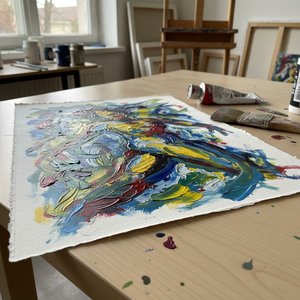
Acrylic on Paper: A Modern Canvas for Contemporary Expression
Explore the versatility of acrylic painting on paper! Discover expert techniques, artist insights & archival practices for creating stunning contemporary art. Learn more at OriginalUniqueArt.

Goya's Meesterwerken: 25 Iconische Schilderijen voor Kunstliefhebbers | OriginalUniqueArt
Ontdek de 25 meest iconische schilderijen van Francisco Goya! Duik in zijn Spaanse romantiek, donkere kleuren & emotionele kracht. Museumkwaliteit reproducties voor jouw interieur op OriginalUniqueArt.com.

Angelo Chiacchio: A Mid-Century American Illustration Master & the Rise of Commercial Art
Explore the captivating world of Angelo Chiacchio, a master of mid-century American illustration. Discover his evolution, signature style, and lasting impact on commercial art & design. Learn about his legacy at the Museum of American Illustration.

Kay Rasmus Nielsen: A Golden Age Illustrator's Enchanting Legacy of Symbolism & Narrative
Explore the captivating world of Kay Rasmus Nielsen, a celebrated Golden Age illustrator renowned for his Art Nouveau fairy tale art & Disney contributions. Discover his unique style, enduring legacy, and how to collect his enchanting works.


